Speculoos
A thin, spiced caramel biscuit, often stamped with Saint Nicholas figures
- Vegetarian
- Local name
- Speculoos
- Served with
- Coffee
- Best eaten at
- A Belgian café with your coffee
- Pairs with
- Coffee
What it is
Speculoos are thin, hard biscuits made from a sweet dough that is baked until deep brown and caramelised. The texture is distinctively crisp; they snap cleanly when broken rather than crumbling or bending. They are not soft cookies but dense discs of flavour, often described as having the consistency of a shortcrust pastry that has been pushed to its limit in the oven.
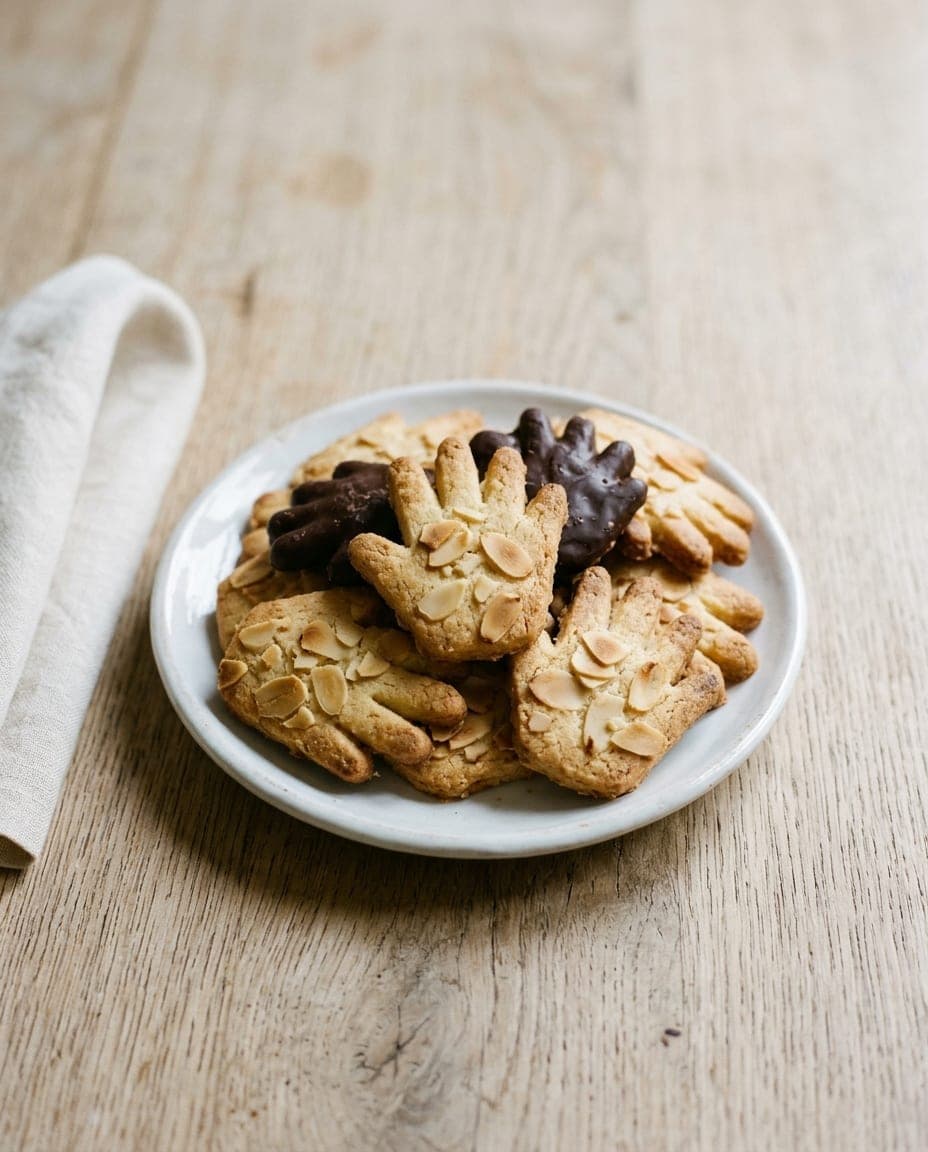
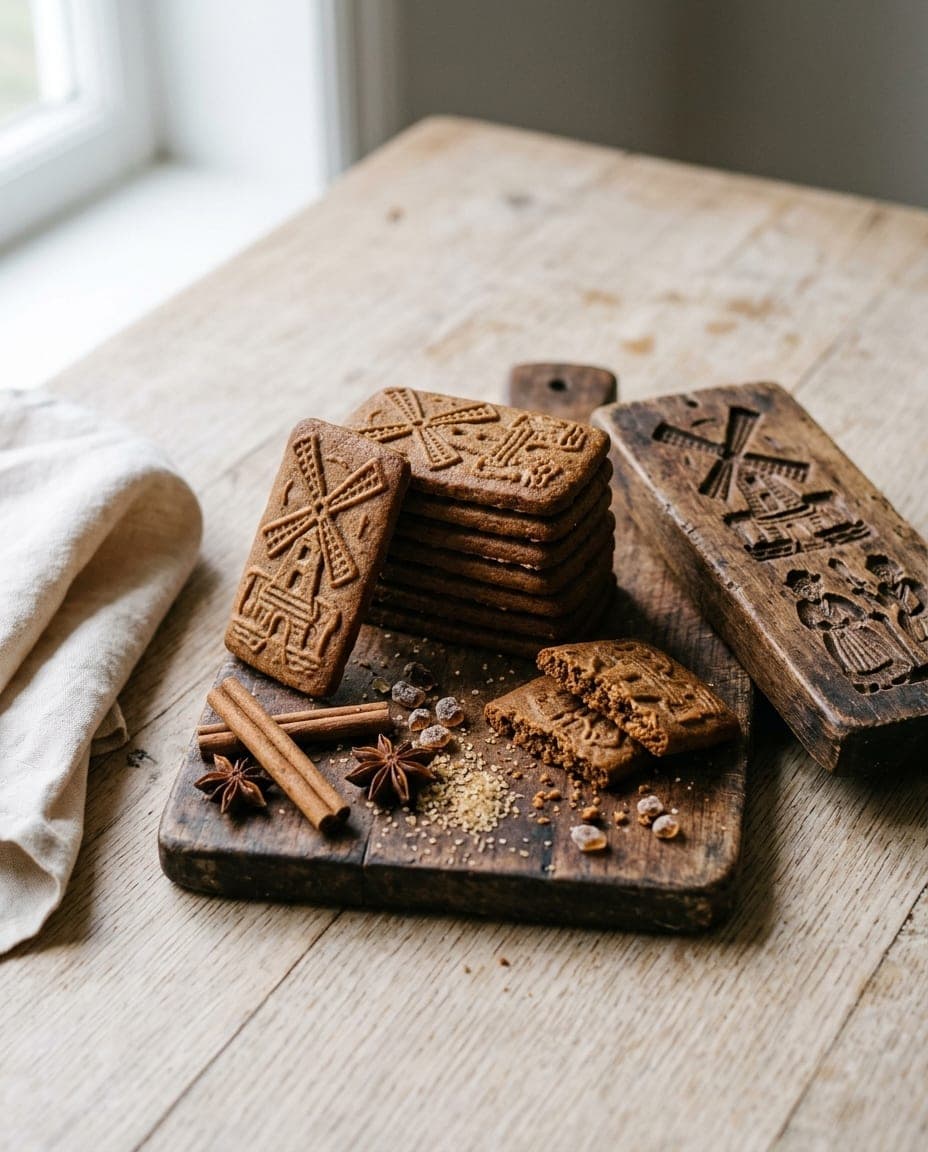
The surface of the biscuit often carries an embossed relief image, a detail that comes from the traditional method of pressing the dough into wooden moulds before baking. These moulds feature intricate designs ranging from figures of Saint Nicholas and his horse to windmills, animals, and ships. While the stamped versions are well-known, most everyday Belgian speculoos are small plain rectangles with little or no decoration, particularly those served as a simple accompaniment to coffee throughout the year.
The flavour is defined by the deep caramel notes of browned sugar and a lighter touch of warm spice. Belgian speculoos usually leans on cinnamon, while the fuller blend of nutmeg, cloves, ginger, cardamom and pepper is more typical of Dutch speculaas. The colour is not merely the result of baking time but comes from brown sugar such as cassonade or candi sugar, giving the biscuit its characteristic dark hue and toffee-like taste.
Speculoos are a staple across Belgium, with industrial production centred in Flanders and a long baking tradition in Brussels. The Belgian spelling is speculoos, a Brabantian dialect form, while the Dutch form is speculaas. Although the names are close and the origins overlap, the two are generally considered distinct in their final form. Belgian speculoos tends to be harder, thinner and less heavily spiced than many Dutch variations found elsewhere in the Low Countries.
The story of the wooden moulds
The tradition of stamping biscuits with images dates back centuries, long before the modern industrial era. In the past, bakers in the Low Countries used carved wooden moulds to press dough into shape. These moulds were often passed down through families or crafted by local woodworkers who specialised in the task. The designs were not random; they reflected the daily life of the region and its religious calendar.
The most famous figure stamped onto the biscuit is Saint Nicholas, known locally as Sint-Nikolaas. He is depicted in his bishop's robes and mitre, often holding a crosier or riding his white horse. Other common motifs include windmills, which were once central to the landscape of Flanders, ships that recall the maritime trade of Antwerp, and various animals such as cats or dogs.
The use of these moulds was originally practical as well as decorative. Pressing the dough ensured that each biscuit was uniform in thickness, allowing them to bake evenly on a large sheet. It also meant that a baker could produce many biscuits quickly with a single press. Over time, the stamped image became a symbol of quality and tradition. Even today, the presence of a relief design is often seen as a mark of authenticity, distinguishing the biscuit from mass-produced alternatives that lack the texture of the mould.
The connection between the biscuit and Saint Nicholas is strongest during the winter season. In Belgium, the feast day of Saint Nicholas on 6 December is a major celebration, especially in Flanders. Children leave their shoes by the fireplace or near the window, hoping to find them filled with sweets and small gifts. Speculoos are a traditional offering found in these shoes, alongside other treats like marzipan, chocolate and mandarins. The stamped figure of the saint serves as a visual link between the food and the holiday, reminding the eater of the story behind the season.
How it came to be
The origins of speculoos are not settled in any single document, though several theories exist about how the biscuit evolved. The family of spiced, moulded biscuits grew in the Low Countries from the 17th century, when Dutch traders brought in spices in quantity and wheat flour and sugar replaced older rye-and-honey cakes. The Dutch word speculatie is first recorded in a Haarlem bakers' ordinance of 1749.
In Belgium, moulded spiced biscuits were sold by bakers in the 19th century, including in Brussels, where one well-known biscuit bakery was founded in 1829. The distinctly Belgian style, sweeter and lighter on spice, took shape in the early 20th century, partly because spices were scarcer and more expensive in Belgium; caramelised brown sugar did more of the work.
By the 20th century, the industrialisation of food production had transformed the way speculoos were made, especially in Flanders. Factories replaced hand-pressed wooden boards with machine moulding, allowing for faster production and more consistent shapes. This shift ensured that the biscuit remained affordable and accessible to everyone, not just those who could afford a baker's custom order. Despite the changes in method, the essential character of the biscuit remained unchanged: a hard, spiced, caramelised treat that was easy to store and share.
The origin of the name is debated. A popular theory links it to the Latin speculum, meaning mirror, because the biscuit is a mirror image of its mould; linguists more often trace it to the old Dutch speculatie, a word for fine baked treats. Speculoos is the Brabantian form adopted in Belgium, and in 2020 speculoos was added to Brussels' inventory of intangible heritage.
What goes into it
The ingredients of speculoos are simple but carefully chosen to achieve the right balance of texture and flavour. The dough is based on a mixture of flour, butter or margarine, and sugar, with the addition of spices that define its character. Unlike many biscuits that rely on eggs for structure, speculoos often use little to no egg, relying instead on the fat and sugar to hold the shape together.
- Flour, usually plain white flour, forms the base of the dough. It is mixed until smooth but not overworked, ensuring a tender crumb.
- Butter or margarine provides the fat necessary for the shortcrust texture. In traditional recipes, butter is preferred for its deep flavour, though margarine is often used in industrial versions for consistency.
- Brown sugar (cassonade) or candi sugar gives the biscuit its deep colour and toffee-like taste. This is a key ingredient that distinguishes Belgian speculoos from other spiced biscuits.
- Spices are led by cinnamon; some bakers add a little nutmeg, cloves or ginger. The exact blend varies by baker, but Belgian versions are gentler than Dutch speculaas.
- Baking soda or baking powder may be added in small amounts to help the dough rise slightly before setting hard.
The mixture is rolled out thinly and pressed into the moulds before being baked at a moderate temperature until the edges turn dark brown and the centre becomes firm. The result is a biscuit that is hard enough to snap but not so brittle that it crumbles into dust. The caramelisation of the sugar creates a subtle sweetness that complements the spices without overwhelming them.
How to eat it
Speculoos are traditionally eaten with coffee, particularly in the setting of a Belgian café. The hard texture makes them ideal for dipping or for holding while sipping a hot drink. A common practice is to break a piece off and dip it into the coffee, allowing the liquid to soften the biscuit slightly before eating. This method enhances the flavour, as the coffee's bitterness balances the sweetness of the caramelised sugar.
In many cafés, a single individually wrapped speculoos arrives on the saucer alongside a cup of black coffee, espresso or cappuccino. The pairing is so common that it has become a cultural norm; visitors to Belgium often find one beside their cup without having asked. The biscuit acts as a gentle sweetener, softening the edge of the coffee without overpowering it.
During the Saint Nicholas season, the experience changes slightly. The stamped biscuits are often given as gifts or placed in children's shoes, where they are eaten as part of the celebration rather than with coffee. In this context, the figure on the biscuit becomes a focal point, adding a visual element to the taste. Some people even collect the stamped biscuits as souvenirs, keeping them for their decorative quality long after the flavour has faded.
Outside of the holiday season, speculoos are also enjoyed as a standalone snack or with tea. Their durability makes them suitable for travel or packing in lunchboxes, and their simple ingredients mean they pair well with a wide range of beverages. However, the coffee pairing remains the best-known way to enjoy the biscuit, especially in the warm, welcoming atmosphere of a Belgian café.
Curious facts
- The mould is traditional. The relief image on speculoos comes from carved wooden boards or machine moulds that shape the dough before baking; festive biscuits in particular still carry it.
- A seasonal symbol. While plain speculoos are available year-round, the stamped versions featuring Saint Nicholas are most common in December, when they are used as gifts or treats for children.
- Hardness is a feature. Unlike soft cookies, speculoos are deliberately baked until hard and brittle. This texture allows them to be stored for long periods without losing their quality.
- A name with history. One popular theory links speculoos to the Latin speculum, mirror, as the biscuit mirrors its mould, though the word's origin is debated.
- A regional identity. Although similar biscuits exist across Europe, Belgian speculoos are distinct in their hardness and spice blend, setting them apart from Dutch or French variations.
Where to try it
The best place to eat speculoos is a traditional Belgian café, particularly those that serve coffee alongside their pastries. These establishments, often found in the historic centres of cities like Brussels, Antwerp or Ghent, are known for their relaxed atmosphere and focus on local products. In these cafés, you will usually find a speculoos served with your coffee as a matter of course.
During the Saint Nicholas season, bakeries across Flanders display special stamped speculoos featuring figures of the saint. These are often sold as gifts or given away as part of local celebrations. The biscuit is also common in supermarkets and convenience stores throughout the country, where it can be bought in various forms, from plain to stamped.
For a more authentic experience, visit a traditional bakery. Some bakers in Brussels and Flanders still use traditional methods, pressing the dough into wooden moulds before baking. The smell of cinnamon and caramelised sugar filling the air is a strong indicator that you are in the right place. Whether you choose a plain biscuit or one stamped with Saint Nicholas, the experience of eating speculoos with coffee is a quintessential part of Belgian culture.
Where to try it
1 region
 Wine Tasting7 destinations
Flanders
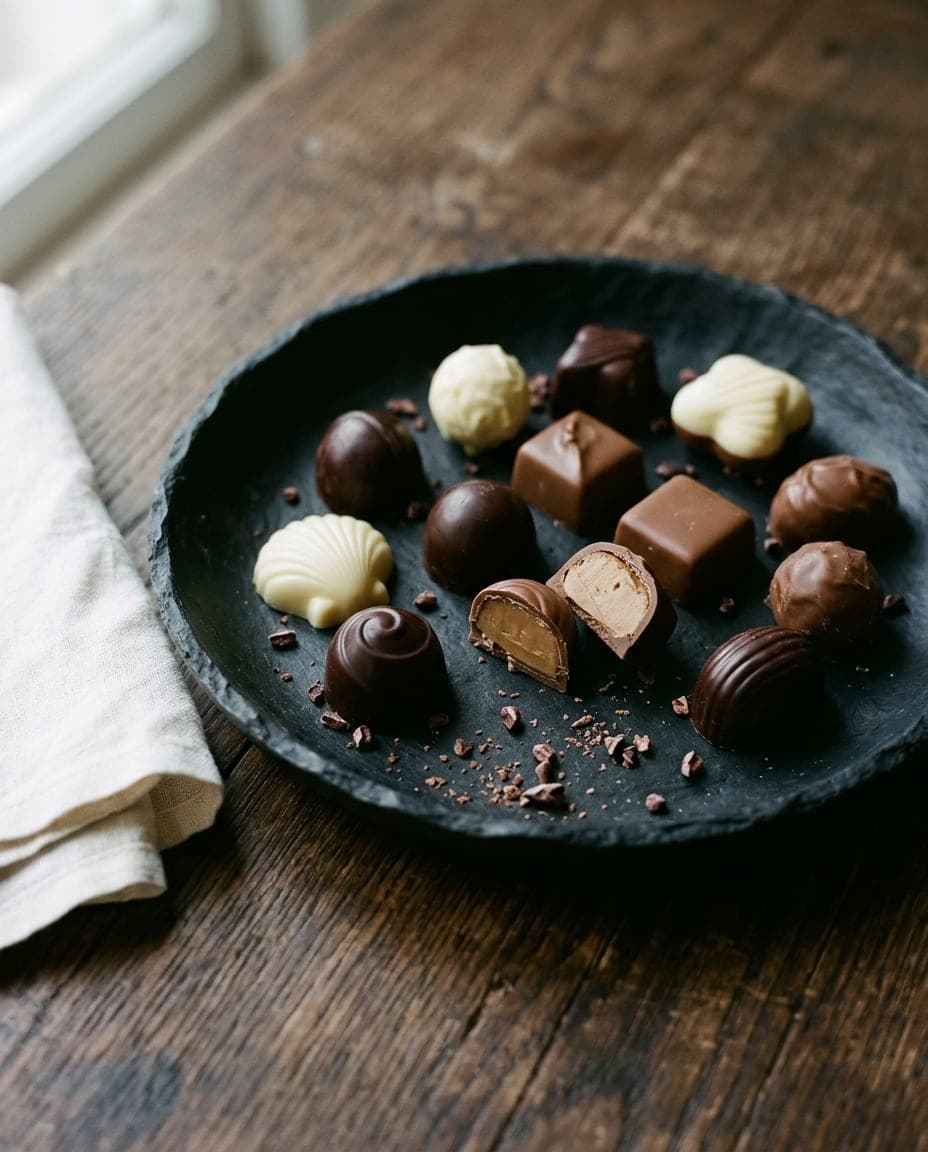
Flanders is the Dutch-speaking region of northern Belgium, and its short distances between towns hide a slow, layered kind of travel. Villages in Flanders and its larger cities share a way of asking for attention: a market square, a belfry, a stretch of canal reflecting brick gables. The pace here rewards stopping, and the region's compact size makes it possible to settle into a handful of places instead of covering ground. The medieval old towns are the backbone of any Flanders itinerary. Ghent carries the largest and least polished of them, its student population keeping the streets lived-in. Bruges is smaller and more carefully kept, its canal loop and lace-making tradition drawing people who want the postcard version of Flanders done well. Antwerp brings energy to the mix: a working port, a Baroque cathedral, a fashion district, and a diamond trade still run on old trust. Mechelen and Leuven sit close to the bigger cities and carry the same belfry-and-canal character at a quieter volume. Flemish painting shaped much of what these cities still show today. Ghent's cathedral holds an early masterpiece of Flemish painting, and Antwerp's museums keep strong collections from the city's own Baroque painters. These works were made for the churches and guild halls that still stand on the same streets, which gives them a different weight than seeing them somewhere unconnected to their making. Beer culture in Flanders runs deep and steady. Trappist monasteries brew to support their communities, following recipes kept inside their own walls for generations, and abbey beers named after those monasteries fill the menus of ordinary town cafés. A brown café in Ghent or Antwerp — dim, wood-panelled, unhurried — is where this culture is actually lived, over a single well-poured glass at a corner table. Chocolate carries a similar seriousness. Family-run chocolatiers in Bruges, Ghent and Antwerp still hand-dip pralines and temper chocolate by hand, and a short exchange with the person behind the counter often teaches more than any shop sign. A small box eaten the same afternoon suits the tradition better than a large one carried home. Flanders' countryside opens quickly beyond the larger cities into flat farmland, poplar-lined canals, and villages that rarely appear on an international itinerary. Damme, close to Bruges along a canal path, holds a windmill, a church and a handful of houses, and needs little more than that. Further south and east, the villages around Ypres carry the memory of the First World War: cemeteries, memorials, and the Last Post sounded each evening at the Menin Gate sit alongside the region's more familiar reputation for beer and lace. The coast changes the rhythm again. Oostende keeps a working fishing fleet and a long promenade, while smaller resorts such as De Haan hold onto early-twentieth-century villas and quiet dunes once summer ends. The flat sand and open sky offer a clear contrast to the cobbled squares and canal reflections inland. Traditions stay visible through the year. Processions, guild festivals, and beer events give each town its own calendar, kept by the community rather than staged for visitors. Slow travel here means choosing depth over distance. The region's small scale makes it tempting to plan a long list of towns, but it holds together better when explored through fewer stops, each one given room to open up: a market square seen at different times of day, a canal walk repeated at dusk, a return visit to the same chocolate shop once the first box runs out. Ghent and Bruges alone hold enough layers — museums, churches, quiet residential streets away from the centre — to fill a visit, and pairing either with a coastal stop or a village like Damme adds contrast without adding rush. Flanders rewards this kind of attention because so much of its character sits just below the surface: a monastery's own beer recipe, a canal town's working history before tourism arrived, a village whose only claim is a windmill and a church that has stood for generations. Most of it opens up only once the rushing stops.
Wine TastingHikingBoat RentalsLocal Cuisine