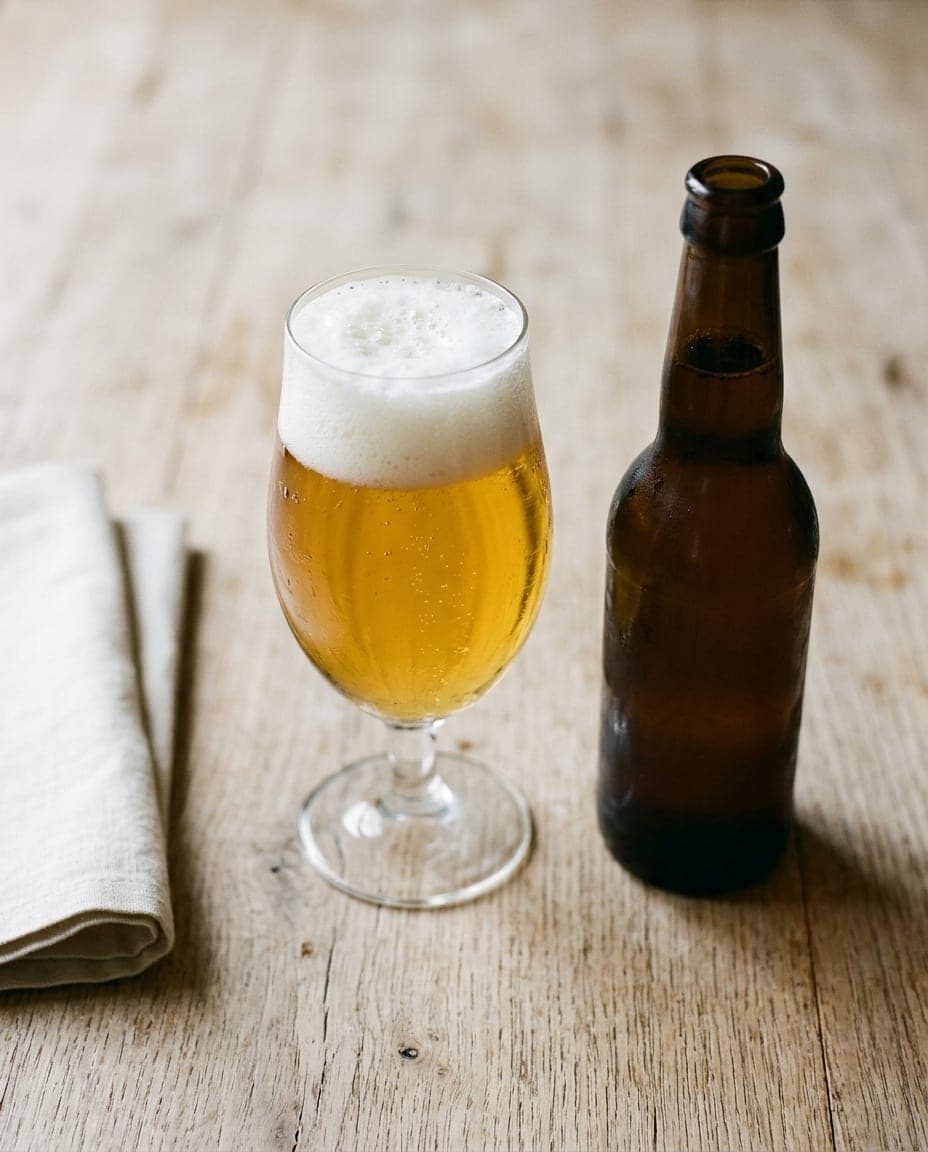
Oud bruin (Flemish brown ale)
A dark, sweet-sour Flemish ale aged for months in steel or wood
- Alcoholic
- Local name
- Oud bruin
- Served
- Cellar temperature, in a tulip glass
- Best eaten at
- A Flemish brown café
- Pairs with
- Stoofvlees or game
What it is
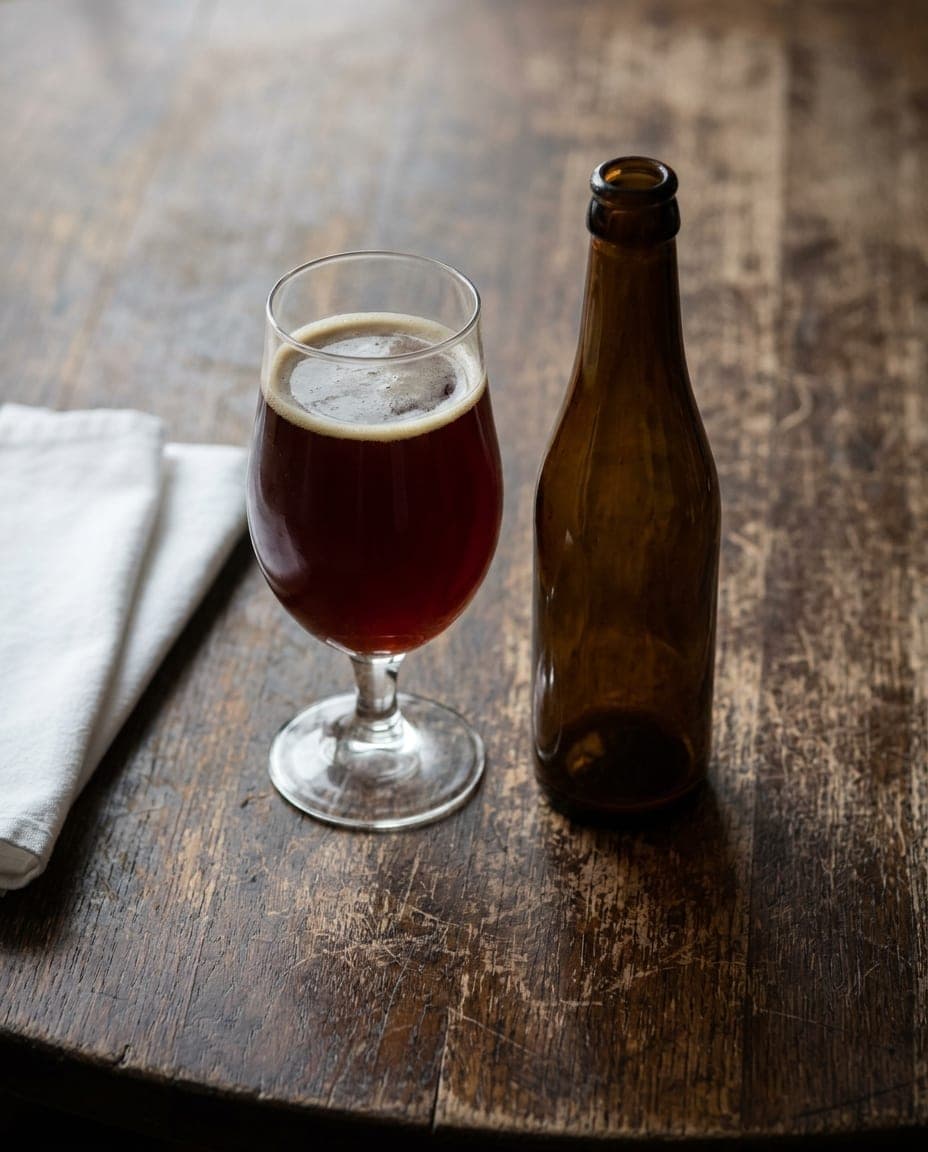
Oud bruin, meaning "old brown", is a dark, sour ale that hails specifically from the region of East Flanders in Belgium. It is not a beer for quick sipping; it is a deep, complex drink defined by its age and its balance between sweetness and acidity. The liquid ranges from dark reddish-brown to brown, with a head that settles quickly to reveal a dark, ruby-tinged body.
Unlike the crisp lagers or hoppy ales found elsewhere in Europe, Oud bruin relies on a slow, mixed fermentation process. Brewers blend young beer with older stock, allowing yeast and lactic bacteria to work over weeks or months, sometimes up to a year. The result is a taste that sits somewhere between a malty brown ale and a sweet-sour fruit wine. It tastes of caramel, toffee, dried fruit and a gentle acidity that cuts the fat.
This is not a nationwide Belgian style. While red-brown ales exist in West Flanders, those tend to be sharper and more vinous due to heavy oak ageing. The Oud bruin of East Flanders, particularly around the town of Oudenaarde, is maltier and rounder. It is a regional speciality, with roots going back centuries, that has survived the industrialisation of beer production in a handful of breweries.
How it is made
The creation of Oud bruin begins with a grain bill of pale malt with a share of darker caramel malts and a little roasted malt. These provide the base notes of toffee, caramel and dried plums or raisins. The carbonate-rich water of the region helps soften the acidity. Brewers then introduce a blend of yeast strains and lactic acid bacteria, usually ageing the beer warm in stainless steel tanks, though a few producers still use wooden barrels.
The defining characteristic is the time spent maturing. The beer ages for weeks or months, sometimes up to a year, allowing the micro-organisms to develop their signature tartness. This process transforms the sugar into alcohol and organic acids. Crucially, the final product is rarely just one batch of beer. Brewers blend young, sweet beer with old, sour beer to achieve the specific balance that defines the style. The acidity is never overwhelming; it acts as a counterpoint to the sweetness rather than replacing it.
There are no strict rules for how long a brewer must age their Oud bruin, nor is there a single recipe that all follow. What remains constant is the commitment to time. Some versions are unfiltered and bottle-conditioned, while many commercial examples are filtered and pasteurised for stability.
How to drink it
Oud bruin is best served at cellar temperature, roughly 10 to 14 degrees Celsius. This allows the complex aromas of dark fruit and caramel to rise from the glass. A tulip glass is the standard vessel, as its shape traps the subtle bouquet while supporting a modest head. The beer should not be poured too vigorously, which would dissipate the delicate carbonation before it reaches the palate.
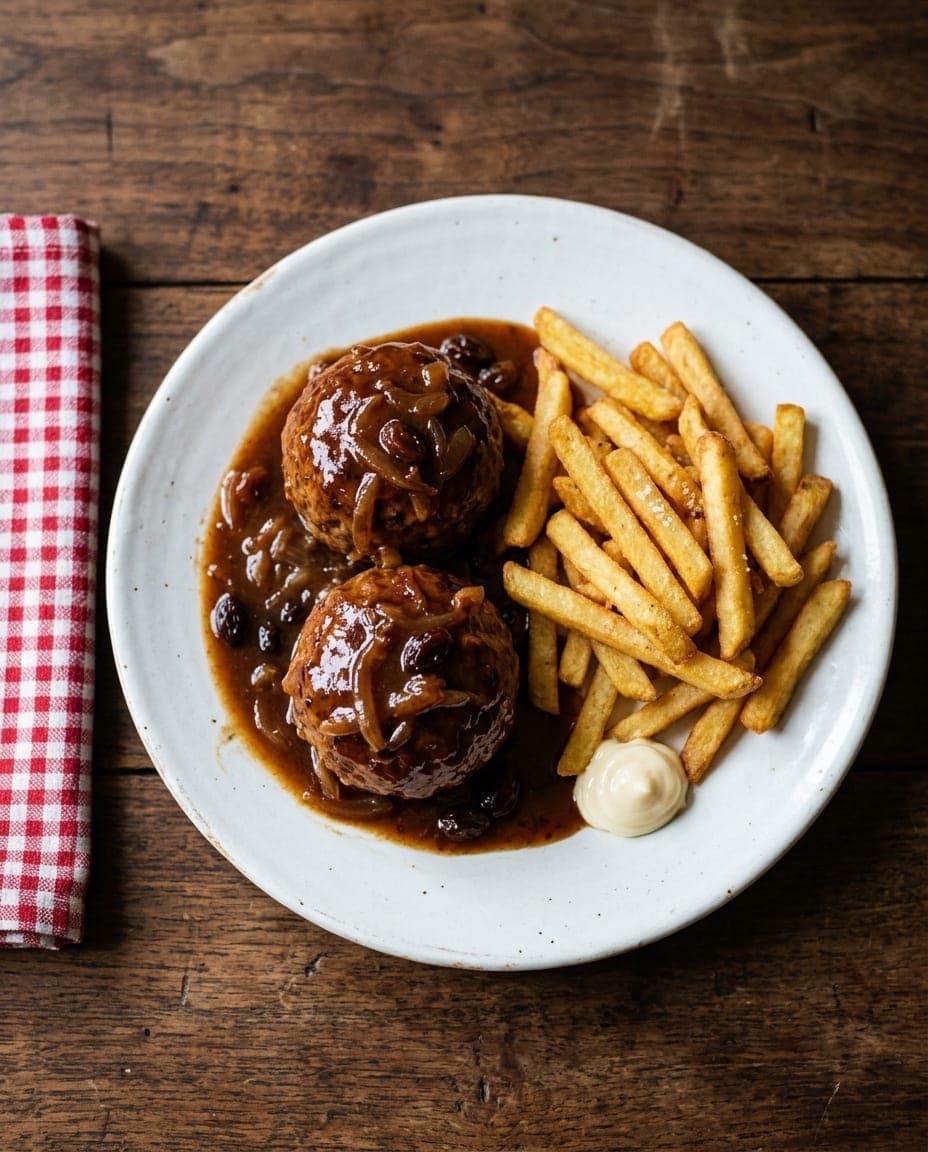
The traditional companion for this ale is stoofvlees, the Flemish beef stew often slow-cooked in brown beer of the same kind. The dish relies on the beer's acidity to tenderise the meat and its maltiness to build a rich sauce. When eaten together, the sharpness of the Oud bruin cuts through the fat of the beef, cleansing the palate for the next bite. It is also a natural pairing with game meats, where the dark fruit notes complement the earthy flavours of venison or rabbit.
While it can be enjoyed on its own, the beer truly shines in the company of food. A local brown café, known as a bruin café, provides the perfect setting. These are neighbourhood taverns with wooden interiors and low lighting, where the atmosphere encourages conversation over long periods. Here, the beer is usually poured from the bottle into a glass that has been rinsed with cold water to ensure it is ready for the pour.
Curious facts
- A blend of times. The final flavour comes from mixing young beer, which is sweet and malty, with old beer, which is sour and complex.
- East vs West. While often grouped together, West Flemish red ales are sharper and aged in oak, whereas Oud bruin from East Flanders is rounder, maltier and usually aged in steel.
- The name means age. "Oud" translates to "old", referring to the maturation period required for the bacteria to develop their character.
- A culinary ingredient. Cooks in the region often use brown beer as a key ingredient, particularly for the famous stoofvlees stew.
- Living culture. Some versions of Oud bruin are bottle-conditioned, keeping active yeast alive in the bottle, though many commercial examples are pasteurised.
Where to try it
The most authentic experience awaits in East Flanders, particularly in the brown cafés in and around Oudenaarde, many of them family-run and serving locals for generations.
Outside the immediate region, one might find Oud bruin in specialist bars in Brussels or Ghent, but the best versions will always trace their lineage back to the cellars of East Flanders. The beer is available year-round, making it a reliable choice regardless of the season.
Where to try it
1 region
 Wine Tasting7 destinations
Flanders
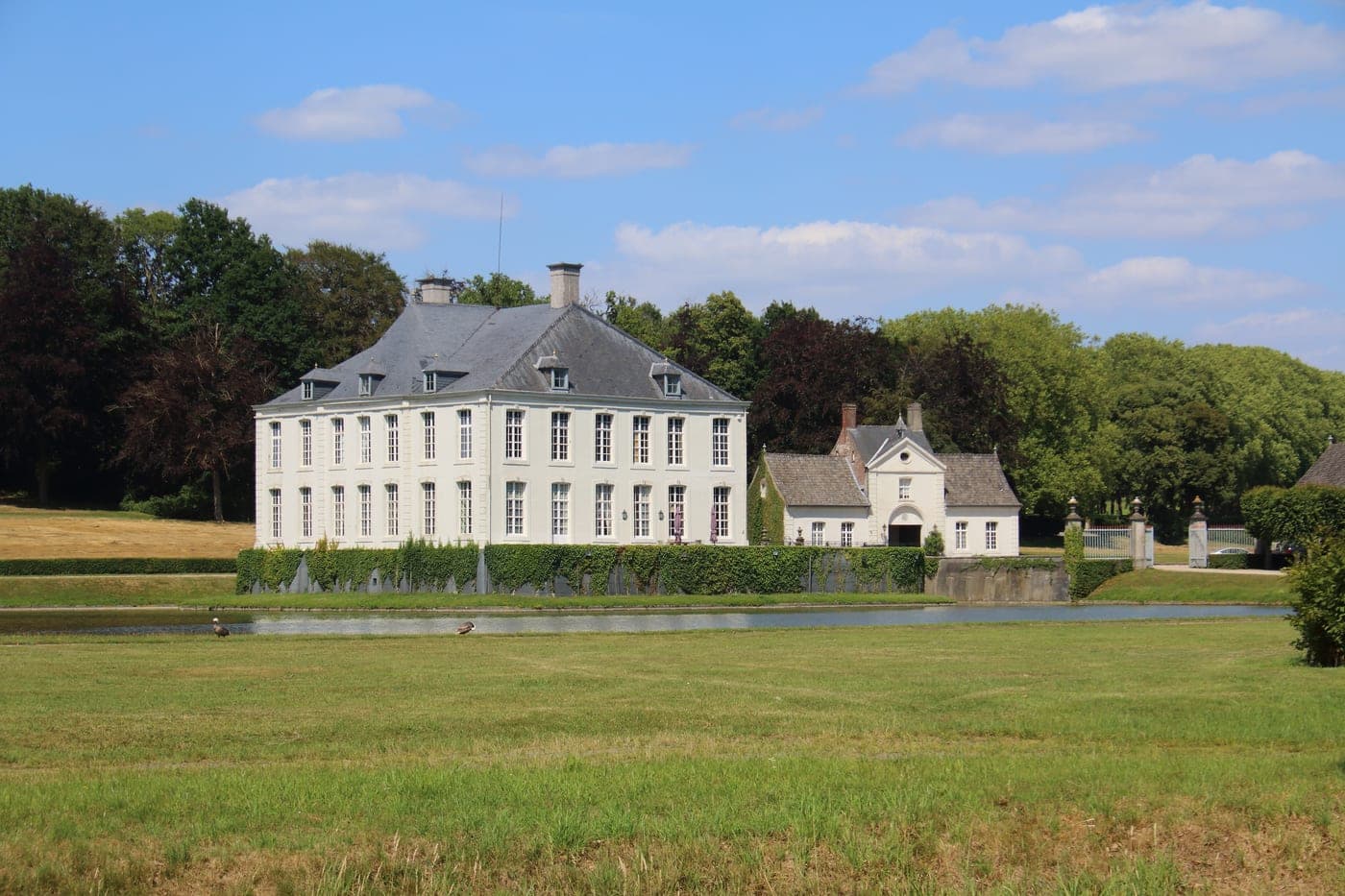
Flanders is the Dutch-speaking region of northern Belgium, and its short distances between towns hide a slow, layered kind of travel. Villages in Flanders and its larger cities share a way of asking for attention: a market square, a belfry, a stretch of canal reflecting brick gables. The pace here rewards stopping, and the region's compact size makes it possible to settle into a handful of places instead of covering ground. The medieval old towns are the backbone of any Flanders itinerary. Ghent carries the largest and least polished of them, its student population keeping the streets lived-in. Bruges is smaller and more carefully kept, its canal loop and lace-making tradition drawing people who want the postcard version of Flanders done well. Antwerp brings energy to the mix: a working port, a Baroque cathedral, a fashion district, and a diamond trade still run on old trust. Mechelen and Leuven sit close to the bigger cities and carry the same belfry-and-canal character at a quieter volume. Flemish painting shaped much of what these cities still show today. Ghent's cathedral holds an early masterpiece of Flemish painting, and Antwerp's museums keep strong collections from the city's own Baroque painters. These works were made for the churches and guild halls that still stand on the same streets, which gives them a different weight than seeing them somewhere unconnected to their making. Beer culture in Flanders runs deep and steady. Trappist monasteries brew to support their communities, following recipes kept inside their own walls for generations, and abbey beers named after those monasteries fill the menus of ordinary town cafés. A brown café in Ghent or Antwerp — dim, wood-panelled, unhurried — is where this culture is actually lived, over a single well-poured glass at a corner table. Chocolate carries a similar seriousness. Family-run chocolatiers in Bruges, Ghent and Antwerp still hand-dip pralines and temper chocolate by hand, and a short exchange with the person behind the counter often teaches more than any shop sign. A small box eaten the same afternoon suits the tradition better than a large one carried home. Flanders' countryside opens quickly beyond the larger cities into flat farmland, poplar-lined canals, and villages that rarely appear on an international itinerary. Damme, close to Bruges along a canal path, holds a windmill, a church and a handful of houses, and needs little more than that. Further south and east, the villages around Ypres carry the memory of the First World War: cemeteries, memorials, and the Last Post sounded each evening at the Menin Gate sit alongside the region's more familiar reputation for beer and lace. The coast changes the rhythm again. Oostende keeps a working fishing fleet and a long promenade, while smaller resorts such as De Haan hold onto early-twentieth-century villas and quiet dunes once summer ends. The flat sand and open sky offer a clear contrast to the cobbled squares and canal reflections inland. Traditions stay visible through the year. Processions, guild festivals, and beer events give each town its own calendar, kept by the community rather than staged for visitors. Slow travel here means choosing depth over distance. The region's small scale makes it tempting to plan a long list of towns, but it holds together better when explored through fewer stops, each one given room to open up: a market square seen at different times of day, a canal walk repeated at dusk, a return visit to the same chocolate shop once the first box runs out. Ghent and Bruges alone hold enough layers — museums, churches, quiet residential streets away from the centre — to fill a visit, and pairing either with a coastal stop or a village like Damme adds contrast without adding rush. Flanders rewards this kind of attention because so much of its character sits just below the surface: a monastery's own beer recipe, a canal town's working history before tourism arrived, a village whose only claim is a windmill and a church that has stood for generations. Most of it opens up only once the rushing stops.
Wine TastingHikingBoat RentalsLocal Cuisine