Moules-frites
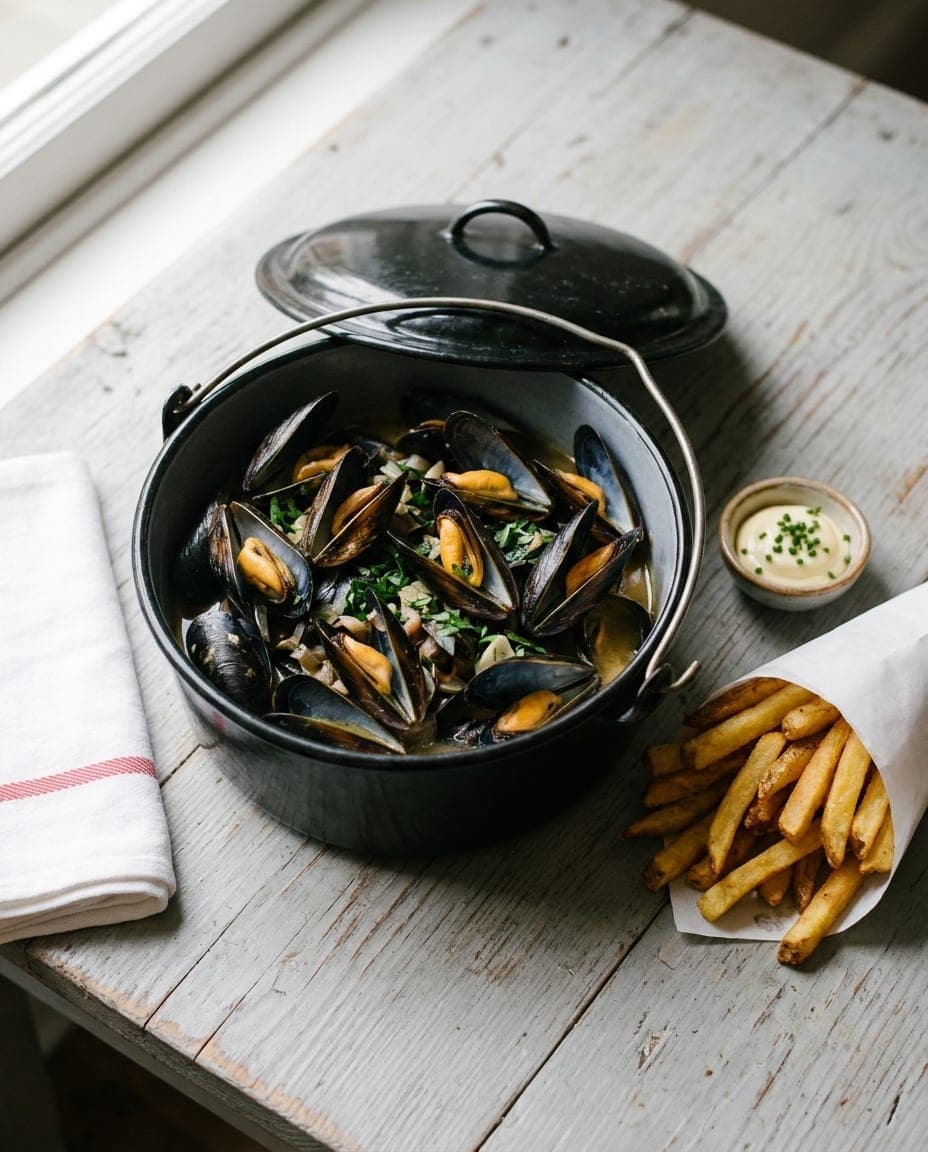
A pot of steamed mussels, with the fries on the side
- Local name
- Moules-frites / Mosselen-friet
- Served with
- Frites, mayonnaise
- Best eaten at
- A Brussels or Lille brasserie
- Pairs with
- Belgian witbier or Muscadet
What it is
Moules-frites is a pot of mussels steamed open, with fries on the side and a bowl of mayonnaise. It is Belgium's national dish, found in brasseries from Ostend to Antwerp and most strongly associated with Brussels, where it is what a brasserie is for. It belongs just as firmly to northern France, especially the Hauts-de-France from Dunkirk to Lille, where it is one of the signature dishes of French Flanders. In Flemish it is mosselen-friet.
The mussels are not boiled. They are steamed in their own liquor, usually with white wine, sometimes beer or cream, and with shallot, celery and parsley. What collects in the bottom of the pot is the point as much as the shellfish. The fries are fried separately and never go in the pot.
A dish of Flanders
There is no inventor and no certain year, and the moment the two ingredients first met on a plate is lost to history. Mussels were long a cheap food on the North Sea coast, often eaten in winter in place of fish; what made them a staple was cheap transport inland and cities full of brasseries to serve them in. One popular account has the pairing with fries first sold at the Liège fair around 1875.
The dish is rooted in the shared culture of Flanders, a region whose borders have shifted between France and the Low Countries many times over the centuries. In Lille, Dunkirk and the surrounding countryside, the food culture has much in common with that of Belgian Flanders, and the dish likely grew out of everyday eating along the coast and in the industrial cities of the north.
The fries are the other half of the habit. Belgium's much-disputed claim to the fried potato rests on a story set in the Meuse valley, and the pairing became standard in the eating houses on both sides of the border.
How it is prepared
There is no single official recipe. The mussels are cleaned of grit and their fibrous beard, then steamed. The default everywhere is à la marinière — a method rather than a recipe — with dry white wine, shallots or onions, celery and parsley, and often a knob of butter. À la crème replaces some of the wine with cream for a richer, paler broth. The nature version leaves out the wine and steams the mussels with celery, onion or leek and butter. Provençale adds garlic and tomatoes, closer to a stew.
Beer is a common alternative to wine, especially near the border. Whatever the liquid, the mussels come off the heat as soon as the shells open, and any that stay closed are discarded.
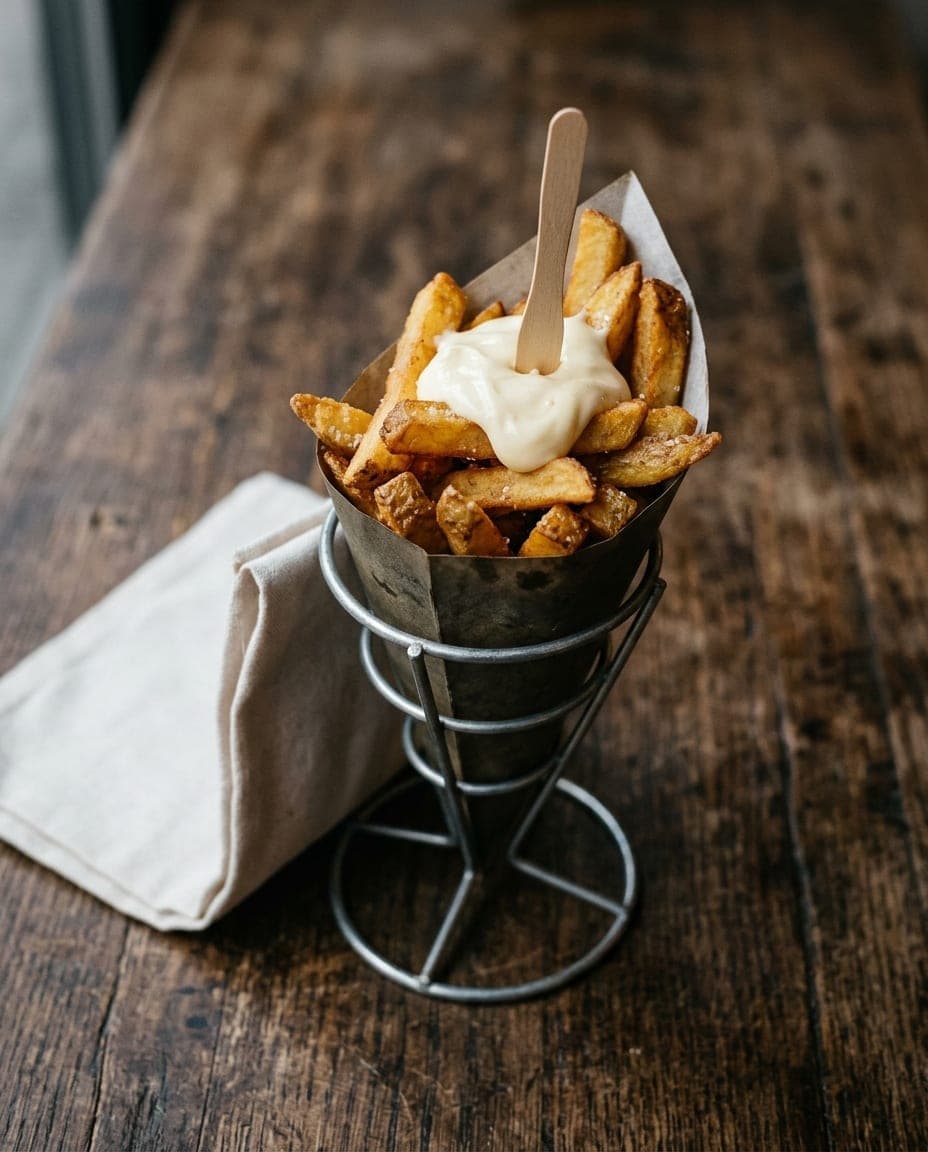
The fries are cut thick so they stand up to dipping. They are traditionally fried twice: the first fry cooks the inside, the second, at a higher temperature, makes the golden crust.
What goes into it
- Mussels: mussels, mostly farmed in the Netherlands and traded through Zeeland, with a small but growing quantity from Belgian waters. French menus also offer moules de bouchot, smaller mussels grown on wooden posts in the tidal zone.
- Aromatics: shallots or onions, celery and parsley; garlic mainly in provençale.
- Liquid: dry white wine or a light beer, or only the mussels' own liquor.
- Dairy: butter for marinière, cream for à la crème.
- Fries: thick-cut potatoes, fried until golden.
- Mayonnaise: a bowl on the side, for the fries.
Around nine in ten mussels eaten in Belgium are imported from the Netherlands, grown in the Oosterschelde in Zeeland and the Wadden Sea. Zeeland also historically supplied the French north, close enough to transport before refrigeration.
How to eat it
The mussels arrive in the pot they were steamed in, often a black enamelled casserole, with the lid turned upside down to hold the empty shells. Diners use one empty shell as a pair of tongs to pick the meat out of the others; a fork is acceptable for those who prefer it. The broth is not wasted: it is spooned up with a shell or soaked up with bread or fries.
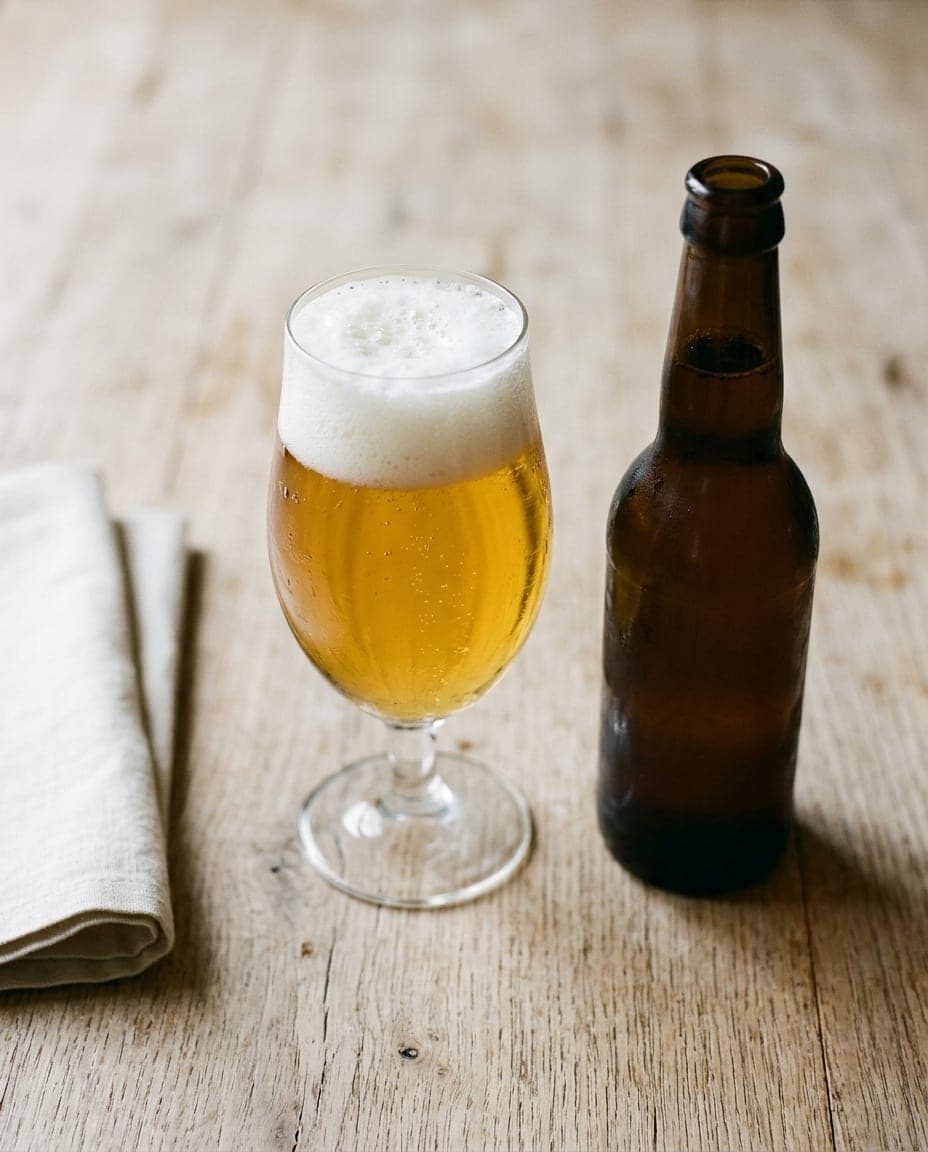
The fries come in a separate dish, so each diner controls the ratio of shellfish to potato, and are dipped in the mayonnaise. A Belgian witbier is the usual glass in Brussels; Muscadet or a cold beer does the same job in the French north, the acidity working against the butter or cream.
The Braderie de Lille
The great spectacle of moules-frites comes during the Braderie de Lille, a giant flea market on the first weekend of September. The city estimates that around 500 tonnes of mussels are eaten over the weekend. Restaurants pile the empty shells in front of their doors, and the height of the heaps has become an unofficial competition. The city says mussels appeared at the fair as early as the 15th century, long before fries joined them. A popular legend claims mussels replaced roast chicken at the fair after a poultry epidemic, but no historical document confirms it.
Curious facts
- The shell tongs. Using one empty shell to extract another is the standard way to eat the dish in Belgium and northern France.
- The shell competition. At the Braderie, restaurants compete informally for the tallest pile of shells.
- A season, loosely kept. The Belgian season runs from roughly early summer to spring, following the Dutch harvest; the old rule of eating mussels only in months with an "r" faded with refrigerated transport.
Where to try it
In Belgium, a traditional Brussels brasserie: neighbourhood taverns, often with dark wood panelling and a menu chalked on a blackboard. The streets around the Grand Place are thick with them, and the difference between one and the next is whether the mussels arrived that morning.
In France, Lille is the obvious place, above all during the Braderie, in city-centre brasseries and the estaminets of the surrounding neighbourhoods. The coast around Dunkirk and the Côte d'Opale offers more.
A kitchen that takes the season seriously will say when it starts. Out of season the pots keep coming, with mussels from further afield, and regulars wait.
Where to try it
2 regions
 Wine Tasting3 destinations
Hauts-de-France
Hauts-de-France is the northernmost region of France, known for its rich industrial heritage, unique cultural blend, and stunning coastal landscapes along the English Channel. Lille, the largest city, boasts vibrant Flemish architecture and a thriving arts scene. The region is the birthplace of French Impressionism, with museums dedicated to renowned artists like Van Gogh. The Somme Valley offers historic World War I sites, while the Opal Coast features breathtaking cliffs and charming fishing villages. Known for its local cuisine, Hauts-de-France is famous for dishes like 'potjevleesch' and 'moules-frites,' providing an authentic taste of the area. Off the beaten path, explore towns such as Arras, with its grand squares, or the serene countryside of the Avesnois Natural Park, rich in biodiversity and picturesque landscapes.
Wine TastingCamper Van RentalsHiking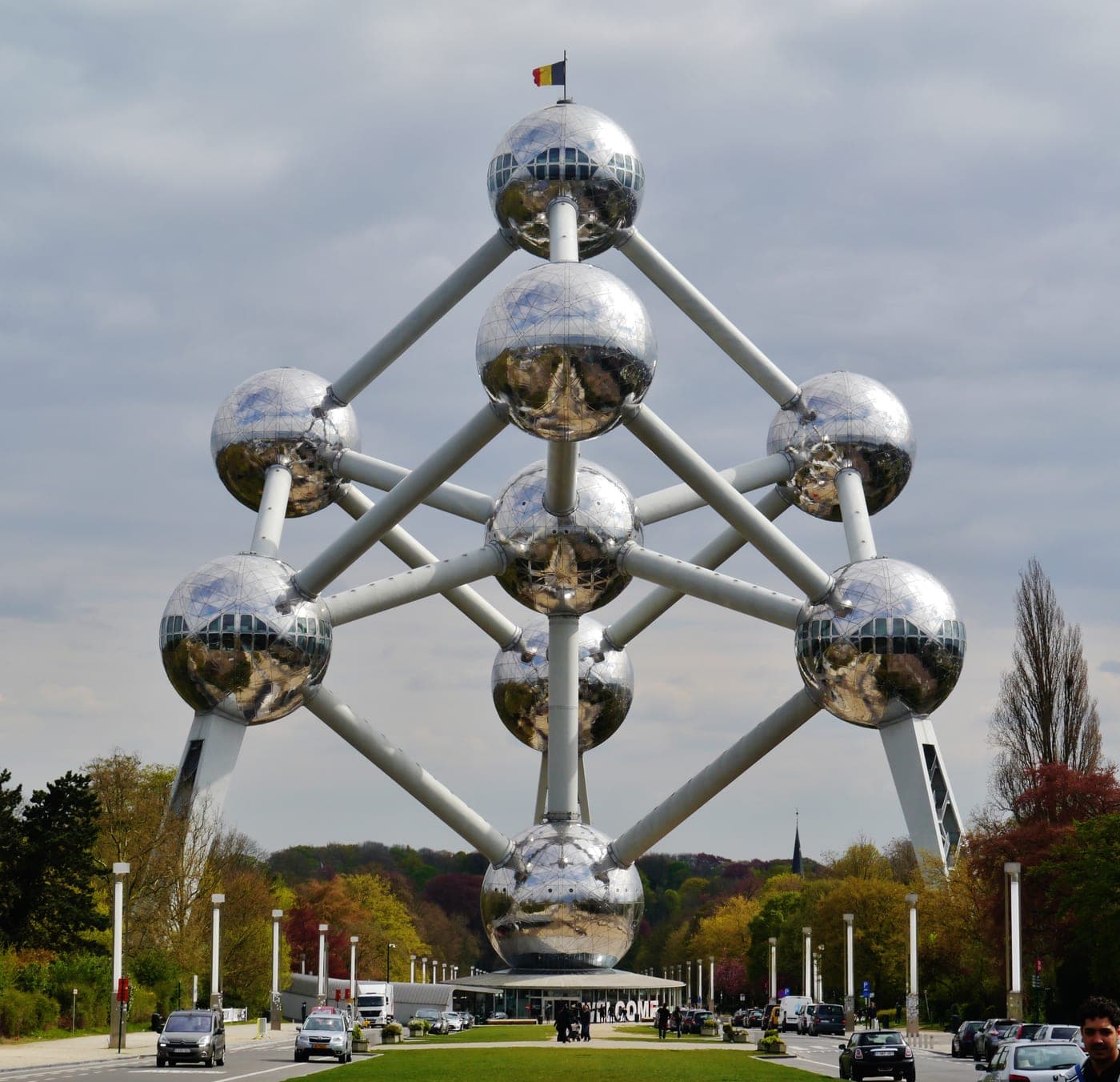 Camper Van Rentals1 destination
Brussels
Brussels sits at the meeting point of French and Flemish Belgium, and that mix shapes everything about how the region feels: two languages on every street sign, two culinary traditions on every menu, and a pace that has never quite caught up with its role as a capital of European institutions. Away from the glass towers of the EU quarter, the older city keeps its own rhythm, built around guild squares, covered arcades, and small bars that have poured the same abbey beers for generations. The Grand Place is the obvious starting point, a market square ringed by gilded guildhalls that once belonged to the city's bakers, brewers, and boatmen. It is a UNESCO World Heritage Site, and even on a busy afternoon the carved facades reward slow looking rather than a quick photo. From here, narrow lanes lead into the Îlot Sacré, where waffle stands sit beside chocolate shops that still temper cacao by hand. Belgian chocolate culture runs deep in Brussels: family-run ateliers sell pralines by weight, and a few keep working display kitchens where the process is part of the shop. Beer is the other constant. Brussels is where lambic and gueuze are still brewed using spontaneous fermentation. Traditional estaminets pour these alongside Trappist and abbey beers, often with a matching cheese or a plate of frites on the side. A few breweries in the city centre still run tours through working cellars, and tasting a gueuze where it is made is a different experience from drinking it anywhere else. Beyond the tourist core, Brussels holds neighbourhoods that reward unhurried wandering. Saint-Géry is now full of small galleries and bars built into old warehouses. The Marolles keeps a flea market running through its cobbled streets, where dealers lay out furniture, glassware, and old postcards each morning. Matongé, the Congolese quarter near Porte de Namur, brings West African fabrics, music shops, and cooking into the same few blocks, a reminder that Brussels' identity is not only Franco-Flemish but genuinely international. Ixelles and Saint-Gilles hold rows of townhouses with curved iron balconies and stained-glass stairwells from the era of architect Victor Horta. Walking these streets without a fixed plan is often how they're noticed, since many of the finest facades sit on quiet residential blocks rather than main avenues. Brussels' long-standing love of comic art shows up in a similar way: painted murals of characters from Belgian comics appear on gable walls across the centre, part of a public trail that turns a walk between neighbourhoods into something like a treasure hunt. The Zenne river, mostly covered over in the nineteenth century, still shapes the city's geography, and the canal that runs north from the centre connects Brussels to Antwerp and the Flemish lowlands beyond it. Along its banks, old industrial warehouses have become galleries, breweries, and weekend markets, giving the canal district a slower, more local feel than the tourist streets around the Grand Place. As a region, Brussels works as a base for exploring the smaller Flemish and Walloon towns that ring it, each with its own guildhalls, beer traditions, and market squares, all reachable within short distances of the capital. Together they form a compact, walkable corner of Belgium where medieval architecture, brewing traditions, and chocolate craft sit within easy reach of one another.
Camper Van RentalsHiking