Limburgse vlaai
A wide fruit tart from Belgian Limburg, shared at funerals and fairs
- Vegetarian
- Local name
- Limburgse vlaai
- Served with
- Coffee
- Best eaten at
- A Limburg bakery or tearoom
- Pairs with
- Coffee
What it is
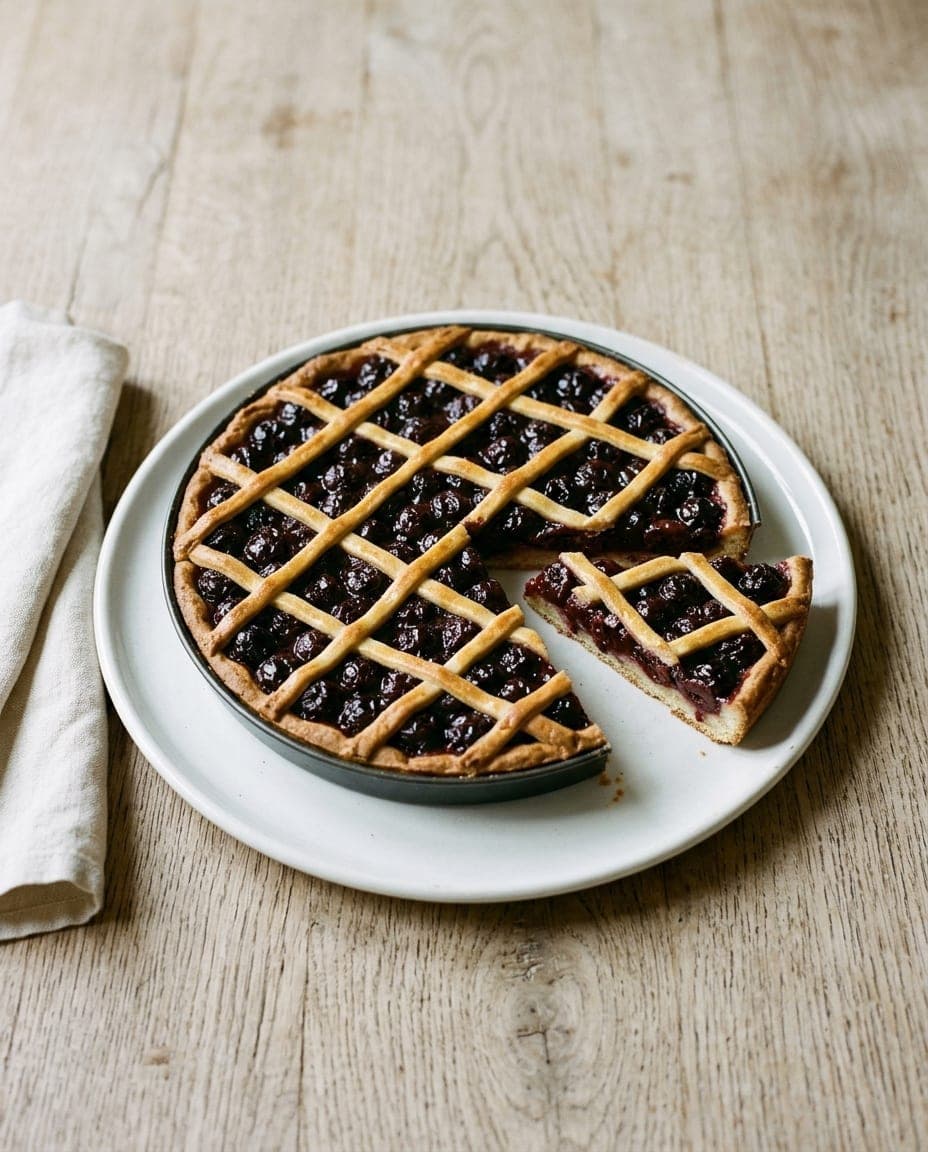
Limburgse vlaai is a wide, flat open tart that defines the pastry culture of Belgian Limburg and the neighbouring Dutch province of the same name. It sits on a base of light yeast dough rather than shortcrust, holding a generous layer of fruit or sweet filling before being finished with either a lattice of dough strips or a crumble topping. The result is a soft, substantial cake that feels more like a shared meal than a delicate confection.
The standard vlaai is large, typically measuring around 26 to 30 centimetres across. This size reflects its purpose: it is made to be cut into wedges and eaten by a group. A single tart belongs to family Sundays, local fairs, and even funeral gatherings in the region. It is not a pastry intended for one person to finish alone.
While the concept of fruit tarts exists across Europe, the specific form of Limburgse vlaai has a distinct identity. The dough rises significantly, creating a soft, bread-like texture that contrasts with the sweet filling. The most famous version features whole or halved cherries, often baked in their own juice to create a syrupy glaze, but apricot, plum, and apple are equally common. Some variations replace the fruit entirely with rice pudding, known as rijstevlaai, while kruimelvlaai is finished with a crumble topping.
Where it comes from
The tradition of the vlaai is rooted in the agricultural history of Limburg, a region that straddles the border between Belgium and the Netherlands. The name itself, vlaai, is used in both Dutch dialects to describe this specific type of open fruit tart. On both sides of the border the pastry has become a regional badge of honour, and since January 2024 the name Limburgse vlaai has been protected as an EU Protected Geographical Indication, reserved for bakers in Belgian and Dutch Limburg.
The early history of the vlaai is uncertain, and the exact moment when the modern form emerged is not documented with a single date; a 19th-century account already describes flat fruit-filled cakes called vlaai being served at Limburg farm feasts. What is clear is that the dish evolved alongside the farming life of the Low Countries. The availability of local orchard fruit provided the filling, while the yeast dough offered a way to preserve and elevate it into something substantial enough for a communal meal.
The vlaai is not merely a sweet treat but a social object. In Limburg, it was traditionally baked at home on farms for celebrations where neighbours would come together, and only moved into local bakeries in the 20th century. The size of the tart ensured that everyone could take a piece home or eat while standing around the table. This tradition persists today, with local bakeries preparing them daily for afternoon coffee breaks.
What goes into it
The construction of a Limburgse vlaai follows a specific pattern that distinguishes it from other fruit tarts. The base is a yeast dough that has been allowed to rise until it is light and airy. This is not a flaky or buttery shortcrust; it is more akin to a soft bread that can hold a heavy load of fruit without becoming soggy.
The filling is the heart of the dish. For the classic cherry vlaai, whole or halved cherries are used, usually pitted. The fruit is usually mixed with sugar and sometimes a splash of water or juice to create a syrup as it bakes. Other popular fillings include apricots, which provide a tart sweetness, or plums that release a deep red juice into the dough.
The topping determines the character of the final slice. A lattice top involves strips of dough woven over the fruit, creating a decorative grid that allows steam to escape while keeping the filling in place. Alternatively, a crumble topping, known as kruimel, is sprinkled generously over the fruit. This mixture of flour, butter, and sugar creates a crunchy, sandy texture that contrasts with the soft dough beneath. Rice pudding versions replace the fruit entirely with a creamy custard base made from rice, milk, and sugar.
How it is eaten
Limburgse vlaai is best enjoyed in the company of others. It is cut into wedges, much like a pizza or a large cake, and shared at a table. The standard accompaniment is coffee. In a Limburg bakery or tearoom, it is common to see customers ordering a slice alongside a black coffee or a milky variant. The sweetness of the pastry complements the bitterness of the coffee.
The timing of consumption is flexible but often tied to specific moments. It is above all an afternoon treat, eaten over koffie en vlaai. On Sundays, families might bake one at home or visit a local bakery to collect a fresh one. At funerals in the region, it is customary for the bereaved family to serve slices of vlaai, traditionally black plum, to guests as a gesture of hospitality and remembrance.
A small fork is usual, but the base is firm enough for a slice to be eaten by hand, though the syrupy filling from cherry varieties can sometimes make them messy. A napkin is always recommended. The texture is soft and yielding, with the fruit bursting gently under the pressure of the bite.
Curious facts
- The size matters. A vlaai is rarely small. The standard diameter of up to 30 centimetres ensures it serves a group, reflecting its role in community gatherings rather than individual snacking.
- Two main toppings. While fruit is essential, the topping varies between a woven lattice of dough or a crumble layer called kruimel, each offering a different texture.
- Rice pudding variant. Not all vlaai contain fruit; the rijstevlaai uses a sweet rice pudding filling, a popular alternative that has been baked for decades in the region.
- Funeral tradition. In Limburg, it is customary to serve vlaai, often black plum, at funerals as a way of welcoming guests and offering comfort during times of loss.
- Cross-border bond. The dish is shared by both Belgian and Dutch Limburg, where the dialects and traditions overlap across the border.
Where to try it
The best place to find an authentic Limburgse vlaai is in a local bakery or tearoom in Belgian Limburg. Bakeries bake them fresh every day, since a vlaai is meant to be eaten the day it is made. Many are small, family-run businesses where the pastry remains a central part of the menu.
The smell of baking yeast and fruit is often enough to guide you. While the dish is available in other parts of Belgium, only bakers in Limburg may sell it under the protected name.
Where to try it
1 destination
 Boat Rentals
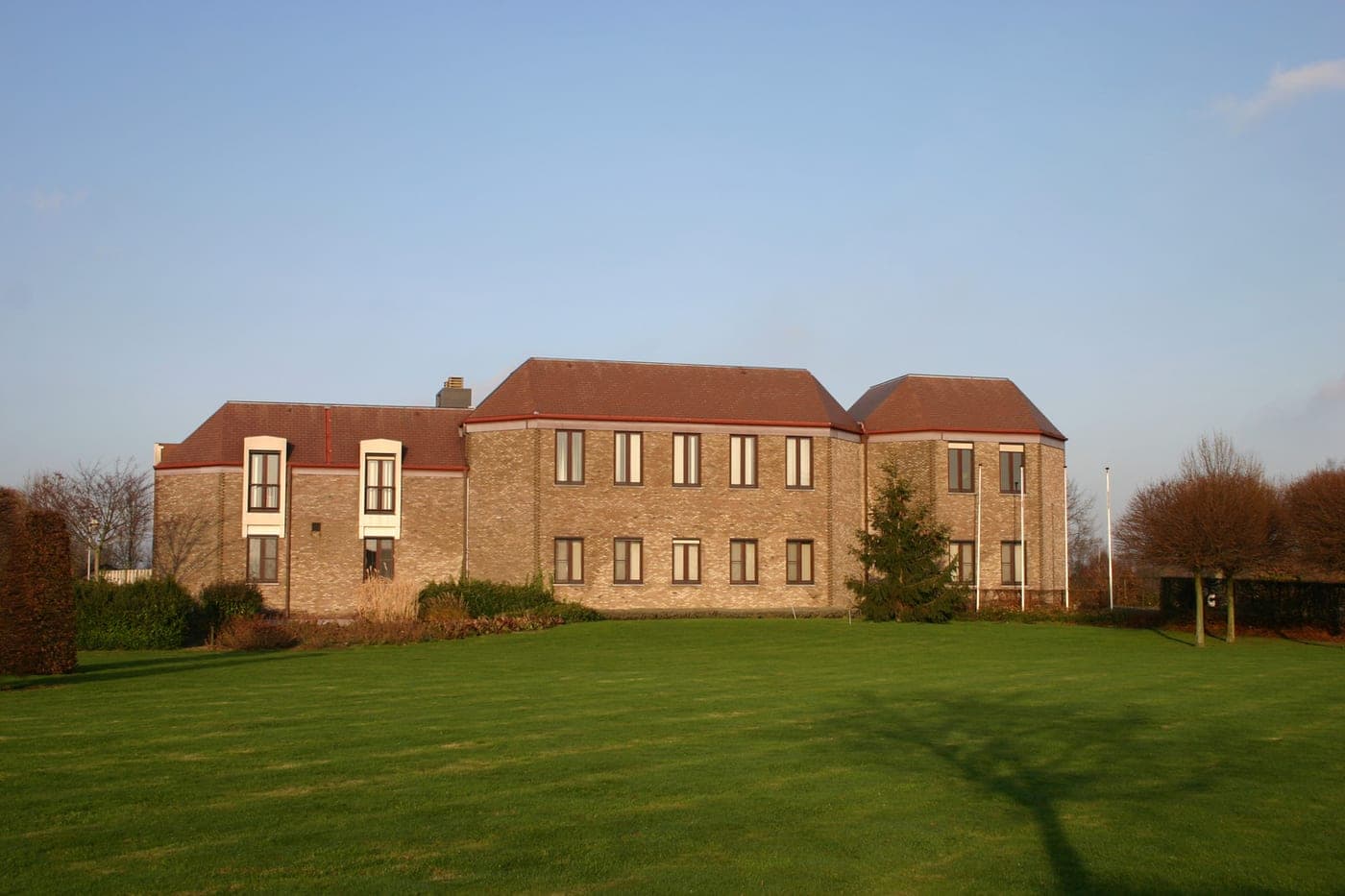
Kinrooi
Maasland village with water recreation, nature reserves, and cycling routes.
Boat RentalsHiking
1 region
 Wine Tasting7 destinations
Flanders
Flanders is the Dutch-speaking region of northern Belgium, and its short distances between towns hide a slow, layered kind of travel. Villages in Flanders and its larger cities share a way of asking for attention: a market square, a belfry, a stretch of canal reflecting brick gables. The pace here rewards stopping, and the region's compact size makes it possible to settle into a handful of places instead of covering ground. The medieval old towns are the backbone of any Flanders itinerary. Ghent carries the largest and least polished of them, its student population keeping the streets lived-in. Bruges is smaller and more carefully kept, its canal loop and lace-making tradition drawing people who want the postcard version of Flanders done well. Antwerp brings energy to the mix: a working port, a Baroque cathedral, a fashion district, and a diamond trade still run on old trust. Mechelen and Leuven sit close to the bigger cities and carry the same belfry-and-canal character at a quieter volume. Flemish painting shaped much of what these cities still show today. Ghent's cathedral holds an early masterpiece of Flemish painting, and Antwerp's museums keep strong collections from the city's own Baroque painters. These works were made for the churches and guild halls that still stand on the same streets, which gives them a different weight than seeing them somewhere unconnected to their making. Beer culture in Flanders runs deep and steady. Trappist monasteries brew to support their communities, following recipes kept inside their own walls for generations, and abbey beers named after those monasteries fill the menus of ordinary town cafés. A brown café in Ghent or Antwerp — dim, wood-panelled, unhurried — is where this culture is actually lived, over a single well-poured glass at a corner table. Chocolate carries a similar seriousness. Family-run chocolatiers in Bruges, Ghent and Antwerp still hand-dip pralines and temper chocolate by hand, and a short exchange with the person behind the counter often teaches more than any shop sign. A small box eaten the same afternoon suits the tradition better than a large one carried home. Flanders' countryside opens quickly beyond the larger cities into flat farmland, poplar-lined canals, and villages that rarely appear on an international itinerary. Damme, close to Bruges along a canal path, holds a windmill, a church and a handful of houses, and needs little more than that. Further south and east, the villages around Ypres carry the memory of the First World War: cemeteries, memorials, and the Last Post sounded each evening at the Menin Gate sit alongside the region's more familiar reputation for beer and lace. The coast changes the rhythm again. Oostende keeps a working fishing fleet and a long promenade, while smaller resorts such as De Haan hold onto early-twentieth-century villas and quiet dunes once summer ends. The flat sand and open sky offer a clear contrast to the cobbled squares and canal reflections inland. Traditions stay visible through the year. Processions, guild festivals, and beer events give each town its own calendar, kept by the community rather than staged for visitors. Slow travel here means choosing depth over distance. The region's small scale makes it tempting to plan a long list of towns, but it holds together better when explored through fewer stops, each one given room to open up: a market square seen at different times of day, a canal walk repeated at dusk, a return visit to the same chocolate shop once the first box runs out. Ghent and Bruges alone hold enough layers — museums, churches, quiet residential streets away from the centre — to fill a visit, and pairing either with a coastal stop or a village like Damme adds contrast without adding rush. Flanders rewards this kind of attention because so much of its character sits just below the surface: a monastery's own beer recipe, a canal town's working history before tourism arrived, a village whose only claim is a windmill and a church that has stood for generations. Most of it opens up only once the rushing stops.
Wine TastingHikingBoat RentalsLocal Cuisine