Gaufre de Bruxelles (Brussels waffle)
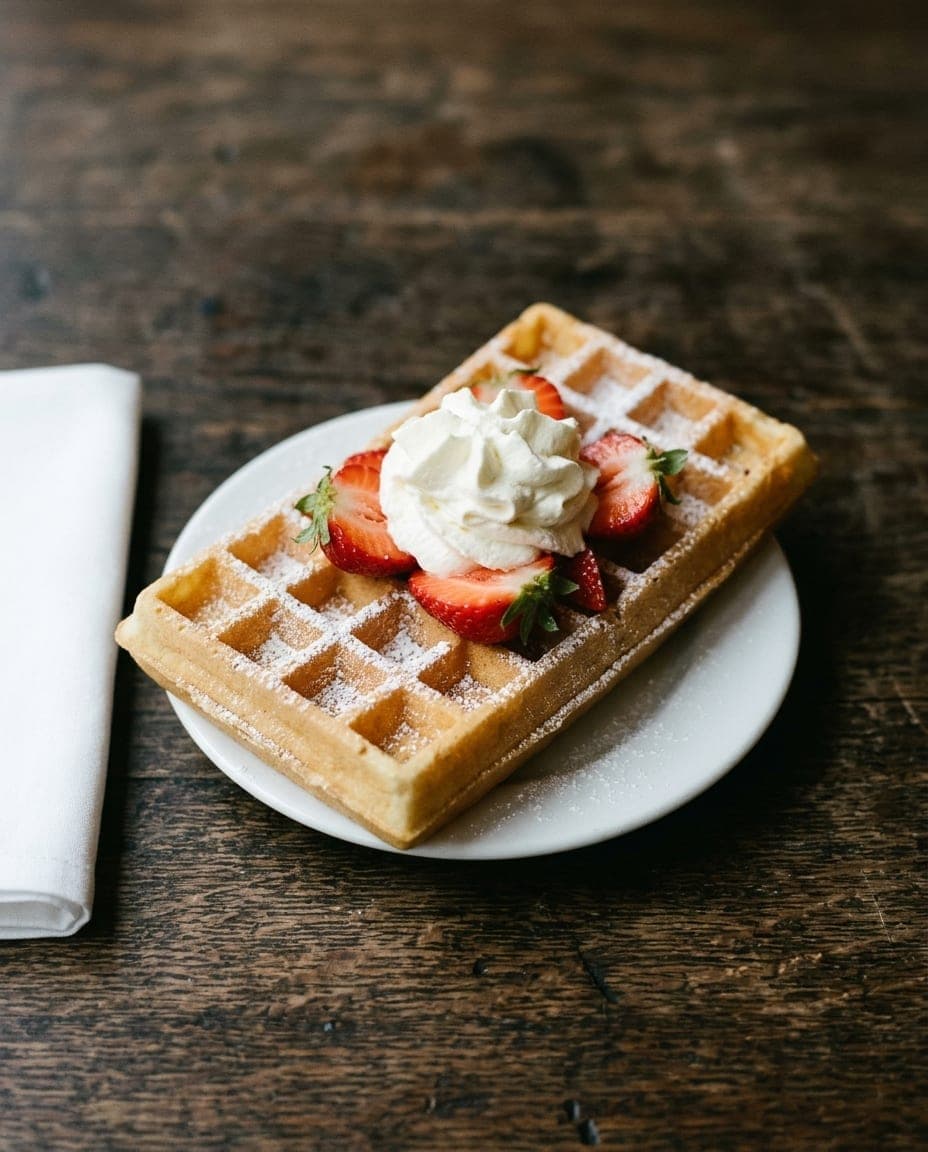
The light, rectangular Brussels waffle served with cream and fruit
- Vegetarian
- Local name
- Gaufre de Bruxelles
- Served with
- Whipped cream, strawberries, icing sugar
- Best eaten at
- A Brussels waffle stand or tearoom
- Pairs with
- Coffee or hot chocolate
The character of a Brussels waffle
The gaufre de Bruxelles, or Brussels waffle, is one of the most recognisable sweet pastries from Belgium, originating specifically from the capital city of Brussels. Unlike its more famous cousin from Liège, this pastry is defined by its lightness and rectangular shape. It is baked in a deep iron that creates large, uniform pockets along the surface, giving it a texture that is crisp on the outside while remaining light and airy inside. The batter is thin and pourable, often leavened with beaten egg whites or yeast, which allows the waffle to rise high without becoming dense.
The result is a pale golden cake rather than a dark, caramelised one. This specific colouration occurs because pearl sugar is not used and the batter contains little or no sugar; instead, the sweetness comes mostly from toppings added after baking. The absence of embedded sugar means the surface does not brown deeply during cooking, preserving a delicate flavour that pairs well with fresh fruit and dairy. It is a pastry designed to be eaten as a treat, often served on a plate at a table rather than held in the hand like street food.
A history of public bakeries
The origins of the gaufre de Bruxelles are tied to the pastry shops and tearooms of 19th-century Brussels. While the exact moment of its invention remains a subject of debate, the name first appears around 1842, when Florian Dacher, a Swiss pastry cook who had learned to make waffles in Brussels, advertised "Grosses gaufres de Bruxelles" at his shop in Ghent. Ghent tradition also credits Maximilien Consael with introducing the waffle at a fair in 1856. The rectangular, deep-pocketed shape itself is far older: similar waffles appear in 16th- and 17th-century Flemish paintings.
By the late 19th century, the dish had become a staple of the city's culinary identity. It appeared on the menus of traditional tearooms that specialised in coffee and pastries. Brussels heritage researchers think it was first a sit-down affair in tearooms, served hot to customers at wooden tables, before it spread to street vendors and funfairs. The tearoom tradition persists today, where the waffle is still associated with the ritual of taking a break in a café rather than rushing through a meal on the go.
The distinction between the Brussels waffle and the Liège waffle has always been clear in Belgian culinary practice. The Liège version uses a denser dough studded with pearl sugar that caramelises as it bakes, creating a chewy, sweet texture. The Brussels waffle, by contrast, relies on a lighter batter and external toppings. Over time, the two styles have become the primary examples of Belgian waffles internationally, yet they remain distinct in their preparation, ingredients, and the way they are consumed.
The construction of the batter
The body of the gaufre de Bruxelles is built from a simple mixture of flour, milk, eggs, butter and salt, with little or no sugar and a leavening agent to ensure its airy structure. The key to its texture lies in the method of incorporating air into the batter. The oldest known recipe, published in 1874, and many traditional ones since call for separating the egg whites from the yolks, beating the whites until they form stiff peaks, and then folding them gently into the rest of the mixture just before baking. This technique introduces bubbles that expand rapidly in the hot iron, creating the high, hollow pockets that define the waffle.
Yeast is another common leavening agent used in Brussels, which adds a subtle fermented flavour and helps the batter rise over a longer period before cooking. The batter itself is quite liquid, resembling a thin pancake mix rather than a thick dough. This fluidity allows it to flow easily into the deep recesses of the iron, ensuring that every pocket is filled and cooked evenly.
The waffle is baked until the exterior turns a pale golden colour. Because there is little or no sugar in the batter to caramelise, the surface does not develop the dark brown crust found on other types of waffles. Instead, it remains light and delicate, providing a neutral canvas for the sweet toppings that follow. The interior is soft and warm, while the exterior offers a gentle crispness that gives way easily when bitten.
How to eat it properly
The gaufre de Bruxelles is traditionally served as a dessert or a sweet snack in a tearoom or café. It arrives on a plate, often still warm from the iron, ready to be topped. The standard accompaniments are generous: a dusting of icing sugar, a mound of freshly whipped cream and a handful of fresh strawberries or other seasonal fruit. Some establishments may offer chocolate sauce or caramel, but the combination of cream and fruit remains the classic choice.
Unlike the Liège waffle, which is often eaten by hand as a street food, the Brussels waffle is designed for use with a fork. The deep pockets hold the toppings securely, allowing the diner to cut into the waffle without it crumbling. It is common to see customers seated at a table in a tearoom, taking their time to enjoy the pastry alongside a cup of coffee or hot chocolate. The structure of the waffle encourages a slower pace of eating, fitting for a leisurely afternoon break.
The serving style reflects its status as a sit-down treat. In traditional Brussels tearooms, the waffle is placed on a ceramic plate, often accompanied by a small bowl for the cream or a separate dish for the fruit. The presentation is simple but elegant, highlighting the contrast between the pale waffle and the white cream or red berries. It is not a dish meant to be rushed; it invites the diner to savour the texture and the balance of flavours.
Where to find it in Brussels
The waffle is sold across Belgium, but it is bound up with the capital's culinary culture.
A typical setting is a small tearoom with wooden tables and mirrors on the walls, where the air smells of roasted coffee and baking batter. These establishments often have a reputation for serving the waffle fresh from the iron, ensuring that the texture is perfect when it reaches the table.
While the waffle can be found in other parts of Belgium, its true home remains Brussels. In the city, it is common to see waffle stands near tourist areas, but the most authentic experience comes from a sit-down establishment where the waffle is prepared with care. The tearooms often serve other local pastries alongside the waffle, creating a menu that reflects the broader culinary traditions of the capital.
Curious facts
- The shape matters. The rectangular form with straight edges and uniform pockets is the primary visual difference from the irregular, rounded Liège waffle, which is made with a denser dough.
- No embedded sugar. Unlike other Belgian waffles, the batter contains no pearl sugar and little or no sugar at all, meaning the sweetness comes mostly from the icing sugar, cream and fruit added after baking.
- A fork is standard. Because the deep pockets hold toppings securely, the waffle is typically eaten with a fork at a table rather than by hand as street food.
- Leavening varies. The light texture is achieved either through beaten egg whites or yeast, creating a light, airy interior.
- A capital speciality. While known globally as "the Belgian waffle" (a name popularised in the US at the 1964 New York World's Fair), the specific style of the gaufre de Bruxelles is a distinct product of Brussels and its traditional tearooms.
Where to try it
To taste the gaufre de Bruxelles in its most authentic form, visit a traditional tearoom in central Brussels.
Where to try it
1 destination
 Camper Van Rentals
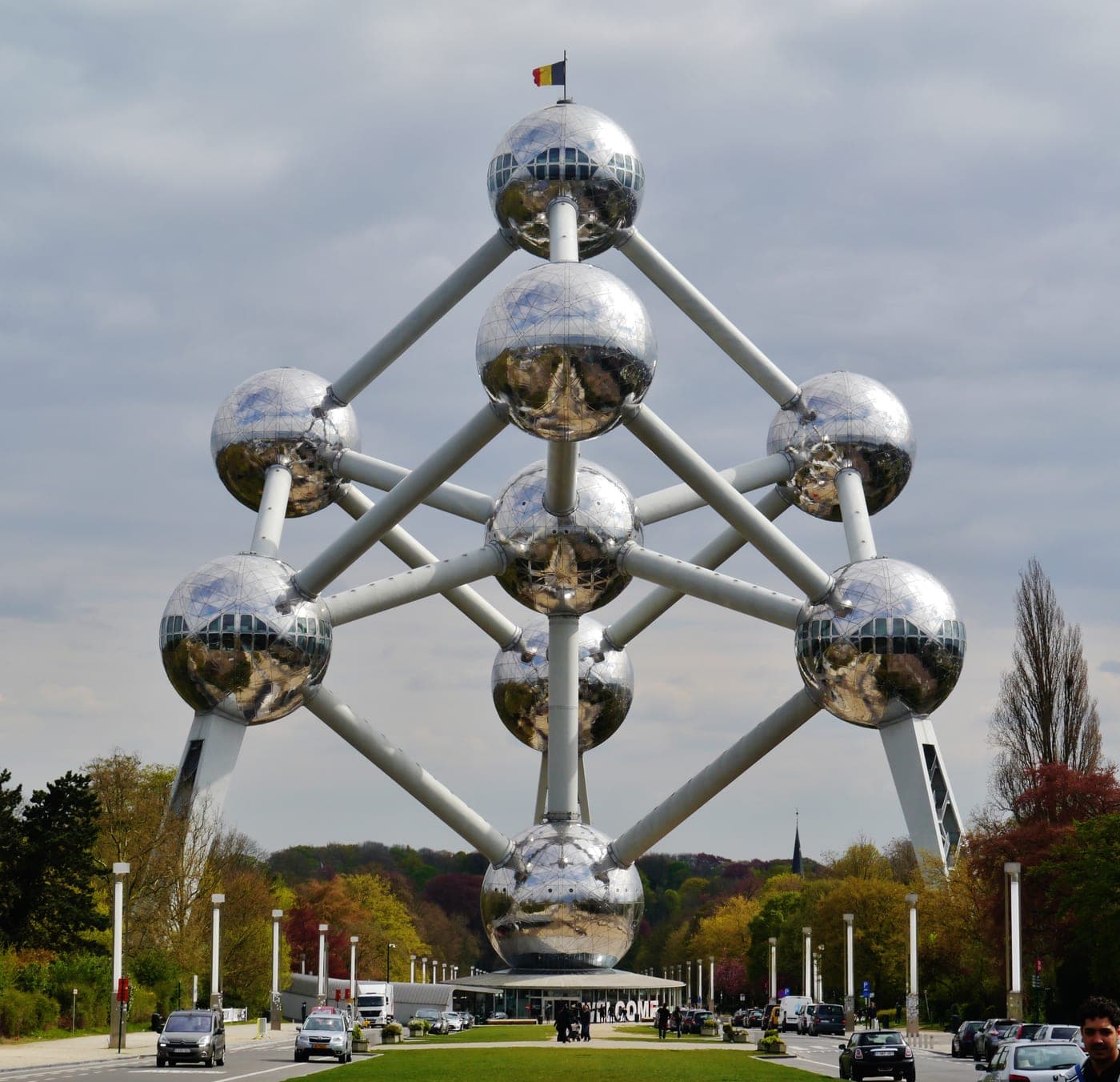
Brussels
Belgium's capital with Grand Place, Art Nouveau, chocolate, and EU institutions.
Camper Van RentalsHiking
1 region
- Camper Van Rentals1 destination
Brussels
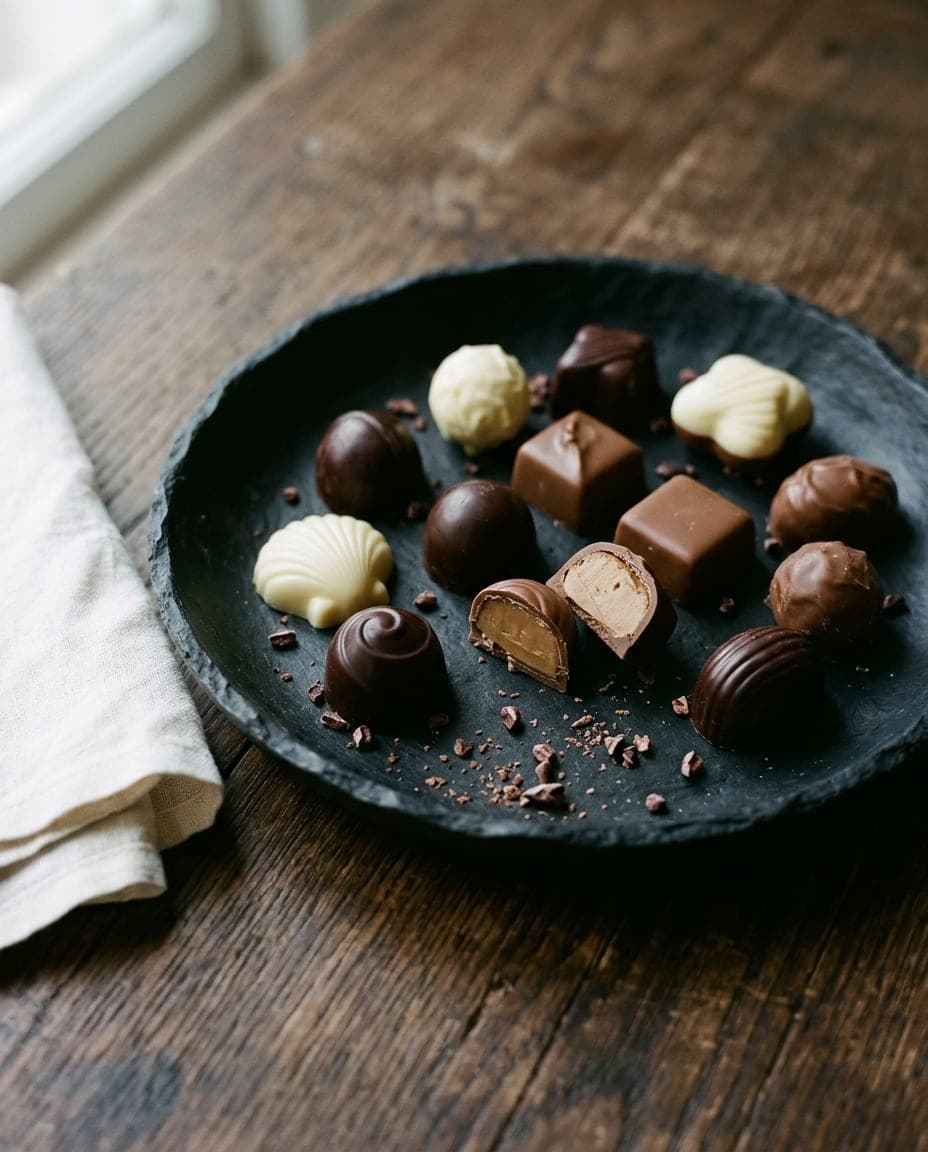
Brussels sits at the meeting point of French and Flemish Belgium, and that mix shapes everything about how the region feels: two languages on every street sign, two culinary traditions on every menu, and a pace that has never quite caught up with its role as a capital of European institutions. Away from the glass towers of the EU quarter, the older city keeps its own rhythm, built around guild squares, covered arcades, and small bars that have poured the same abbey beers for generations. The Grand Place is the obvious starting point, a market square ringed by gilded guildhalls that once belonged to the city's bakers, brewers, and boatmen. It is a UNESCO World Heritage Site, and even on a busy afternoon the carved facades reward slow looking rather than a quick photo. From here, narrow lanes lead into the Îlot Sacré, where waffle stands sit beside chocolate shops that still temper cacao by hand. Belgian chocolate culture runs deep in Brussels: family-run ateliers sell pralines by weight, and a few keep working display kitchens where the process is part of the shop. Beer is the other constant. Brussels is where lambic and gueuze are still brewed using spontaneous fermentation. Traditional estaminets pour these alongside Trappist and abbey beers, often with a matching cheese or a plate of frites on the side. A few breweries in the city centre still run tours through working cellars, and tasting a gueuze where it is made is a different experience from drinking it anywhere else. Beyond the tourist core, Brussels holds neighbourhoods that reward unhurried wandering. Saint-Géry is now full of small galleries and bars built into old warehouses. The Marolles keeps a flea market running through its cobbled streets, where dealers lay out furniture, glassware, and old postcards each morning. Matongé, the Congolese quarter near Porte de Namur, brings West African fabrics, music shops, and cooking into the same few blocks, a reminder that Brussels' identity is not only Franco-Flemish but genuinely international. Ixelles and Saint-Gilles hold rows of townhouses with curved iron balconies and stained-glass stairwells from the era of architect Victor Horta. Walking these streets without a fixed plan is often how they're noticed, since many of the finest facades sit on quiet residential blocks rather than main avenues. Brussels' long-standing love of comic art shows up in a similar way: painted murals of characters from Belgian comics appear on gable walls across the centre, part of a public trail that turns a walk between neighbourhoods into something like a treasure hunt. The Zenne river, mostly covered over in the nineteenth century, still shapes the city's geography, and the canal that runs north from the centre connects Brussels to Antwerp and the Flemish lowlands beyond it. Along its banks, old industrial warehouses have become galleries, breweries, and weekend markets, giving the canal district a slower, more local feel than the tourist streets around the Grand Place. As a region, Brussels works as a base for exploring the smaller Flemish and Walloon towns that ring it, each with its own guildhalls, beer traditions, and market squares, all reachable within short distances of the capital. Together they form a compact, walkable corner of Belgium where medieval architecture, brewing traditions, and chocolate craft sit within easy reach of one another.
Camper Van RentalsHiking