Wiener Saftgulasch
Beef, onions and nothing to thicken it
- Local name
- Wiener Saftgulasch
- Served with
- Semmel roll, gherkin
- Best eaten at
- A Viennese Beisl
- Pairs with
- Austrian Märzen beer
What it is
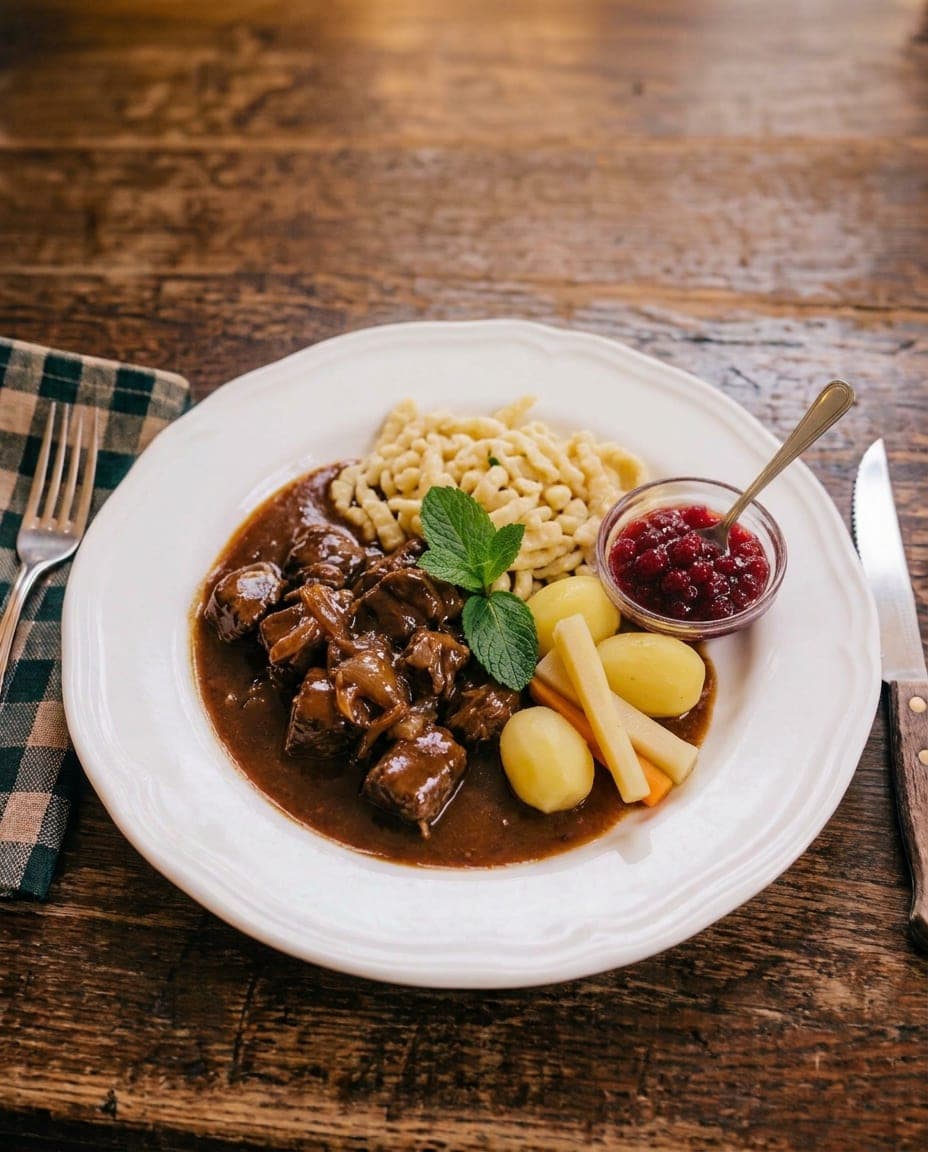
Wiener Saftgulasch is one of the defining meat dishes of Vienna. It is not merely a goulash but a specific regional interpretation that distinguishes itself from the soups of Hungary. The dish consists of beef cut into cubes, cooked slowly with an equal weight or even more of onions until the vegetables have completely dissolved into a dark, glossy sauce. This liquid, known as Saft, is the true heart of the meal. Unlike many stews where flour acts as a thickener, this version relies entirely on the broken-down onions to create a texture that clings to the meat.
It is milder than a Hungarian goulash and far thicker in the body. It comes in a deep plate with a Semmel, the Viennese white roll, and usually a gherkin. The roll is cutlery rather than a side: the sauce is the reason for the dish and none of it is left.
Where it comes from
The roots of this dish lie in the culinary exchange between Vienna and Hungary under the Habsburgs; a Viennese cookbook printed a Hungarian-style goulash recipe as early as 1827. While the concept of goulash originated as a herder's soup in Hungary, known as gulyás, the Viennese adaptation evolved into something distinct. Over the 19th century, in the city's kitchens, it shifted from a thin broth to a thick, meat-centric stew — closer to what Hungarians call pörkölt.
In Vienna it settled into the Beisl, the neighbourhood taverns, where it is cooked in quantity and kept. Hungarians will point out, correctly, that what Vienna calls goulash is not what the word means in Hungary; the Viennese version is a separate dish that kept the name.
How it is made
The preparation focuses on patience rather than complex techniques. Beef cubes are layered with a generous amount of chopped onions and cooked over low heat for an extended period. Sweet paprika provides the colour and the primary flavour, while marjoram and caraway add depth. A splash of vinegar sharpens it and a little tomato goes in for colour and acidity.
The critical element is the onion. It must be cooked until it melts into the meat, creating a dark, glossy sauce that coats every piece of beef. This Saft should be thick enough to hold its shape when the plate is tilted, yet fluid enough to soak into the bread. No flour and no cornflour go in; the body is the onions and nothing else. It is cooked in quantity because it is better on the second day, which Viennese cooks say openly rather than apologising for.
How to eat it
In a Beisl, at a wooden table, with the gherkin on the side of the plate. The roll is torn rather than cut, and used to clear the sauce — some dip it straight into the plate, which nobody minds. A Märzen, Austria's everyday malty lager, is the standard drink with it.
Variations exist that reflect the city's history. A Fiakergulasch is a specific version served with a frankfurter sausage, a fried egg and a fanned gherkin on top. This variant is named after the drivers of Vienna's horse-drawn cabs, the Fiaker, who are said to have needed a hearty meal to sustain their long shifts. The addition of the egg and sausage turns the dish into an even more filling affair, suitable for a cold morning or a heavy evening.
Curious facts
- The onion is the thickener. Unlike many stews that use flour or cornstarch, the sauce relies entirely on onions cooked until they dissolve into the meat.
- Better the next day. Viennese cooks openly state that the flavour improves after standing overnight, which is why many kitchens cook it a day ahead.
- It is not strange at breakfast. A plate of goulash in the morning, often as a soup, is a normal order in Vienna on a cold day.
- The Fiaker connection. The Fiakergulasch variant, topped with a sausage and egg, takes its name from Vienna's horse-cab drivers.
- Not Hungarian soup. While it shares a name with the Hungarian gulyás, the Viennese version is a thick stew rather than a soup, reflecting the empire's culinary evolution.
Where to try it
A Beisl in one of the residential districts, on a quiet street near a tram line, where the menu is short and the goulash has been on the stove since morning. The telling detail is the sauce: if it is glossy and clings to the meat, the onions were given their hours. If it looks thickened, they were not.
Where to try it
1 region
 Camper Van Rentals1 destination
Vienna
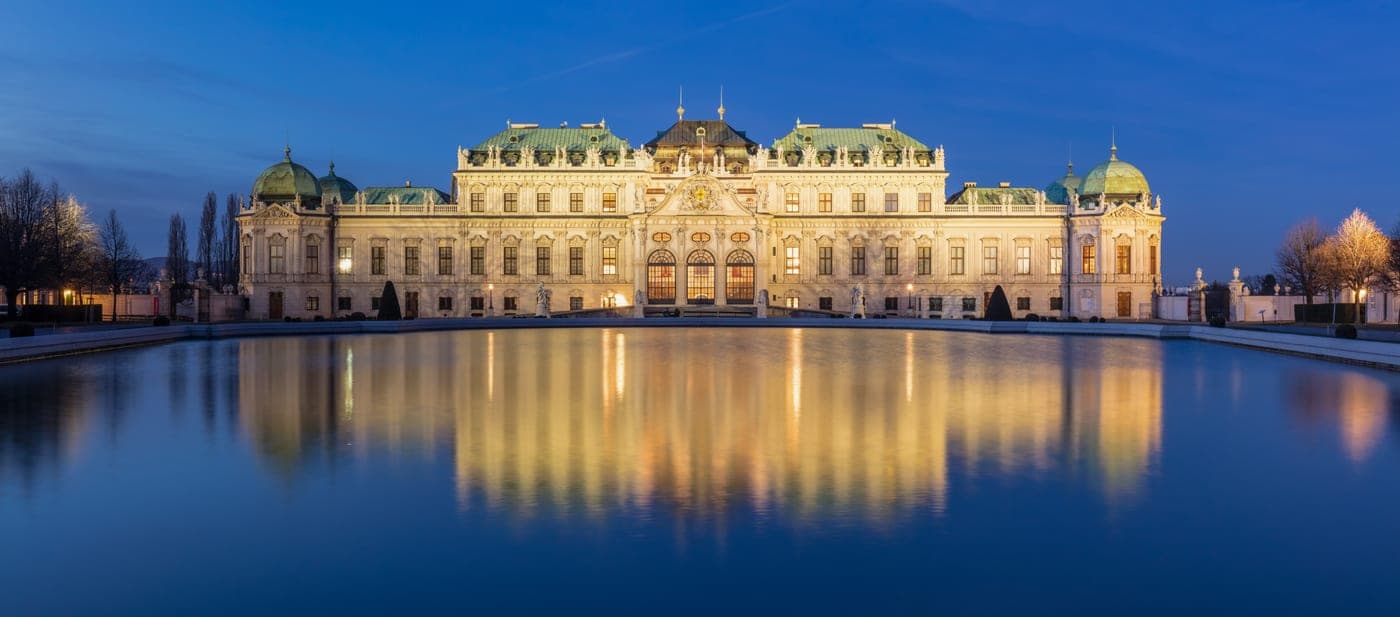
Vienna stands out as Austria's capital, rich in history and culture. This vibrant city is renowned for its classical music heritage, featuring composers like Mozart and Beethoven. The historic center, a UNESCO World Heritage site, showcases stunning architecture ranging from Gothic to Baroque. Beyond the mainstream attractions, explore the lesser-known neighborhoods like Margareten and Favoriten, where local markets and authentic eateries thrive. The city's coffee house culture, a UNESCO Intangible Cultural Heritage, invites you to savor traditional pastries. For nature lovers, the Vienna Woods offer picturesque hiking trails. This capital is an exciting blend of imperial history and modern creativity.
Camper Van RentalsWine TastingHiking