Wachauer Marillenschnaps
Clear apricot brandy from the terraced Wachau valley
- Alcoholic
- Local name
- Wachauer Marillenbrand
- Served
- Neat, as a digestif
- Best eaten at
- A Wachau Heuriger
- Pairs with
- Apricot desserts
What it is
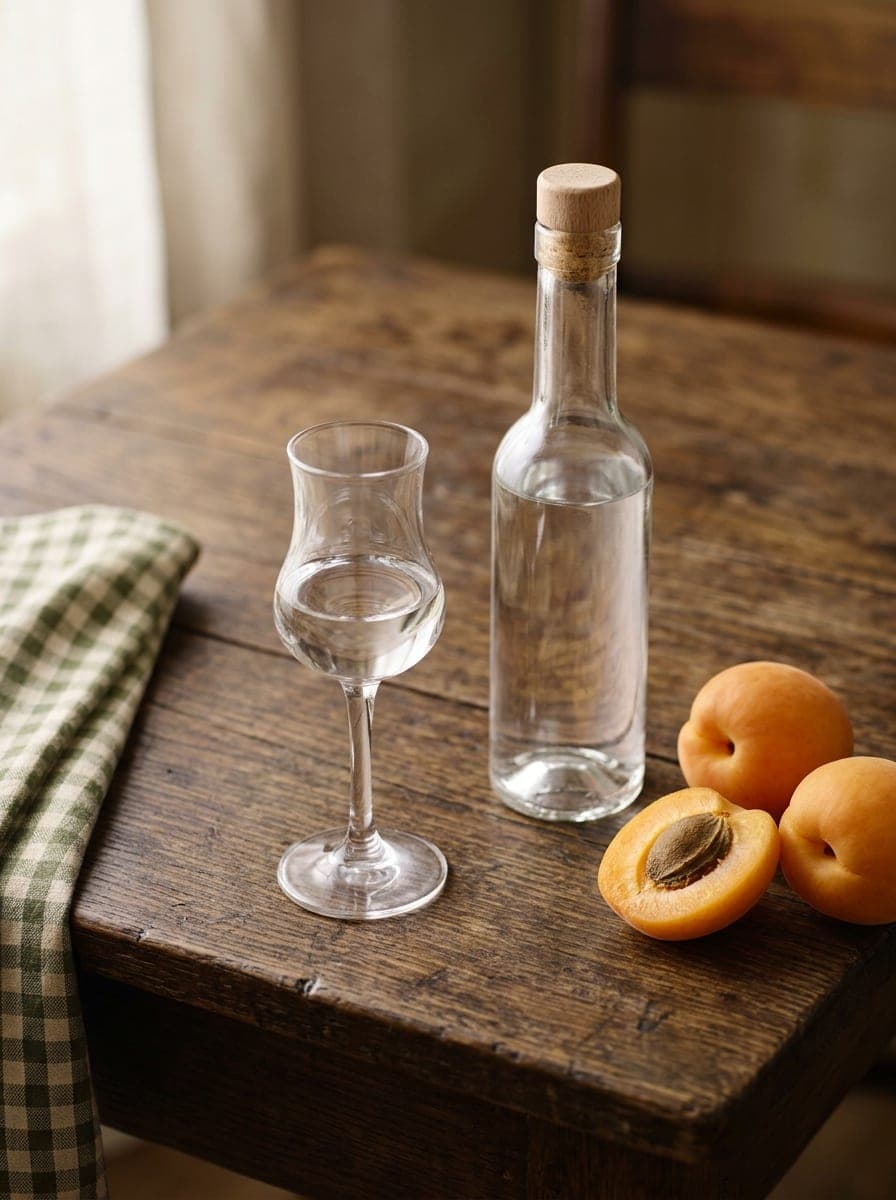
Wachauer Marillenschnaps is a clear spirit distilled exclusively from the apricots of the Wachau, a narrow stretch of the Danube valley in Lower Austria. It is not a sweet liqueur where fruit is steeped in alcohol; it is a true Schnaps, created by fermenting the fruit and then distilling the resulting liquid until only the essence remains. The result is a colourless spirit with an intense aroma of fresh apricots, often described as floral and honeyed, yet dry on the palate.
The fruit is the Wachauer Marille — not a single variety but a protected designation of origin covering the apricots (mostly the Klosterneuburger) of this stretch of the Danube. The spirit is protected too: as Wachauer Marillenbrand it is an EU-registered geographical indication, which means Wachau apricots only, distilled within the region, with the distillery named on the label — and a grower will say whose trees they came from.
The valley is terraces — vines above, fruit below — on both banks of the Danube between Melk and Krems an der Donau. The apricot trees in it number around a hundred thousand. They flower early, from late March into April, and the fruit is picked from mid-July into August.
How it is made
The apricots are small and thin-skinned, and for Schnaps they are picked riper than for the market — soft fruit ferments better. They are usually stoned and then crushed, flesh and skin together; where some stones are left in, they are handled gently, and their kernels leave a faint almond note behind the fruit.
The mash ferments for a few weeks, then goes through a small copper still — a simple pot, or one with a short rectifying column — in which the distiller cuts away the heads and the tails and keeps the middle. No colour is added, sugar only up to a trace the rules allow, and the spirit comes off clear as water. Many Wachau farms distil their own, which is why two bottles from neighbouring villages taste different.
Where it is served
The most appropriate setting for Wachauer Marillenschnaps is the Heuriger, a traditional wine tavern found throughout the Wachau and surrounding areas. These are simple establishments, often run by the vintners themselves, where new wine is served alongside local snacks. In this context, the Schnaps is not an aperitif but a digestif. It arrives in a small glass, served cool but not ice-cold, after the main meal has concluded.
It is drunk neat, and the aroma is most of it: a good one smells strongly of fresh apricot and tastes dry, with the fruit arriving as scent rather than sweetness. In the valley it is the thing that follows a plate of Marillenknödel, the apricot dumplings of the same orchards.
Curious facts
- Not sweetened. Unlike apricot liqueurs, a true Marillenbrand is not sweetened (the rules allow only a trace of sugar); any impression of sweetness comes from the aroma of the fruit.
- Stones, mostly out. The fruit is usually stoned before mashing; where some stones stay in, they put a faint almond note behind the fruit.
- It takes a lot of fruit. Distillers reckon on roughly ten kilos of apricots or more for a litre of spirit, which is why a bottle costs what it does.
- Farmhouse production. Many distilleries in the Wachau are small family operations that only produce enough Schnaps for their own consumption and local sale.
- One harvest, one chance. The apricots ripen unevenly over a few weeks from mid-July and are picked by hand in several passes, so a distiller's whole year is decided in that short window.
- Fruit and spirit are both protected. Wachauer Marille carries a protected designation of origin, and Wachauer Marillenbrand is a registered geographical indication for spirits.
Where to try it
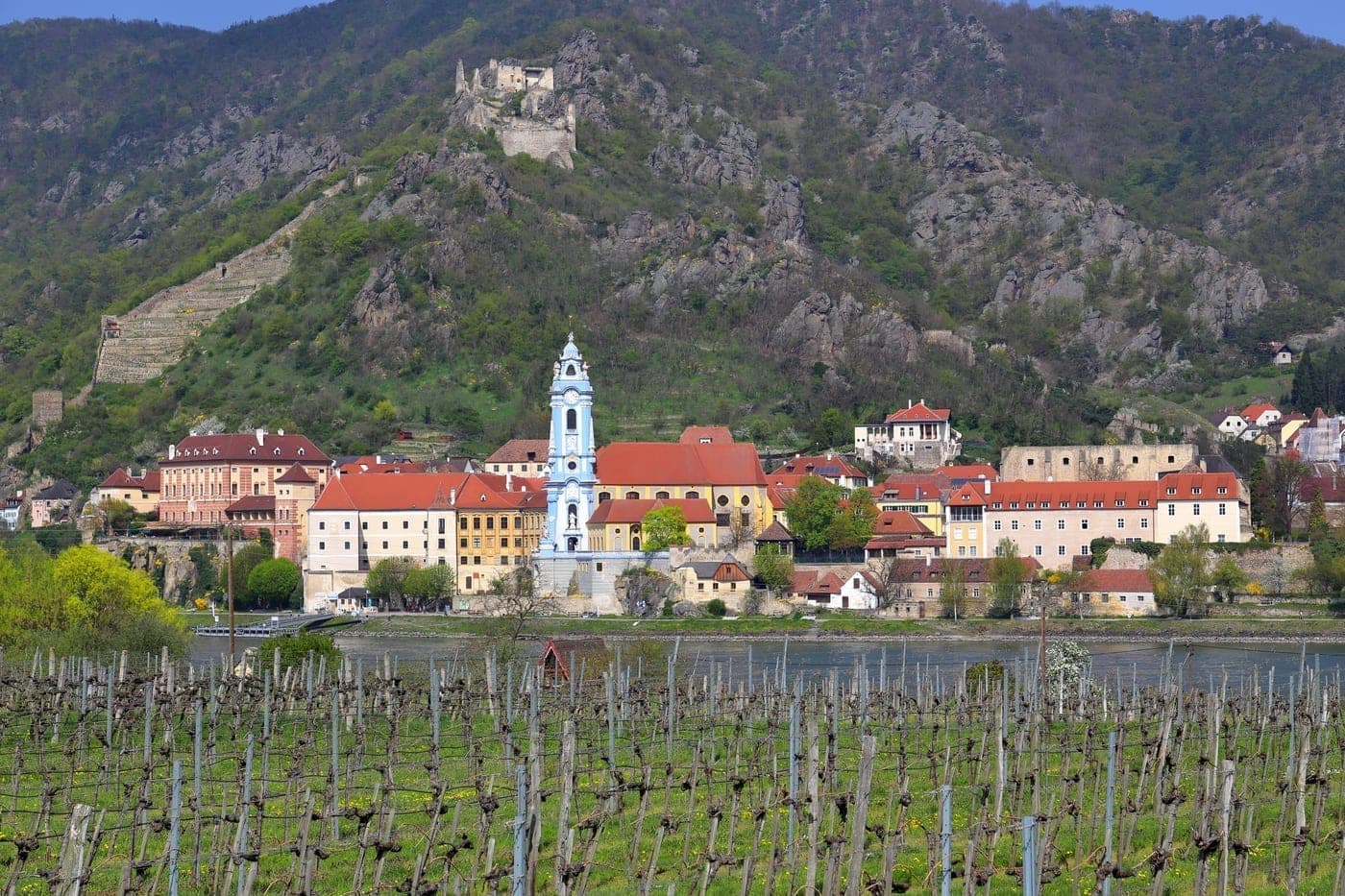
The Wachau villages along the Danube — Dürnstein and its neighbours — where a Heuriger or a farm with a still will have its own on the shelf, and where the person pouring it generally grew the fruit. Many farms sell bottles at the gate alongside jam and dried apricots.
July and August are the apricot season in the valley, though the Schnaps on the shelf then is from an earlier year: distilling follows the fermentation, and a spirit is bottled months after the fruit came off the tree.
Where to try it
1 destination
 Wine Tasting
Dürnstein
Iconic Wachau town with medieval castle ruins and world-class wines.
Wine TastingCastlesHikingLocal Cuisine
1 region
 Wine Tasting175 destinations
Lower Austria
Lower Austria is the largest province in Austria, known for its diverse landscapes that include rolling vineyards, historic towns, and the Danube River. The region boasts notable sites like the picturesque Wachau Valley, famous for its apricot orchards and terraced vineyards. Krems and Dürnstein are charming towns that offer a glimpse into the region's medieval past, while the vibrant city of St. Pölten serves as the provincial capital. Lower Austria is also home to several castles, such as Schloss Grafenegg, and natural parks like the Thayatal National Park, which provide opportunities for hiking and exploring local flora and fauna. This area is rich in wine culture, particularly known for Grüner Veltliner and Riesling varieties, drawing wine enthusiasts to its many wineries. The blend of nature, history, and gastronomy makes the province a fascinating destination for those looking to explore Austria beyond the usual tourist routes.
Wine TastingHikingThermal SpasLocal Cuisine