Tiroler Graukäse
A cheese made without rennet, and eaten with vinegar
- Vegetarian
- Local name
- Tiroler Graukäs
- Served with
- Vinegar, oil, onion, dark bread
- Best eaten at
- A Tyrolean alpine hut
- Pairs with
- Schnapps or lager
What it is
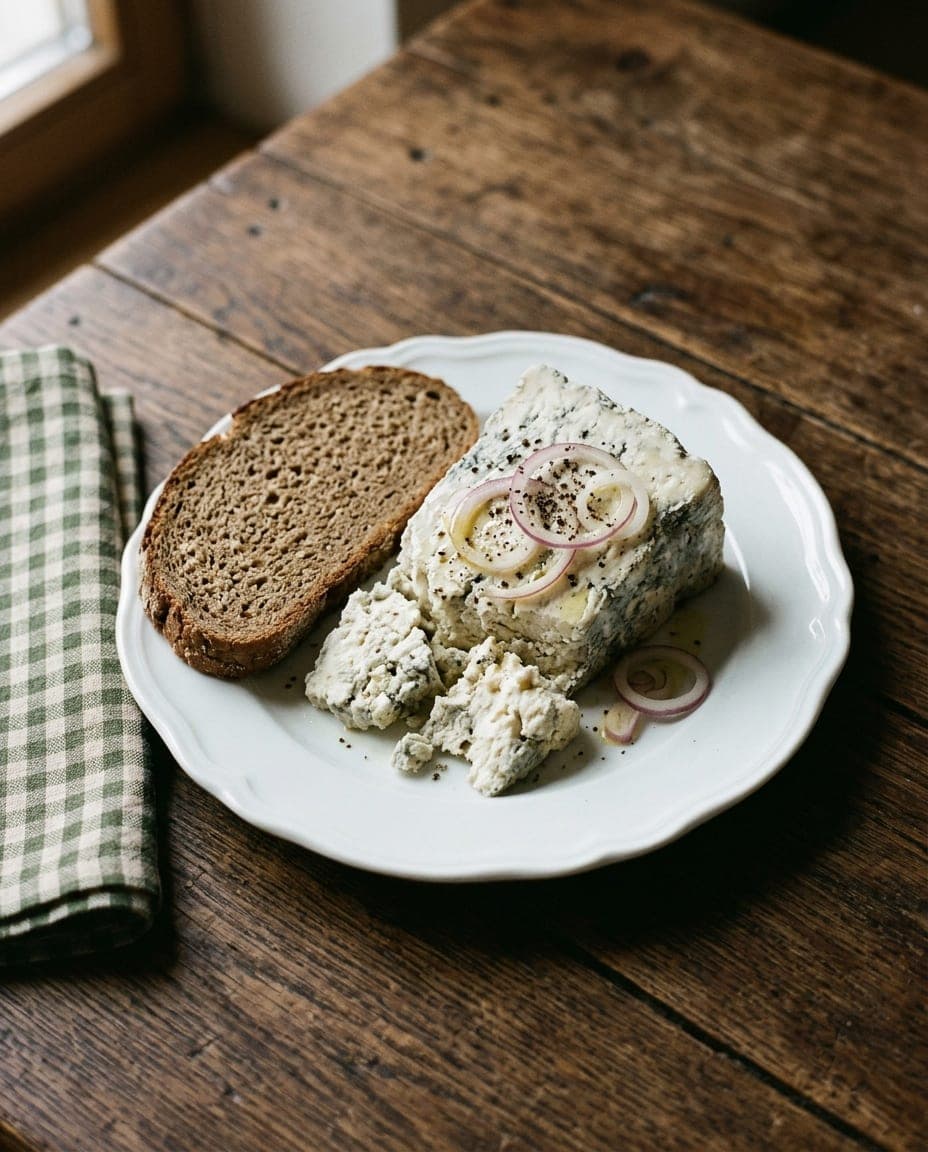
Tiroler Graukäse — Graukäs in the valleys where it is made — is a cheese from the Tyrolean side valleys, and one of the strangest things in Austrian dairying. It comes as small loaves or bars of one to four kilos, with a thin grey-blue to grey-green rind on the outside that gives the cheese its name.
The texture is crumbly rather than creamy, and the flavour is sharp, tangy and intense. It belongs to the category of sour-milk cheeses, made from skimmed milk that has been soured using lactic acid bacteria instead of rennet. This technical detail sets it apart from the rennet-set mountain cheeses that dominate Alpine dairying. The result is a very low-fat product, born from the practice of skimming cream for butter and then using the remaining milk to make cheese.
How it is made
Tiroler Graukäs was long a farmhouse and alpine-pasture cheese; today it is made year-round, mostly in valley dairies. The skimmed milk is soured with lactic acid starter cultures. Because the milk has been skimmed, the fat content remains extremely low. The curds are then gently pressed into small, flat rounds and left to ripen.
It develops its character from the outside in. As it ages, a grey-blue mould grows on the surface, giving the cheese its name and a strong, pungent aroma. A young cheese is crumbly with a pale, curd-like core; as it ripens the interior turns yellowish and smoother. The sharpness of the taste increases with time, making older wheels significantly more potent than fresh ones.
How it is eaten
The most traditional way to eat Tiroler Graukäs is raw and dressed as a simple starter or snack. The plainest way is on farmhouse bread with a little butter. The other classic is saurer Graukäs: the cheese is sliced or crumbled into a bowl and mixed with vinegar, oil and thin slices of raw onion. The sharp acidity of the vinegar cuts through the intensity of the cheese, while the oil softens the texture. This mixture is eaten with dark rye bread or dense mountain loaves, which provide a sturdy base for the bold flavours.
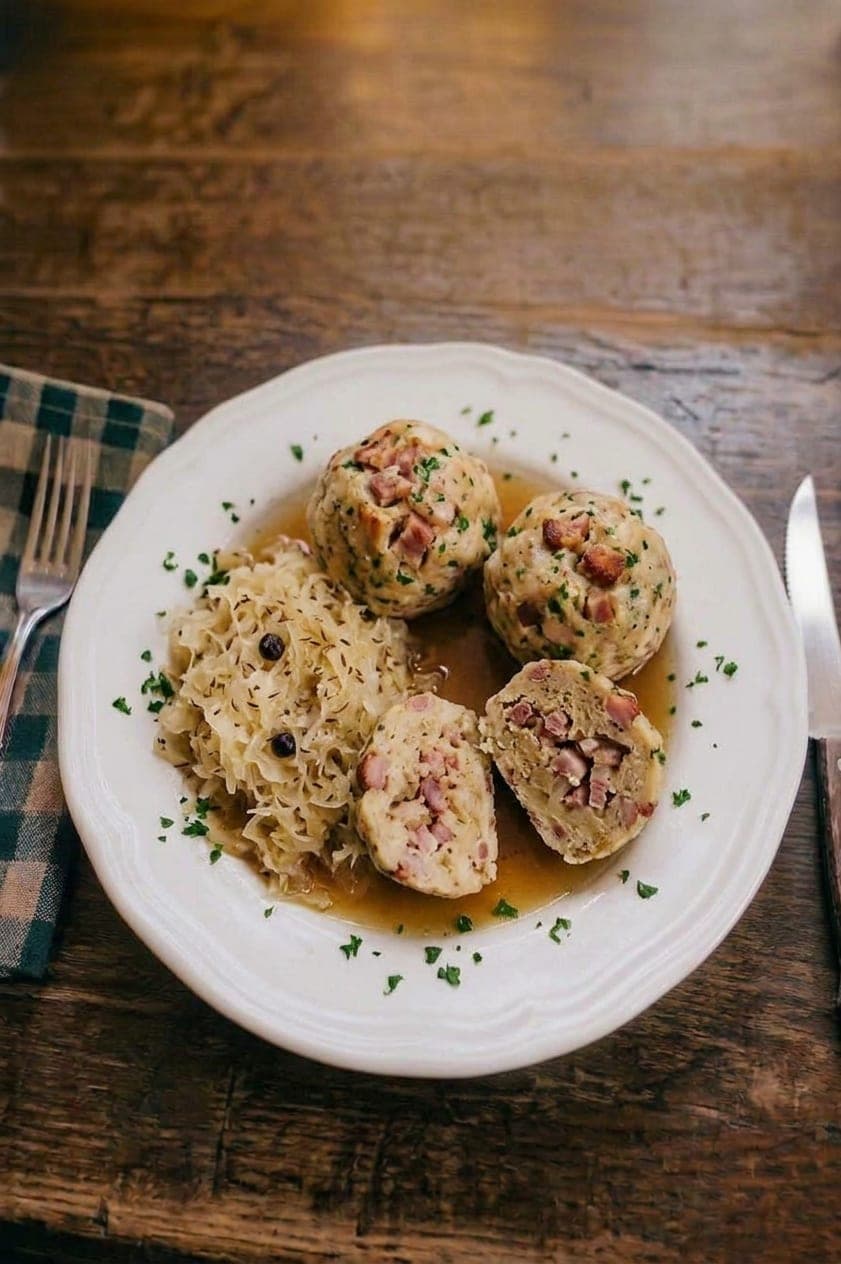
In winter, the cheese finds another home in Kaspressknödel, the fried cheese dumplings that are a staple of Tyrolean cuisine. Graukäs is mixed into the bread dough, which is pressed into flat patties and pan-fried until golden. The sharpness of the cheese remains distinct even when cooked, offering a warm contrast to the cold alpine air.
A clear Schnaps or a lager is what is usually put beside it.
Where it comes from
The cheese is the end of a chain that starts with butter. A farm skimmed the cream off the milk to churn, and what was left was thin, almost fatless milk that still had to be turned into food; souring it and pressing the curd was the answer, and Graukäse is what that answer tastes like. It is strongly associated with the Zillertal and the Inn valley, and since 1996 it has carried an EU protected designation of origin covering North and East Tyrol.
Curious facts
- No rennet used. Like other sour-milk cheeses, it is made entirely without rennet, relying solely on souring for coagulation.
- Grey-blue rind. The distinctive colour comes from a specific mould that grows on the surface during ripening, giving the cheese its name.
- Low-fat origin. It was created to utilise skimmed milk left over after butter was made, resulting in an extremely low-fat product.
- It ripens inwards. The grey-blue mould works from the rind towards the middle, so a cut round shows a soft ripe edge and a drier, paler centre.
- The smell arrives first. It is a pungent cheese, and a round left in a warm car will be noticed for days.
Where to try it
A hut or a farm shop in the Tyrolean valleys, where it is sold by the round straight from the dairy, and where a plate of it dressed with vinegar and onion is on the menu as saurer Graukäs or Graukäs mit Essig und Öl. Village co-operative dairies in the Zillertal sell it over the counter. It is made all year. Anyone unsure about committing to a whole round should order the dressed plate first: this is a cheese that divides opinion, and the vinegar and onion are how the valleys introduce it.
Where to try it
1 region
 Camper Van Rentals2 destinations
Tyrol
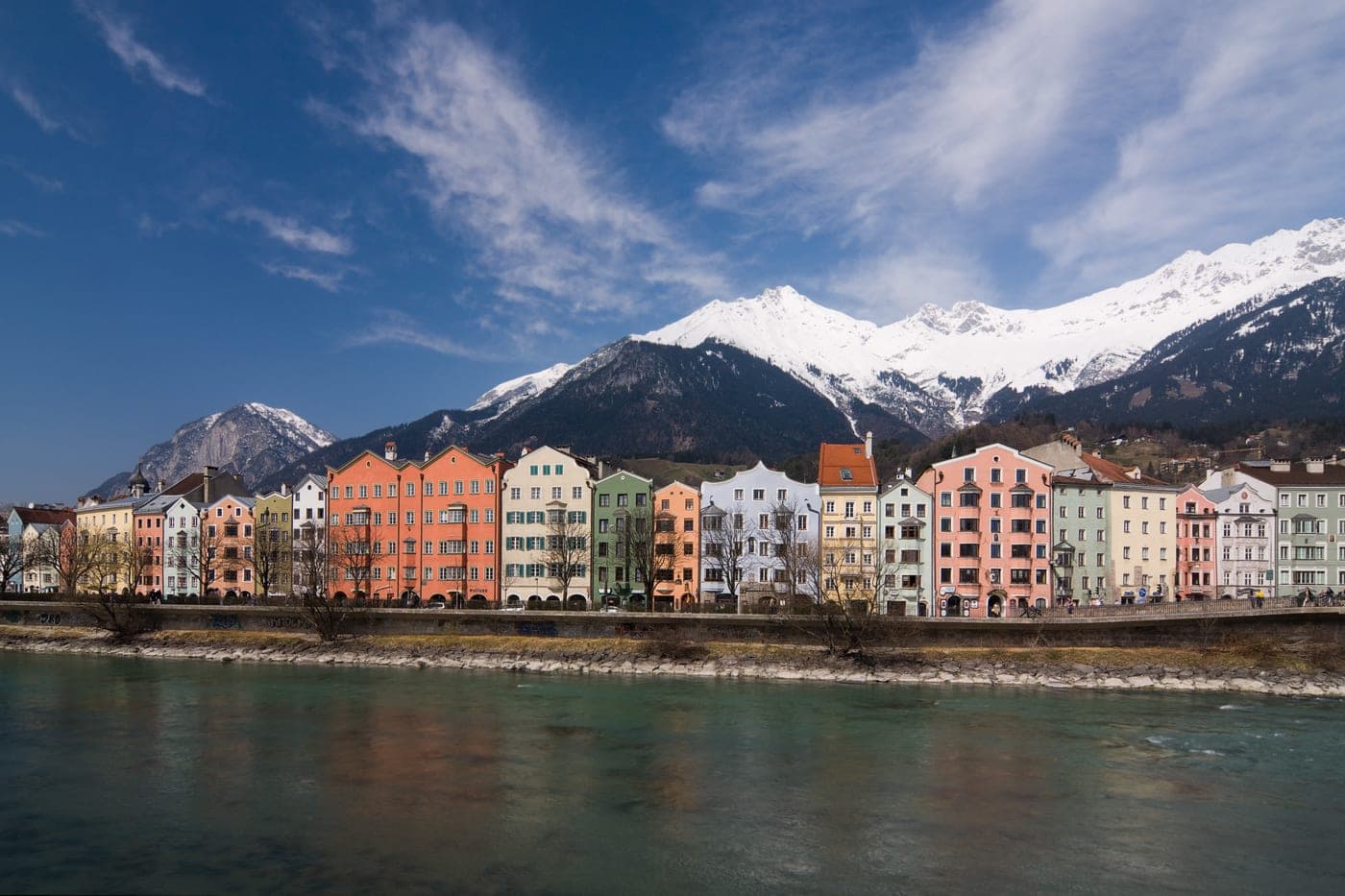
Nestled in the heart of the Alps, this region is renowned for its stunning landscapes and traditional alpine culture. Innsbruck, the capital, is famous for its historic architecture and the iconic Golden Roof. Smaller towns like Hall in Tirol and Rattenberg showcase medieval charm and rich local traditions. The region is known for its outdoor activities, including hiking in summer and skiing in winter, along with unique culinary offerings such as Tyrolean dumplings and apple strudel. Tyrol is also home to numerous historic castles and museums that reflect its rich heritage. Off the beaten path, the Ötztal Valley offers breathtaking trails and authentic mountain huts, ideal for a deeper connection with nature and local life.
Camper Van RentalsHikingLocal CuisineCastles