Tafelspitz
Vienna's boiled beef, served in two courses
- Local name
- Tafelspitz
- Served with
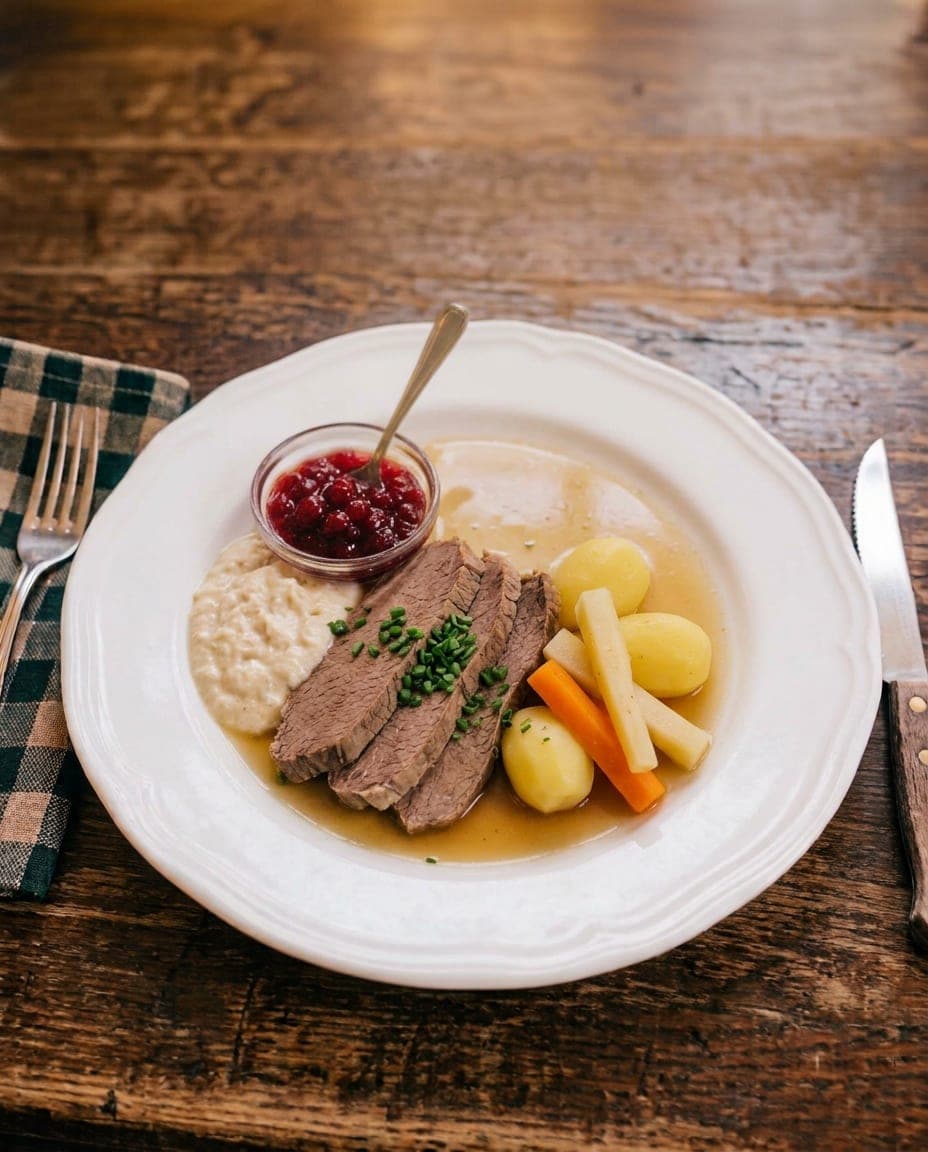
- Apple horseradish, chive sauce, fried potatoes
- Best eaten at
- A Viennese Beisl
- Pairs with
- Grüner Veltliner
What it is
Tafelspitz is beef simmered in broth, and one of the dishes Vienna is best known for. The name belongs to the cut as well as to the meal: in Viennese butchery Tafelspitz is the pointed end of the rump cap, a lean muscle that rewards slow simmering and punishes a hot pan. Viennese butchers name a dozen boiling cuts where most countries sell one, which is a fair measure of how seriously the city takes a pot of beef.
The dish is built on clarity. A whole piece of beef is submerged in a large pot of water with root vegetables and aromatics, then cooked slowly until the meat is tender but not falling apart. The result is two distinct elements: a clear, golden broth and slices of firm, juicy beef. It is not a heavy stew, nor a dry roast. The texture is soft, the flavour clean, and the presentation deliberate.
It is not a quick lunch. It takes an afternoon to cook and most of an hour to eat, and it is Sunday food as much as restaurant food.
The history of the imperial table
The dish is bound to Emperor Franz Joseph I, who reigned from 1848 to 1916 and who is said to have eaten it almost daily. The claim is repeated in every account of Viennese food and the frequency is surely exaggerated, but it has some footing: a court service manual of 1912 records boiled beef as a favourite at his private table, he was known for plain tastes, and the dish became a fixture of the city's restaurant cooking during his reign.
The association did the cut a favour. Boiled beef is thrifty food — the broth is the first reason for cooking it — and the imperial connection moved it from the thrifty end of the menu to the expensive one, where it has stayed. The two-course structure, broth first and meat after, is the part of that tradition that most clearly survives.
How it is prepared and served
The preparation relies on patience rather than technique. A large piece of beef is placed in a pot with water, onions, carrots, leeks, celery, and sometimes parsnips or turnips. The pot is brought to a gentle simmer and kept there for several hours until the meat is cooked through. The vegetables are removed once they have softened enough to release their flavour into the broth, leaving the liquid clear and aromatic.
It arrives in two parts. The broth comes first, in a deep bowl, with something cut into it: Frittaten, pancakes rolled and sliced into ribbons; Grießnockerl, small semolina dumplings; or simply noodles. The meat follows on its own plate or in a small copper pot of broth, sliced thin across the grain, with the vegetables that cooked with it and a side of creamed spinach or fried potatoes (Rösterdäpfel).
The marrow bone comes with it, standing upright, with a small spoon or knife to get the marrow out. It goes on dark bread with salt, and it is usually eaten before the meat rather than with it.
What goes into it
The ingredients are few and there is nowhere to hide: a gentle simmer flatters nothing.
- Tafelspitz cut: The pointed tip of the rump cap, a long muscle that remains firm when sliced.
- Clear broth: The cooking liquid, carrying the vegetables and the bones, served first with noodles, Frittaten or semolina dumplings.
- Root vegetables: Carrot, celeriac, leek and sometimes parsnip or turnip, simmered with the meat and served alongside it.
- Apple horseradish (Apfelkren): Fresh horseradish grated with apple — sweet and sharp at once, and the condiment that makes the plate work.
- Chive sauce: A creamy emulsion made with chives, often thickened with white bread or cream, served alongside the beef.
- Marrow bone: Served with salt for spreading on dark bread.
Two sauces arrive because they do different jobs: the horseradish is there to cut, the chive sauce to soften. Most tables use both, alternating.
How it is eaten
The order is fixed and worth following. Broth first, unthickened, its clarity being the measure of the kitchen. Then the marrow on bread. Then the meat, in small slices, with one sauce and then the other, and the vegetables between them.
A glass of Grüner Veltliner, the dry white grown across Lower Austria, is the standard drink; its acidity does the same work as the horseradish. In a Beisl a beer is just as usual.
Curious facts
- The name is a cut. Tafelspitz is a specific muscle, the pointed end of the rump cap, before it is a dish — and Viennese butchers distinguish a dozen more boiling cuts around it.
- The broth is the first course. It is served before the meat, with noodles, semolina dumplings or sliced pancake in it, and it is not thickened.
- The marrow bone is part of it. Served upright with a spoon, the marrow goes on dark bread with salt, before the meat.
- The imperial link is partly a story. Franz Joseph I is said to have eaten it constantly; the frequency is legend, though a 1912 court service manual does name boiled beef as a favourite of his.
- It is Viennese, not Austrian. The dish is eaten across the country but belongs to Vienna, and the restaurant version is a city tradition rather than a farmhouse one.
Where to try it
A Beisl — a small neighbourhood tavern with a short menu and no ceremony — is where the dish is least theatrical and usually best, and the residential districts just outside the Ringstrasse are full of them. The thing to look for is a kitchen that serves the broth separately rather than ladling everything into one bowl, which is the shortcut version. The city's older restaurants and a few hotel dining rooms serve a more formal version with the meat brought to the table in its copper pot, which is the same dish with more brass.
Where to try it
1 destination
 Camper Van Rentals
Vienna
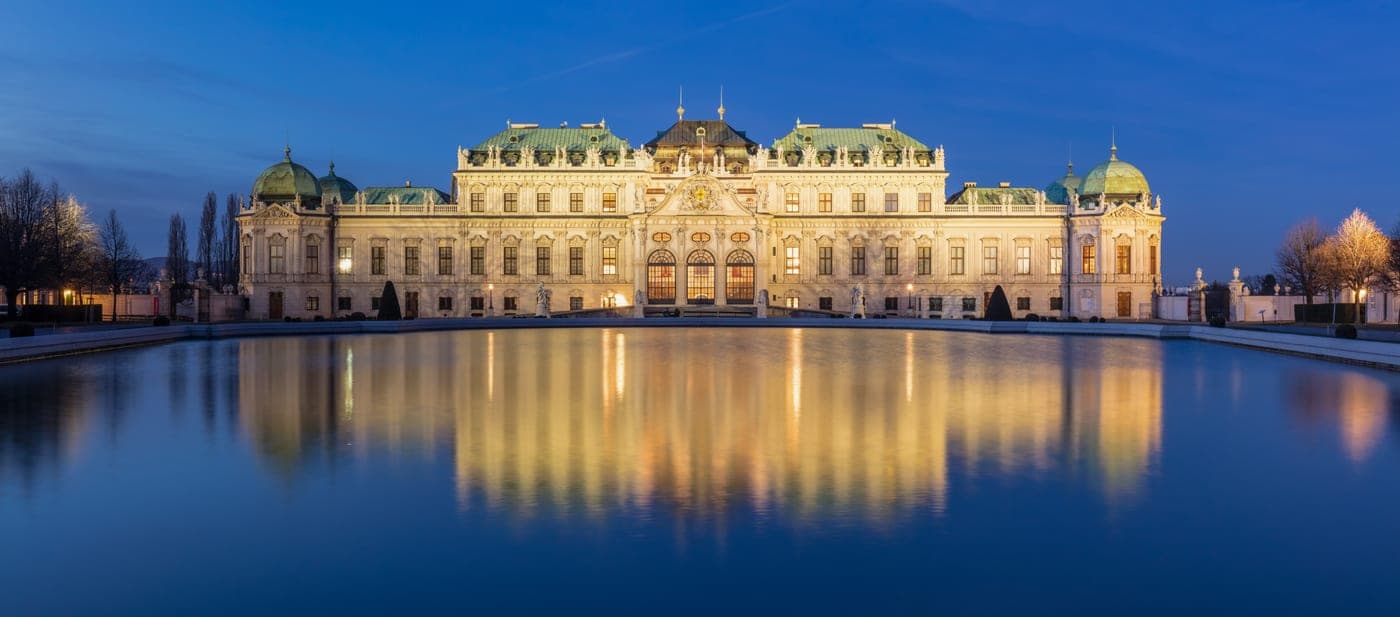
Imperial capital with baroque palaces, Ringstrasse, classical music scene.
Camper Van RentalsWine TastingHiking
1 region
- Camper Van Rentals1 destination
Vienna
Vienna stands out as Austria's capital, rich in history and culture. This vibrant city is renowned for its classical music heritage, featuring composers like Mozart and Beethoven. The historic center, a UNESCO World Heritage site, showcases stunning architecture ranging from Gothic to Baroque. Beyond the mainstream attractions, explore the lesser-known neighborhoods like Margareten and Favoriten, where local markets and authentic eateries thrive. The city's coffee house culture, a UNESCO Intangible Cultural Heritage, invites you to savor traditional pastries. For nature lovers, the Vienna Woods offer picturesque hiking trails. This capital is an exciting blend of imperial history and modern creativity.
Camper Van RentalsWine TastingHiking