Steirisches Backhendl
Breaded Styrian chicken with pumpkin-seed-oil potato salad
- Local name
- Steirisches Backhendl
- Served with
- Pumpkin-seed-oil potato salad, lemon
- Best eaten at
- A Styrian Gasthaus
- Pairs with
- Welschriesling or Schilcher
What it is
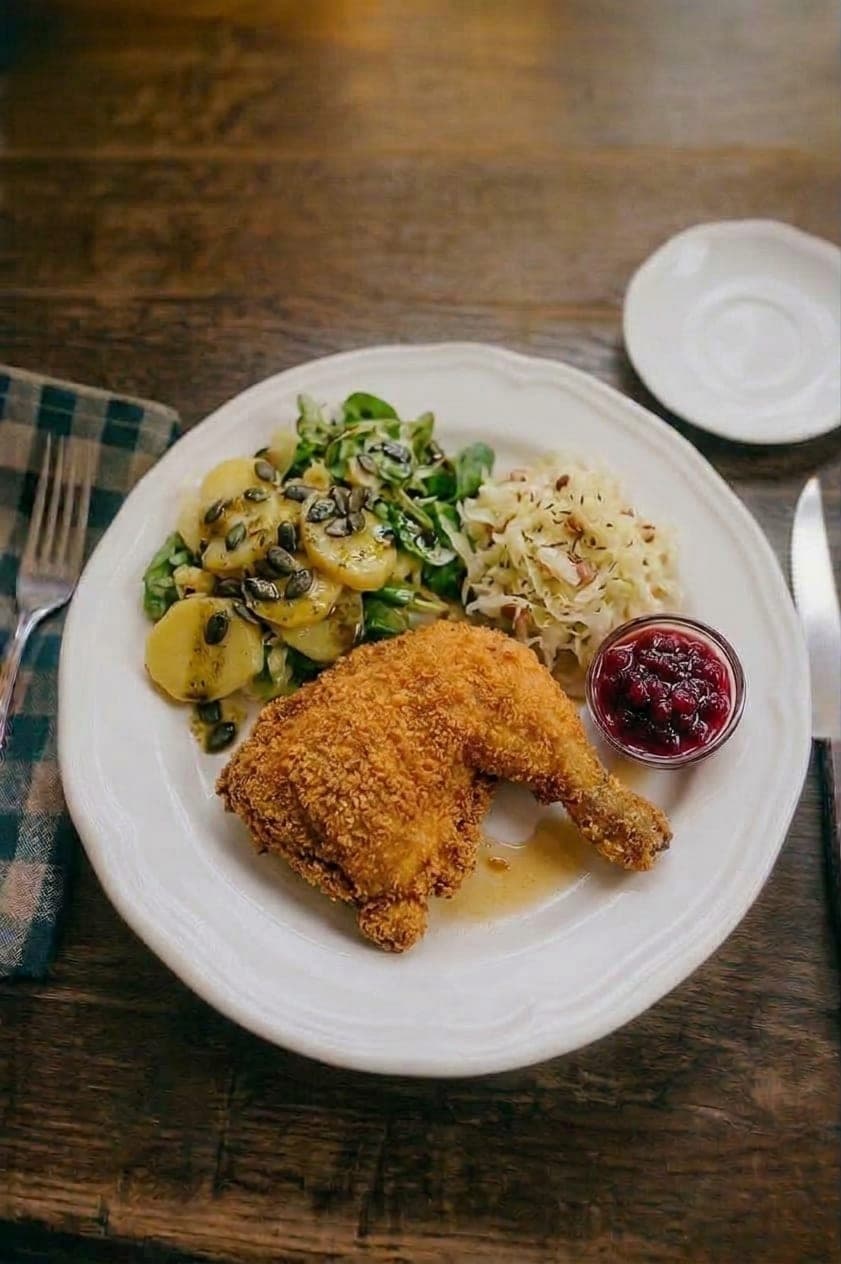
Steirisches Backhendl, the breaded and fried chicken of Styria, is a dish that defines the region's culinary identity. A young chicken is jointed — breast, thigh, drumstick, wing — floured, egged, breaded and fried in deep fat until the crust is dark gold. It comes with a wedge of lemon and, in Styria, with a potato salad dressed in the region's dark pumpkin seed oil, which is the part that makes it Styrian rather than simply fried chicken.
The treatment is the one given to a schnitzel, and the result is drier and crisper than a roast bird: small pieces, a lot of crust, and meat that is eaten off the bone with the fingers.
A history tied to a specific era
Backhendl has been a speciality of Viennese cooking since the 18th century, and the Biedermeier decades before 1848 are sometimes remembered in Vienna as the Backhendlzeit, or "fried-chicken time". The nickname stands for an era of bourgeois comfort, when fried young chicken was the mark of a prosperous table. While the dish began in the capital, it found an enduring home in Styria, a region long known for its poultry.
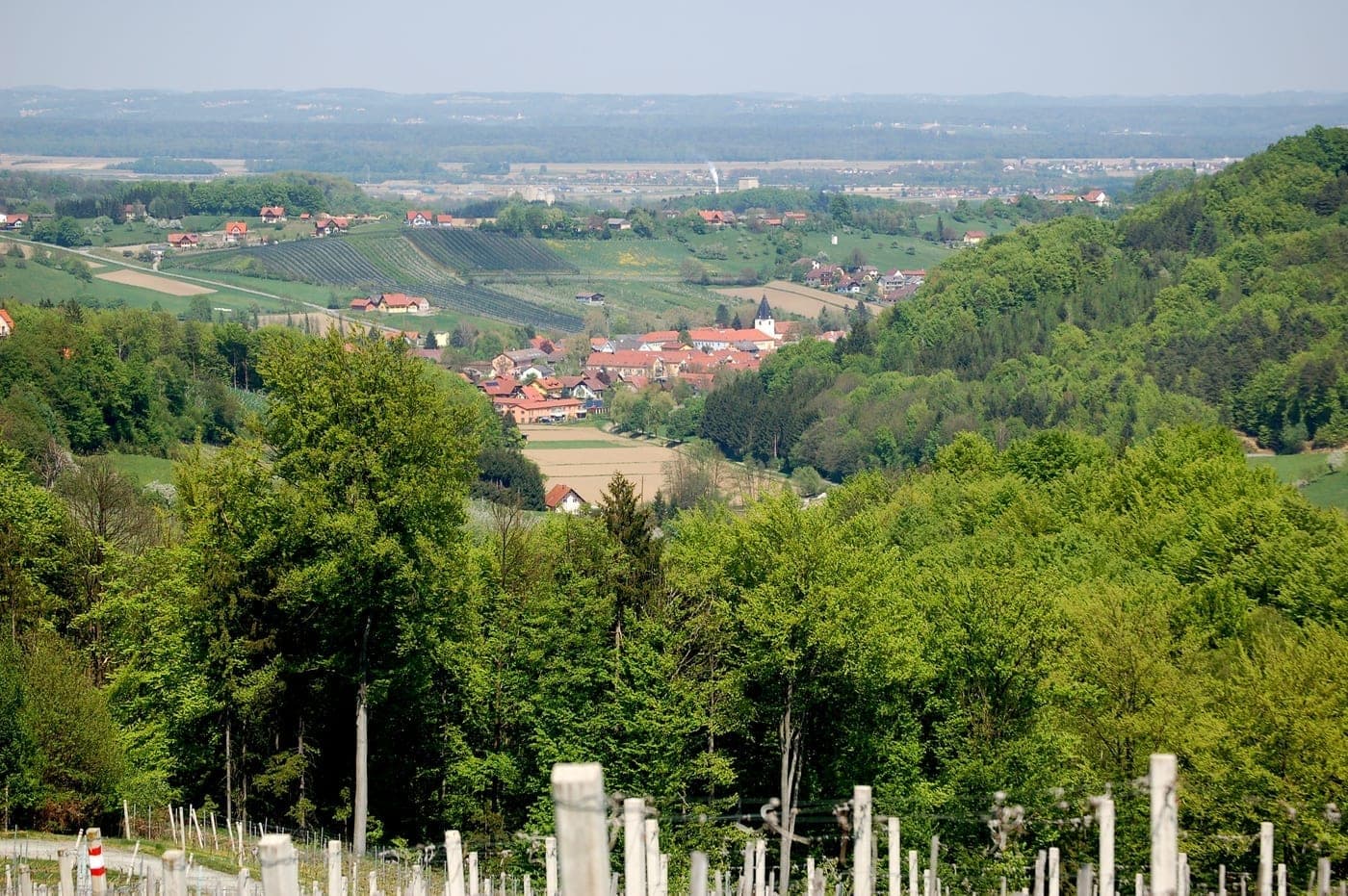
Styria is farm country of a particular kind: smallholdings, orchards, poultry, and — south and east of Graz — fields of the oil pumpkin. The dish belongs to that combination rather than to a kitchen, and the two local products arrive on the same plate.
It was Sunday food, and in its older form the whole bird went into the fat, including the liver and the smaller offal, which were fried with the joints and eaten first. Some country kitchens still serve it that way, and a plate that includes the liver is a sign of the older version rather than an oversight.
What goes into it
The ingredients are few, but each plays a vital role in the final taste. The chicken is young and tender, usually cut into jointed pieces before cooking. The coating consists of plain flour, beaten eggs and fine breadcrumbs, which fry to a golden brown without becoming greasy. A squeeze of fresh lemon is served on the side to brighten the flavour.
The potato salad does the work a sauce would do elsewhere. There is no mayonnaise in it: the potatoes are boiled, cut while still warm so they take up the dressing, and turned in vinegar, a little stock and the dark pumpkin seed oil, which stains them a green-brown and tastes of toasted nuts. In spring the salad is often Vogerlsalat, lamb's lettuce, dressed with the same oil.
How to eat it
With the fingers, which is normal here and not a lapse, and with the lemon squeezed over the crust at the last moment. The salad comes in its own bowl.
The wine is Styrian and usually white: a Welschriesling, sharp and light, or a Schilcher, the pale, high-acid rosé made from the Blauer Wildbacher grape of western Styria, which is an acquired taste and the local one. A plate is usually set in the middle and shared.
Curious facts
- The oil is roasted first. Styrian pumpkin seed oil is pressed from roasted seeds, which is where the colour and the nutty taste come from; pressed raw, the same seeds give a pale, bland oil.
- It is not just any chicken. The name Backhendl refers specifically to young chicken, not older birds which would be too tough for this method of frying.
- The Buschenschank tradition. These farm taverns go back to a 1784 decree of Joseph II and are regulated by law, allowing farmers to sell their own produce directly to customers — cold food only, so the fried chicken itself belongs to the village inn.
- Seasonal greens. In spring, the potato salad is often swapped for Vogerlsalat, a tender salad green known in English as lamb's lettuce.
- A regional icon. While other parts of Austria have their own fried chicken dishes, Steirisches Backhendl is uniquely tied to the pumpkin seed oil of Styria.
Where to try it
A Gasthaus, the village inn with a proper kitchen, in the hills around Graz or further south towards the Slovenian border. The Buschenschank — a farm tavern licensed to sell its own wine and its own cold food, marked by a bunch of green branches hung over the door — is the other Styrian institution, but it is a legal category rather than a style: the licence dates from the 18th century, it limits what may be sold largely to the farm's own produce, and it rules out warm dishes, so the chicken is a Gasthaus dish and the Buschenschank is for the wine and a cold plate.
Buschenschanken keep their own hours, opening for a few weeks at a time and closing again, which is published locally as a rota. The warm months are the season for both, and a table outside under the vines is the setting the dish was built for.
Where to try it
1 destination
 Camper Van Rentals
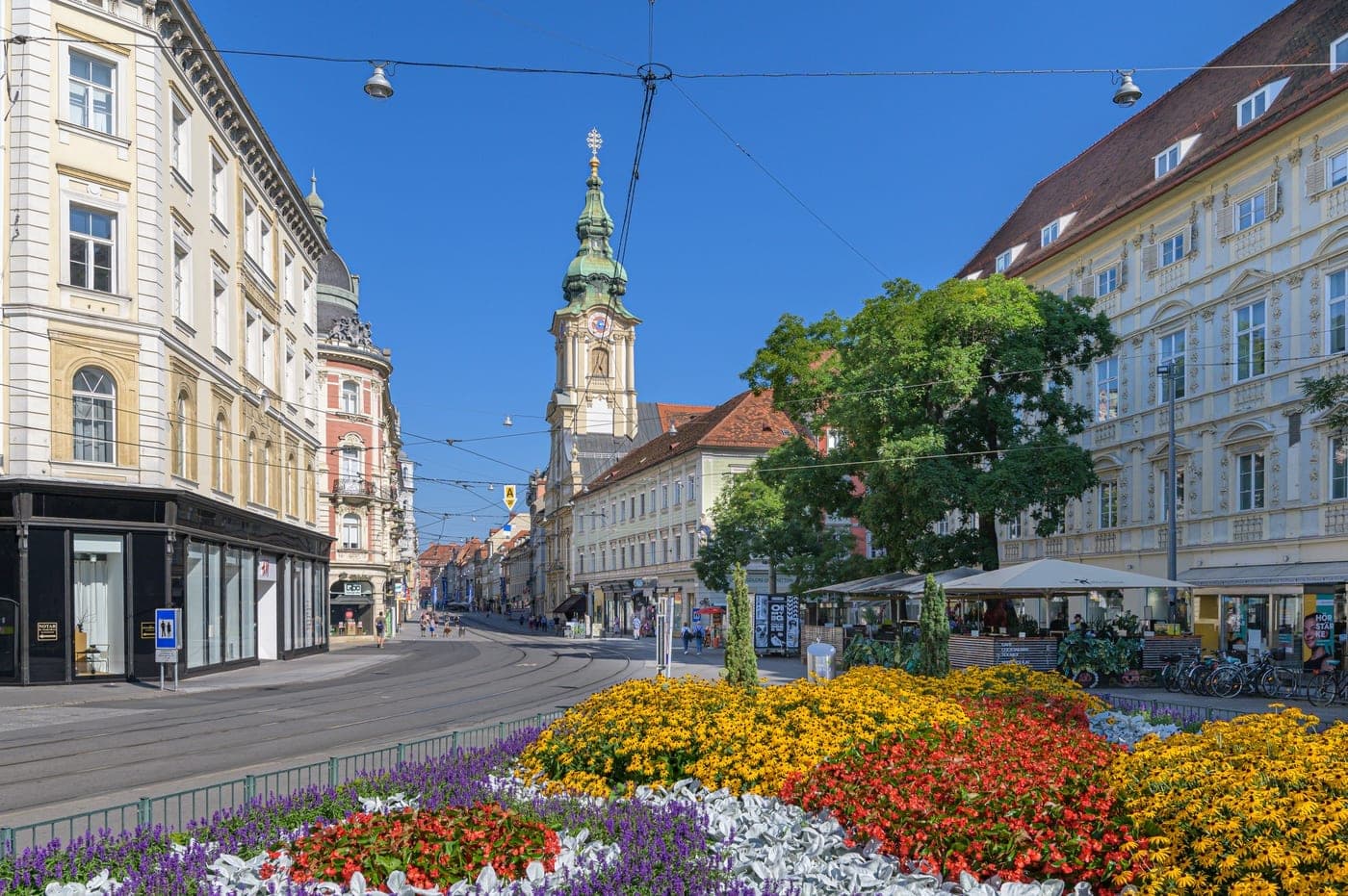
Graz
Historic city with a UNESCO-listed old town and vibrant culinary scene.
Camper Van RentalsHikingLocal Cuisine
1 region
 Wine Tasting53 destinations
Styria
Styria is Austria's second-largest region, known for its diverse landscapes ranging from rolling hills to the Eastern Alps. Graz, the capital, is a UNESCO World Heritage site, celebrated for its Renaissance and Baroque architecture. The region is famed for its wine production, particularly the white wines from the Südsteiermark wine route, where picturesque vineyards dot the landscape. Outdoor enthusiasts can explore the Gesäuse National Park, rich in hiking trails and scenic vistas. Unique to Styria, the region also boasts a vibrant culinary scene, with local specialties like pumpkin seed oil and Styrian cheeses. The area features many historic castles and small towns like Riegersburg, known for its impressive fortress and local artisans.
Wine TastingHikingLocal CuisineCamper Van Rentals