Salzburger Nockerl
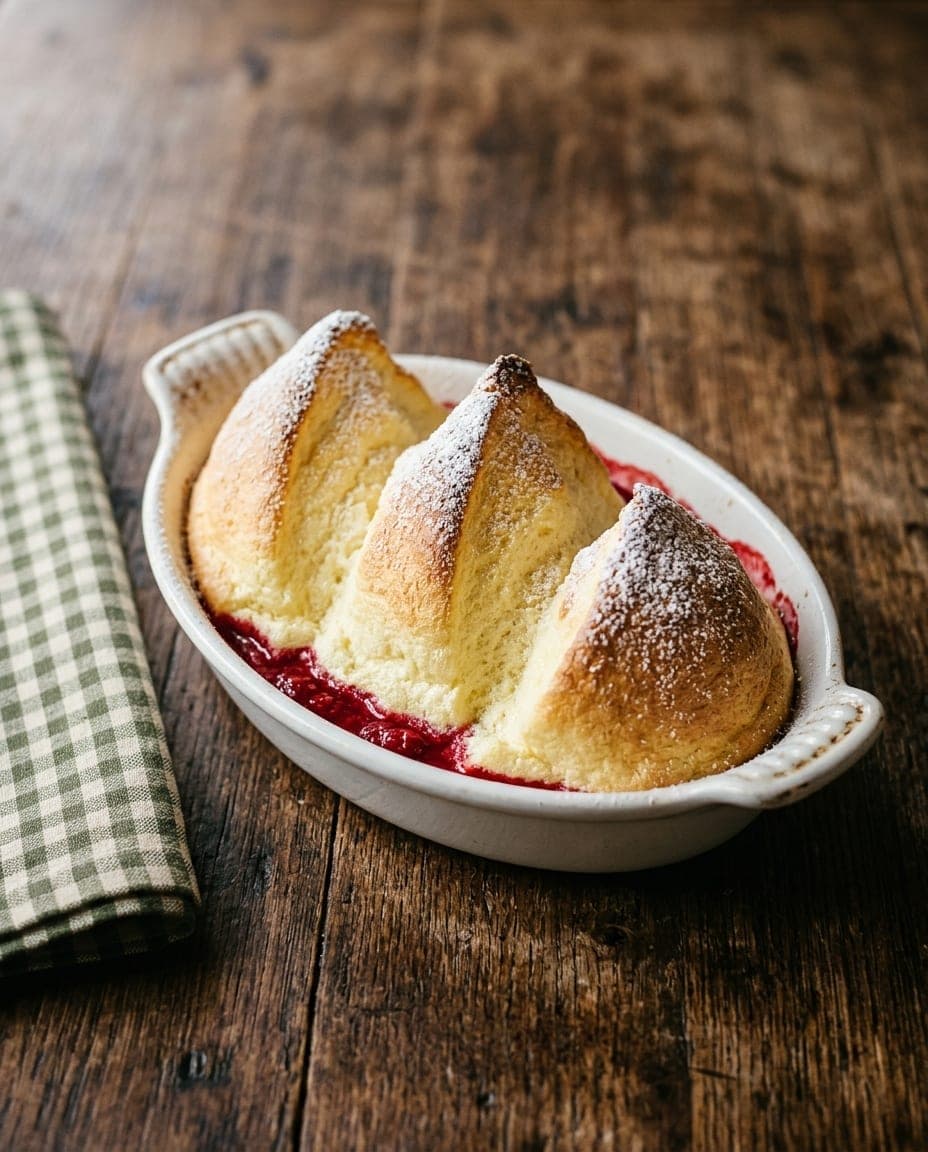
Three golden peaks of egg and sugar served with berry sauce
- Vegetarian
- Local name
- Salzburger Nockerl
- Served with
- Raspberry sauce or lingonberry jam
- Best eaten at
- A Salzburg Altstadt restaurant
- Pairs with
- Sweet Austrian dessert wine
What it is
The Salzburger Nockerl is a warm, airy soufflé that stands as one of the most recognisable sweet dishes in Austria's Salzburg region. It consists of a light batter made from egg whites, sugar and a small amount of flour, baked until it rises into three distinct golden peaks before settling. The dessert arrives at the table hot and puffy, often dusted with icing sugar, and is commonly served with raspberry sauce or a layer of lingonberry jam.
Nockerl is the Austrian word for a small dumpling, which is misleading here: nothing about the dish is round. The three peaks are the point, and they are said to stand for Salzburg's city hills — the Mönchsberg, the Kapuzinerberg and, depending on who is telling it, the Gaisberg or the Rainberg. The ingredients are almost nothing; the difficulty is entirely in the timing, because the soufflé starts to sink within a few minutes of leaving the oven.
Three peaks and one story
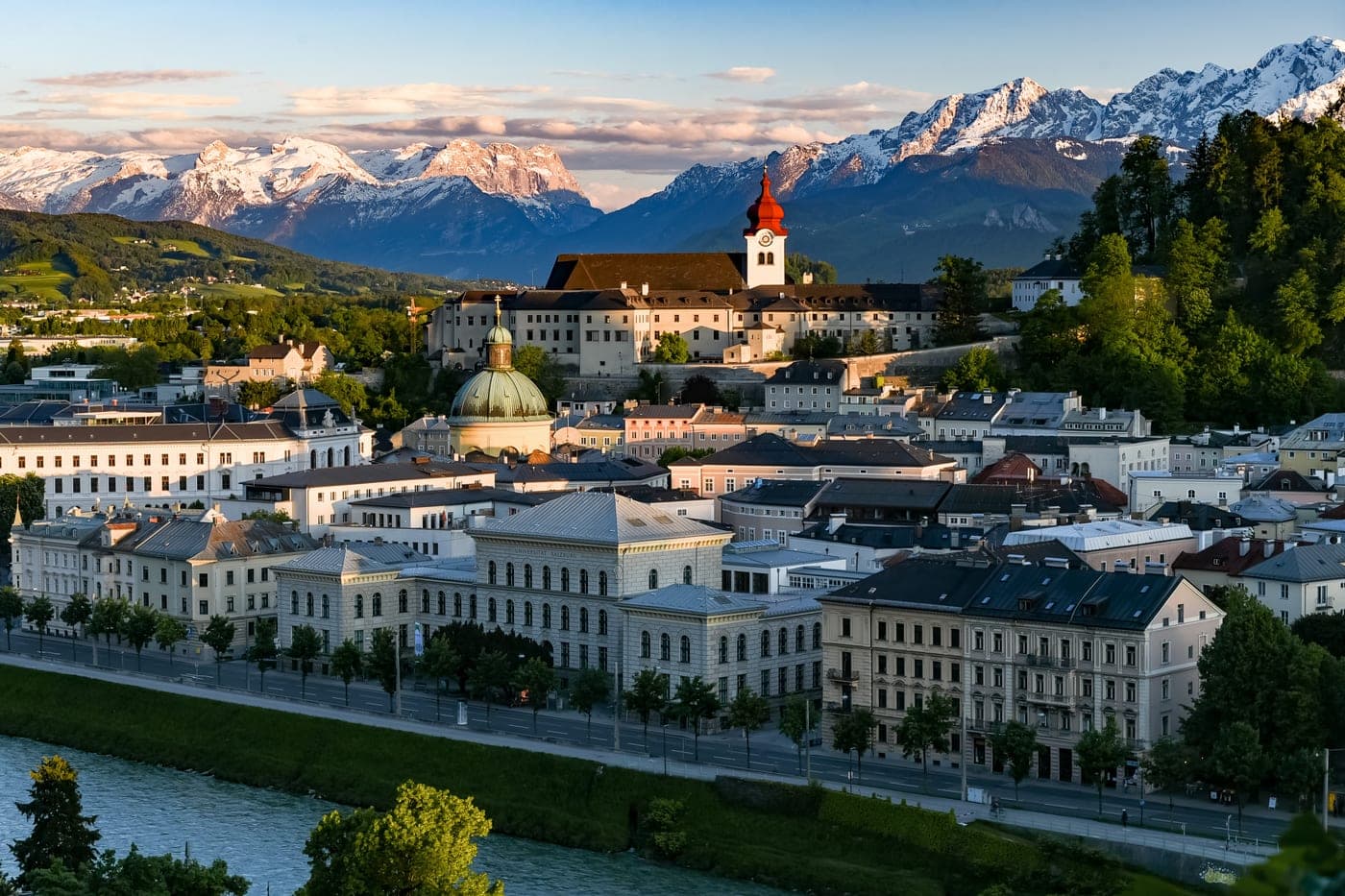
The shape is a claim about the landscape. Salzburg's old town sits in a bend of the Salzach with hills rising straight out of it, close enough that the castle on one of them is visible from most of the streets below, and the dessert is baked to repeat that outline in egg and sugar. The peaks are never symmetrical, which is part of the resemblance.
The story usually told about its origin belongs to the years around 1600 and to Salome Alt, the partner of Salzburg's prince-archbishop, with whom she had a large family and a house in the city; a cook in that household is said to have put the first three peaks on a plate. The tale is repeated in the city's restaurants and in its guidebooks, and there is no document behind it; the earliest known recipe under the name appears in a Salzburg cookbook of 1719. It is worth knowing as a story about Salzburg rather than as a record of a kitchen.
The batter is simpler than the legend. Whipped egg whites do all the lifting, a spoonful of flour keeps the structure from tearing, and the yolks are folded in for colour and body. Once the dish leaves the oven the air begins to go out of it, which is why the waiter walks quickly and why nobody is offended if a table starts eating before the last person is served.
What goes into it
The ingredients are modest, relying on quality rather than quantity to achieve the final texture:
- Egg whites, whipped to stiff peaks with sugar to create the airy structure.
- Egg yolks, beaten separately and folded in gently, for colour and body.
- A small amount of flour, just enough to stabilise the batter without making it heavy.
- Butter, used to grease the baking dish, ensuring the peaks can rise freely.
- Icing sugar, for dusting the top just before serving.
- Raspberry sauce or lingonberry jam, served on the side or underneath the soufflé to provide a sharp contrast to the sweet egg batter.
The flour is the whole argument: too much and the dish bakes into a plain cake, too little and it falls apart before it reaches the table. What it should be is a hot foam that holds its shape for a few minutes and then does not.
How to eat it
The Salzburger Nockerl is almost always served as a dessert following a main course in a traditional restaurant. Because it falls so quickly, it is rarely ordered for a single person. The dish is typically prepared for two or more diners, allowing them to share the peaks and the sauce. It arrives in the same baking dish it was cooked in, often still sizzling slightly at the edges.
The serving style encourages a communal approach. Diners use spoons to break into the peaks, dipping the soft interior into the fruit sauce that pools around the base. The contrast between the warm, sweet egg and the tart fruit is essential to the experience. A sweet Austrian wine — a Strohwein, or a late-harvest white — makes a good accompaniment in the evening.
Unlike Sachertorte or Apfelstrudel, the dish stayed where it came from. It is not reliably on a menu in Vienna, Graz or Innsbruck, and outside Salzburg it turns up mainly in kitchens that make a point of regional cooking. That is partly the fragility — it cannot be made in advance, and it cannot be made for one — and partly the subject: a dessert shaped like three particular hills makes most sense where the hills are.
Curious facts
- The three peaks represent specific hills. The mounds are said to be the Mönchsberg, the Kapuzinerberg and a third hill — the Gaisberg or the Rainberg, depending on the source — all visible from the city.
- It is a race against time. The soufflé begins to collapse within minutes of being removed from the oven, so diners must eat it immediately to experience the intended texture.
- The name does not describe the shape. Although Nockerl means a small dumpling, the dish is defined by its three distinct peaks, resembling a mountain range rather than a dumpling.
- It is rarely served alone. The dessert usually comes with raspberry sauce, lingonberry jam or currants to cut through the sweetness of the egg batter.
- The origin story is a legend. The usual account places it in Salome Alt's household around 1600; no document supports it.
- It did not travel. Unlike Austria's other famous sweets, it is rarely found outside Salzburg — it cannot be prepared in advance and cannot be made for one person.
Where to try it
A restaurant in Salzburg's Altstadt, with the hills in view from the window, is the setting the dish was built for, and most kitchens there that cook regional food have it on the dessert menu. Two things are worth knowing before ordering: it is made for two or more, and it takes a quarter of an hour, so it is usually ordered at the same time as the main course rather than after it.
Where to try it
1 destination
 Camper Van Rentals
Salzburg
Mozart's birthplace, baroque jewel of Austria
Camper Van RentalsCastlesHikingLocal Cuisine
1 region
 Castles3 destinations
Salzburg
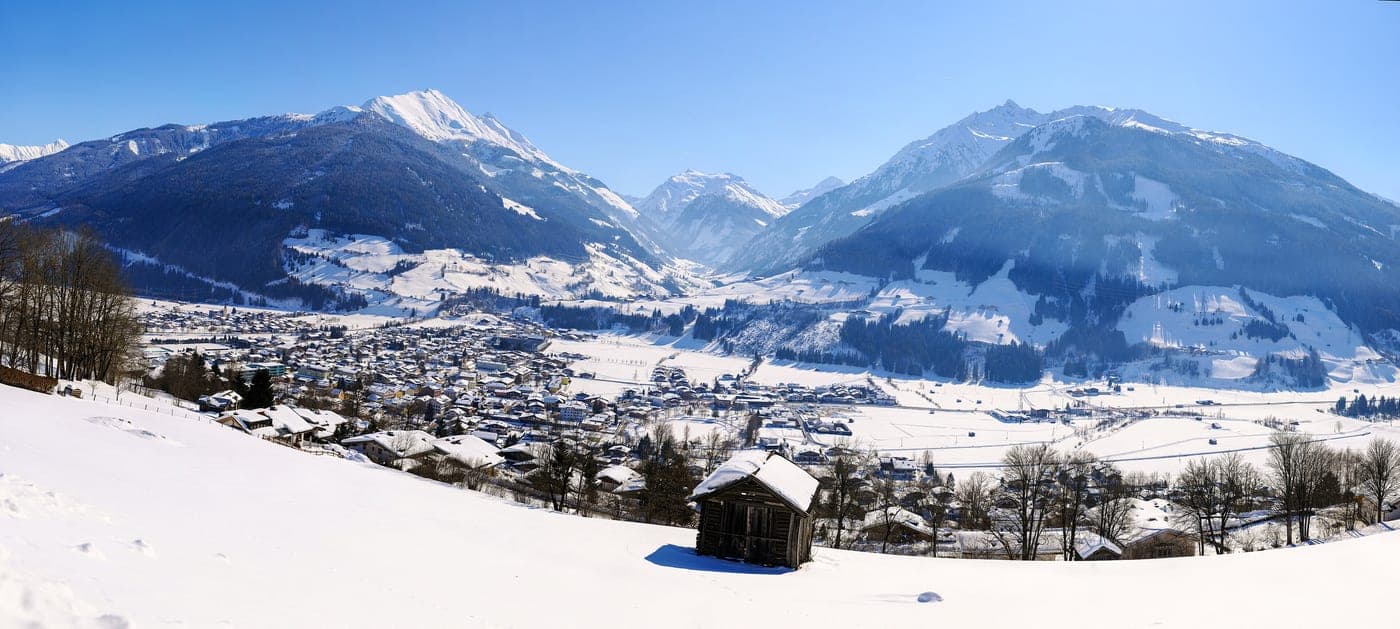
Nestled in the Alps, this region is renowned for its baroque architecture and stunning landscapes. Salzburg is the birthplace of Mozart and boasts a rich musical heritage. The region is characterized by picturesque lakes, including the beautiful Wolfgangsee, and the majestic peaks of the surrounding mountains. Hidden gems like the charming village of St. Gilgen and the historical town of Hallein invite exploration. Salzburg's unique salt mines, dating back to prehistoric times, reveal its historical significance in trade. The region hosts various local festivals, including the Salzburg Festival, celebrating music and theater, making it an intriguing locale for cultural exploration. Ideal for those seeking to connect with both nature and history, this area offers a wealth of experiences off the typical tourist path.
CastlesHikingWine TastingCamper Van Rentals