Sachertorte
The chocolate cake Vienna went to court over
- Vegetarian
- Local name
- Sacher-Torte
- Served with
- Unsweetened whipped cream
- Best eaten at
- A Viennese coffee house
- Pairs with
- Wiener Melange
What it is
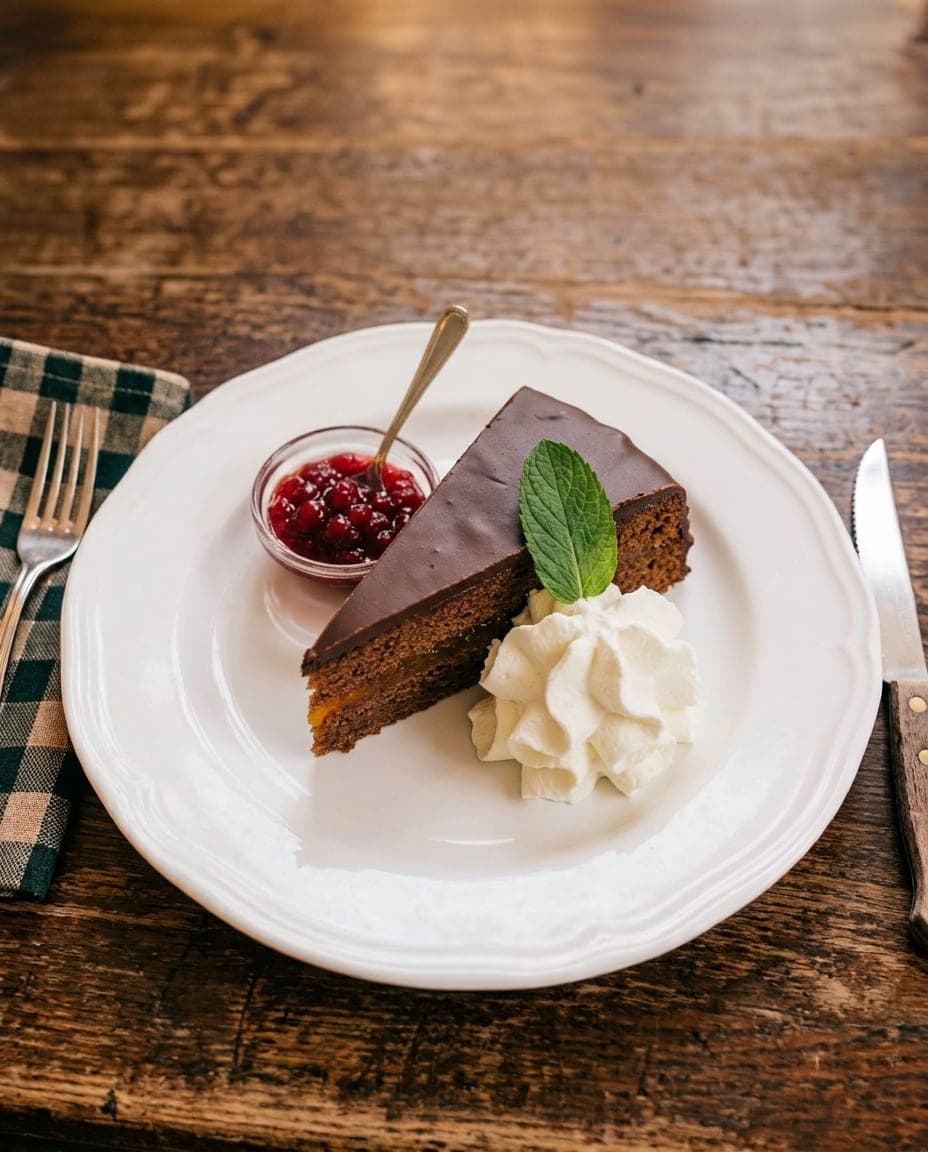
Sachertorte is a dense chocolate cake brushed with a thin coat of apricot jam and covered with a dark chocolate glaze poured over the whole thing and left to set smooth. Some versions also split the cake and add a layer of jam through the middle. Written as Sacher-Torte in Austria, it is the cake most closely identified with Vienna, and it is sold by the slice in every coffee house in the city.
The jam is the point. Without it the cake is a plain chocolate sponge — firm, close-textured, deliberately not airy — and the glaze is sweet on its own. The thin sharp layer of apricot between them is what makes the cake taste of something other than chocolate, and it is also what the arguments have always been about.
The apprentice and the prince
The account usually given places the cake in 1832, in the kitchen of Prince Metternich, the statesman who ran Austrian foreign policy for the first half of the 19th century. Metternich had asked for a new dessert for an evening at his house; his head confectioner was ill; the job fell to Franz Sacher, a 16-year-old apprentice, who sent out a chocolate cake with apricot jam. The cake kept his name.
Much of the story was put on record decades later by the family itself, in a letter Franz's son Eduard wrote to the Wiener Zeitung in 1888, so details shift between tellings. What is documented is the family: Eduard refined the cake while training at the court confectioner Demel, founded the Hotel Sacher in 1876, and the cake became the hotel's signature.
The word "Original"
From the 1930s, when Eduard's son passed the recipe to Demel, two Viennese houses claimed the same cake: the Hotel Sacher and the court confectioner Demel a few streets away. Both sold it, both traced their recipe to the Sacher family, and both wanted the word Original on the box. The dispute went through the Austrian courts from 1950 to 1961, and in 1963 the two settled: the hotel keeps Original Sacher-Torte, and Demel sells its version as the Eduard-Sacher-Torte.
The two cakes differ in one structural detail: where the apricot jam sits. The hotel splits the sponge and puts a layer of jam in the middle, as well as under the glaze; Demel keeps the sponge whole and relies on the jam beneath the glaze alone. Both are made to a recipe with a genuine claim on the name, and Viennese opinion on which is correct is unresolved and probably permanent.
What goes into it
- Dark chocolate, melted into a butter-and-egg batter rather than added as cocoa powder.
- Eggs, with the whites whipped and folded in separately, which is the only lightness the cake has.
- A little flour, enough to hold the crumb together and no more.
- Apricot jam, warmed and sieved so it spreads in a thin, even film.
- A poured chocolate glaze, cooked with sugar and water to the point where it sets to a matt, unbroken sheet.
The result is firm enough to cut into clean slices and dry enough that the cream served beside it is not a decoration.
How to eat it
With a fork, in a coffee house, with a spoonful of Schlagobers — whipped cream, unsweetened — on the side of the plate. The cream is not optional in any real sense: the cake is dense and the glaze is sweet, and the plain cream is what makes a whole slice possible. Sweetened cream is not served with it.
The standard pairing is a Wiener Melange, the Viennese coffee with steamed milk and a cap of foam, whose bitterness works against the glaze. A slice keeps well for days, which is why the cake travels, posted in wooden boxes to places where it is a souvenir rather than a dessert.
Curious facts
- The jam defines it. Apricot and nothing else; a version made with another fruit is a different cake.
- The cream is deliberately plain. Schlagobers served with Sachertorte is unsweetened, to offset the glaze.
- The dispute was about a word. The court case between the two houses turned on the right to call a cake the Original, not on the recipe itself.
- The jam layer is the tell. One version puts jam through the middle of the sponge as well as under the glaze; the other only under the glaze.
- The cake has a date. 5 December is observed in Vienna as a day for Sachertorte.
Where to try it
Any traditional Viennese coffee house will have it, and the two houses at the centre of the old dispute both still sell their own version a short walk apart in the city centre — which makes tasting both in an afternoon a reasonable plan, and the standard way Viennese friends settle the argument with a visitor. Outside Vienna the cake is on the menu of confectioners and coffee houses across Austria, usually made to a house recipe rather than either of the famous two.
Where to try it
1 destination
 Camper Van Rentals
Vienna
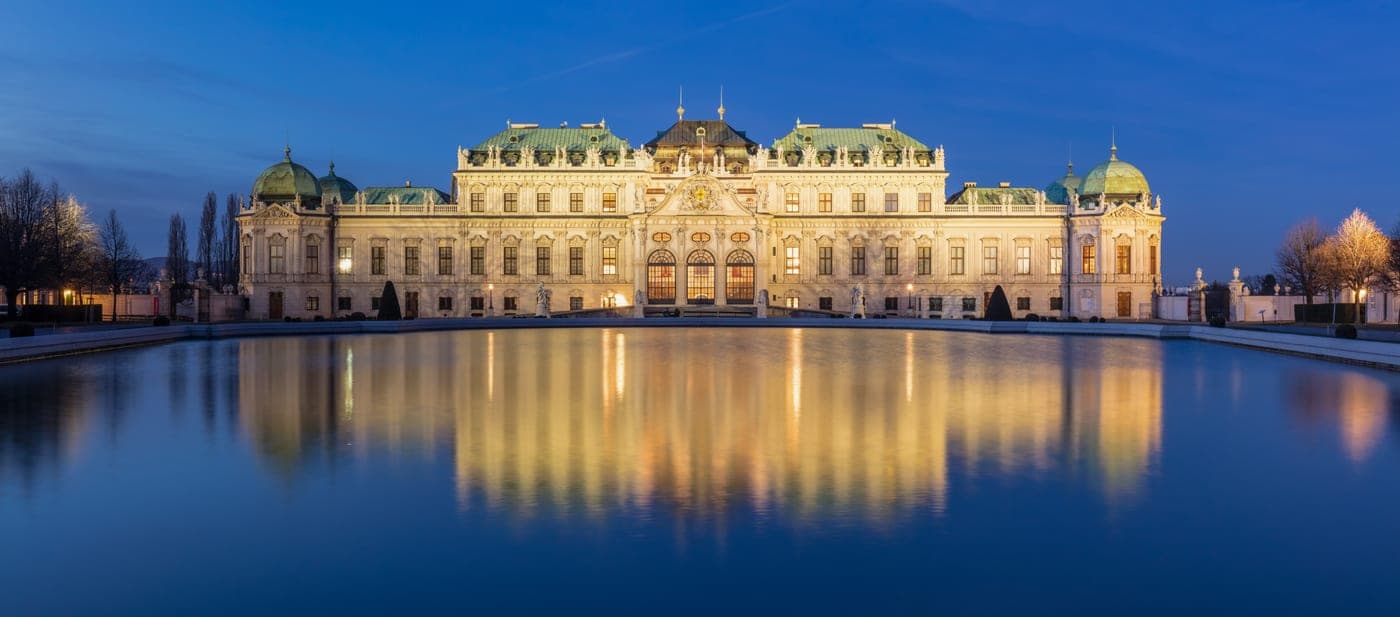
Imperial capital with baroque palaces, Ringstrasse, classical music scene.
Camper Van RentalsWine TastingHiking
1 region
- Camper Van Rentals1 destination
Vienna
Vienna stands out as Austria's capital, rich in history and culture. This vibrant city is renowned for its classical music heritage, featuring composers like Mozart and Beethoven. The historic center, a UNESCO World Heritage site, showcases stunning architecture ranging from Gothic to Baroque. Beyond the mainstream attractions, explore the lesser-known neighborhoods like Margareten and Favoriten, where local markets and authentic eateries thrive. The city's coffee house culture, a UNESCO Intangible Cultural Heritage, invites you to savor traditional pastries. For nature lovers, the Vienna Woods offer picturesque hiking trails. This capital is an exciting blend of imperial history and modern creativity.
Camper Van RentalsWine TastingHiking