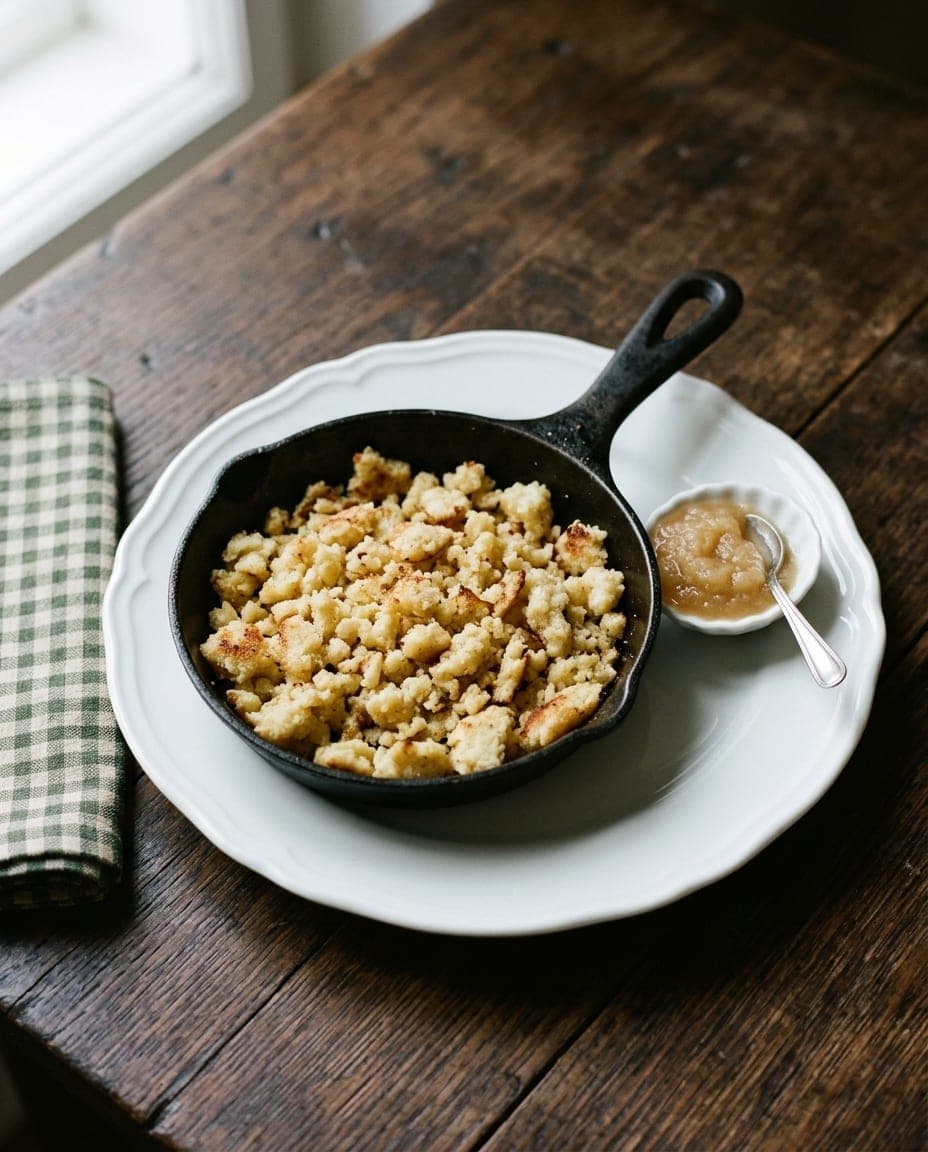
Riebel
Maize, broken up and fried, for breakfast
- Vegetarian
- Local name
- Riebel
- Served with
- Apple sauce, fruit compote
- Best eaten at
- A Vorarlberg farmhouse breakfast
- Pairs with
- Milky coffee
What it is
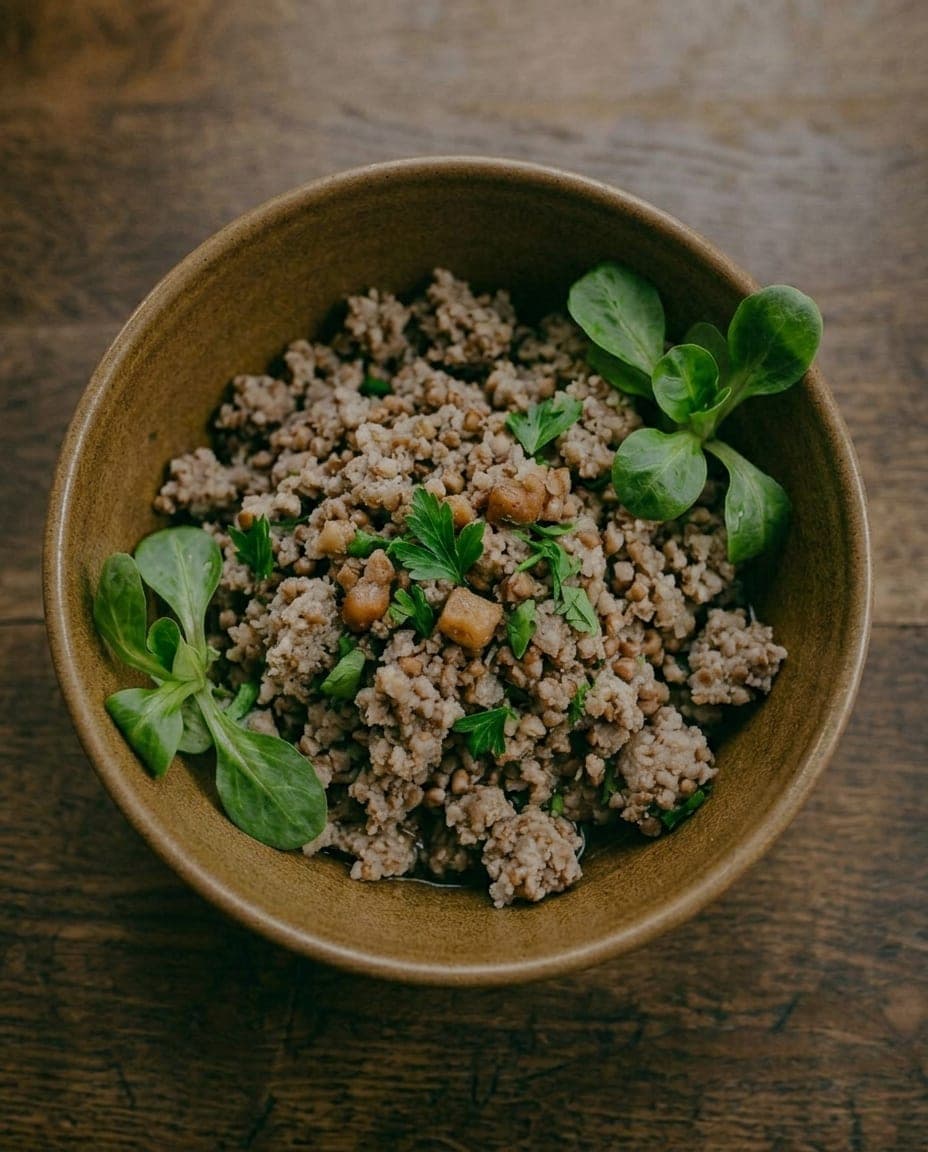
Riebel is fried maize, and in Vorarlberg it is breakfast. Coarse maize semolina, today often mixed with wheat semolina, is cooked in salted milk into a stiff mass, then broken up in the pan and fried slowly in butter until the pieces are golden and dry at the edges. It is neither a porridge nor a bread but sits between the two, and it is eaten with apple sauce, stewed fruit or a cup of milky coffee.
It belongs to the start of the day rather than to lunch — above all breakfast on a farm, sometimes supper — and it is a dish of the valley floor rather than of Austria generally.
Where it comes from
A maize dish in an Alpine state needs explaining, and the explanation is geography. Vorarlberg's Rhine valley is flat, low and sheltered, warm enough to ripen maize as a field crop — unlike the high valleys around it. Maize reached these fields in the 17th century, probably from Italy; by around 1800 it had overtaken spelt as Vorarlberg's main grain and become the staple of poor households, and Riebel is what they made with it.
The dish does not stop at the border. The same thing is eaten across the Rhine in the Swiss Rheintal and in Liechtenstein, spelled Ribel on the Swiss side, because the valley is one landscape with a river through the middle of it. The maize itself, Riebelmais, is an old regional white flint maize; on the Swiss side Rheintaler Ribelmais has carried a protected designation of origin since 2000, and the coarse grind is what gives the fried crumbs their texture.
What goes into it
The ingredients are few and sourced locally, reflecting the farming traditions of the Rhine Valley:
- Coarse maize semolina, ideally from the local Vorarlberger Riebelmais, often mixed with wheat semolina, which provides the nutty base and crumbly texture.
- Milk, sometimes diluted with water, used to cook the grain until it forms a thick, cohesive mass.
- Butter (or lard, in older kitchens), for frying the broken chunks until they are golden and crisp.
- Apple sauce or compote, often made from local apples, served alongside as a sweet counterpoint.
- Milky coffee, the traditional drink that accompanies the dish at breakfast or supper.
There is no single official recipe, and every kitchen in the valley has its own preference for how soft the maize should be before frying or how golden the final pieces should be. The version served with apple sauce is perhaps the most common, but the plain fried maize also stands well on its own with a cup of coffee.
How it is eaten
Hot from the pan, in a shallow bowl, with apple sauce or compote spooned beside it so the crumbs can be pushed into it with a fork. Milky coffee is the drink, and the plain version with nothing but coffee is the older way.
It is farmhouse food, which means a guesthouse breakfast table rather than a restaurant menu, and it does not survive being kept warm: the crumbs soften and the butter goes heavy.
Where to try it
The Rhine valley villages of Vorarlberg, between Bregenz and Feldkirch, where farmhouse guesthouses put it on the breakfast table and village inns serve it in the evening. A Bauernhof offering bed and breakfast is the most reliable way to meet it, since this is a dish kept alive in kitchens rather than restaurants.
It is rarely served beyond Vorarlberg and its neighbours across the Rhine.
Where to try it
1 destination
 Wine Tasting
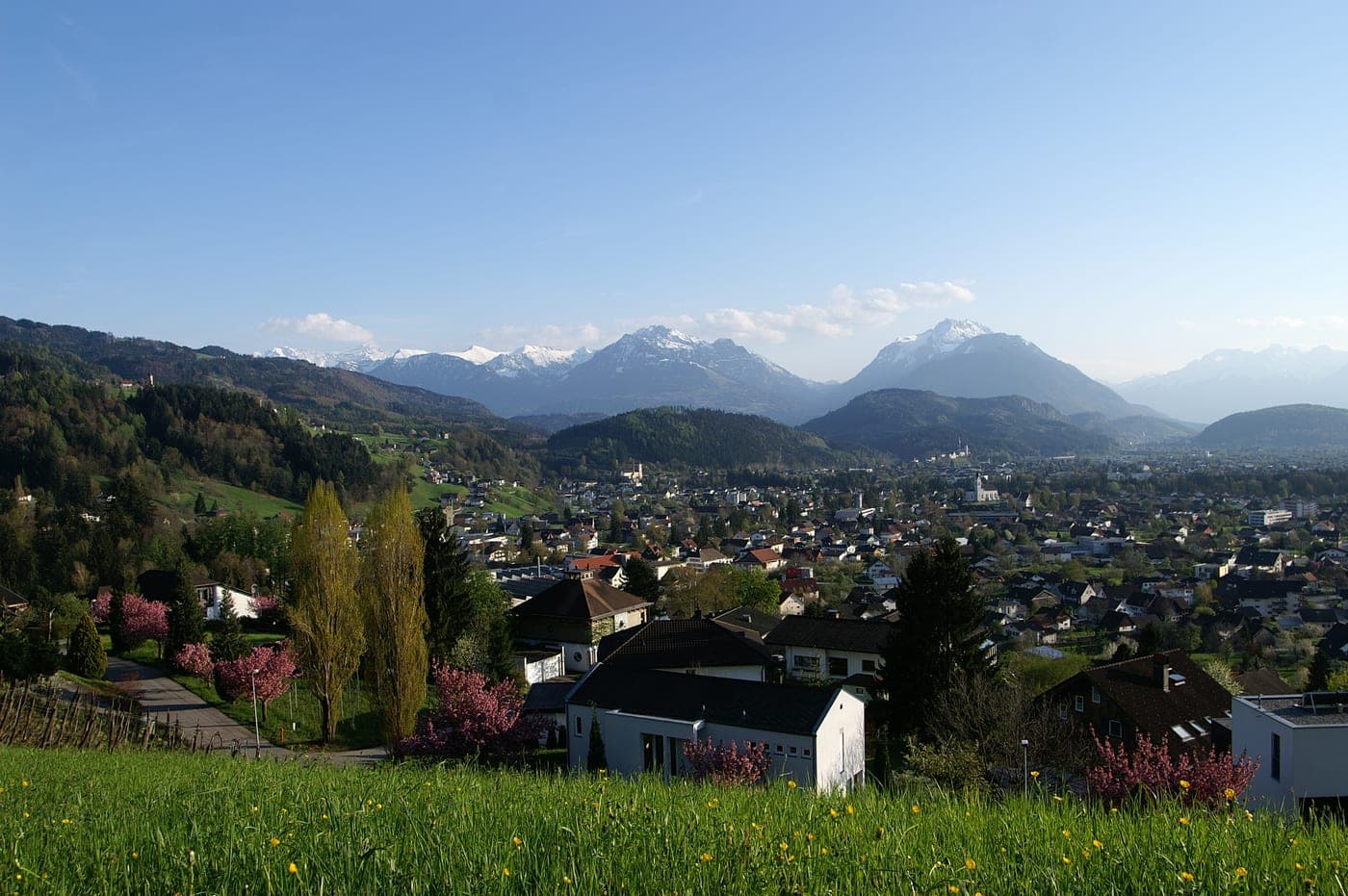
Röthis
Village known for its regional wine production and scenic views.
Wine TastingHiking
1 region
 Wine Tasting3 destinations
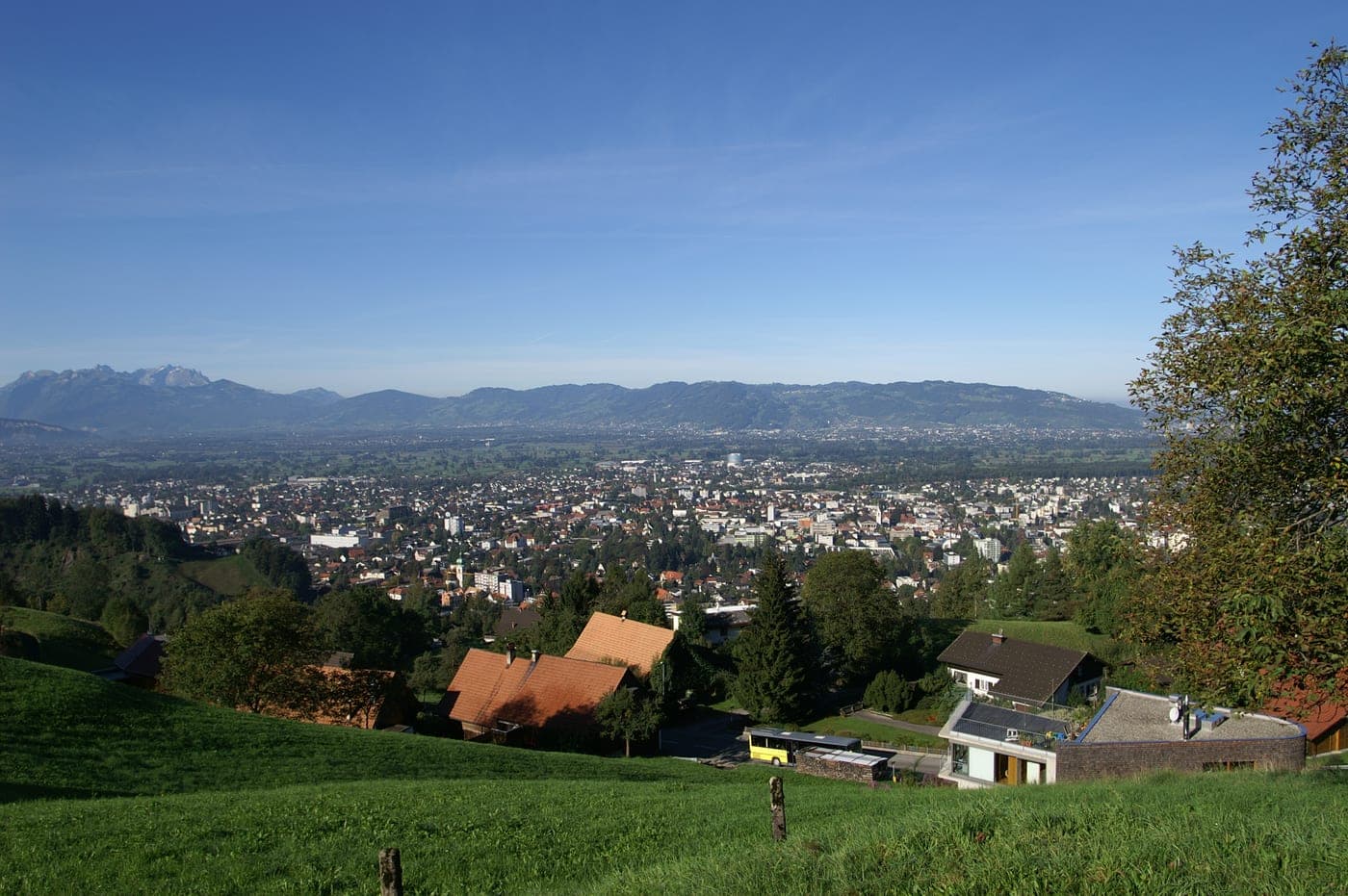
Vorarlberg
Nestled in the far west of Austria, Vorarlberg is the smallest federal state, bordered by Switzerland and Germany. Its stunning landscapes feature the Alps and Lake Constance, offering a mix of outdoor adventures and cultural experiences. The region is known for its traditional wooden architecture, particularly in villages like Schwarzenberg, where you can find local artisans at work. Bregenz, the capital, hosts the renowned Bregenzer Festspiele, an annual festival featuring opera on the lake. Vorarlberg is also famous for its culinary scene, showcasing local cheeses and wines, such as the robust whites from the region's vineyards. Explore the picturesque hiking trails in the Rätikon mountains for a deeper connection to the natural beauty and local traditions.
Wine TastingHikingLocal Cuisine