Mostviertler Birnenmost
Pear cider from Lower Austria's orchard avenues
- Alcoholic
- Local name
- Mostviertler Birnenmost
- Served
- Cool, from a jug or mug
- Best eaten at
- A Mostheuriger in the Mostviertel
- Pairs with
- Brettljause cold-cuts board
What it is
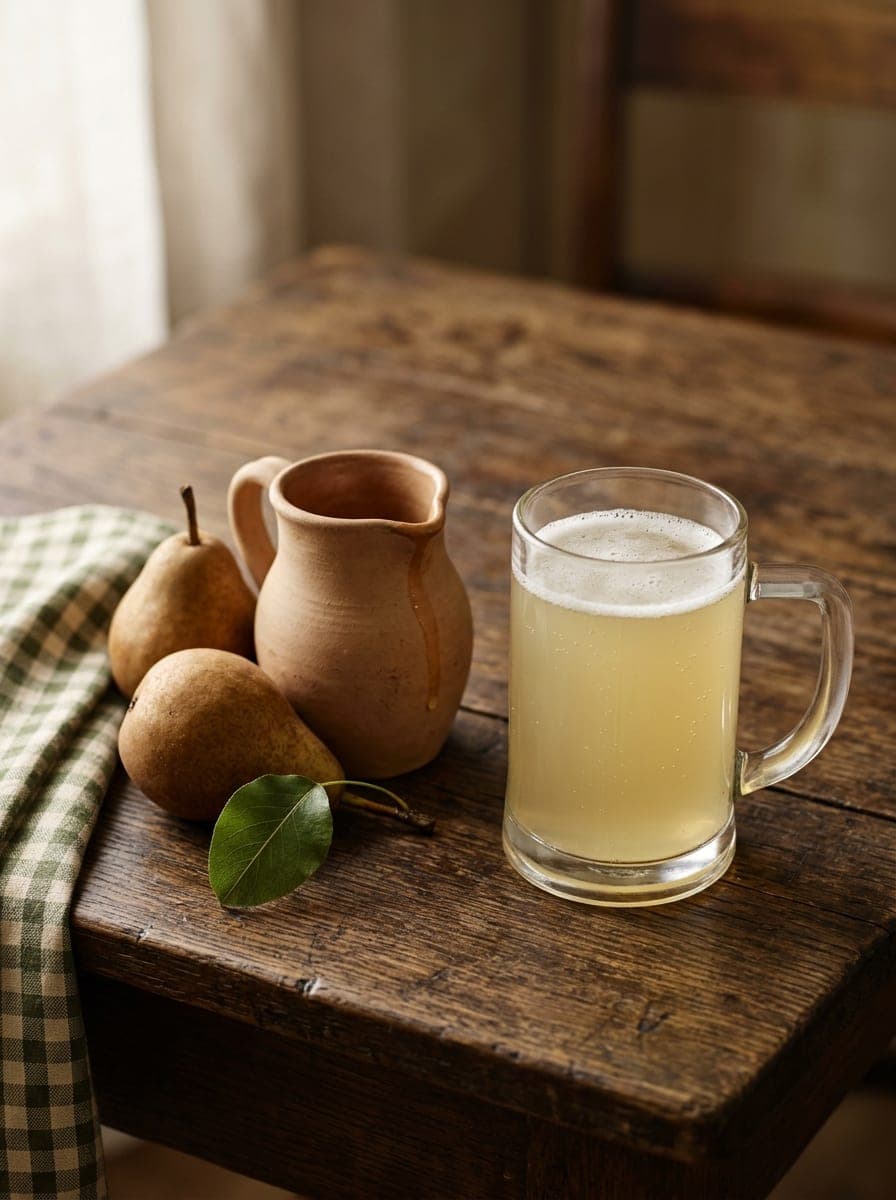
Mostviertler Birnenmost is pear cider from the Mostviertel, the south-western quarter of Lower Austria — a region named after the drink rather than the other way round. It is not juice and not a grape wine: the pears are pressed and the juice is fermented, and what comes out is dry, usually still, and between pale gold and amber depending on the fruit and the cellar.
The pears are not for eating. They are old pressing varieties, high in tannin and acid and astringent raw, grown on standard trees — tall trunks, high crowns — that stand along field edges and farm tracks rather than in dense orchards. The Mostviertel has the largest continuous area of perry-pear trees in Central Europe.
Where it comes from
Viertel means quarter: Lower Austria is divided into four, and this one is the Most quarter. The trees were planted for practical reasons — fruit for the household, windbreaks and shade for the fields, fodder for the pigs, and a household drink that kept through the winter.
Two seasons matter. In mid to late April the standard trees flower white, which the region now signposts as a route for visitors, and in autumn the fruit comes down and the pressing begins. The pressing is short and all at once, and a farm's whole year of Most is made in a few weeks.
How it is served
Cool, from a jug, into a thick glass or a pottery mug, at a Mostheuriger — a farm tavern licensed to sell the house's own pressing, which opens for a few weeks at a time and advertises itself with a sign at the gate. There is no list and no vintage to discuss: it is the farm's Most, this year's, and the usual question is whether a litre or a half.
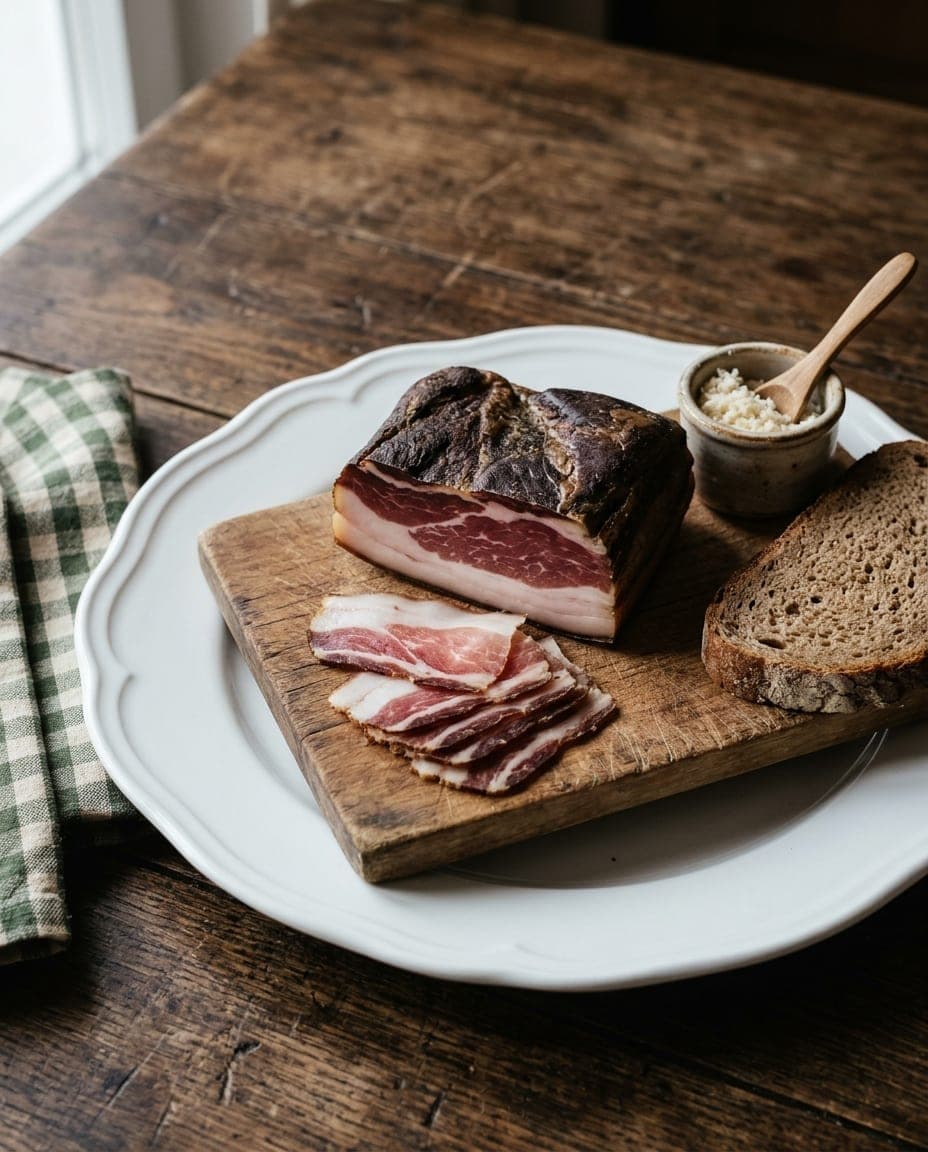
What comes with it is a Brettljause, a wooden board of cold cuts, cured pork, cheese and farmhouse bread. The pairing is the whole point of both: a dry, slightly tannic cider against fat and salt. The table is usually long and shared, and the jug goes round it.
Curious facts
- Standard trees define the landscape. The tall, single-trunk pear trees line the field edges rather than forming dense orchards, creating a unique visual identity for the Mostviertel.
- One pressing a year. The fruit comes down in autumn and the whole year's Most is made then; what is drunk in spring has been in the cellar since.
- Dry by tradition. Traditional Most is fermented out on the natural sugars of the pear juice, which is why it is dry rather than sweet.
- A local tavern culture. The Mostheuriger is a distinct institution where farmers sell their own produce, keeping the drink closely tied to its place of origin.
- The region is named after it. Mostviertel means the Most quarter — one of the four quarters of Lower Austria, alongside the Weinviertel, the Waldviertel and the Industrieviertel.
Where to try it
The villages of the Mostviertel, at a Mostheuriger with its own press — the region publishes which farms are open in which weeks, since each opens only for limited periods. A signed route, the Moststraße, links the farms and the pear avenues for anyone travelling through on foot or by bicycle.
Autumn is the obvious season, with the pressing under way and the previous year's cider still in the cellar to compare it with.
Where to try it
1 region
 Wine Tasting175 destinations
Lower Austria
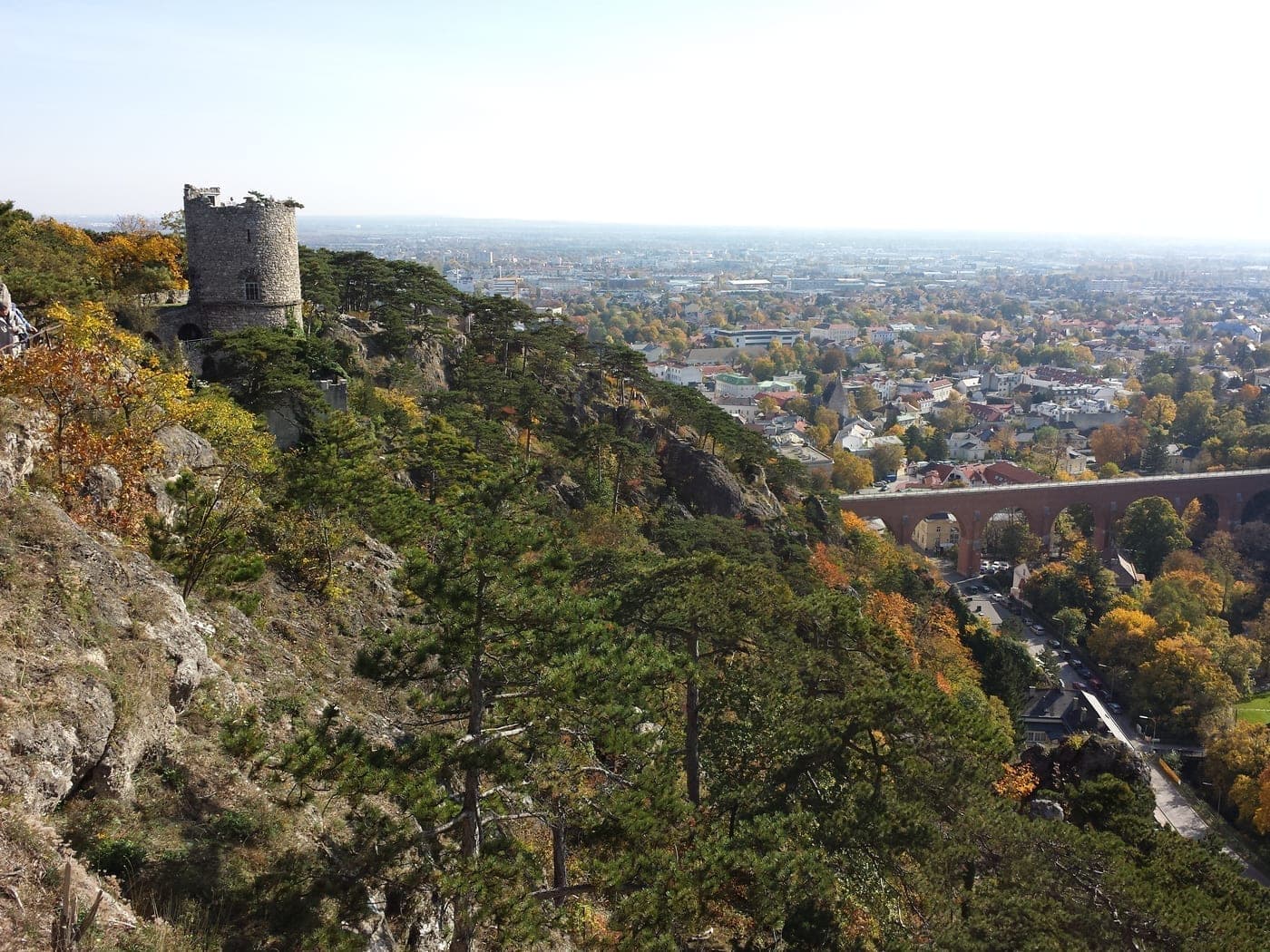
Lower Austria is the largest province in Austria, known for its diverse landscapes that include rolling vineyards, historic towns, and the Danube River. The region boasts notable sites like the picturesque Wachau Valley, famous for its apricot orchards and terraced vineyards. Krems and Dürnstein are charming towns that offer a glimpse into the region's medieval past, while the vibrant city of St. Pölten serves as the provincial capital. Lower Austria is also home to several castles, such as Schloss Grafenegg, and natural parks like the Thayatal National Park, which provide opportunities for hiking and exploring local flora and fauna. This area is rich in wine culture, particularly known for Grüner Veltliner and Riesling varieties, drawing wine enthusiasts to its many wineries. The blend of nature, history, and gastronomy makes the province a fascinating destination for those looking to explore Austria beyond the usual tourist routes.
Wine TastingHikingThermal SpasLocal Cuisine