Mohnnudeln (poppy-seed noodles)
Potato noodles under the Waldviertel's grey poppy
- Vegetarian
- Local name
- Mohnnudeln
- Served with
- Melted butter, powdered sugar
- Best eaten at
- A Waldviertel Gasthaus
What it is
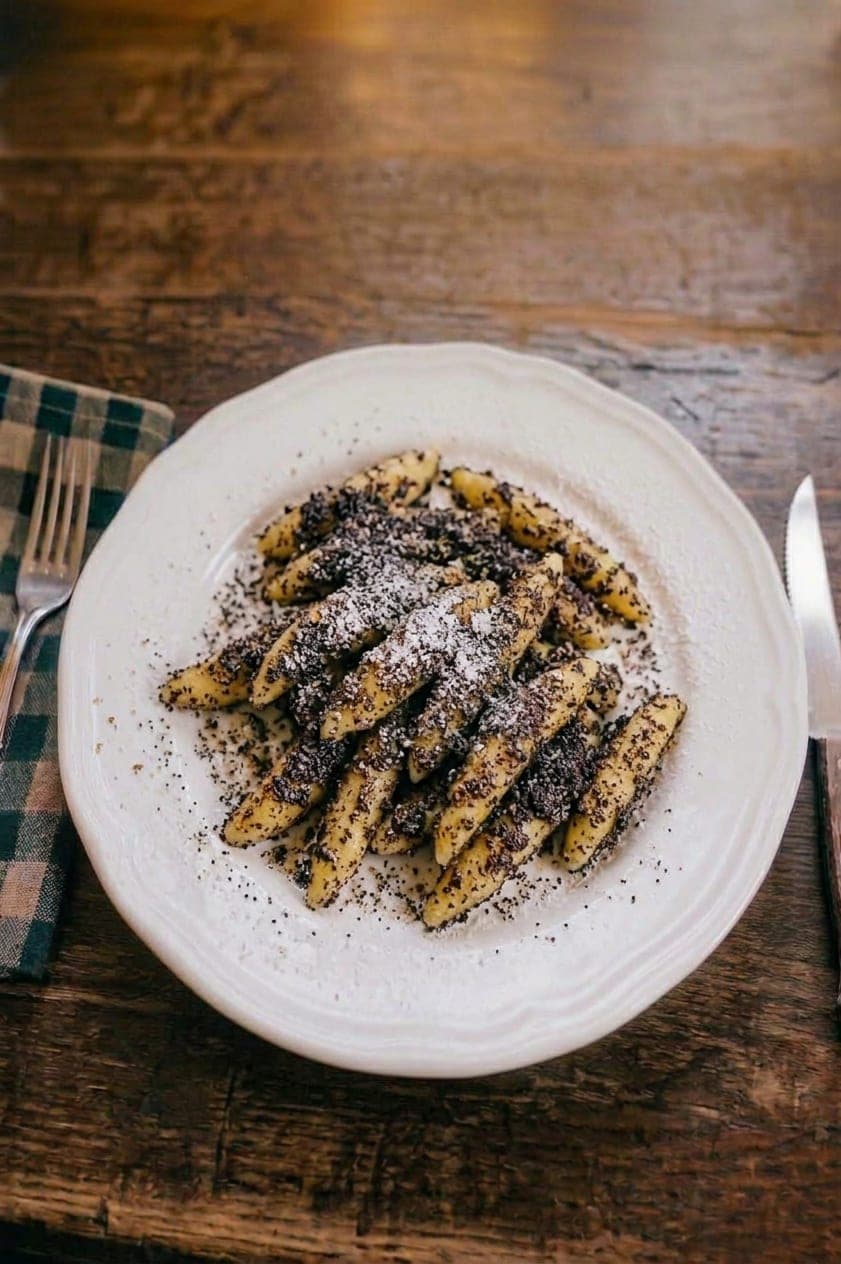
Mohnnudeln, literally "poppy-seed noodles", are eaten across Austria and in neighbouring Bohemia and Bavaria, but they are claimed above all by the Waldviertel in northern Lower Austria, where potato farming and poppy cultivation have long gone hand in hand. The dish consists of finger-sized pieces of potato dough, boiled until tender and then tossed in melted butter, ground grey poppy seed and icing sugar.
It sits between a main course and a dessert, which is an Austrian category rather than a confusion: a sweet dish, eaten at the end of a lunch that began with soup, in a portion that would be a full meal anywhere else.
The noodles are rolled individually by hand from a dough of boiled potato, flour and egg — short, blunt-ended, thicker in the middle — and boiled, then turned in the butter and poppy while still hot so the coating sticks. They have to be eaten warm; cold, the potato tightens and the butter sets.
The poppy of the Waldviertel
The defining ingredient of Mohnnudeln in the Waldviertel is Waldviertler Graumohn, the grey poppy grown specifically in the region. It is distinct from the blue-black poppy more common elsewhere, and milder and richer in oil. The fields flower white, lilac and red from late June to mid-July, creating a soft carpet across the landscape before the seeds are harvested by hand or machine in late summer.
The grey poppy carries a protected designation of origin of its own (EU-registered since 1997), and it is not a garnish here: the Waldviertel puts it in strudel, in cakes, in dumplings and in these noodles, ground fresh, because ground poppy quickly turns stale and bitter.
Poppy was a field crop in a region with thin soil and a short season, grown because it would grow. That is the whole origin of the dish: two cheap things, potato and poppy, cooked in butter.
How it is eaten
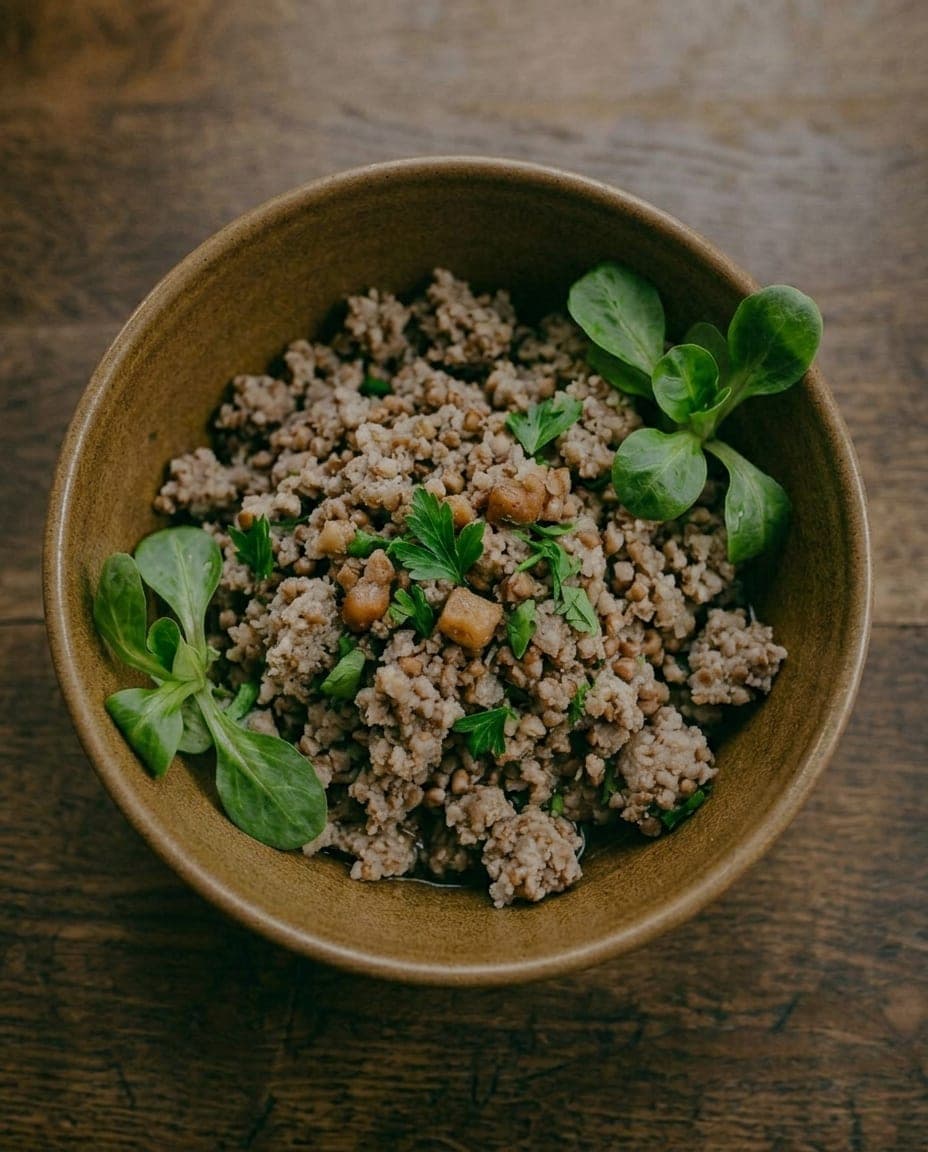
Warm, in a shallow bowl, under icing sugar, with a spoon rather than a fork — the loose poppy and butter at the bottom of the bowl is the best part and a fork will not get it.
The texture to look for is soft noodle, slight crunch from the seed. A small glass of Obstler, the clear brandy distilled from orchard fruit, is a common thing to order afterwards.
Curious facts
- Hand-rolled texture. The noodles are shaped by hand rather than machine, giving them an irregular shape that holds the poppy coating better than uniform pasta would.
- Grey, not blue. The Waldviertel's poppy is the grey variety, milder and nuttier than the blue-black seed sold elsewhere.
- Seasonal harvest. The poppy fields flower in early summer and the seed is harvested later that year, so autumn is when the new crop reaches the kitchens.
- Regional identity. Mohnnudeln are made across Austria, but only the Waldviertel makes them with its own protected grey poppy.
Where to try it
A Gasthaus in the Waldviertel — the villages around Zwettl, including the "poppy village" of Armschlag, and the country north towards the Czech border — where the noodles are rolled in the kitchen and the poppy is ground on the premises or bought from a mill in the next village.
Early July is worth timing a visit for, when the poppy fields are in flower, white, lilac and red across whole hillsides. The seed itself is sold in farm shops and at markets all year, and a packet of Waldviertler Graumohn is the easiest thing to take home from the region.
Where to try it
1 destination
 Wine Tasting
Japons
Charming village with traditional wooden houses and scenic hiking trails.
Wine Tasting
1 region
 Wine Tasting175 destinations
Lower Austria
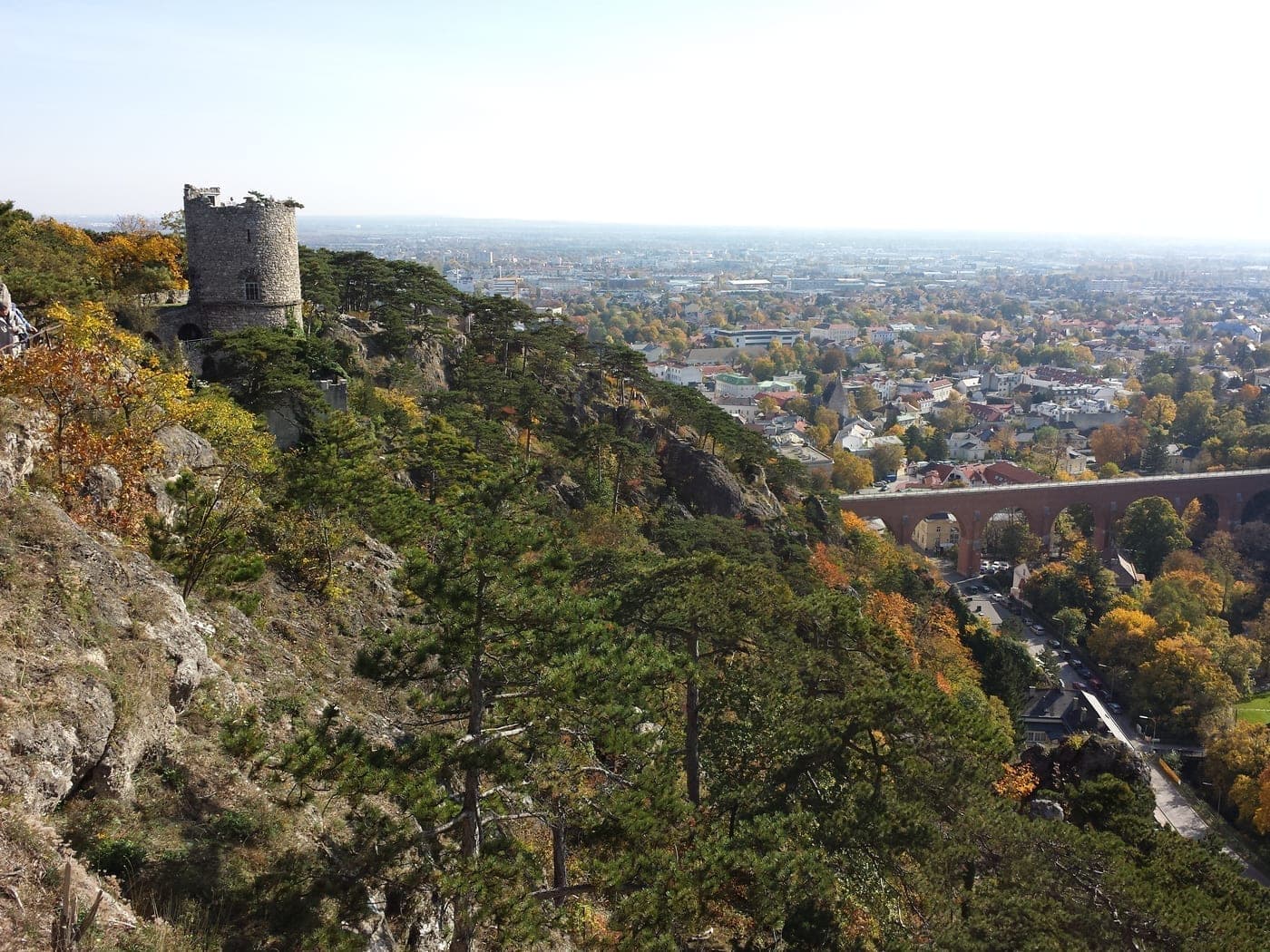
Lower Austria is the largest province in Austria, known for its diverse landscapes that include rolling vineyards, historic towns, and the Danube River. The region boasts notable sites like the picturesque Wachau Valley, famous for its apricot orchards and terraced vineyards. Krems and Dürnstein are charming towns that offer a glimpse into the region's medieval past, while the vibrant city of St. Pölten serves as the provincial capital. Lower Austria is also home to several castles, such as Schloss Grafenegg, and natural parks like the Thayatal National Park, which provide opportunities for hiking and exploring local flora and fauna. This area is rich in wine culture, particularly known for Grüner Veltliner and Riesling varieties, drawing wine enthusiasts to its many wineries. The blend of nature, history, and gastronomy makes the province a fascinating destination for those looking to explore Austria beyond the usual tourist routes.
Wine TastingHikingThermal SpasLocal Cuisine