Martinigansl
The goose that gave away a saint, eaten every November
- Local name
- Martinigansl
- Served with
- Red cabbage, bread dumplings
- Best eaten at
- A Burgenland Gasthaus or Viennese Beisl
- Pairs with
- Young Heuriger wine
What it is
Martinigansl is roast goose eaten around St Martin's Day, 11 November. The date is a hinge in the rural year: the farming season closes, and in the wine country the year's new wine is ready to be drunk. It is eaten across Austria, and most seriously in Burgenland and Lower Austria, where the goose and the young wine belong to the same week.
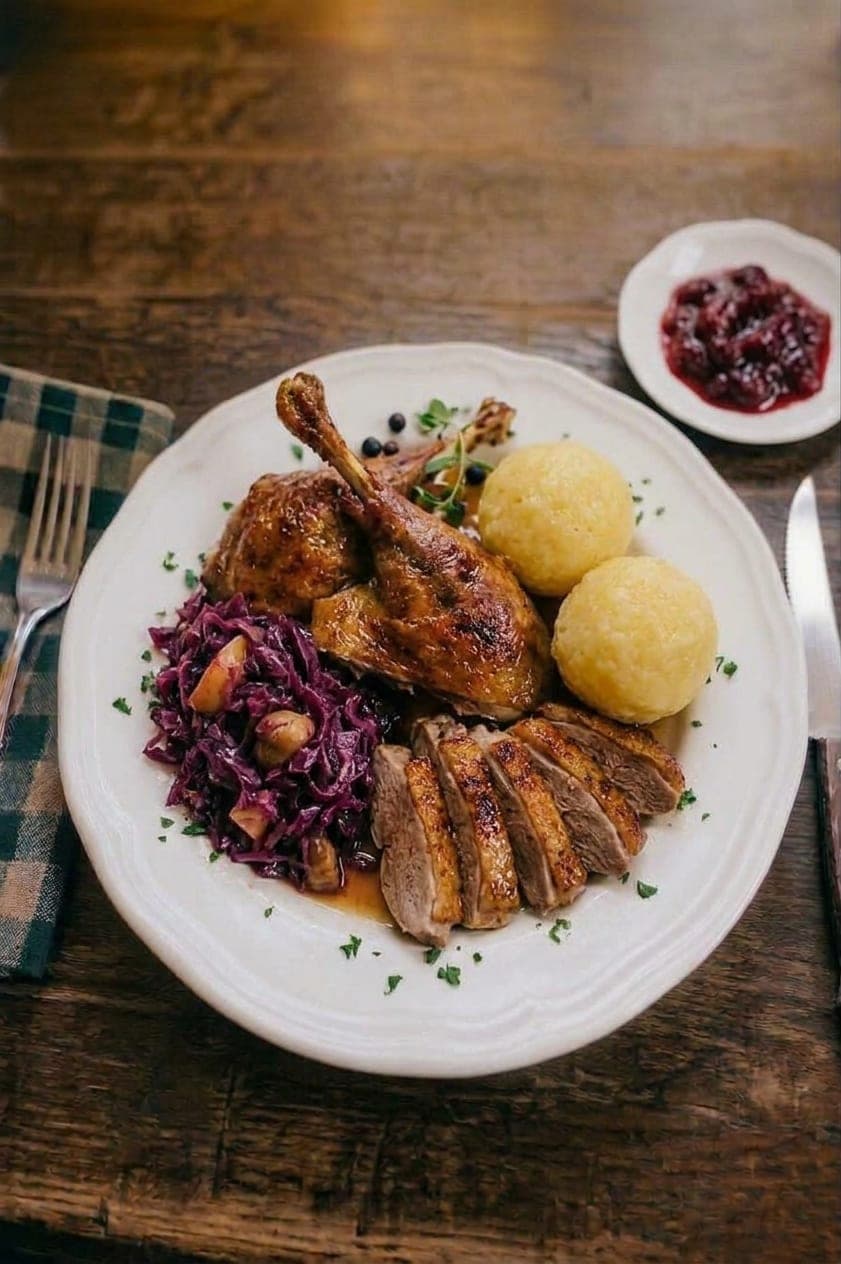
The name is Martin plus Gansl, the Austrian diminutive of Gans, goose — a small goose, affectionately. The bird is roasted until the skin crackles and carved onto deep red cabbage with bread dumplings beside it. It is a long lunch rather than a quick meal, usually eaten in a tavern with a table of other people.
The legend of the cackling geese
The story behind Martinigansl is one of the most enduring folk tales in Central Europe. Saint Martin was a Roman soldier who later became a bishop and is known for his generosity, particularly for sharing his cloak with a beggar. When he was chosen to become the Bishop of Tours in France, he did not want the role. According to the legend, Martin hid himself in a goose pen to avoid it. The geese, sensing his presence, began to cackle loudly and gave him away. Because the birds revealed where he was hiding, they are eaten on the day of his feast, so the story goes, as a kind of ironic punishment or remembrance.
The legend explains the bird and not the menu. In practice the goose marks the close of the farming year, when geese that would not be fed through the winter were slaughtered and given as dues to landlords. The season is elastic: inns advertise Gansl weeks from the start of November, often into December, and a table on the 11th itself needs booking well in advance.
How it is eaten
The meal is traditionally served as a main course at lunch or early dinner, often in a setting where large tables encourage sharing. The goose arrives whole for a table or by the quarter or half for one, with the skin left crisp and intact. It is usually accompanied by a generous portion of red cabbage, which has been cooked slowly with apples, vinegar and spices until it turns a deep purple colour.
Bread dumplings are not optional. Made from diced stale rolls with milk, egg and flour and simmered in salted water, they go under or beside the goose and take up the fat and the juices, which is their entire job. Roast chestnuts often appear with the cabbage.
In Burgenland and Lower Austria the glass beside it is the year's young wine, poured from a jug in small quantities. The acidity against the fat of the goose is why the pairing has stuck.
Curious facts
- A seasonal feast. The dish is a late-autumn event, tied to St Martin's Day and the end of the farming year, and is rarely seen on menus outside November and December.
- The wine is the other half. In eastern Austria, Martini is when the year's new wine is first drunk, which is why the goose and the young wine share the date.
- A regional variation. While eaten across Austria, the dish is most deeply rooted in Burgenland, whose patron saint is St Martin, and in Lower Austria, where the wine and meat traditions merge.
- The name's meaning. Martinigansl literally translates to "Martin's little goose", using a diminutive form common in Austrian German.
- The date was a deadline. Martini traditionally closed the farming year: rents were settled, contracts ended and the season's accounts were squared.
Where to try it
A Gasthaus in Burgenland or the Lower Austrian wine villages, a Heuriger — the wine-grower's own tavern — that cooks for the season, or a Beisl in Vienna, where the dish appears on a board outside for the month. Tables on and around the 11th are booked weeks ahead, and the quieter end of November is the easier way in.
The thing worth asking is whether the goose is roasted on the day. A kitchen cooking for the season will say so; one reheating portions tends to change the subject.
Where to try it
1 region
 Wine Tasting48 destinations
Burgenland
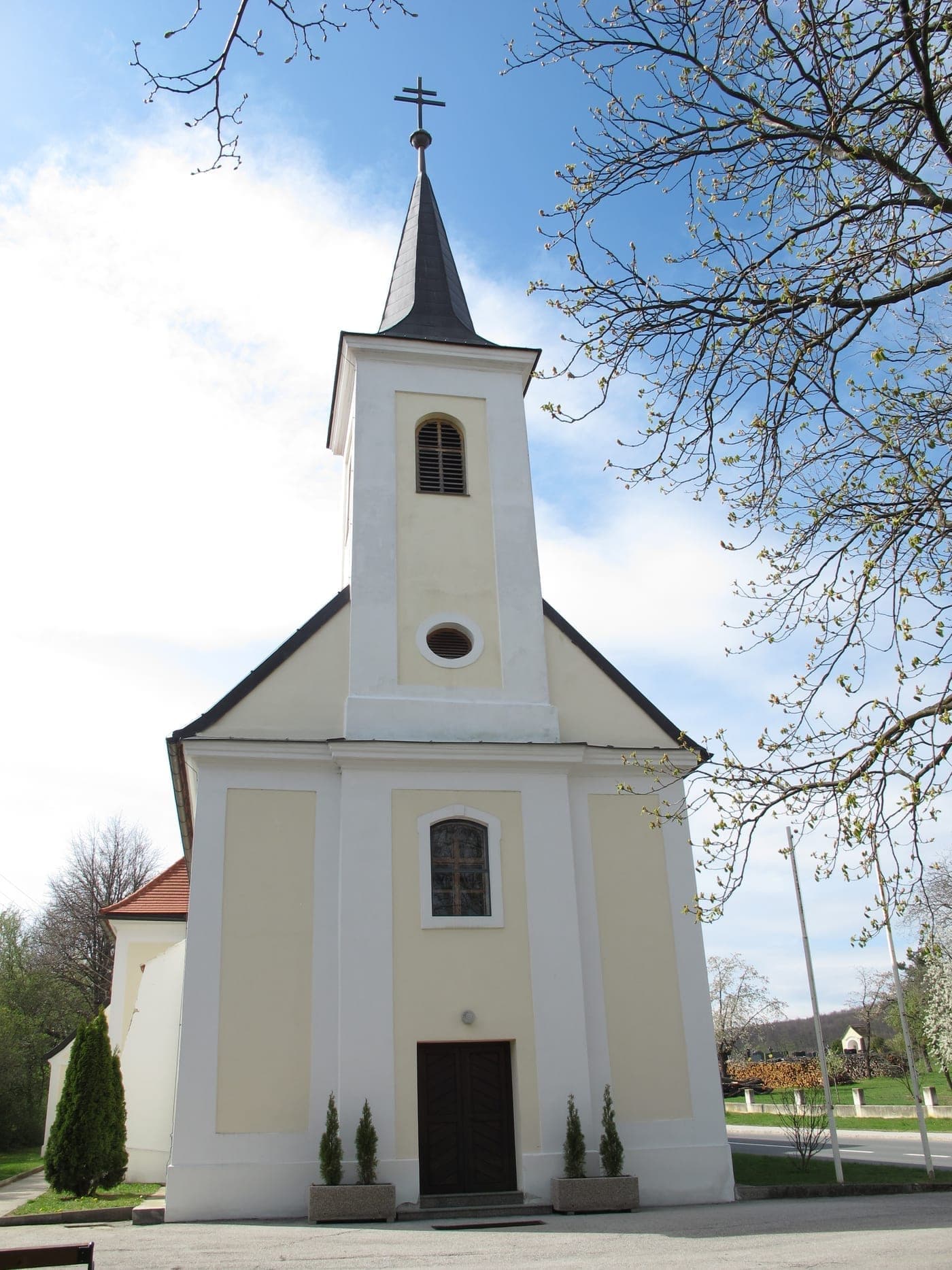
Burgenland is Austria's easternmost region, known for its diverse landscapes and rich cultural heritage. It is home to the historic city of Eisenstadt, where the Haydn Museum showcases the music of composer Joseph Haydn. The region features the unique Neusiedler See, a UNESCO World Heritage site, famous for its wetlands and birdwatching opportunities. Burgenland is also renowned for its wine production, particularly the sweet wines from the vineyards surrounding the charming town of Rust. Explore lesser-known towns like Lutzmannsburg, known for its thermal baths, or the picturesque village of Mönchhof, celebrated for its local crafts and traditional festivals. Outdoor activities such as hiking and cycling trails along the lake enhance the immersive experience in this less-traveled area.
Wine TastingHikingLocal CuisineThermal Spas