Linzer Augen
Three holes, redcurrant jam and a Christmas tin
- Vegetarian
- Local name
- Linzer Augen
- Best eaten at
- An Austrian Konditorei
- Pairs with
- Coffee
What they are
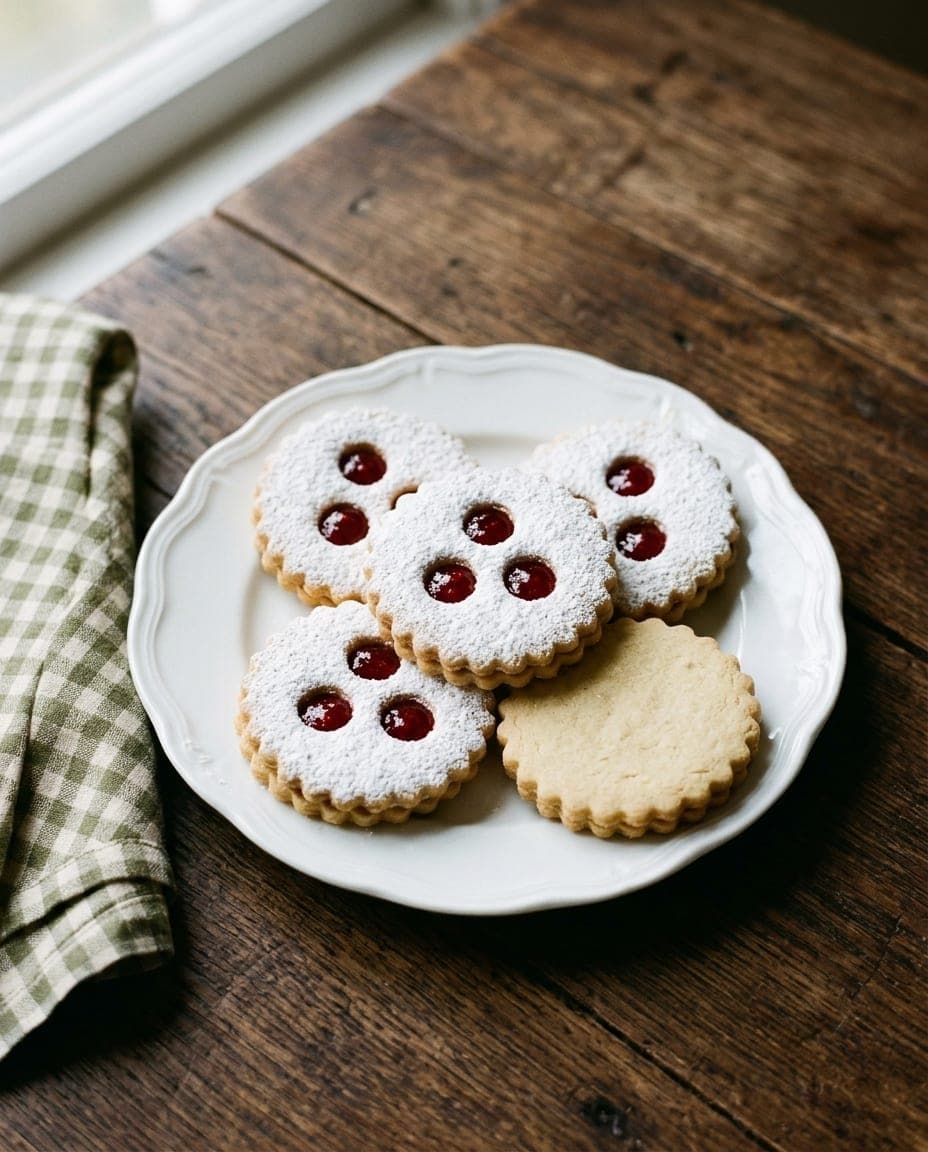
Linzer Augen — Linzer eyes — are two discs of nut pastry sandwiched with redcurrant jam, the top disc pierced with three round holes through which the jam shows, the whole thing dusted white with icing sugar.
They are the small version of the Linzer Torte, named after the same city and made from the same family of dough: butter, flour and sugar, often with ground almonds or hazelnuts and cinnamon or lemon zest, and a sharp redcurrant filling to keep it from being too sweet. Where the torte is cut into slices, these are made in dozens.
Their real season is December. Austrian households bake tins of Christmas biscuits through the month, Weihnachtsbäckerei, and these are one of the fixed items in the tin; a Konditorei, the confectioner's shop, sells them all year.
The nutty pastry
The dough is the defining feature of the Linzer Augen. It begins with butter and sugar, and in many recipes the texture comes from ground nuts mixed into the flour. This creates a crumbly, melt-in-the-mouth quality that distinguishes it from standard shortbread or cookie dough. Cinnamon often goes in too, providing a warm spice note that complements the sharpness of the redcurrant jam.
Three holes in a triangle are the standard, though a single central hole is common too, and everyone still calls them Augen. The jam has to be sieved and thick enough to hold an edge.
The order of work matters. Both discs are cut out, the holes are punched in the lids, and the discs are baked separately; the jam goes on afterwards, warmed, and the lid is laid on while it is still soft so the two stick. Icing sugar is sifted over the lids — usually before they are assembled, so the jam in the holes stays red rather than being dusted over.
How they are eaten
With coffee, in the afternoon, two or three at a time — they are small, and nobody eats one. A Mokka or a plain black coffee is the standard partner; the icing sugar needs it.
In a Konditorei they are sold loose by weight or by the piece and packed into a flat box, which is also how they are given as a present. The pastry should crumble rather than snap, and the icing sugar should still be powdery: a hard, glassy surface means the biscuit has been sitting out.
Curious facts
- The name comes from the cake. Linzer Augen take their name from the Linzer Torte, a much larger version of the same nut-and-jam pastry that dates back to the 17th century.
- Three holes are standard. While a single central hole is also common, three round openings are the most common way to present the jam-filled biscuit.
- A Christmas tradition. They are part of the annual baking season in Austrian homes, where families prepare tins of biscuits for friends and neighbours throughout December.
- Known well beyond Linz. Despite the name, Linzer Augen are baked all over Austria and in southern Germany; close relatives go by Spitzbuben or, in Carinthia, Linzer Radl.
- No recipe is official. There is no single rulebook for the dough; each Konditorei or household has its own ratio of nuts, butter, and spices.
Where to try it
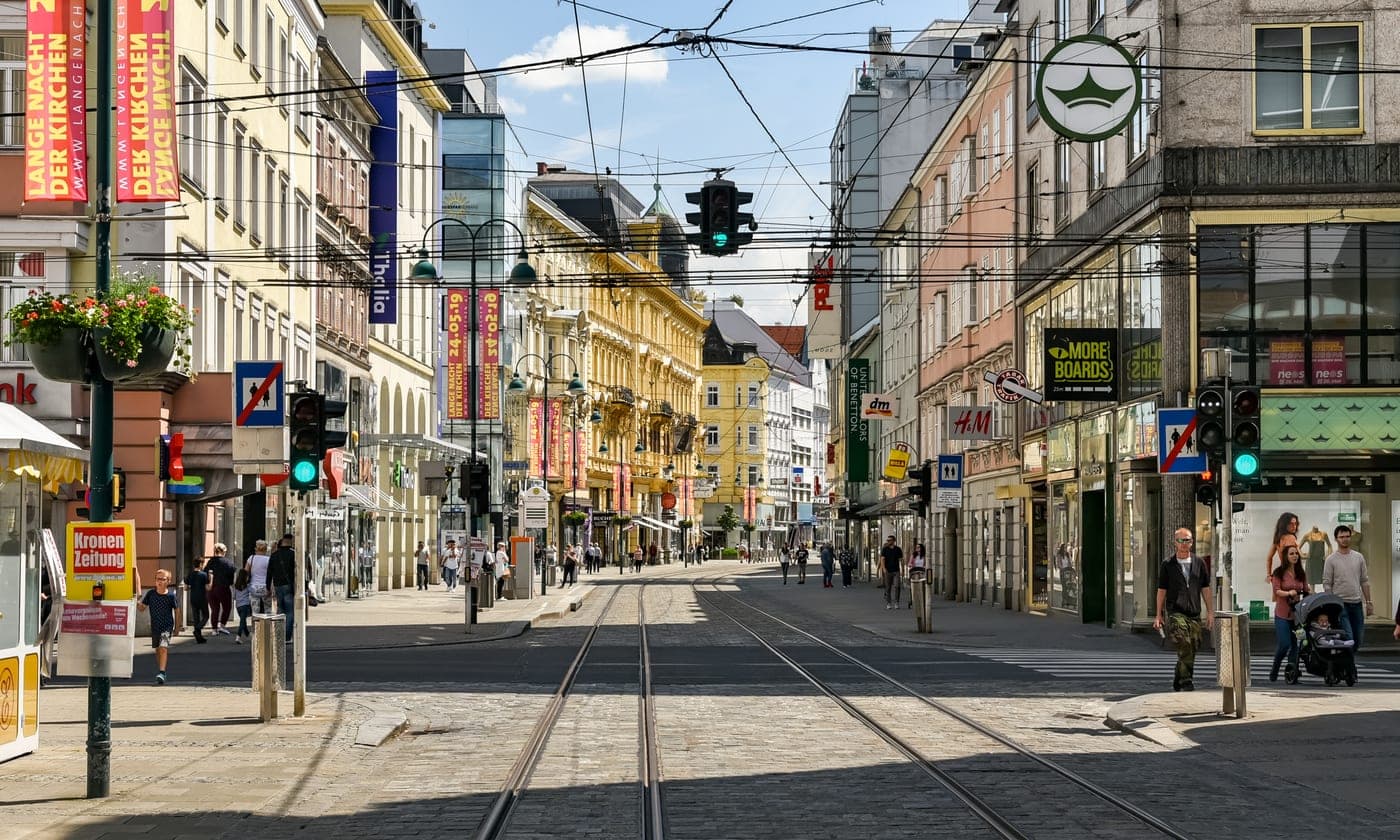
Any Konditorei in Linz or the towns around it has them on the counter, usually beside the whole Linzer Torte they are the small version of. Village bakeries across Upper Austria bake them too, and in December so does most of the province at home — a tin of mixed Christmas biscuits in an Austrian house will have Augen in it. They keep for a fortnight in a tin, which makes them the easiest thing to carry home from Linz.
Where to try it
1 destination
1 region
 Wine Tasting6 destinations
Upper Austria
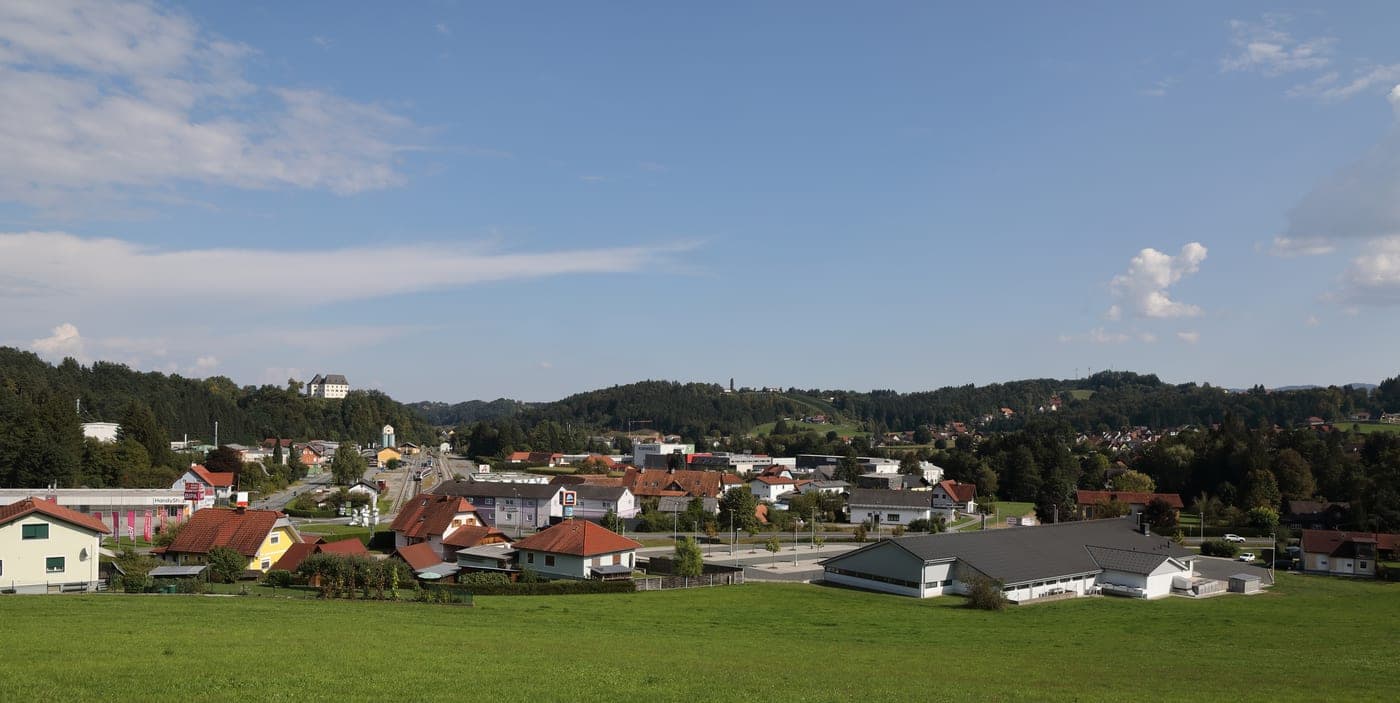
Upper Austria is known for its stunning landscapes, featuring the Danube River and the foothills of the Alps. The largest city, Linz, is a cultural hub with a rich industrial heritage, hosting the Ars Electronica Center for contemporary media art. The region is also famous for its picturesque lakes, such as Traunsee and Attersee, which offer outdoor activities like hiking and sailing. Explore charming towns like Gmunden, known for its pottery, and Steyr, where medieval architecture meets a vibrant textile industry. Upper Austria's history includes significant events from the Habsburg era and the industrial revolution, making it a fascinating destination for those interested in cultural depth and local traditions.
Wine TastingHikingCamper Van Rentals