Käferbohnensalat
Styrian beans under dark pumpkin seed oil
- Vegetarian
- Local name
- Steirischer Käferbohnensalat
- Served with
- Red onion, farmhouse bread
- Best eaten at
- A Styrian Buschenschank
- Pairs with
- Welschriesling or Schilcher
What it is
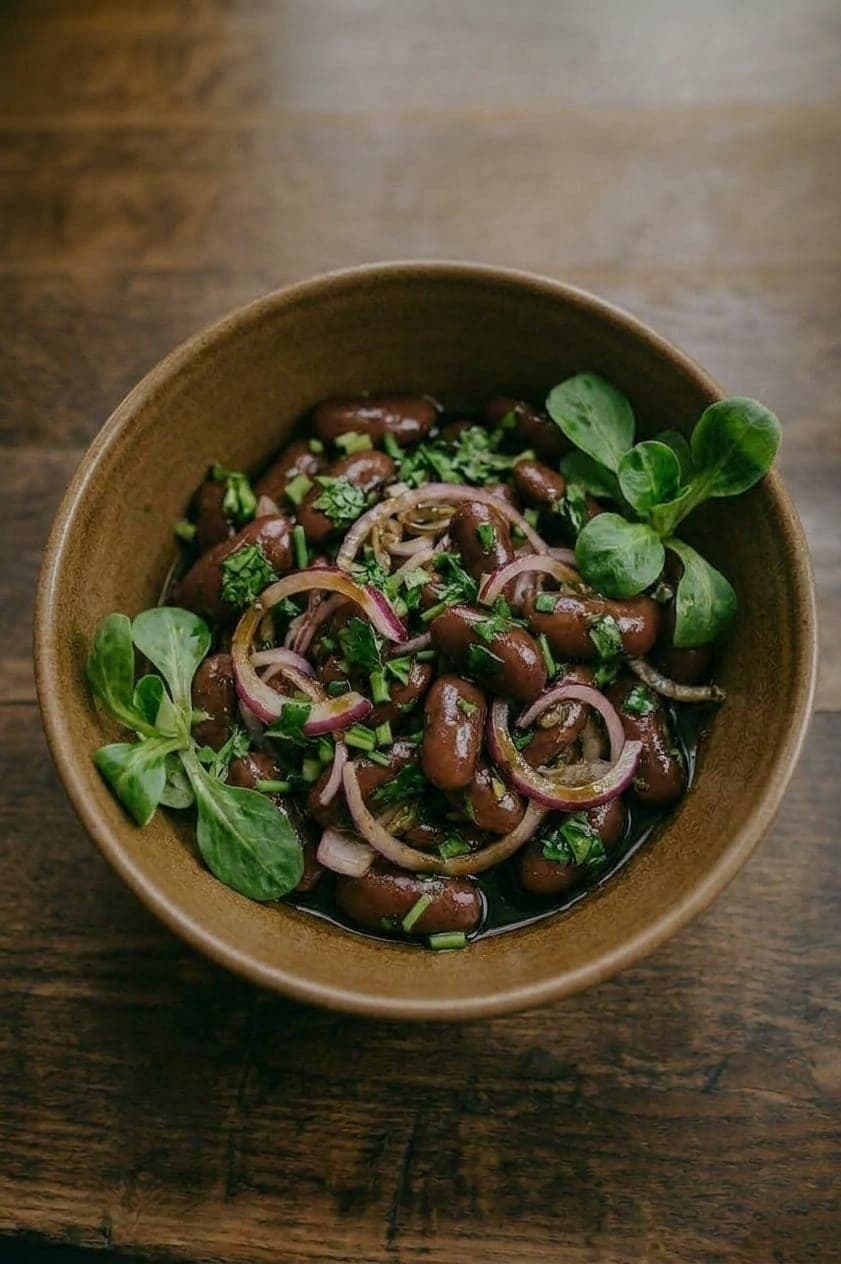
Käferbohnensalat, or Steirischer Käferbohnensalat, is a simple but distinctive salad from the Austrian region of Styria. It relies on one protected ingredient: the Steirische Käferbohne, a scarlet runner bean whose large, flat seeds are mottled in violet-black, brown and beige. The beans are boiled until tender, cooled, and then dressed with the region's signature dark green pumpkin seed oil, vinegar and slices of raw red onion.
It is not a side dish. A plate of it with bread is lunch in southern Styria: the beans are large and floury, the oil is strong, and the raw onion is there to keep the whole thing from being heavy.
Where it comes from
The salad belongs to the farming districts of Styria, particularly the south and south-east of the province. Its history is tied to the specific method of growing the Steirische Käferbohne. Traditionally, these beans are sown in maize fields where the climbing plants use the tall corn stalks as natural supports. This intercropping system remains visible in Styrian fields during the harvest season, creating a distinct visual rhythm between the maize and the red-flowering bean vines.
Dried beans keep, which is the practical reason the dish exists: a sack of them in the cellar meant a cooked meal in February. Bean salads are made all over central Europe; the Styrian one is this bean with this oil, and that pairing is local.
How it is eaten
The salad is traditionally served at a Buschenschank, a small country tavern found in Austrian vineyards and farming areas where producers serve their own wine and seasonal food. In these rustic settings, the dish arrives on a wooden board or in a shallow bowl, often accompanied by thick slices of farmhouse bread to scoop up the oil.
It is eaten with a fork, and the bread is for the oil left in the bottom of the bowl, which nobody leaves. A glass of Welschriesling, or of Schilcher — the pale, sharp Styrian rosé made from Blauer Wildbacher — is the standard thing beside it.
What goes into it
The composition is strict, with little room for improvisation if the dish is to remain authentic:
- Steirische Käferbohne: Large, flat beans, beige and mottled with purple-brown — the scarlet runner bean, grown here for the seed rather than the pod. Cooked, they are floury and almost chestnut-like.
- Pumpkin seed oil: A dark green, unrefined oil pressed from roasted pumpkin seeds. It has a strong nutty flavour and is added sparingly to coat the beans without overwhelming them.
- Red onion: Thinly sliced raw onions provide a sharp contrast to the soft texture of the beans.
- Vinegar: A light wine vinegar or cider vinegar, enough to cut the oil.
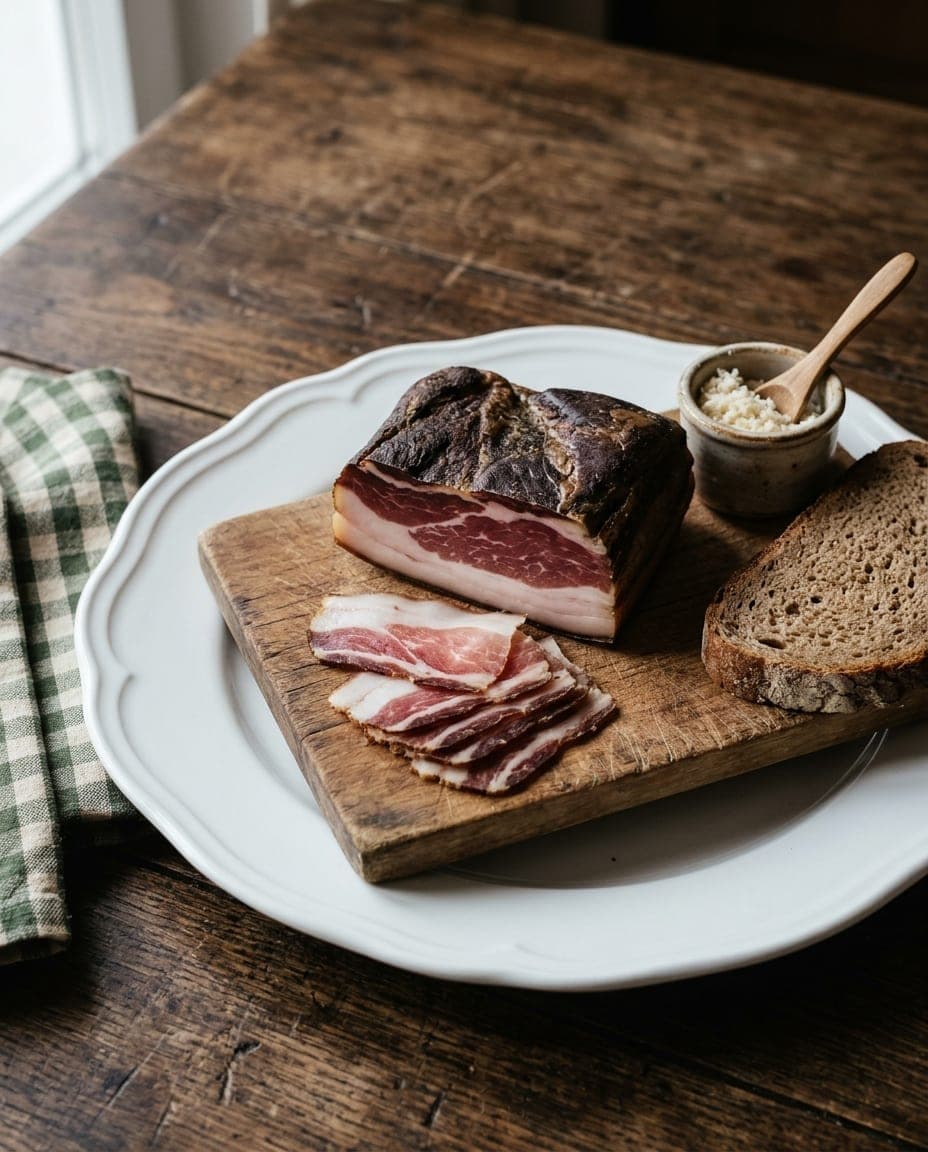
- Farmhouse bread: A dense loaf, cut thick, for the oil at the bottom of the bowl.
In a tavern the salad usually arrives as part of a larger spread, next to cold cuts, cheese and bread, rather than alone.
Curious facts
- The bean is protected. Steirische Käferbohne has been an EU protected designation of origin (g.U.) since 2016; the pumpkin seed oil beside it is a protected geographical indication (g.g.A.).
- Picked dry. The pods are left on the plant until they have dried, and the harvest runs from October into December.
- Two crops, one field. The beans are still sown among maize in Styrian fields, the stalks standing in for bean poles.
- Seasonal timing. Because the beans are dried, the salad is made all year; late autumn is when the new crop arrives.
- Dried, not fresh. The salad is made from the dried seed, soaked overnight and boiled — not from green pods.
Where to try it
A Buschenschank in southern or south-eastern Styria — wine country, in the same districts where the beans grow among the maize — has it on the board most of the year, since the beans are dried. Autumn is when the new crop comes in and when the oil from the same harvest is at its freshest, which is the best argument for timing a visit.
Where to try it
2 destinations
 Wine Tasting
Gamlitz
Premier wine destination with world-class wineries and stunning landscapes.
Wine TastingHikingLocal Cuisine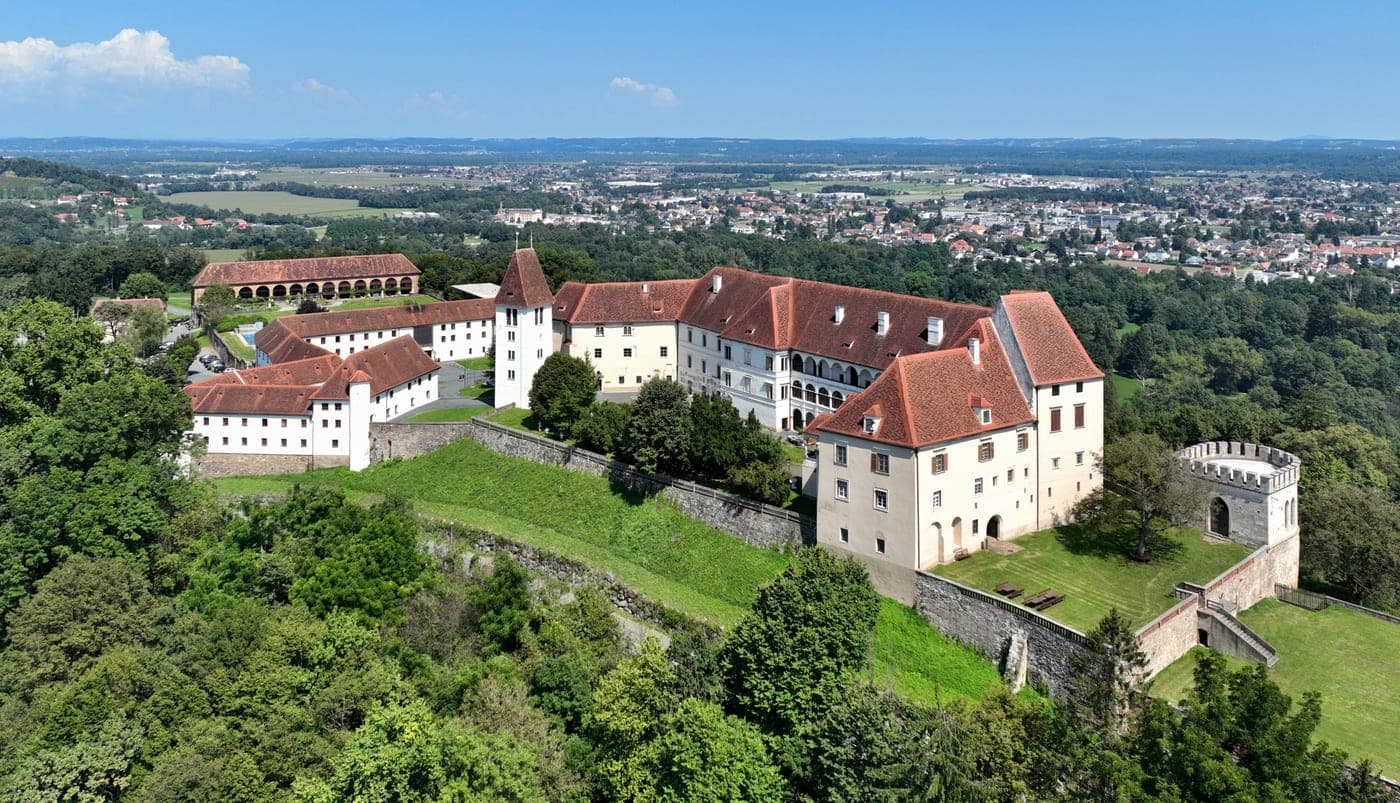 Wine Tasting
Leibnitz
Historic town with Roman ruins and Schloss Seggau castle.
Wine TastingHikingLocal Cuisine
1 region
- Wine Tasting53 destinations
Styria
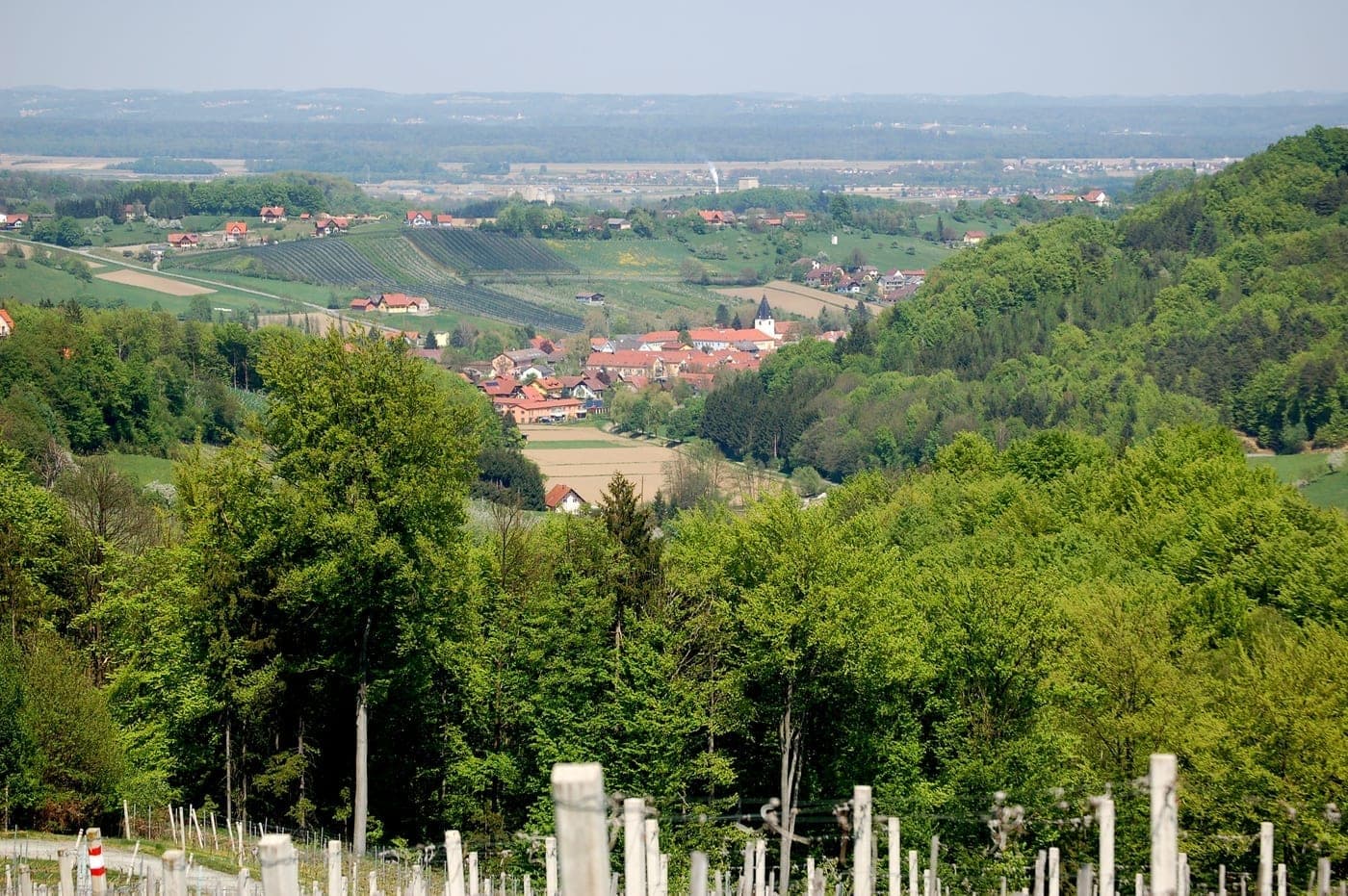
Styria is Austria's second-largest region, known for its diverse landscapes ranging from rolling hills to the Eastern Alps. Graz, the capital, is a UNESCO World Heritage site, celebrated for its Renaissance and Baroque architecture. The region is famed for its wine production, particularly the white wines from the Südsteiermark wine route, where picturesque vineyards dot the landscape. Outdoor enthusiasts can explore the Gesäuse National Park, rich in hiking trails and scenic vistas. Unique to Styria, the region also boasts a vibrant culinary scene, with local specialties like pumpkin seed oil and Styrian cheeses. The area features many historic castles and small towns like Riegersburg, known for its impressive fortress and local artisans.
Wine TastingHikingLocal CuisineCamper Van Rentals