Toast Skagen
Shrimp, dill and roe on butter-fried bread
- Local name
- Toast Skagen
- Served with
- Lemon, dill
- Best eaten at
- A Stockholm bistro
- Pairs with
- Dry white wine
What it is
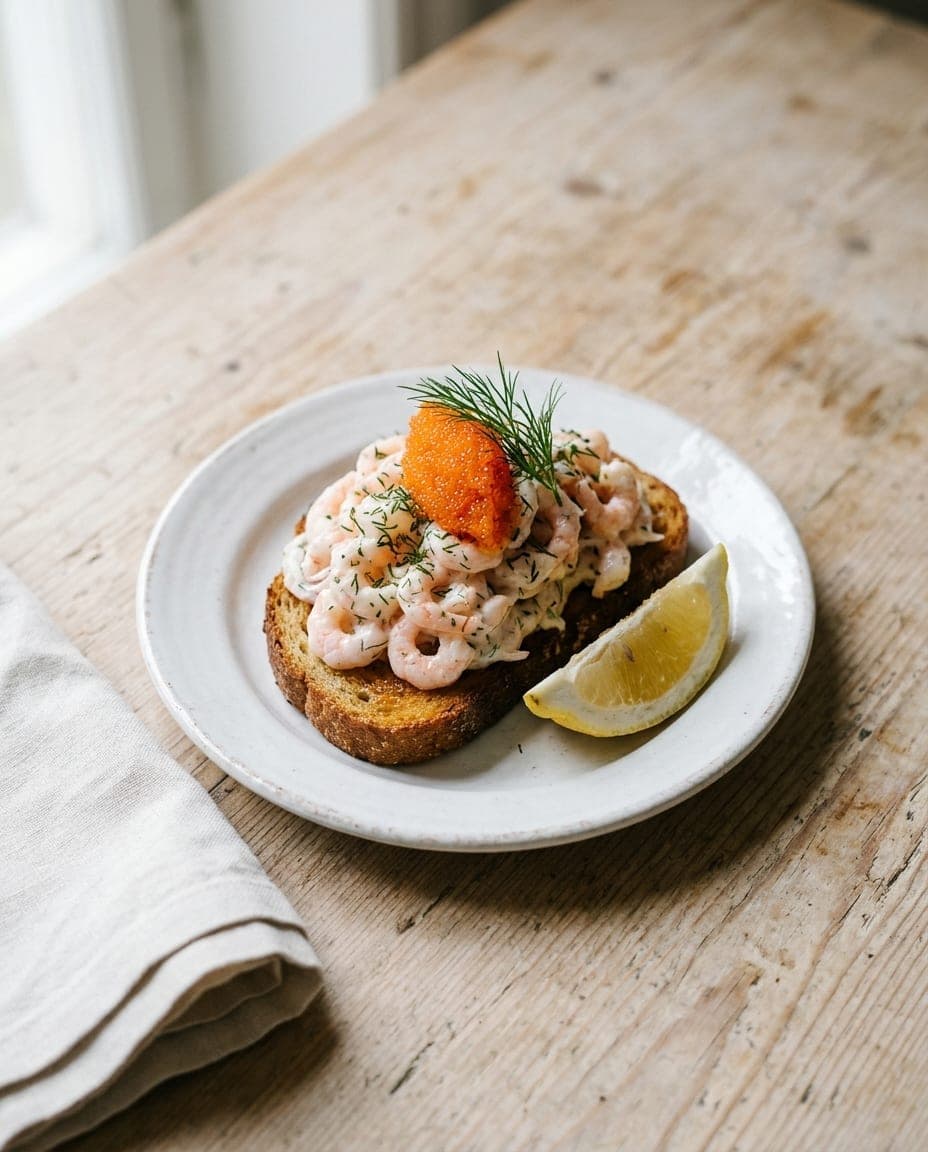
Toast Skagen is one of the most recognisable starters in the capital's dining scene, a dish that balances lightness with a richness that feels substantial enough to satisfy. It consists of a generous mound of small, cold-water shrimp mixed with mayonnaise, a touch of sour cream or crème fraîche, chopped dill and lemon juice, all piled onto a slice of white bread that has been fried in butter until golden. The pile is finished with a spoonful of löjrom, the orange roe of the vendace, and a sprig of dill.
The texture is the defining feature: the shrimp remain cool and firm against the warm, crisp toast, while the creamy dressing binds everything together without feeling heavy. It is a dish that feels both festive and everyday, appearing on the menu of almost every traditional Swedish bistro in Stockholm, from the historic centre to the waterside quarters. It is now a staple across Sweden, but it belongs to the capital's restaurant culture rather than to farmhouse cooking.
The name often confuses visitors who assume the dish originates from Denmark. Skagen is indeed a town at the northern tip of Jutland, famous for its fishing and its light-filled summers, but Toast Skagen is a Swedish invention. By the account of Wretman's widow, he improvised it in 1956 aboard his boat during a sailing race, with Skagen on the horizon, and named it after the nearest land.
The origin story of Tore Wretman
The dish has a clear lineage that traces back to the 1950s and a man named Tore Wretman. He was a Stockholm restaurateur, owner of Riche and later Operakällaren, who played a prominent role in the post-war era by championing traditional Swedish home cooking, husmanskost, and putting it on restaurant menus. Wretman sought to preserve these recipes while presenting them with a level of care that matched international standards.
He put Toast Skagen together from what was in the galley: shrimp, eggs and oil for mayonnaise, white bread, roe and dill. The name came from the view rather than from any plan; Skagen was simply the closest land. This connection between a Swedish creation and a Danish place name has led to persistent confusion over the years, with many assuming the recipe is Danish in origin. In reality, it made its name in Stockholm's mid-century restaurants once Wretman put it on his menus, a refined way to eat the Nordic catch.
Wretman's approach was to take simple ingredients—shrimp, bread, butter—and combine them with precision rather than excess. The result became an instant classic, appearing on the menus of the city's most respected establishments and eventually becoming a standard offering in any place serving traditional Swedish food. His work helped define the modern Swedish bistro, where such dishes remain central to the dining experience today.
What goes into it
The ingredients are few, but each plays a specific role in the balance of the dish. There is no single official recipe, and every kitchen guards its own variation, yet the building blocks remain consistent across Stockholm.
- Small cold-water shrimp, peeled and kept chilled, form the main body of the topping. These are not the large prawns found in other cuisines, but tiny, sweet specimens that offer a delicate texture.
- Mayonnaise acts as the primary binder, providing a creamy base that coats the shrimp evenly without overwhelming their natural flavour.
- Sour cream or crème fraîche, used sparingly, adds a slight tang and lightens the fat of the mayonnaise.
- Fresh dill, chopped finely, is essential for the herbal note that defines the dish's character.
- Lemon juice is squeezed in to brighten the mixture and cut through the creaminess.
- White bread, sliced thickly and fried in butter until crisp on the outside and soft within, serves as the warm foundation.
- Vendace roe, löjrom, which gives the salt burst and the orange colour on top.
The mixture is not seasoned with heavy spices; the flavour relies entirely on the quality of the shrimp, the freshness of the dill, and the balance between the creamy dressing and the sharp lemon. It is a dish where the ingredients are visible and distinct, rather than blended into a uniform paste.
How to eat it
Toast Skagen is served as a starter or a light lunch course, rarely appearing as a main meal. It is designed to be eaten immediately after leaving the kitchen, while the toast retains its warmth and the shrimp remain cool. The bread should be sturdy enough to hold the weight of the topping without becoming soggy, yet soft enough to offer a gentle contrast to the crisp crust.
It is common to see it presented on a small plate with a wedge of lemon on the side, allowing the diner to squeeze a little extra juice over the top if desired. A sprig of fresh dill is often placed on the roe as a garnish, reinforcing the herb's importance in the dish. The traditional way to eat it involves taking a bite that includes all elements: the crisp bread, the creamy shrimp mixture, and the salty burst of roe.
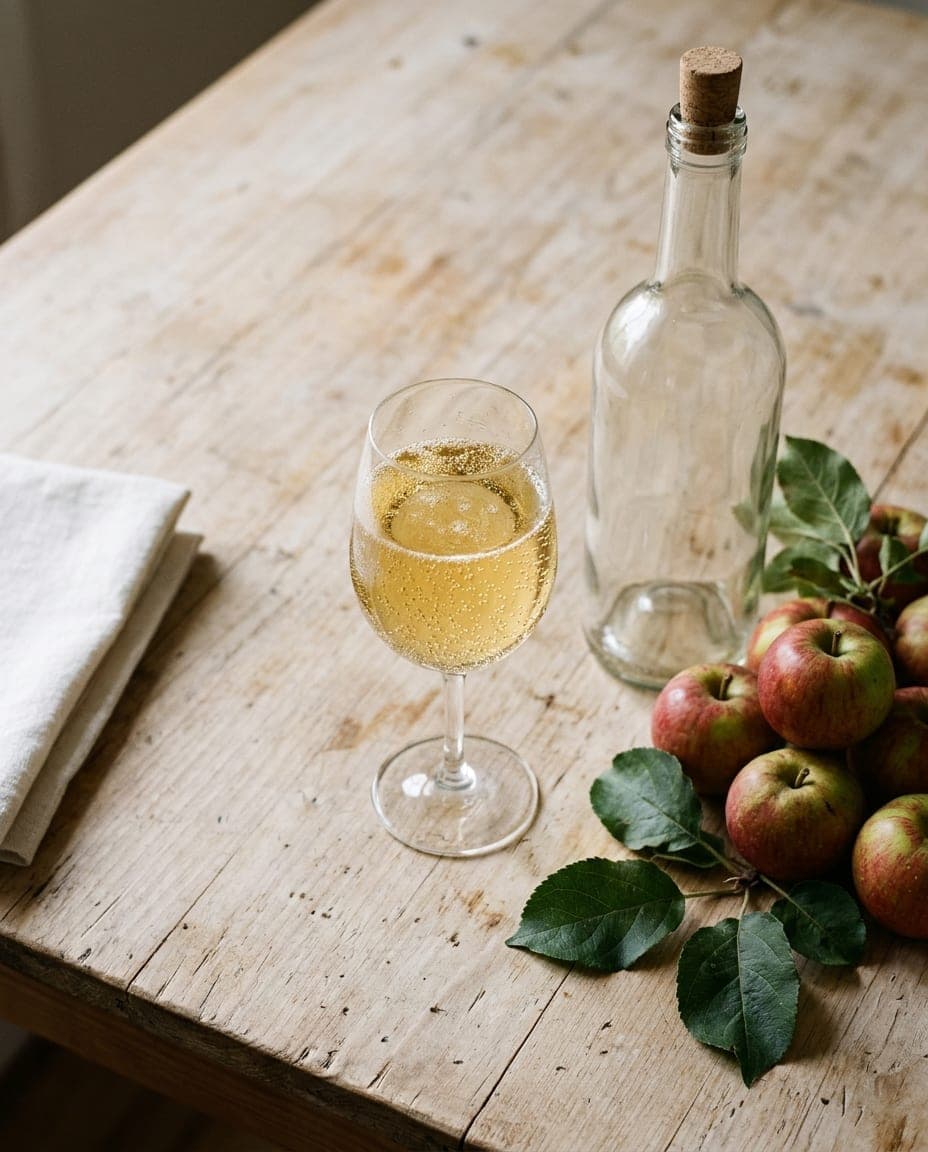
A dry white is the usual glass — a Riesling or a Chablis-style wine — against the brine of the shrimp. A pale lager does the same work on the mayonnaise, and a small aquavit alongside is a Swedish habit rather than a requirement.
Curious facts
- A Danish name, Swedish birth. The dish is named after the town of Skagen in Denmark, but it was created by the Stockholm restaurateur Tore Wretman, reputedly in 1956 on a sailing trip off Skagen.
- The roe matters. Not every version includes löjrom, but the proper one does, and it is what the price reflects.
- A bistro staple. It appears on the menu of almost every traditional Swedish bistro in Stockholm, from the old town to the waterfront.
- Temperature play. The dish is defined by the contrast between the warm, butter-fried bread and the cold, chilled shrimp mixture.
- No heavy spices. Unlike many seafood dishes, Toast Skagen relies on dill and lemon for flavour rather than black pepper or hot sauces.
Where to try it
The best place to eat Toast Skagen is in a traditional Stockholm bistro, where the dish remains a core part of the menu. These are neighbourhood places serving classic Swedish food, in the centre and along the water. Saltsjöbaden, the seaside suburb at the end of the line south-east of the city, has the version with a view.
The variables are the shrimp and the roe. Hand-peeled shrimp and real löjrom cost what they cost, and a cheap version of this dish announces itself immediately.
Where to try it
1 destination
1 region
 Boat Rentals7 destinations
Stockholm
Stockholm, the largest city in Sweden, is spread across 14 islands, each with its unique character. The city boasts a rich maritime history, and its archipelago features over 30,000 islands, perfect for exploration. Gamla Stan, its medieval heart, offers narrow cobblestone streets and colorful buildings. The Vasa Museum showcases a 17th-century warship, while Skansen, the world's first open-air museum, presents traditional Swedish life. Nearby, the historic town of Sigtuna is known for its Viking heritage. The region also embraces sustainability, with numerous parks and eco-friendly initiatives, making it a hub for nature lovers and those interested in local culture.
Boat RentalsHikingCamper Van Rentals