Biff Rydberg
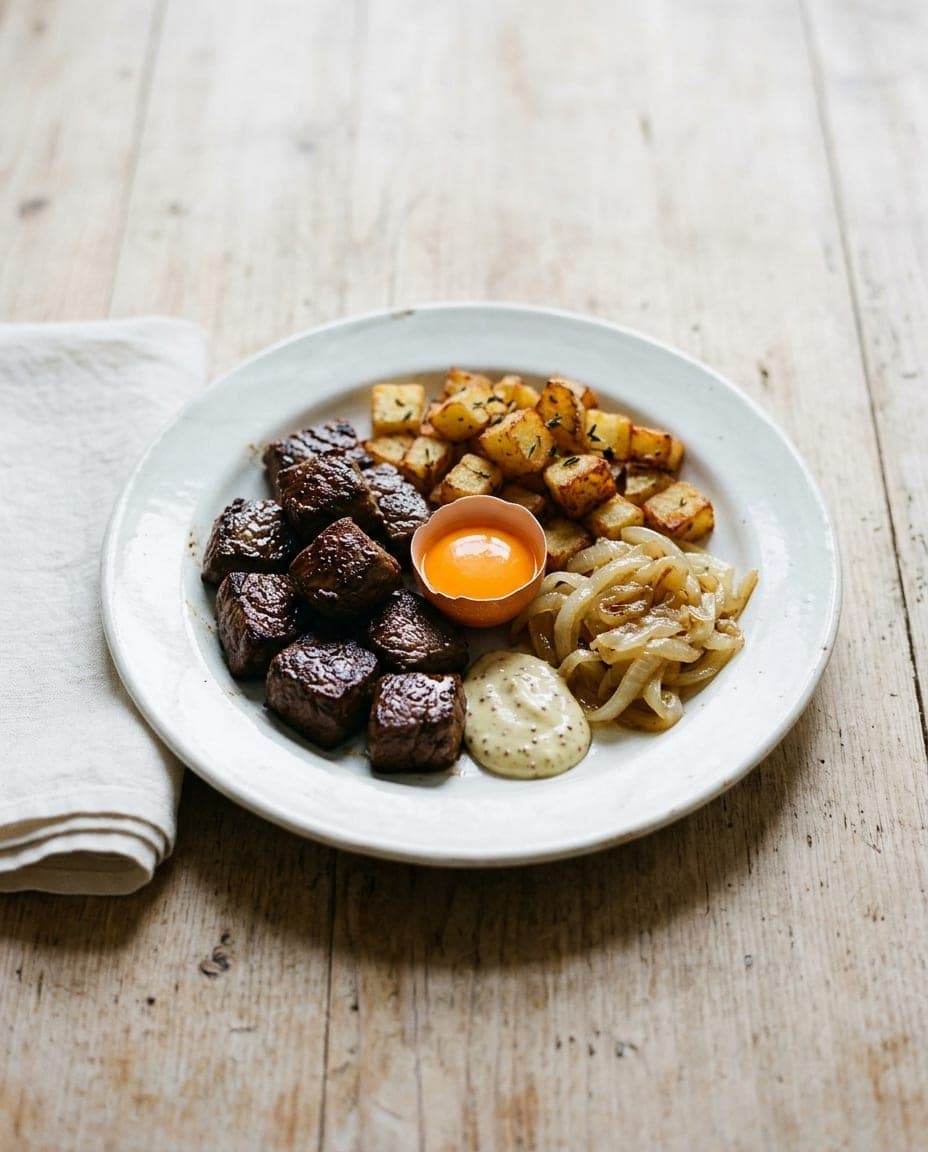
Diced beef, potato and onion with a raw yolk
- Local name
- Biff Rydberg
- Served with
- Egg yolk, mustard cream
- Best eaten at
- A Stockholm husmanskost restaurant
- Pairs with
- Swedish lager or red wine
What it is
Biff Rydberg is a classic example of husmanskost, the traditional category of Swedish home cooking that was elevated for restaurant service. The dish consists of diced beef fillet, diced potatoes and diced onions, each fried separately in their own pan before being arranged on a single plate. A raw egg yolk sits in a half-shell or a hollowed centre, often accompanied by a dollop of mustard cream.
The preparation relies on keeping the ingredients distinct rather than mixing them during cooking. By frying the beef, potatoes and onions separately, each component retains its own texture and flavour without steaming in the others. The diner then mixes the egg yolk and mustard cream into the three piles just before eating, creating a deep, unified sauce that coats every bite.
It is a dish defined by its cut of meat. Beef fillet is one of the most expensive cuts available, which makes Biff Rydberg a special occasion meal rather than an everyday staple. The result is a hearty, savoury plate where the tenderness of the beef contrasts with the crisp edges of the potatoes and the sweetness of the onions.
The history behind the name
The name comes from the Hotel Rydberg in Stockholm, a prominent establishment on Gustav Adolfs torg in the city centre that stood until it was demolished in 1914. The dish is named for the hotel, where it was either created or made famous in the late 19th century; the accounts differ and the hotel is not around to settle it.
Today the hotel no longer exists, so there is no single location where one can claim to eat the original recipe. The name persists as a tribute to that era of Stockholm dining, linking the dish to a time when husmanskost was being refined for a growing middle class. While many dishes have faded from menus over the decades, Biff Rydberg remains a recognised part of Swedish culinary heritage.
What goes into it
The components are simple but require care in their execution:
- Beef fillet, diced into small cubes and fried until browned on the outside while remaining tender inside.
- Potatoes, cut into similar-sized dice and fried separately to ensure they are crisp rather than soft and steamed.
- Onions, diced and fried until they have lost their raw bite but not turned dark or bitter.
- A raw egg yolk, served in a half-shell or set in the centre of the plate to be stirred into the mixture.
- Mustard cream, a sauce made from mustard and cream that adds a sharp, tangy element to balance the fat of the meat and potatoes; some kitchens serve plain mustard instead.
Frying the three elements apart is the whole technique: nothing steams, nothing loses its edge, and the mixing happens on the plate rather than in the pan.
How to eat it
Biff Rydberg is best enjoyed at a Stockholm restaurant that specialises in traditional husmanskost. It is typically served as a main course, often accompanied by a side of pickled vegetables or a green salad to cut the fat of the meat and egg.
The method of eating is part of the experience. Diners take the raw egg yolk and the mustard cream and stir them into the three piles of ingredients on the plate. This action creates a creamy, emulsified sauce that binds the beef, potatoes and onions together. The result is a warm, comforting dish where the textures blend just before the first bite.
A Swedish lager or a light red wine pairs well with the dish, as the carbonation or fruit notes help cleanse the palate between bites of the rich egg and mustard cream.
Curious facts
- The hotel is gone. The Hotel Rydberg was demolished in 1914, so the name serves only as a historical marker rather than a reference to an active venue.
- Separate frying matters. Each ingredient is fried in its own pan to prevent steaming and preserve distinct textures before mixing.
- A specific cut. The use of beef fillet makes the dish expensive compared to other husmanskost options that might use cheaper cuts like brisket or shoulder.
- No single recipe. There is no official standard for the size of the dice or the ratio of egg to meat, allowing each kitchen to adjust the proportions.
Where to try it
A Stockholm restaurant cooking husmanskost — the plain Swedish repertoire of meatballs, herring, hash and boiled potatoes — where Biff Rydberg sits at the expensive end of the menu because of the cut it uses.
It is a city dish and an old-fashioned one, and the kitchens that keep it tend to be the ones that keep the whole tradition: white tablecloths, a long menu of classics, and a clientele that has been ordering the same thing for thirty years. It is most at home in Stockholm, and outside Scandinavia it is little known.
Where to try it
1 destination
 Camper Van Rentals
Stockholm
Archipelago capital with historic sites, vibrant culture, and stunning waterfront.
Camper Van Rentals
1 region
 Boat Rentals7 destinations
Stockholm
Stockholm, the largest city in Sweden, is spread across 14 islands, each with its unique character. The city boasts a rich maritime history, and its archipelago features over 30,000 islands, perfect for exploration. Gamla Stan, its medieval heart, offers narrow cobblestone streets and colorful buildings. The Vasa Museum showcases a 17th-century warship, while Skansen, the world's first open-air museum, presents traditional Swedish life. Nearby, the historic town of Sigtuna is known for its Viking heritage. The region also embraces sustainability, with numerous parks and eco-friendly initiatives, making it a hub for nature lovers and those interested in local culture.
Boat RentalsHikingCamper Van Rentals