Falafel
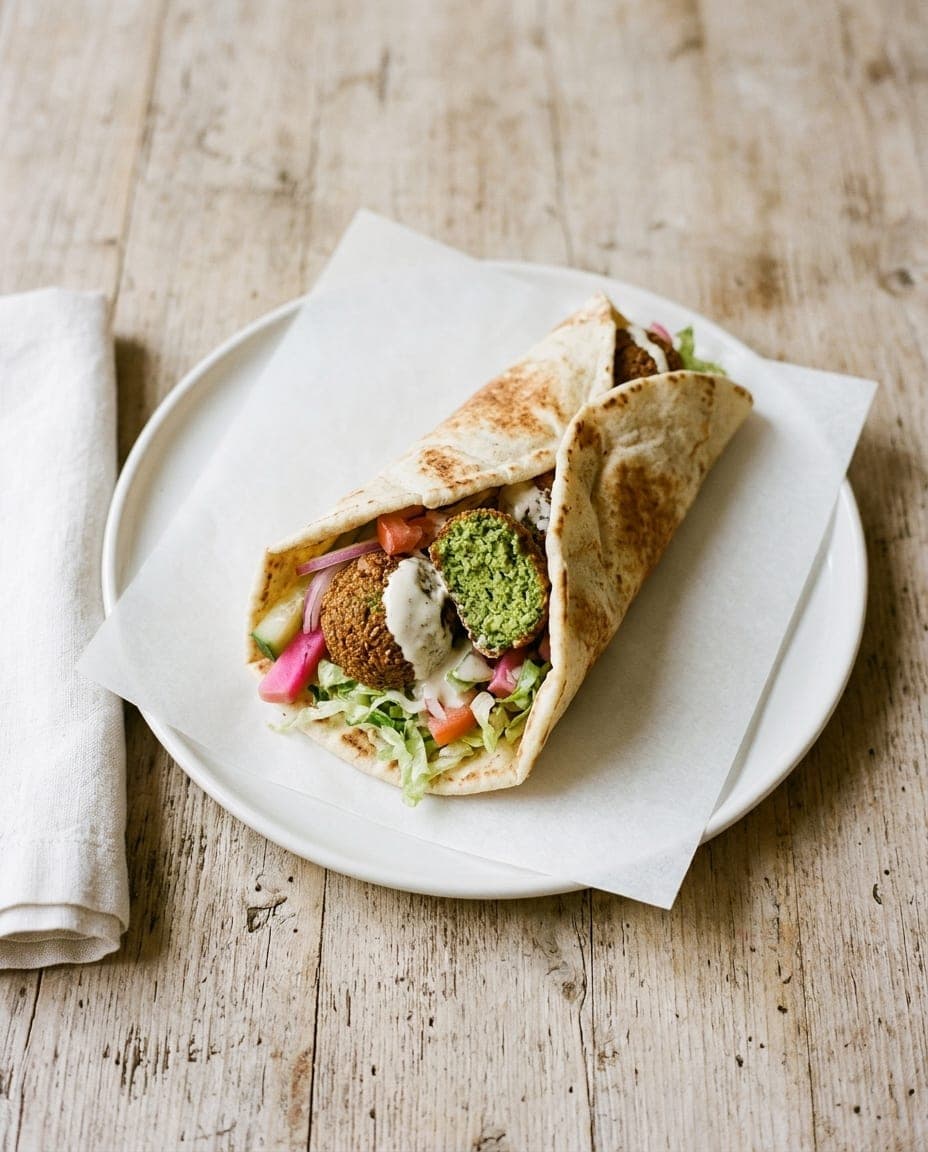
Malmö's falafelrulle, with chips and garlic sauce
- Vegetarian
- Local name
- Falafel
- Served with
- Pita, salad, garlic sauce
- Best eaten at
- A Malmö falafel stand
What it is
Falafel in Sweden is not a single dish but a phenomenon centred on one specific form: the falafelrulle. It is a rolled street food that has become the unofficial standard of Malmö, the city in the southern province of Skåne with a large population of people from the Middle East. While falafel is sold in restaurants and kiosks across the Nordic region, the Malmö version is distinct in its construction and its ubiquity.
The dish arrives on a thin, soft flatbread, often pita or a similar leavened bread, which is folded into a cylinder rather than served as a bowl of separate components. Inside the roll sit warm falafel balls made from ground chickpeas or fava beans, accompanied by a crunchy mix of fresh salad leaves, tomato, parsley, onion and pickled vegetables, often with chips as well. Sauces go over the top: vitlökssås, a thick white garlic sauce, which is the one nobody omits, and usually tahini and a chilli sauce alongside it. It is designed to be eaten with the hands, often while standing at a street corner or walking through the city centre.
The form took shape in the 1980s, when people fleeing the war in Lebanon, along with immigrants from Israel and elsewhere in the Middle East, settled in Malmö and the food they brought adapted to street service and to local appetites. The first falafel restaurant is thought to have opened in 1988, and the trade spread fast during the economic crisis that followed, because a roll was one of the cheapest hot meals in town. It is now an ordinary part of daily life in Skåne, sold by small stands that have been on the same corners for decades.
How Malmö made it its own
The story of falafel in Malmö is one of adoption rather than invention. The city did not create the chickpea fritter; it created the way it is served and consumed. In other parts of Sweden, falafel might appear on a menu as a side dish or a vegetarian option in a restaurant setting. In Malmö, however, it became a standalone meal for anyone, regardless of background, who needed something quick, warm and filling.
The specific format of the falafelrulle reflects the practicalities of street food culture. The roll is substantial enough to serve as a full lunch or dinner but compact enough to hold in one hand while walking. Chips inside the bread are a popular local addition. The combination creates a texture contrast between the soft bread, the crisp exterior of the falafel and the fresh vegetables, all bound together by the sauces.
Malmö's large Middle Eastern community provides the context for this dish to thrive. Rosengård, Möllevången and the streets around the central station hold the greatest concentration of small businesses run by families from the Levant. These stands became community anchors, offering affordable meals to students, workers and tourists alike. Over time, the falafelrulle shed its status as an exotic import and became a local institution, accepted as part of the city's culinary identity.
What goes into it
The composition of a Malmö falafelrulle is specific, though every stand guards its own variation of the proportions. The bread is usually a thin, soft pita or a similar flatbread that does not tear easily when rolled. The core consists of falafel balls, which are deep-fried patties made from soaked and ground chickpeas, sometimes mixed with fava beans, herbs such as coriander or parsley, and spices including cumin and garlic.
The fillings extend beyond the falafel itself. A bed of fresh lettuce or cabbage provides a crisp base, topped with diced tomatoes, cucumber slices and pickled turnips or cucumbers. Chips often go inside the roll too, salty and starchy against the chickpeas.
Two or three sauces finish it. The thick garlic sauce is the one that defines the Swedish version; tahini, thinned with lemon and water, and a chilli sauce are the usual companions.
How to eat it
The falafelrulle is designed for handheld consumption. It is typically wrapped in paper to prevent the oil from soaking through the bread and to keep the fillings secure while eating. The standard way to enjoy it is to hold the roll with both hands, taking bites from one end until the entire cylinder is finished.
These stands are often found on street corners or in small kiosks where customers order at the counter and receive their food immediately. There is no need for cutlery; the paper wrapper serves as a plate. A falafelrulle is substantial enough to serve as a main meal, particularly for lunch or a late-night snack.
People are loyal to one stand and will walk past three others to reach it, which is the clearest sign of how ordinary the food has become.
The role of migration in Malmö's food scene
The stands are more than food outlets. They keep long hours, they are cheap, and they sit on corners people pass anyway, which makes them some of the few places in the city where everybody turns up. Over nearly four decades the roll has become one of the city's everyday meals, and Malmö's newspaper has even run rankings of the best falafel in town.
What is in the roll has not changed much since the first stands opened; what changed is who eats it and how ordinary it became.
Curious facts
- The chips inside the bread. Many Malmö stands will put chips directly inside the roll rather than on the side, for a texture contrast that has become part of the local style.
- A year-round staple. The dish is sold in all seasons, from cold winter evenings to hot summer days, with no seasonal variation in the core recipe.
- No single inventor. There is no record of which specific stand first created the falafelrulle; the format emerged organically as migrants adapted their cooking for street service.
- A city-wide presence. Falafel stands are found across Malmö; at one point a single local falafel chain had more outlets in the city than McDonald's.
- Cheap by design. It has stayed one of the cheapest hot meals in the city, which is most of the reason students and shift workers live on it.
- The bread is the measure. Stands are judged on whether the flatbread is warm and soft enough to roll without splitting, which is why the good ones bake or heat it to order.
Where to try it
The best place to eat falafel is at one of the many small stands scattered across Malmö, particularly in the city centre and neighbourhoods with high concentrations of Middle Eastern communities. No particular address is required; the kiosks are the trade.
Rosengård, the streets around Möllevångstorget and the blocks near the central station are where they are thickest on the ground. Restaurants in Skåne serve falafel on plates, but the roll from a street window is the form the city actually eats.
Where to try it
1 destination
 Boat Rentals
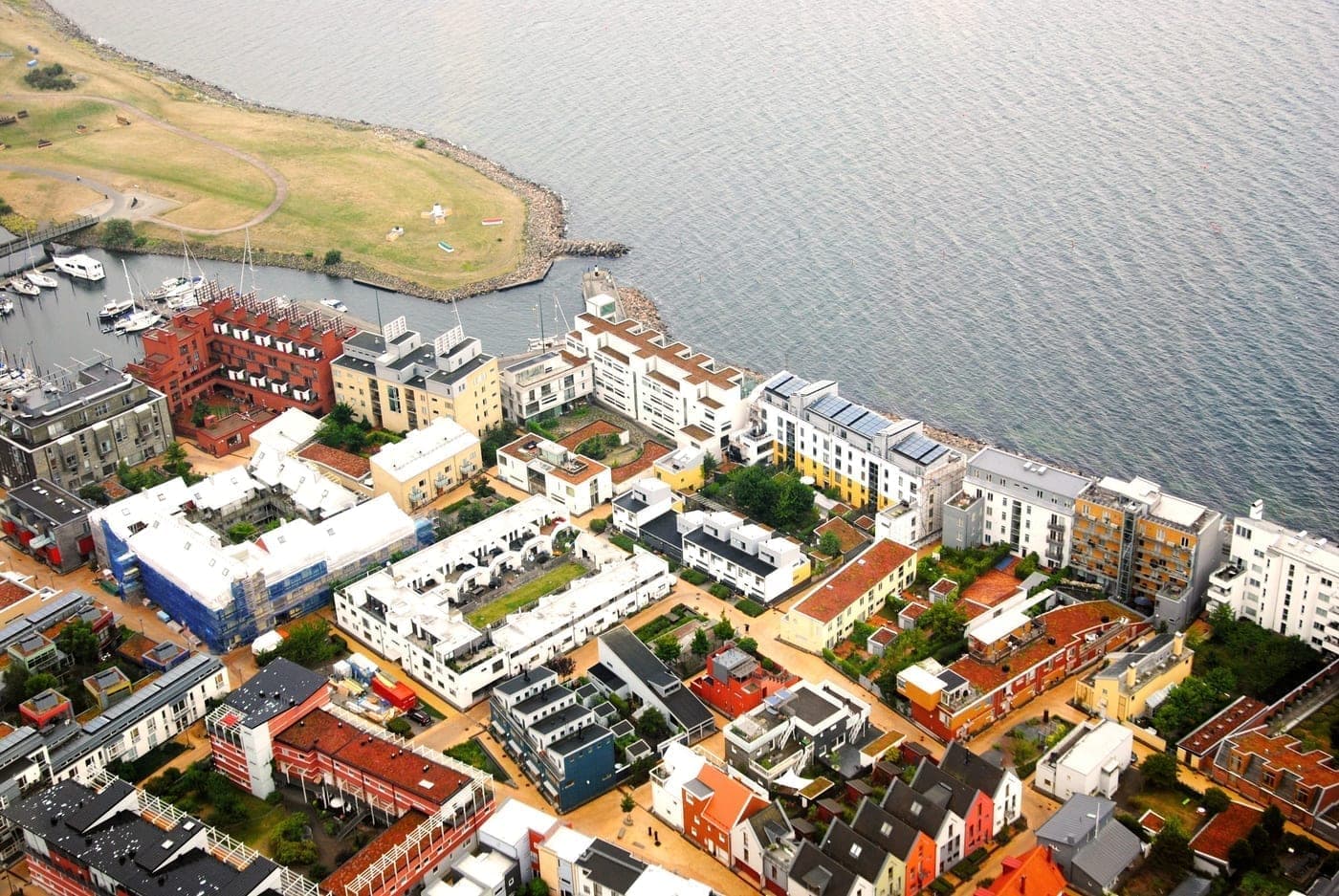
Malmö
Vibrant coastal city known for modern architecture and rich cultural scene.
Boat RentalsCamper Van RentalsHiking
1 region
 Boat Rentals3 destinations
Skåne
Skåne, Sweden's southernmost region, is known for its diverse landscapes, from sandy beaches to rolling farmland. Malmö is the largest city, famous for its modern architecture and vibrant cultural scene, while Lund boasts a historic university and medieval charm. The region features a unique blend of Danish influence and Swedish traditions, evident in its cuisine, particularly in the use of locally sourced ingredients and seafood. Skåne is also home to the scenic Öresund Strait and picturesque coastal towns like Ystad, known for its medieval streets. The area hosts several local craft markets and food festivals, providing authentic experiences beyond typical tourist attractions. The Skåne Trail offers stunning hiking routes through its varied terrains, allowing for deeper exploration of this culturally rich region.
Boat RentalsHikingCamper Van Rentals