Spettekaka
A hollow meringue tower baked on a spit
- Vegetarian
- Local name
- Spettekaka
- Served with
- Coffee, ice cream
- Best eaten at
- A Skåne konditori
- Pairs with
- Coffee
What it is
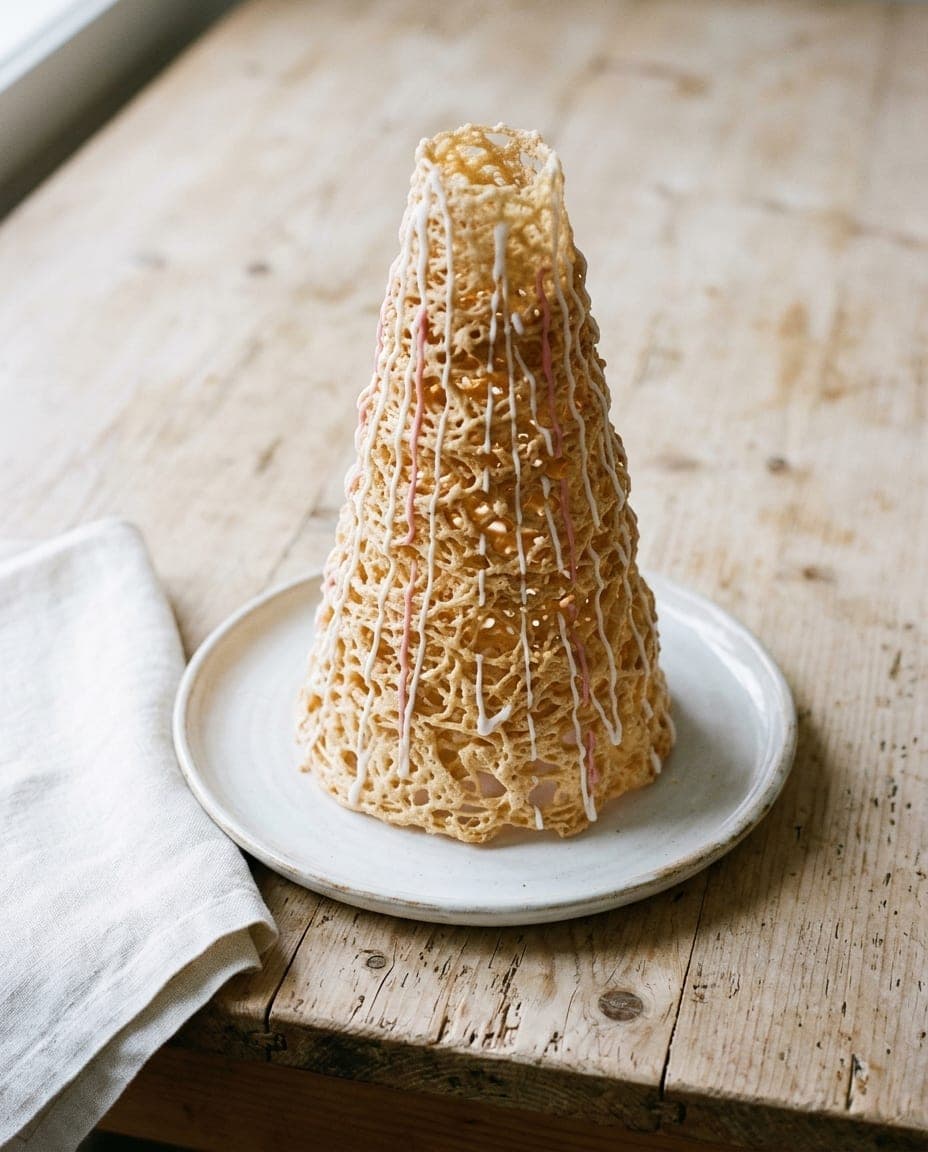
Spettekaka is the soaring spit cake of Sweden's southernmost province, Skåne. It is a towering structure that can reach a metre or more in height, built from a thin batter of eggs, sugar and potato flour that drips from a funnel onto a rotating cone, traditionally turned over an open fire. Each thread sets instantly as it lands, layer upon layer, creating a hollow, lace-like tower that is bone dry and extremely brittle.
The texture is the defining feature. Unlike a sponge cake or a bread, spettekaka has no soft crumb inside. It is a solid shell of crisp meringue that shatters under the pressure of a knife. This dryness allows it to keep for months in an airtight tin without going stale, a quality that made it a practical choice for long celebrations before modern refrigeration. The name Skånsk spettkaka carries European Protected Geographical Indication status, tied to Skåne and its baking tradition.
How it is baked
Building one requires a spettkaksugn, the spit oven, and little else. A cone rotates slowly on an axis in front of the heat, historically an open wood fire. The baker drips the mixture from a funnel onto the spinning cone. The heat cooks the batter as it lands, fusing each new layer to the one below.
The process takes several hours. As the tower grows, it becomes a fragile lattice of golden-brown meringue. Once the desired height is reached, the cake is removed from the heat, allowed to cool completely and decorated with white or pink icing. The hollow interior means the structure is light despite its size. When the time comes to serve it, the entire tower is brought to the table whole. A fine-toothed saw is used to cut through the brittle shell, dividing the tower into wedges that are then distributed among the guests.
Where it comes from
This dish is a regional speciality of Skåne and is not found as a standard offering in the rest of Sweden. It is tied closely to the landscape and history of the province, particularly Sjöbo, which baked the world's largest spettekaka in 1985. The first written mention dates from 1642, at the court of Queen Kristina. The method shares a distant lineage with other spit-baked treats across Europe, such as the Hungarian chimney cake or the German Baumkuchen, yet it stands apart. Those dishes are typically layered sponges or breads with a softer texture, whereas the Swedish version is defined by its dry, meringue-like quality and its hollow form.
The dish has long been a fixture of weddings, baptisms and major family gatherings in Skåne. Its presence on the table marks a significant occasion. The sight of the towering cake being sawn apart adds a theatrical element to the celebration, turning the serving of dessert into a shared event for the whole party.
What goes into it
The ingredients are few, but the technique is precise. There is no single official recipe, yet every traditional baker follows the same core components:
- Eggs: The base of the batter, used in large numbers and providing richness and structure.
- Sugar: Added to sweeten the mixture and aid in the formation of the crisp shell.
- Potato flour: The key differentiator from other cakes, giving the tower its distinctive dryness and ability to hold its shape as it bakes.
The result is a cake that is intensely sweet but not cloying, with a texture that dissolves quickly on the tongue. It contains no butter, milk or leavening agents in the traditional sense. What stops it cloying is the faint caramel of the browned sugar and, where it is built over a wood fire, a trace of smoke.
How to eat it
Spettekaka is almost always served as a dessert at the end of a meal. Because it is so dry, it pairs naturally with coffee, which helps soften the texture in the mouth. It is also common to serve it with a scoop of vanilla ice cream or whipped cream, the cold dairy contrasting with the dry, crisp cake.
In Skåne, the best place to find an authentic version is a local konditori, a traditional Swedish bakery or café. The cake is sold by weight or by the slice, and it keeps well enough to be taken home as a souvenir for later enjoyment.
Curious facts
- A hollow structure. Unlike most cakes that are solid throughout, spettekaka is a thin shell with an empty space in the centre, making it surprisingly light for its size.
- The saw is essential. Serving the cake requires a large saw to cut through the brittle layers, turning the dessert into a communal activity.
- Long shelf life. The bone-dry nature of the meringue allows the cake to be stored in a tin for months without losing quality.
- A protected name. Only cake made in Skåne according to the local tradition can be sold as Skånsk spettkaka.
- It does not leave Skåne. Spit cakes exist across Europe, but the dry, hollow, meringue version belongs to the southern province and is barely made anywhere else in Sweden.
Where to try it
A konditori in Skåne, where it is sold by weight in broken wedges from a tin rather than as a whole tower. Around ten bakeries in the province still make it, each with its own recipe, and Sjöbo is the town most associated with it.
A whole one is an order rather than a purchase: they are made for weddings, confirmations and large birthdays, and the sawing of it at the table is part of the event. Outside Skåne it is a speciality item, sold in tins to people who grew up with it.
Where to try it
1 destination
 Boat Rentals
Höganäs
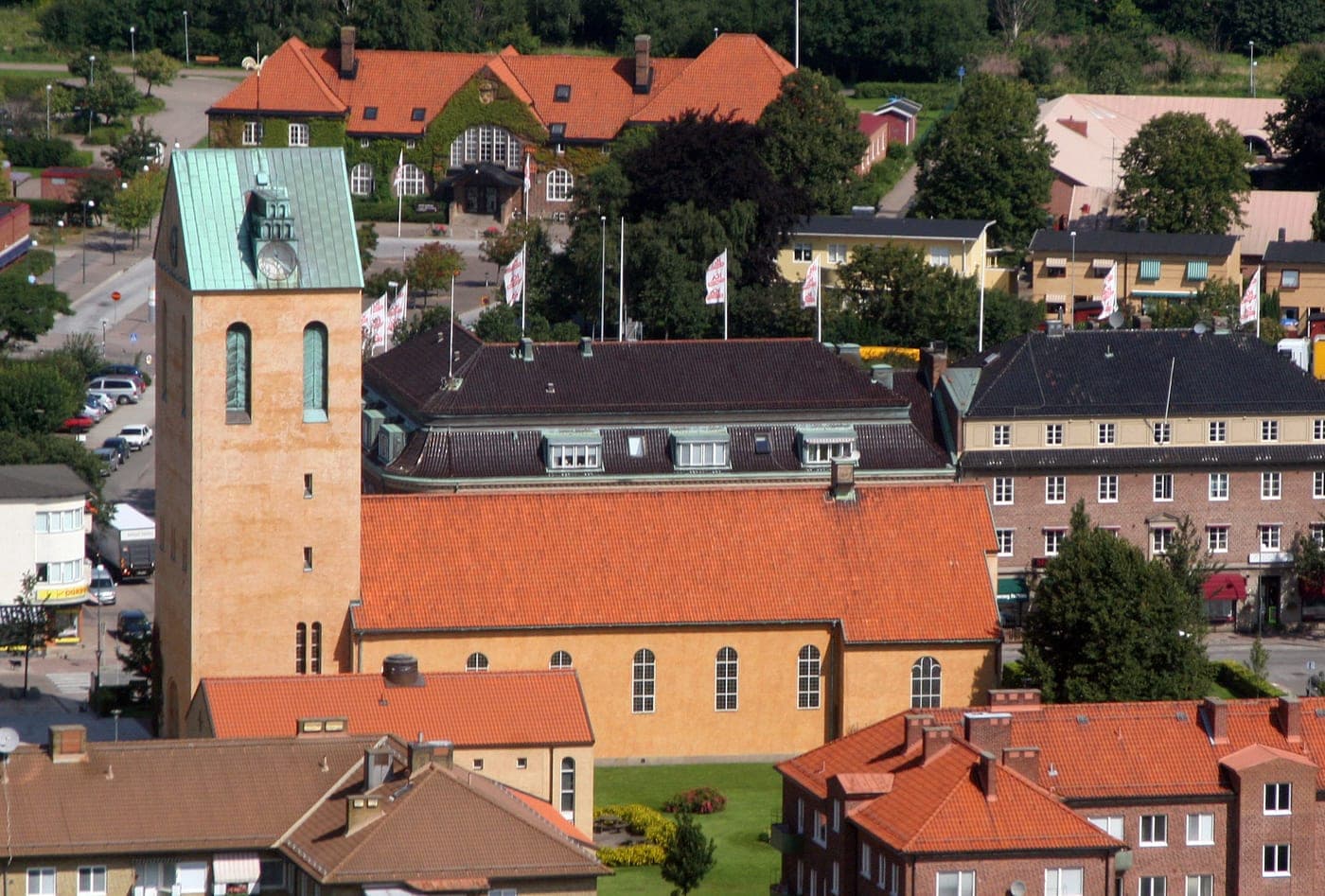
Coastal town in southern Sweden with boat rentals and views across to Denmark.
Boat RentalsHiking
1 region
 Boat Rentals3 destinations
Skåne
Skåne, Sweden's southernmost region, is known for its diverse landscapes, from sandy beaches to rolling farmland. Malmö is the largest city, famous for its modern architecture and vibrant cultural scene, while Lund boasts a historic university and medieval charm. The region features a unique blend of Danish influence and Swedish traditions, evident in its cuisine, particularly in the use of locally sourced ingredients and seafood. Skåne is also home to the scenic Öresund Strait and picturesque coastal towns like Ystad, known for its medieval streets. The area hosts several local craft markets and food festivals, providing authentic experiences beyond typical tourist attractions. The Skåne Trail offers stunning hiking routes through its varied terrains, allowing for deeper exploration of this culturally rich region.
Boat RentalsHikingCamper Van Rentals