Äggakaka
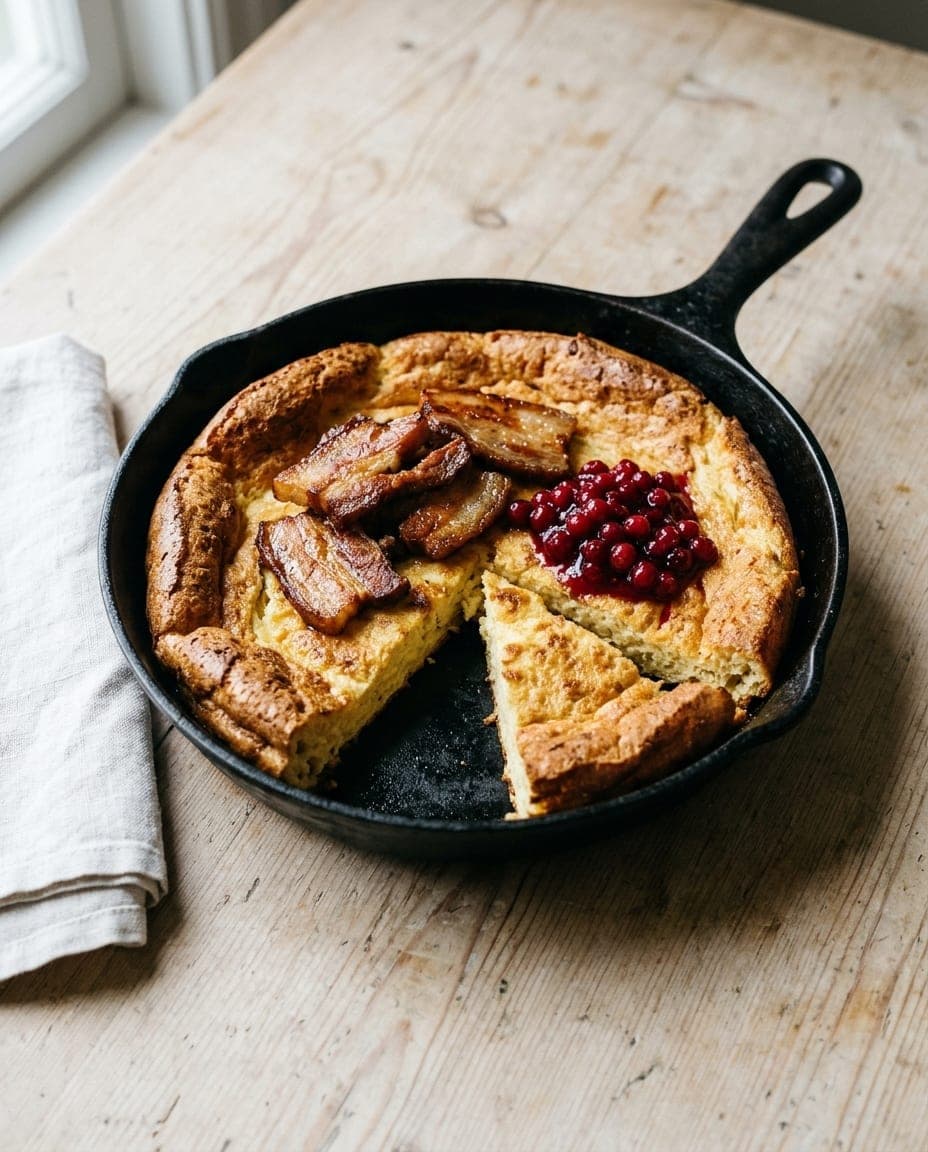
A thick pan-fried egg cake with pork and berries
- Local name
- Äggakaka
- Served with
- Fried salted pork, lingonberries
- Best eaten at
- A Skåne country inn (gästgiveri)
- Pairs with
- Swedish lager
What it is
Äggakaka is a thick, golden egg cake from Skåne, the southernmost province of Sweden. The name translates literally to "egg cake", though it is more substantial than a typical dessert item. It begins as a batter of eggs, milk and flour, richer in egg than ordinary pancake batter, which is poured into a hot buttered cast-iron frying pan and left to set, then turned and browned on the other side. The texture lands somewhere between a thick pancake and an omelette. Many modern cooks finish it in the oven instead.
The result is far thicker than the thin crêpes found in many Nordic kitchens. It holds its shape when sliced, yet remains soft and moist inside. This is not a sweet treat to be eaten with jam alone; it is a main course, a dish of country food designed to fill a plate and sustain someone working the flat fields of Skåne.
The defining feature of the dish lies in its accompaniments. It arrives at the table alongside a generous portion of fried salted or smoked pork. The meat is rendered until crisp at the edges and soft within, often cooked in its own fat. Alongside the savoury meat sits a mound of bright red lingonberries, as jam or stirred raw with sugar (rårörda lingon). Older households served it with apple sauce or apple wedges fried in butter instead. The sharp, tart fruit cuts the fat of the egg and the salt of the pork, creating a balance that is both rustic and complete.
Where it comes from
Äggakaka belongs to the farm kitchens of Skåne. It was made for farmworkers, notably at the autumn harvest, because a wedge could be wrapped up and eaten in the field, and it used ingredients that were always to hand: eggs from the farmyard, milk from the cows, flour from the mill, and salted pork kept in the cellar. In the 1800s it was also festive food, served at parties and May celebrations and brought as a gift to new mothers, and special ceramic dishes were made for it. Today it is a fixture of Skåne's gästgiverier, the old country inns.
The dish is not found everywhere in Sweden. Similar egg cakes were made in Halland, Blekinge, Denmark and northern Germany, but the thick cake with fried pork is a signature of Skåne. It reflects the agricultural wealth of the region, where grain farming and livestock rearing have long gone hand in hand.
How it is made
The preparation relies on simple technique rather than complex methods. A batter of eggs, milk and flour is whisked until smooth. It is then poured into a frying pan with plenty of browned butter. The heat is kept moderate, allowing the centre to cook through without burning the base; the cook lifts the setting egg from the bottom so the middle firms up.
When it has nearly set, the cake is turned out onto a lid or plate and slid back into the pan to brown the other side. It is sliced into wedges while still warm. The pork is fried separately until crisp; older recipes sometimes mixed it into the batter, but kept apart it keeps more flavour. The lingonberries come as jam or stirred raw with sugar, retaining their bright colour and sharp flavour.
What goes into it
The ingredients are few, but each plays a specific role in the final dish:
- Eggs, which provide the structure and the rich yellow colour of the cake.
- Milk, added to the batter to create a soft, custard-like interior.
- Flour, used sparingly to give the batter body without making it heavy or doughy.
- Salted or smoked pork belly (fläsk), fried until the fat is crisp and the meat is tender.
- Lingonberries, which offer a tart counterpoint to the savoury egg and salted meat.
The fat from the pork pan goes over the plate rather than being drained off, which is the point rather than an oversight.
Curious facts
- A main course, not a dessert. Despite the name "cake", it is eaten as a substantial meal, often for lunch or dinner, rather than as a sweet ending to a feast.
- The fat matters. The dish relies on the rendered fat from the pork belly; without it, the balance of savoury and tart would feel incomplete.
- Regional identity. It is distinct from the thin pancakes eaten elsewhere in Sweden: thick, cut into wedges and always served with pork.
- Field food and party food. It began as something farmworkers could carry to the fields, yet in the 1800s it was also served at parties and given to new mothers.
Where to try it
A gästgiveri in Skåne — the old coaching inns, several of which still trade on the same sites along the roads between the coast and the interior. Many keep the dish on the menu, usually at lunch.
It is country food and priced accordingly, served in portions built for someone who has been outdoors. A cold lager goes with it.
Where to try it
1 destination
 Boat Rentals
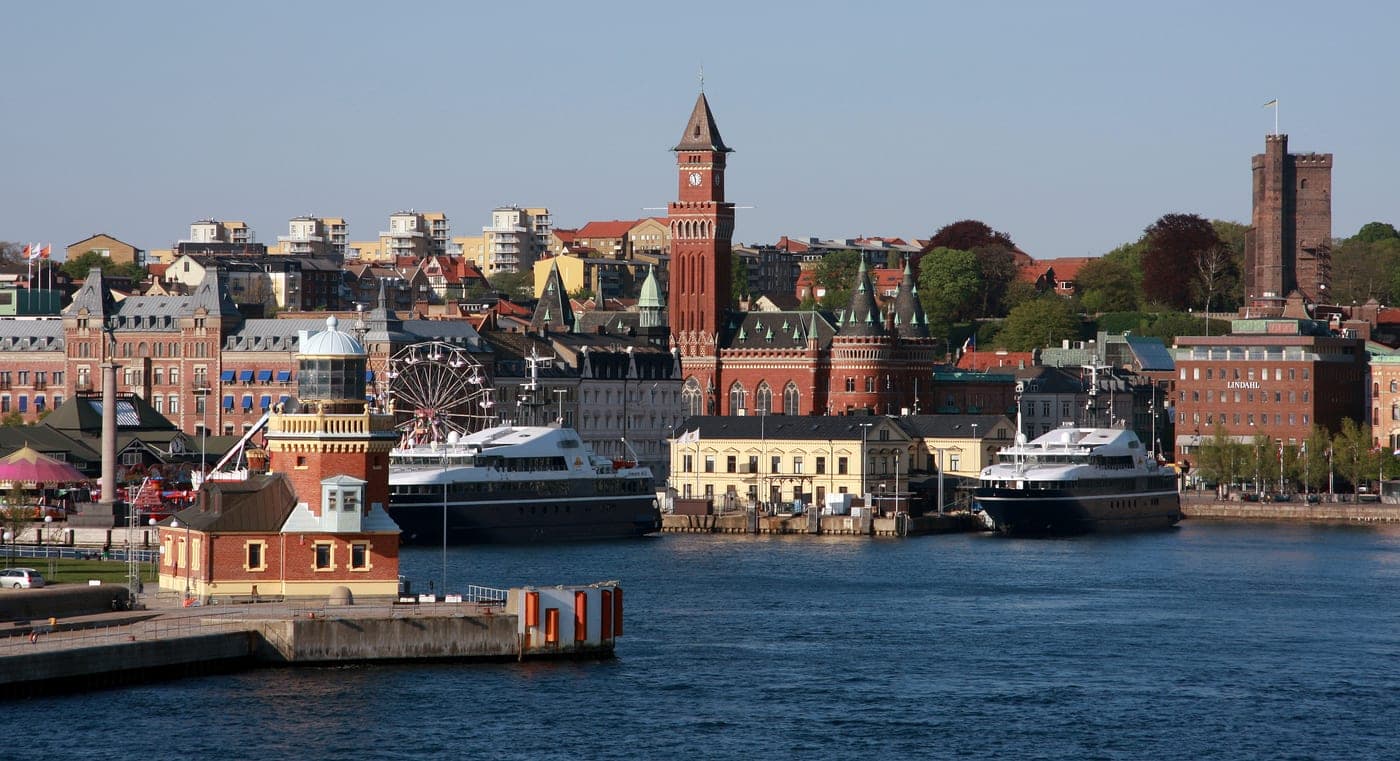
Helsingborg
Coastal city with boat rentals and ferry connections to Denmark across the Öresund.
Boat RentalsHiking
1 region
- Boat Rentals3 destinations
Skåne
Skåne, Sweden's southernmost region, is known for its diverse landscapes, from sandy beaches to rolling farmland. Malmö is the largest city, famous for its modern architecture and vibrant cultural scene, while Lund boasts a historic university and medieval charm. The region features a unique blend of Danish influence and Swedish traditions, evident in its cuisine, particularly in the use of locally sourced ingredients and seafood. Skåne is also home to the scenic Öresund Strait and picturesque coastal towns like Ystad, known for its medieval streets. The area hosts several local craft markets and food festivals, providing authentic experiences beyond typical tourist attractions. The Skåne Trail offers stunning hiking routes through its varied terrains, allowing for deeper exploration of this culturally rich region.
Boat RentalsHikingCamper Van Rentals