Turrón
Alicante's almond and honey nougat, hard or soft
- Vegetarian
- Local name
- Turrón (Valencian: torró)
- Best eaten at
- A Spanish Christmas table
- Pairs with
- Cava
What it is
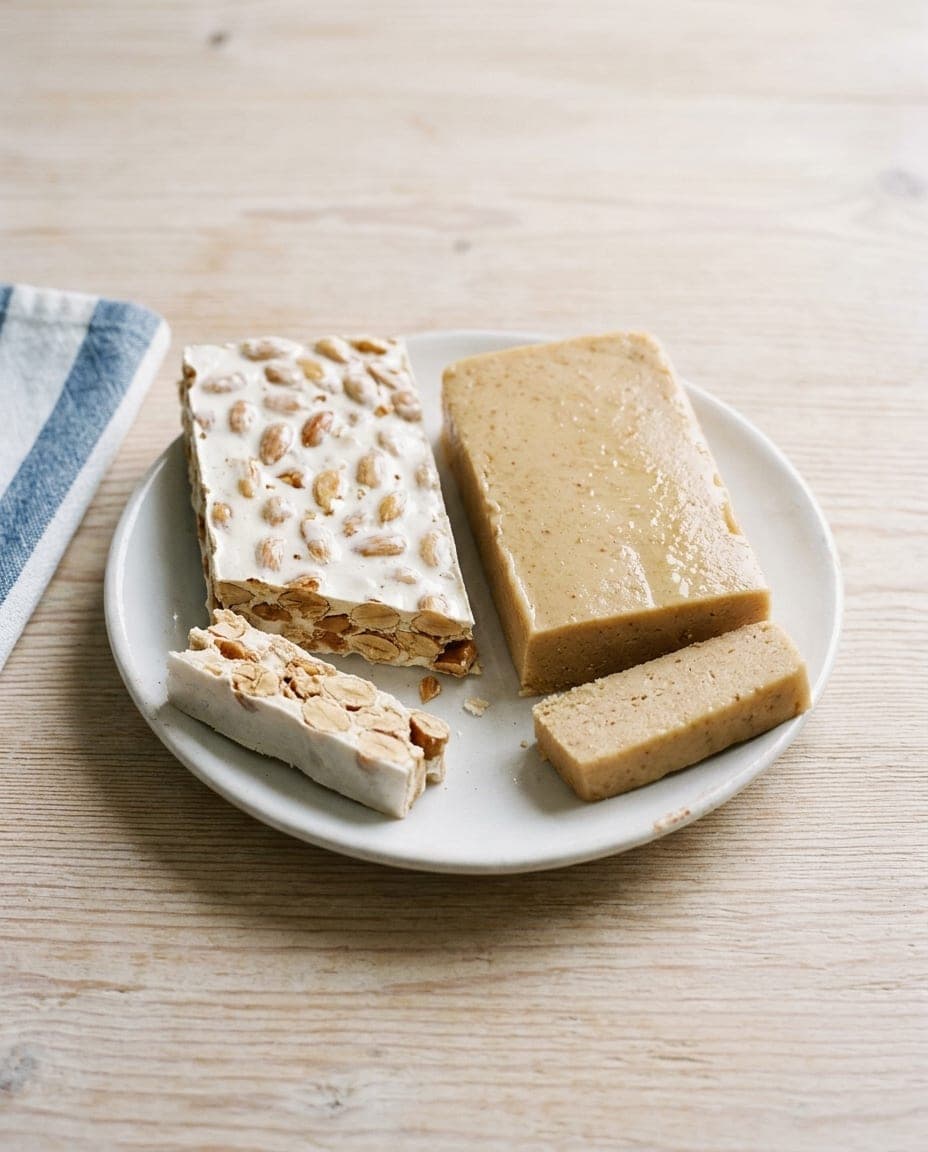
Turrón is the sweet that defines the Spanish Christmas table, and its home is the province of Alicante, above all the inland town of Jijona (Xixona in Valencian). It is a confection built from a handful of ingredients: toasted almonds, honey, sugar and, in the hard version, egg white. The result is a flat, rectangular bar that is either hard and crunchy or soft as a paste, depending on how the almonds are prepared.
There are two classic versions, both protected geographical indications. Turrón de Alicante is the hard variety, made from toasted almonds bound in a firm mass of honey, sugar and egg white and pressed between sheets of wafer. It cracks when bitten. Turrón de Jijona, named for the town, is soft. The almonds are ground very finely and worked with the honey and sugar until the mixture becomes a dense, oily paste that crumbles on the tongue rather than breaking. Both share the name turrón, yet they offer very different textures.
Turrón is eaten all over Spain, but mainly at Christmas. It fills shops, supermarkets and specialist sweetmakers from late autumn and stays on the table through the festive season, until Epiphany in early January.
Where it comes from
The story of turrón is rooted in the agricultural history of the Alicante province, where the dry, sunny climate suits both almond trees and beekeeping. The tradition of combining nuts and honey is centuries old, and many food historians trace this kind of sweet to the period of Muslim rule in al-Andalus, when almond and honey confections were widespread.
While the exact date of the first written record is disputed, the craft has been continuous in the area for centuries. Jijona, in the hills north of Alicante city, became the centre of production for both types: the soft one carries the town's name, while the hard one carries the name of the province and its capital.
The flat, rectangular bar makes the sweet easy to cut and share. Today, production of both protected turrones is concentrated in Jijona, home to a turrón museum and a large share of Spain's output.
What goes into it
The ingredients are simple, but the quality matters greatly. The almonds are peeled and toasted before use, which deepens their flavour. For Turrón de Alicante, honey and sugar are cooked for a long time at high heat, egg white is added, and the toasted almonds are mixed in. The warm mass is spread into moulds lined with wafer and later cut into bars. For Turrón de Jijona, the almonds are ground very finely and cooked slowly with the honey and sugar in special mixing vessels called boixets until the paste turns smooth.
The honey must be pure bee honey, and the protected turrones must contain at least 10 per cent of it. The almond content defines the grade, with the top "Suprema" quality containing the most nuts.
- Almonds: Toasted nuts left whole or in pieces for the hard variety, ground to a paste for the soft one. Valencia, Marcona, Mollar, Planeta and Mallorca varieties are used.
- Honey: Gives the characteristic floral aroma.
- Sugar: Cooked with the honey in both versions.
- Egg white: Used as a binder in the hard Turrón de Alicante.
The final product is sold in rectangular bars or blocks wrapped in paper or foil. The hard variety is covered with sheets of wafer paper, while the soft version is left smooth. Modern variations exist, such as those flavoured with chocolate, candied egg yolk or coconut, but the traditional almond and honey versions remain the ones protected by law.
How to eat it
Turrón is a Christmas sweet, best enjoyed in small pieces alongside a cup of coffee or a glass of Cava. The hard variety requires a firm bite, while the soft version is easier to handle, often crumbling slightly as a piece is taken. The bars are usually cut into thin slices with a sharp knife, so each person can have a small portion to savour slowly.
At a Spanish Christmas table, turrón is rarely eaten alone. It is served on a platter with other sweets, such as polvorones, mantecados and marzipan, often with dried fruits and nuts. Cava, Spain's traditional-method sparkling wine, is a classic festive companion, its bubbles and acidity cutting the richness of the honey and almonds.
Why it matters locally
In Alicante province, turrón is more than a sweet; it is a marker of the season and a symbol of local identity. The industry is the economic backbone of Jijona, employing many people during the busy autumn and winter months, from those who mix and mould the turrón to those who package and ship the bars.
The two protected varieties, Turrón de Jijona and Turrón de Alicante, were recognised as EU PGIs in 1996 and must be made in the municipality of Jijona. This means that only producers there can use the names on their packaging, ensuring that the tradition remains local. Each December the town holds its Christmas fair, the Fira de Nadal, a showcase for its turrón makers.
The seasonal nature of the sweet creates a rhythm in the community: the workshops are busiest in the run-up to Christmas, and after the festive season the cycle begins again.
Curious facts
- Protected status. Both varieties have held Protected Geographical Indication (PGI) status since 1996, and both must be made in Jijona.
- The wafer layer. The hard variety is sandwiched between thin sheets of wafer paper, which holds the mass together and stops it sticking.
- A long gap. Almonds are harvested in late summer, but turrón is mostly eaten in winter.
Where to try it
The best place to taste authentic turrón is in the province of Alicante itself, particularly in Jijona, where both protected types are made, and in Alicante city, where sweet shops stock them through the Christmas season.
Jijona's turrón museum explains how the sweet has been made through history and ends with a tasting. The sweet is intense, so small pieces are best.
Where to try it
1 destination
 Boat Rentals
Playa San Juan
Charming coastal village known for its sandy beaches and stunning cliffs.
Boat Rentals
1 region
 Boat Rentals3 destinations
Alicante
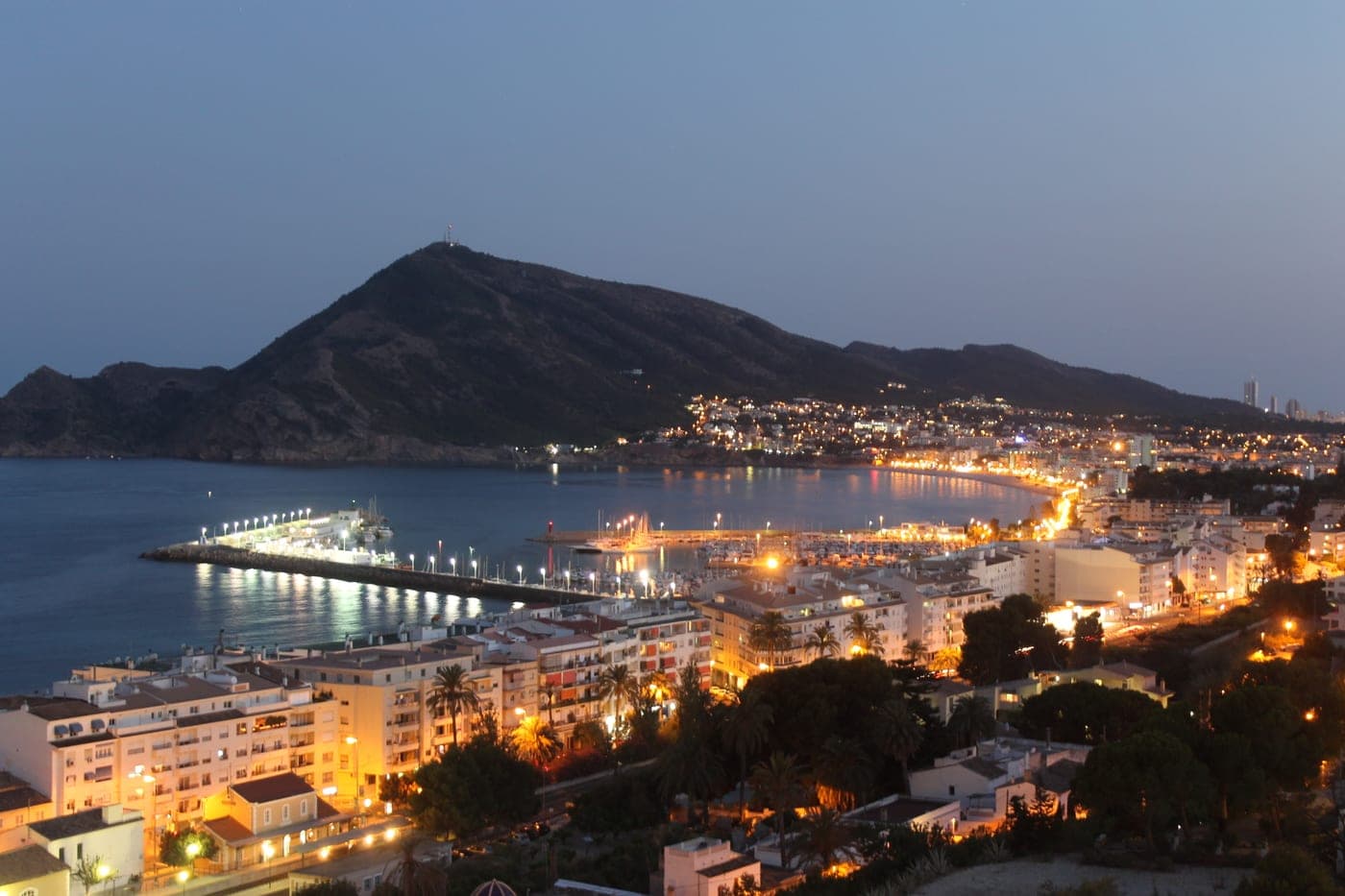
Alicante rewards travellers who slow down. This is a province where the Mediterranean coast and the inland mountains sit close together, so a short stay can move from white villages perched on limestone ridges to rice fields and salt lakes without ever feeling rushed. The pace here has always been unhurried: fishing towns that still mend their nets in the morning, market squares that empty for the midday heat, and hill villages built for shade rather than speed. The city of Alicante sits at the centre of it all, its old quarter climbing toward Santa Bárbara Castle above the harbour. Below the castle walls, the Barrio de Santa Cruz is a maze of narrow lanes and flower-filled balconies, best explored on foot with no fixed plan. From here, the province spreads out in two directions: south toward Elche, known for its extensive palm groves, and north toward the Marina Alta, where the land folds into sharper peaks. That northern stretch is where Alicante's white villages cluster. Guadalest is well known, its houses stacked below a ruined castle with views over a turquoise reservoir, but smaller places like Tàrbena keep the same rhythm without the crowds. Whitewashed walls, tiled roofs, and steep stone streets are the constant here, built to stay cool through long summers. Above the villages, old paths climb toward hilltop hermitages and sanctuaries, still walked each year by local processions that carry a saint or a Virgin from the valley up to her chapel. On the coast, Villajoyosa is worth slowing down for on its own: a working fishing port with houses painted in deep blues, ochres, and pinks. Nearby Altea has a whitewashed old town crowned by a blue-domed church, popular with painters for its light. Further north, Xàbia and Dénia keep a gentler pace than the bigger resorts, with fish markets, old salt works, and views across to the island of Ibiza on clear days. Alicante's food and wine follow the same unhurried logic. The Alicante DO wine region grows Monastrell for deep, dark reds and Moscatel for sweet, aromatic whites, much of it still on small family estates in the hills around Pinoso and Villena. Rice is the other constant: arroz a banda, cooked in fish stock and served separately from its seafood, and arroz del senyoret, the same dish with everything already shelled for lazy eating. Inland, the town of Xixona has made turrón, the almond and honey nougat, for centuries, and its workshops are still small and family-run. Local food festivals mark the calendar through the year, from spring almond-blossom gatherings in the hills to autumn wine harvests. Inland, the Sierra de Aitana rises over the vineyards, its ridgeline visible from much of the province on a clear day. Villages at its foot, like Sella and Confrides, keep orchards of cherry and almond trees and offer walking paths that link one hamlet to the next through terraced hillsides. This is the Alicante that rarely appears in beach brochures: quieter, higher, and built around the seasons rather than the tourist calendar. A few days is enough to get a real sense of the region — a day in Alicante city, a day or two among the white villages of the interior, and a day on the coast between Villajoyosa and Dénia. Longer stays allow for slower detours: a wine estate visit near Pinoso, a walk into the Sierra de Aitana, or simply a morning spent doing nothing in a village square while the town wakes up. Alicante does not need to be rushed to be understood — if anything, it asks the opposite.
Boat RentalsHiking