Riñones al jerez
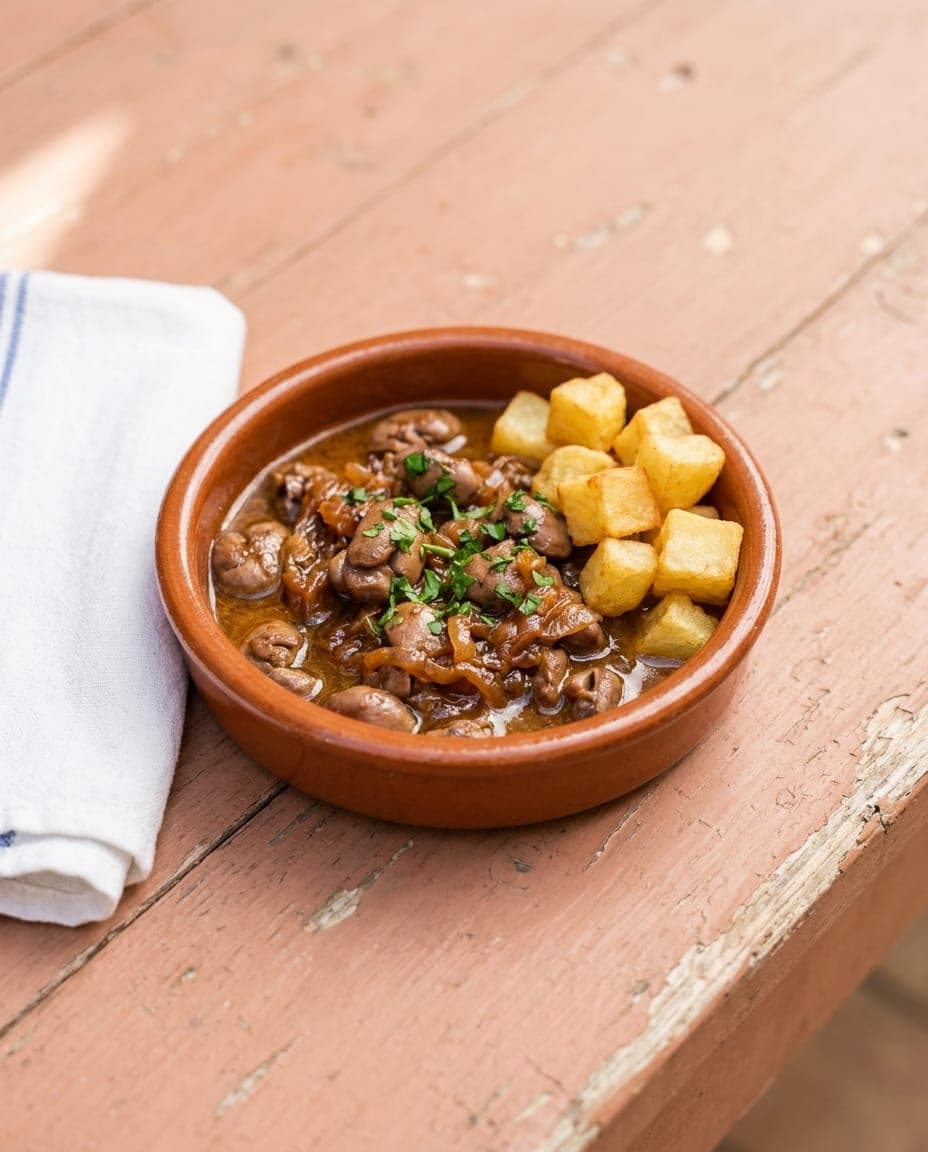
Kidneys cooked in a dry sherry sauce, served with fried potatoes
- Local name
- Riñones al jerez
- Served with
- Fried potatoes or rice
- Best eaten at
- A traditional tapas bar
- Pairs with
- Oloroso, amontillado or fino sherry
What it is
Riñones al jerez, literally "kidneys in sherry", is one of the classic offal tapas of Spain, found in traditional bars from Andalusia to Madrid. Its name points to Jerez de la Frontera and the sherry it is cooked with. It is a dish of sharp contrasts: the earthy, slightly gamey flavour of kidneys meets the nutty, bracing character of dry sherry. The result is not a heavy stew but an intense tapa that relies on the quality of its two main ingredients.
The texture is crucial. When prepared correctly, the kidneys are cleaned, sliced, seared in hot oil and then doused with sherry, which reduces to a glossy sauce coating the meat. The dish usually arrives in a small earthenware dish, often accompanied by golden fried potatoes or simple white rice to soak up the sauce. It demands attention: the kidneys must be tender but not rubbery, and the sherry must provide a bright finish rather than a heavy sweetness.
The Jerez connection
The name points to the wine rather than a birthplace. Jerez de la Frontera, in the province of Cádiz, is the heart of the sherry region, known for its fortified wines aged in oak barrels, some of them under a layer of yeast called flor. While similar dishes exist using other wines, this combination is what gives the dish its identity. The sherry used is not a dessert wine but a dry style, such as Oloroso for depth and nuttiness, amontillado, or Fino for a crisp, saline character.
Cooking offal with wine was a practical way to transform humble, inexpensive ingredients into something substantial, and sherry, abundant in Andalusia and long exported across Spain, was a natural choice. Over time, the dish became a staple of traditional tapas bars, served alongside other classics of the counter.
The technique relies on the wine's alcohol and acidity. As the sherry hits the hot pan, the alcohol evaporates, leaving behind concentrated flavours and a sauce that clings to the meat. This is not a dish that simmers for hours; most recipes cook the kidneys for only a short time so they retain their texture while absorbing the aroma of the wine.
What goes into it
There is no single official recipe, but the components remain fairly consistent:
- Kidneys: Usually from lamb, veal or pork, trimmed of fat and membrane, then sliced or cut into pieces. They are often soaked in water, milk or a little vinegar beforehand to soften their strong flavour.
- Dry sherry: Fino, amontillado or Oloroso, depending on the cook's taste.
- Aromatics: Onion and garlic, fried gently in olive oil to build a flavour base; some cooks add bay leaf, thyme or a little paprika.
- Oil: Olive oil for cooking the kidneys.
- Accompaniments: Fried potatoes or a small serving of plain white rice to balance the intensity of the dish.
The final result is savoury, slightly sweet from the reduction of the wine, and deeply aromatic. The sherry does not overpower the kidneys; rather, it lifts their natural flavour and adds a complex finish that lingers on the palate.
How to eat it
Riñones al jerez is made for the tapas bar. It is typically served as a small plate or ración for sharing, though one hungry diner might easily finish it alone. The dish arrives in a shallow vessel, often with the fried potatoes or rice alongside.
The dish pairs naturally with the sherry used in its preparation. A glass of Fino complements the lighter versions, while an amontillado or Oloroso matches the heartier preparations. A cold beer is a common alternative.
Diners usually tear off a piece of crusty bread to mop up the remaining sauce at the bottom of the dish. The fried potatoes serve a similar purpose, their crisp exterior contrasting with the soft, saucy meat.
Where it comes from
The dish's exact origins are not documented. It belongs to the long Spanish tradition of casquería, or offal cooking, in which inexpensive cuts were made festive with wine, onion and spices. The use of sherry ties it in name to Jerez, but versions are cooked across the country, and cooks in Andalusia and Madrid each claim their own way of making it, from a light splash of sherry to a whole glass.
Over decades, the recipe settled into the menus of traditional bars and home kitchens alike. While other regions have their own versions of kidneys in wine, the use of sherry gives this dish its unique identity.
Curious facts
- The speed matters. Overcooked kidneys become tough and rubbery, so most cooks keep the final cooking short.
- Sherry is the signature. Sherry can only come from the Jerez area of Cádiz province, and using another wine changes the character of the dish entirely.
- A shared plate. It is usually ordered as a ración to share, with bread or potatoes on the side.
- The soaking step. Many cooks soak the kidneys before cooking to soften any lingering gamey taste, though some traditionalists skip this step entirely.
- A casquería classic. It sits alongside callos and other offal dishes as one of the best-known examples of Spain's tradition of cooking with offal.
Where to try it
1 destination
 Wine Tasting
Jerez de la Frontera
World capital of sherry wine with historic bodegas and flamenco culture.
Wine TastingHikingLocal Cuisine





