Queso manchego
The zigzagged sheep's milk cheese of La Mancha
- Vegetarian
- Local name
- Queso manchego
- Served with
- Quince paste (membrillo), bread
- Best eaten at
- A La Mancha tapas bar
- Pairs with
- Tempranillo (Valdepeñas)
What it is
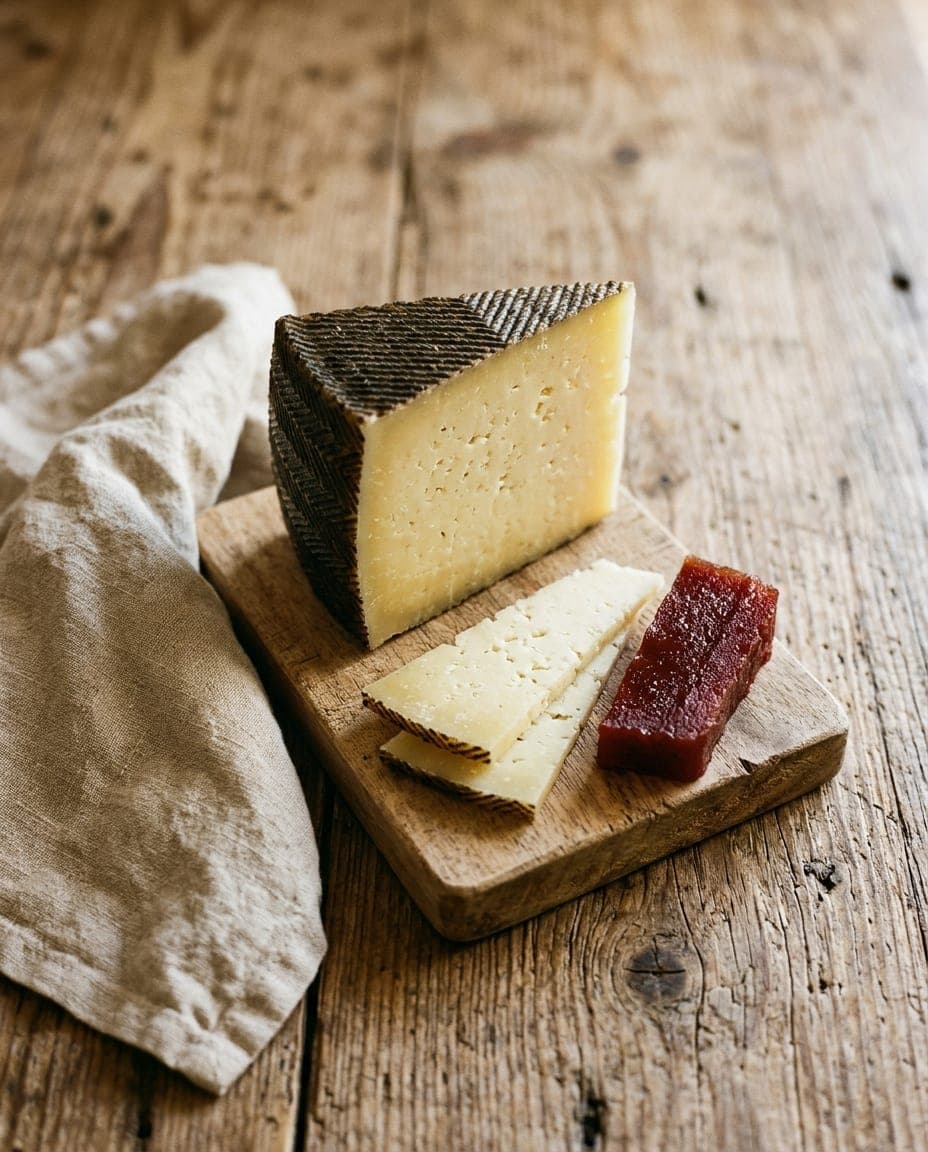
Queso manchego is a firm sheep's milk cheese that comes from the heart of Spain's Castilla-La Mancha region. It is a Protected Designation of Origin (PDO), which means it can only be made in the La Mancha area of the provinces of Albacete, Ciudad Real, Cuenca and Toledo. The cheese is defined by its texture and its striking appearance: a firm wheel with a distinctive zigzag pattern pressed into its side, a mark recalling the traditional esparto grass moulds once used to shape it.
At first glance, the cheese looks rustic and sturdy, but its character shifts depending on how long it has been aged. It offers a spectrum of textures that range from supple and mild to hard and crystalline. The flavour follows the same path, evolving from gentle nuttiness to a sharp, intense punch as the months pass.
This cheese has long been a staple in the region, traditionally made on small farms from the milk of local Manchega sheep. Today, while production includes larger dairies and cooperatives, the rules remain strict. Only milk from the native Manchega breed can be used, and the cheese must be made and aged within the designated territory to carry the name. It is a cheese that speaks of the dry plains of La Mancha, where the climate shapes the grazing, and in turn the flavour of the milk.
The story behind the zigzag pattern
The most visible feature of queso manchego is the pattern on its rind, which serves as an immediate identifier. The sides of the wheel bear a zigzag design known as pleita, while the top and bottom display a flower-like pattern known as flor.
In the past, cheesemakers in La Mancha used bands of plaited esparto grass, a tough plant that grows in the dry interior, to hold the curd. When the curd was pressed, it took on the texture of the weave. Similarly, carved wooden boards were used to mark the top and bottom of the cheese. Modern moulds reproduce these patterns, and the pleita and flor markings are part of the rules of the protected designation.
The pattern links the modern wheel to the hands of earlier cheesemakers and helps consumers distinguish genuine manchego from imitations. Cheese from La Mancha was already familiar in Cervantes' day, and it appears in Don Quixote, set on these same plains.
How age changes the cheese
The defining characteristic of queso manchego is how its profile shifts with time. PDO cheeses are aged for at least 30 days (60 days for larger wheels) and up to two years. In shops and bars, the cheese is usually sold by age, and none of the stages is considered superior; they simply suit different tastes and moments.
Younger semicurado cheese, aged for a few months, is supple and slightly springy, with a mild, buttery flavour. It slices easily without crumbling and suits those who are new to sheep's milk cheeses.
As the cheese matures into curado, it becomes firmer and more compact. The flavour deepens, developing a distinct nuttiness and a hint of salt that lingers on the tongue. This is the form most often found in tapas bars across Spain.
The oldest stage, viejo, is aged for a year or more. Here the cheese becomes hard and dry, with a sharp, intense flavour that can border on peppery. It often contains small white crystals that give a pleasant crunch. This version is typically paired with bold red wines, as its intensity can stand up to robust companions.
What goes into it
The ingredients of queso manchego are set by the rules of the protected designation. The milk must come only from the Manchega sheep, a breed native to the region and adapted to the dry climate and rough terrain of La Mancha. The milk may be raw or pasteurised; cheese made from raw milk can be labelled artesano.
The milk is coagulated with natural rennet or other authorised coagulating enzymes, traditionally animal rennet, so most manchego is not suitable for vegetarians. Salt is applied by brining or dry-salting to draw out moisture and preserve the cheese, and the wheels then mature in cellars or ageing rooms within the production zone.
How to eat it
Queso manchego is most often served as a tapa or a starter at room temperature. The classic way to enjoy it is in thin wedges, sometimes with the rind left on, accompanied by quince paste (membrillo). This sweet, thick fruit preserve provides a counterpoint to the sharpness of the aged cheese or the mild creaminess of younger wheels.
Bread is an essential partner; a rustic, crusty loaf is used to scoop up the cheese and the paste.
A glass of red wine is the standard companion. A Tempranillo from the nearby Valdepeñas region is particularly well suited, as its fruit notes and moderate tannins complement the nuttiness of the cheese without overpowering it.
Curious facts
- The rind tells the story. The pleita zigzag on the side and the flor design on the faces recall esparto moulds and carved wooden boards, a visual link to old methods.
- Only Manchega sheep count. The protected designation requires milk exclusively from the native Manchega breed.
- Three ages in one name. A single cheese offers distinct experiences: semicurado is mild and supple, curado is firm and nutty, and viejo is hard, sharp and crystalline.
- The perfect pairing. Manchego with quince paste is one of the most familiar combinations in Spain, balancing sweet and savoury in a single bite.
Where to try it
The most rewarding experience of queso manchego is in its production zone. While the cheese is available in supermarkets across Spain and internationally, its character is best appreciated in the towns of La Mancha, where many dairies sell directly and offer tastings.
In towns across the provinces of Ciudad Real, Toledo, Cuenca and Albacete, small tapas bars serve the cheese with local membrillo and a glass of Valdepeñas or other La Mancha wine. A traditional taberna is often a better bet than a generic restaurant.
Where to try it
2 destinations
 Wine Tasting
Monreal del Llano
Small La Mancha village with windmills and traditional character.
Wine Tasting Wine Tasting
La Guardia
Historic wine town near Toledo with traditional cellars and organic wineries.
Wine Tasting
1 region
 Wine Tasting5 destinations
Castilla-La Mancha
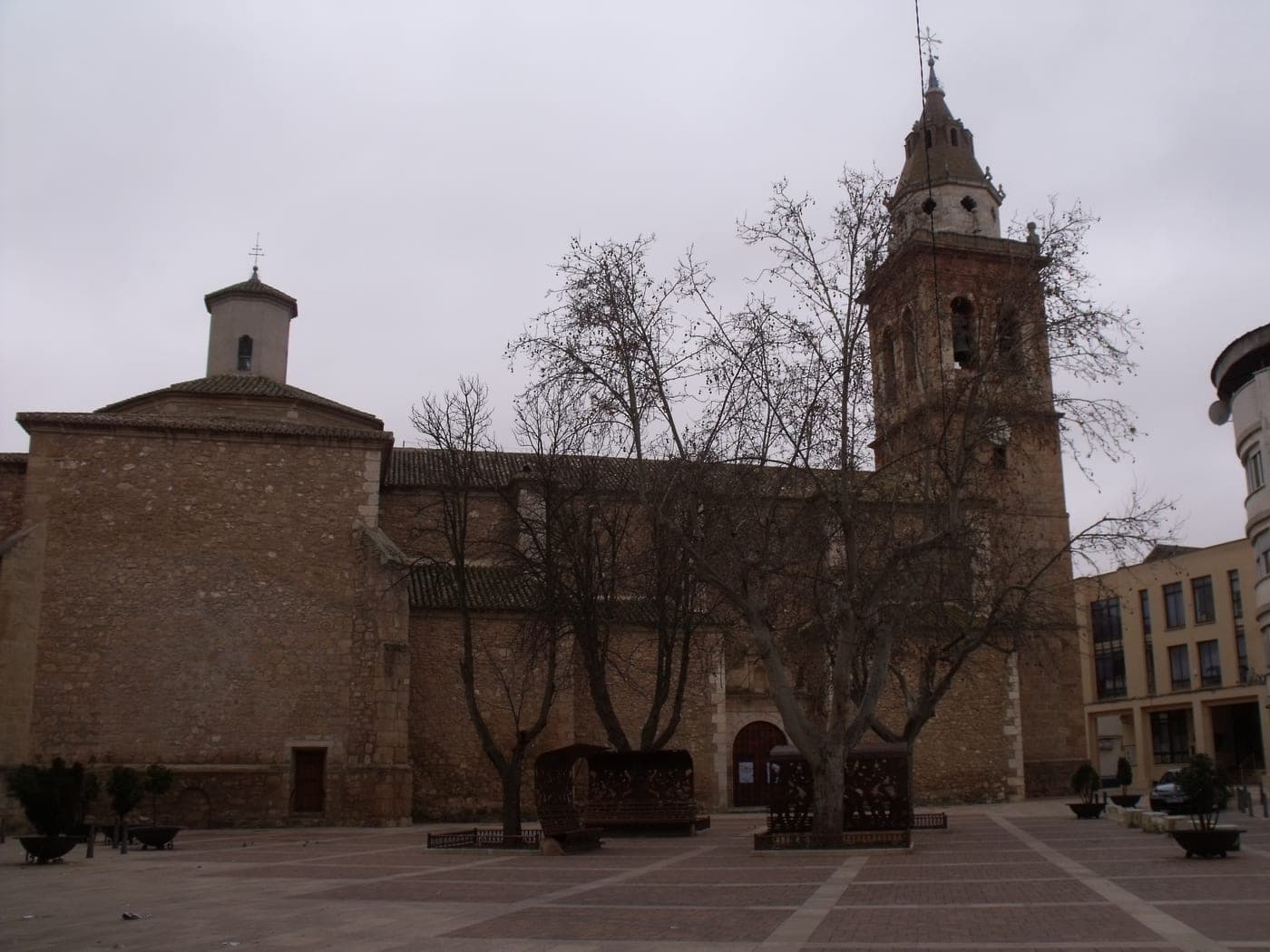
This is Spain's largest region, known for its vast plains and historic cities. Toledo, a UNESCO World Heritage site, showcases a blend of Christian, Muslim, and Jewish architecture, while Cuenca is famous for its hanging houses and modernist art. The region is also noted for its artisanal cheese, saffron production, and robust wines like Tempranillo. Scenic landscapes such as the Tablas de Daimiel National Park offer rich biodiversity. Explore the small towns of Alcázar de San Juan and Consuegra, where windmills dot the horizon, echoing the tales of Don Quixote. The region's festivals, particularly in spring and autumn, celebrate local traditions and gastronomy, providing deeper cultural connections.
Wine TastingHikingLocal Cuisine