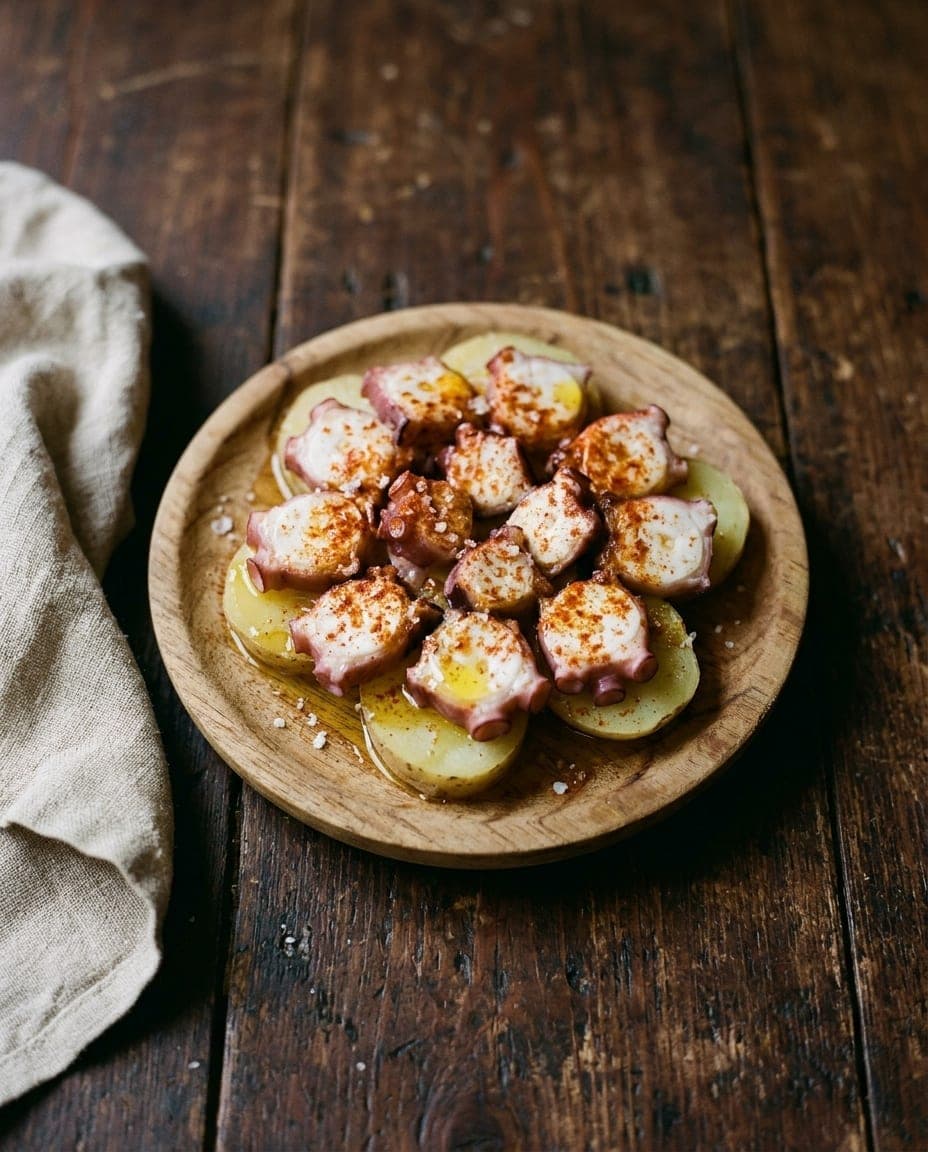
Pulpo a la gallega
Boiled octopus with paprika, olive oil and salt on wooden plates in Galicia
- Local name
- Polbo á feira
- Served with
- Cachelos (boiled potatoes)
- Best eaten at
- A Galician pulpería or village fair
- Pairs with
- Ribeiro or Albariño
What it is
Pulpo a la gallega, known locally as polbo á feira ("fair-style octopus"), is the best-known octopus dish of north-western Spain. It is not merely a recipe but a specific way of preparing octopus that has become a culinary signature of Galicia. The dish consists of octopus boiled until tender, cut into thick coins with scissors, and arranged on a wooden plate. It is dressed generously with coarse salt, sweet or hot paprika known as pimentón, and a final flood of olive oil.
The visual presentation is simple yet striking: the pale, soft meat contrasts against the wood, while the red paprika creates a vivid dusting. The texture is key; the octopus should be tender but still have a slight bite, never rubbery and never mushy. It is often accompanied by cachelos, potatoes boiled in their skins, served alongside or underneath the octopus.
The dish is rooted in the inland fairs and romerías of Galicia, where large copper cauldrons are set up over fires. The preparation is overseen by pulpeiras, traditionally women from the parish of Arcos in O Carballiño (Ourense), who have handed the technique down through generations. While it is now found in restaurants across Spain, its heart remains in the inland market towns and rural fairs of the north-west.
The legend of the three dips
The most famous element of this dish is the method used to prepare the octopus before it boils. The cook "frightens" (asustar) the animal by dipping it three times into boiling water and lifting it out between each dip. This technique, which many cooks credit with a more tender texture, also serves a practical purpose: it makes the tentacles curl and helps keep the skin from peeling away during cooking.
Once the octopus is fully submerged for the remainder of the cooking time, the cook tests its readiness by piercing the thickest part of a tentacle with a skewer or fork. When the metal slides in with little resistance, the octopus is ready to be removed and often left to rest briefly in the cooking water.
The origins of the triple dip are debated. Some say it was a way to ensure even cooking in large copper pots over open fires at fairs, while others see it as an old tradition that has simply persisted because it works. Either way, it remains the standard technique.
How Galician pulperías serve it
The traditional venues for eating polbo á feira are the pulperías of inland towns such as O Carballiño and Melide, and the temporary stalls set up at village fairs and market days. These places are often simple, functional spaces with long shared tables, where large copper cauldrons sit over the heat.
In these settings, the octopus is cooked in large quantities to feed crowds. The pulpeiras work with a rhythm honed by years of experience, managing the heat and timing of several pots at once.
The dish is usually ordered as a ración to share, sometimes as one of several plates and sometimes as a meal in itself with bread and wine. Wooden plates are the classic serving vessel; the wood holds the heat and is said to soak up some of the excess oil.
What goes into it
The ingredients are few, which makes the quality of each one critical. There is no single official recipe, but the components remain consistent across Galicia:
- Octopus, fresh or previously frozen, boiled whole and then cut into rounds.
- Coarse salt, sprinkled over the hot meat to enhance its natural sweetness.
- Pimentón, Spanish paprika, in sweet (dulce) or hot (picante) varieties, which provides the dish's distinctive colour and aroma.
- Olive oil, poured generously over the top to coat the meat and carry the flavour of the paprika.
- Cachelos, boiled potatoes, often served alongside or beneath the octopus to soak up the flavours.
The combination is simple but depends on good products: fresh, fruity oil, aromatic paprika and well-cooked octopus.
How to eat it
The dish is best eaten at a Galician pulpería or during a village fair, where the atmosphere matches the rustic nature of the food. The octopus is served hot on the wooden plate and eaten straight away, while the oil is still warm and the paprika fragrant.
Diners use toothpicks or forks to pick up the pieces of octopus, often dragging them through the pool of oil at the bottom of the plate, which is later mopped up with bread. It is common to share the dish among a group, and the communal style of serving encourages conversation.
A glass of local wine pairs naturally with the dish. A crisp Albariño from the Rías Baixas or a Ribeiro from the inland valleys of Ourense complements the oil and paprika without overpowering the octopus. Wine is traditionally drunk from white ceramic bowls (cuncas).
Curious facts
- The wooden plate matters. The dish is traditionally served on wood. Ceramic plates are used in some modern restaurants, but purists insist on wood.
- Scissors over knives. The octopus is traditionally cut with scissors, which give clean cuts straight onto the plate.
- Frozen first. Many cooks freeze the octopus before boiling to break down the muscle fibres and ensure tenderness, a step that has become standard practice in professional kitchens.
- A fair tradition. O Carballiño's Festa do Pulpo, held each August since the 1960s, draws large crowds and is the best-known celebration of the dish.
- Regional pride. While octopus dishes exist elsewhere in Spain, polbo á feira is unmistakably Galician and a point of local identity.
Where to try it
The best place to eat polbo á feira is in inland Galicia, particularly in O Carballiño, the home of the pulpeiras of Arcos, and in towns on the Camino de Santiago such as Melide, where pulperías are a traditional stop for pilgrims. Santiago de Compostela also has many places serving it.
The dish is available year-round, and is a fixture of the monthly fairs held in many Galician towns as well as of the summer festival season, when the copper cauldrons come out in force.
Where to try it
2 destinations
 Panoramic Trains
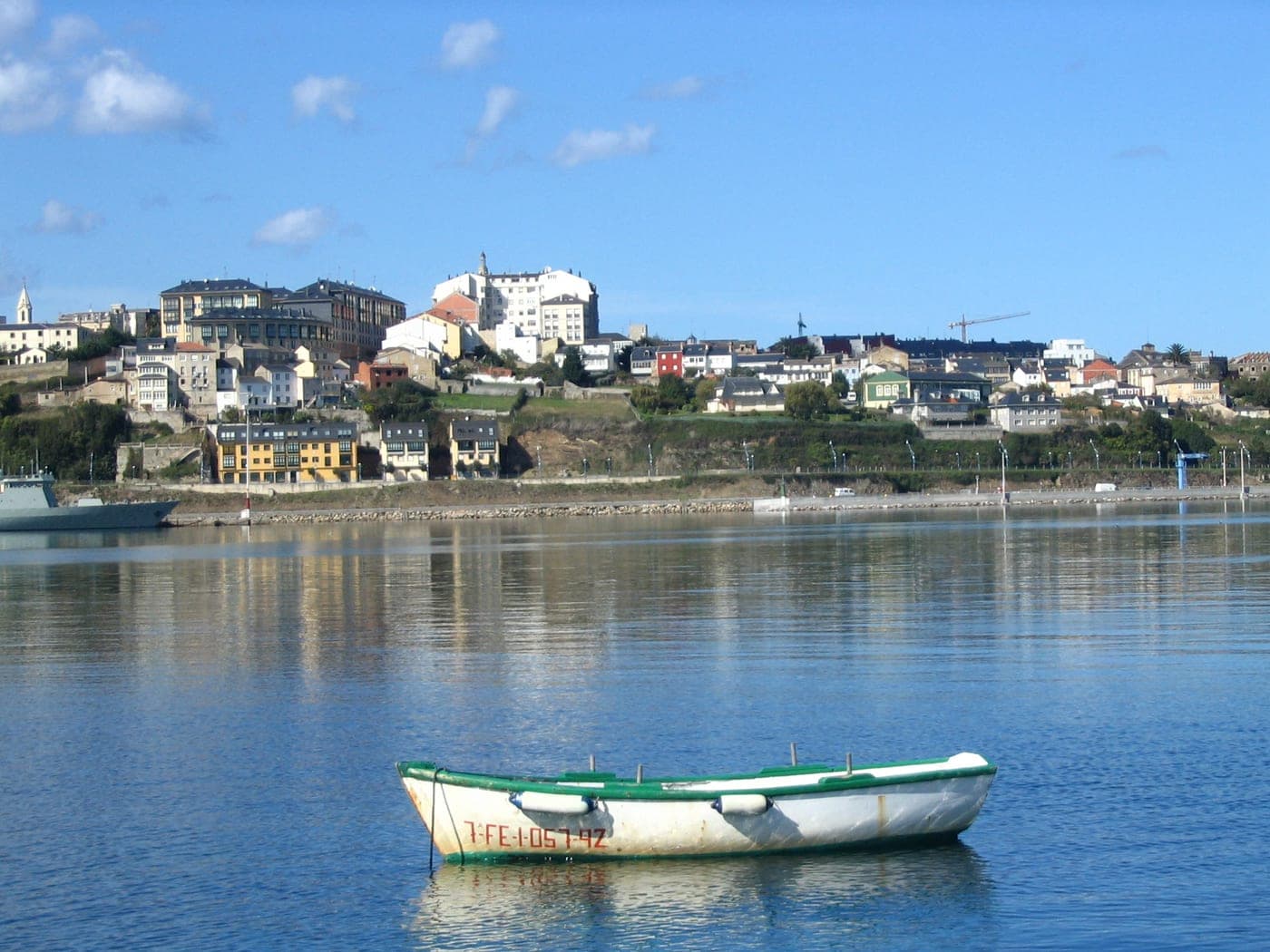
Ferrol
Historic naval port with neoclassical architecture and maritime heritage.
Panoramic TrainsHiking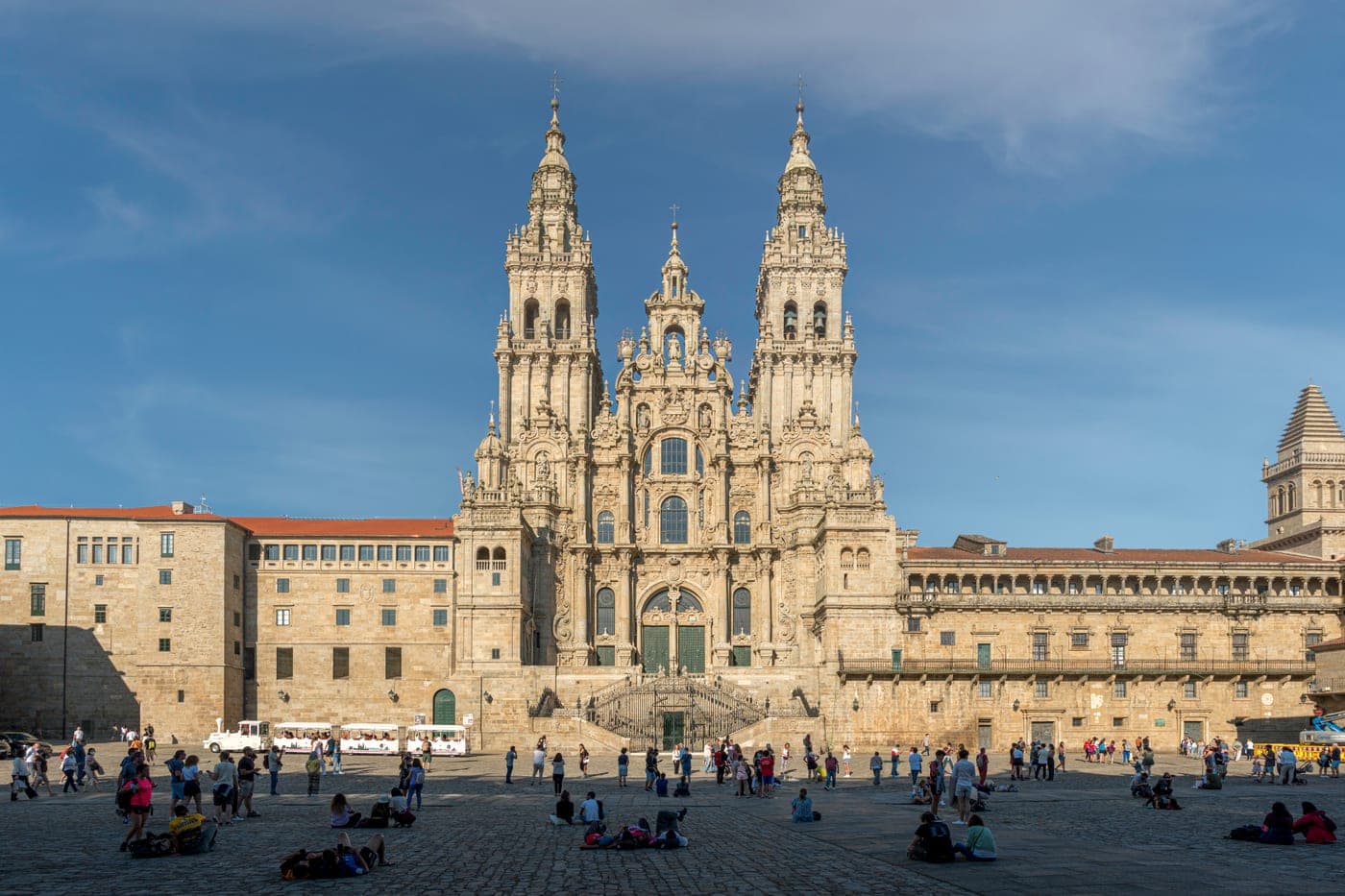 Panoramic Trains
Santiago de Compostela
Famous pilgrimage site featuring the stunning Santiago de Compostela Cathedral.
Panoramic TrainsHikingLocal Cuisine
1 region
 Panoramic Trains8 destinations
Galicia
This region is the largest in Spain, featuring a stunning coastline along the Atlantic Ocean. Known for its rich Celtic heritage, Galicia boasts historical towns like Santiago de Compostela, famous for its pilgrimage routes and the impressive cathedral. The Rías Baixas area is celebrated for its Albariño wine, while the rugged shores offer scenic beauty, including the dramatic cliffs of the Costa da Morte. Traditional crafts, such as pottery and weaving, reflect the local culture. Visitors can explore lesser-known villages like Combarro and O Cebreiro, which showcase ancient architecture and regional gastronomy. Unique festivals, such as the Romería de San Juan, highlight local traditions and community spirit, making this region a treasure trove for those seeking depth in their travels.
Panoramic TrainsHikingWine TastingLocal Cuisine