Pintxos
Small bites served on the counters of Basque bars, eaten standing on a bar crawl
- Local name
- Pintxos
- Best eaten at
- A San Sebastián old-town bar
- Pairs with
- Txakoli
What it is
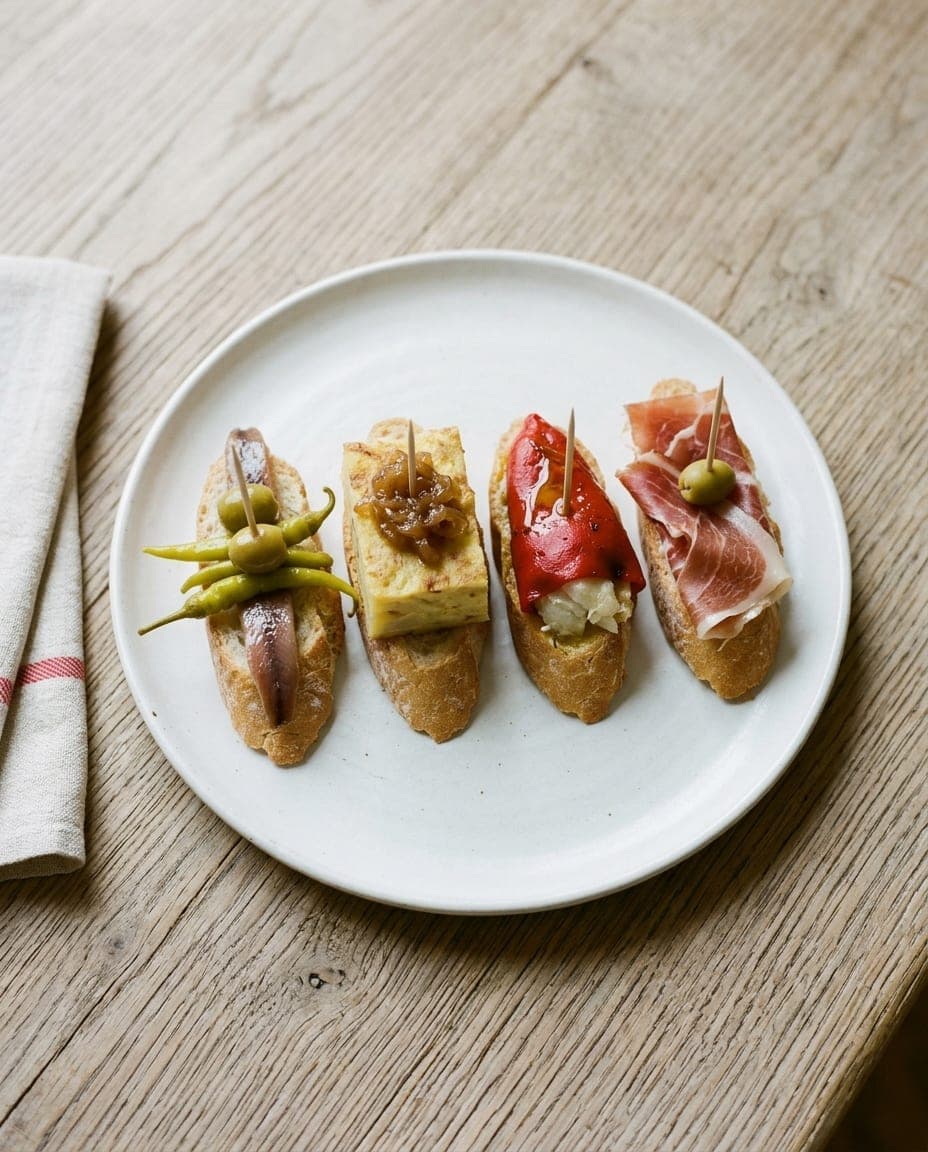
Pintxos are the small, often elaborate bar snacks that define the culinary culture of the Basque Country in northern Spain. Unlike the tapas of Andalusia, which are traditionally served free with a drink or on a plate to be shared at a table, a pintxo is usually a single portion for one person, often built on a slice of bread and held together by a cocktail stick. The word pintxo is the Basque spelling of the Spanish pincho, meaning spike or skewer, referring to the stick that pierces the ingredients.
These are not merely appetisers; they are a social institution. In the old towns of San Sebastián, Bilbao and other Basque towns, the experience is defined by movement rather than sitting down. The tradition involves moving from one bar to another, taking one or two pintxos at each stop, usually with a small glass of wine or beer. This circuit allows diners to sample a wide variety of flavours in a single evening without committing to a full meal in any one place.
The social circuit
The rhythm of eating pintxos is distinct from other forms of dining. It is mostly a standing affair, usually around midday before lunch or in the evening. A visitor enters a bar, orders a drink and a pintxo, eats it near the counter and then moves on to the next venue. This practice turns the act of eating into a tour of the neighbourhood's kitchens.
The bars themselves are often narrow, with limited seating, so most patrons stand at the long counters where the pintxos are displayed. In San Sebastián, particularly in the Old Town (Parte Vieja), the concentration of bars is so high that one can spend an entire evening walking just a few hundred metres while tasting dozens of different creations.
The classic cold pintxos
Before the rise of elaborate hot dishes, the tradition was built on simple, preserved ingredients that could be prepared in advance. The most famous example is the Gilda: a green olive, an anchovy fillet and pickled guindilla peppers threaded onto a single cocktail stick, with no bread at all. It is usually traced to San Sebastián in the 1940s, and its name is a nod to Rita Hayworth's character in the 1946 Hollywood film Gilda, said to be, like the pintxo, green, salty and a little bit spicy.
Other cold classics include slices of tortilla de patatas, the thick Spanish omelette made with eggs, potatoes and often onion, cut into small squares or wedges. Croquettes, usually filled with ham or cod, are also common. Salted cod (bacalao) appears in various forms, and anchovies, peppers and seafood are piled onto slices of bread with mayonnaise-based salads. Many of these items rely on the quality of the raw or preserved ingredients, with little cooking to mask any flaws.
The modern hot pintxos
In recent decades, the landscape has shifted towards pintxos that are cooked to order. This evolution drew on the energy of the New Basque Cuisine movement, as cooks brought restaurant techniques to the bar counter. Instead of pre-made items, these dishes are prepared on a griddle or in a small pan and served immediately.
Typical examples include grilled mushrooms, seared foie gras, slow-cooked meats or seafood on a small plate. These hot versions are usually ordered from a blackboard and often require a short wait, creating a moment of interaction between the cook and the customer at the counter. When bread is used, it is often toasted to provide a sturdy base for the heavier toppings.
How it is eaten and paid for
The method of eating is as important as the food itself. A diner typically takes one pintxo at a bar, often with a small glass of txakoli, the crisp, slightly sparkling white wine from the Basque coast, traditionally poured from a height to aerate it. Then it is on to the next stop.
Payment in many traditional bars has long relied on trust. Diners serve themselves from the counter and tell the bartender what they ate when it is time to pay; in some places, the cocktail sticks or small plates left over serve as a record. Some bars charge a fixed price per pintxo, while others charge according to the complexity of the dish. This system relies on honesty and has become a hallmark of the local culture.
Curious facts
- The toothpick counts. In some bars, the cocktail sticks left on the plate help tally the bill.
- Txakoli is poured high. The local white wine is often poured from a height into the glass to release its bubbles and enhance its aroma.
- Gilda has a film name. The famous combination of olive, anchovy and pepper is named after Rita Hayworth's character in the 1946 film Gilda.
- Bread is common, not compulsory. Many pintxos sit on a slice of bread, but classics like the Gilda have none.
- Little cutlery needed. Most cold pintxos can be eaten with the fingers, making them ideal for standing and moving around.
- Regional variations exist. While San Sebastián is famous for them, other Basque towns have their own local specialities that follow the same format.
Where to try it
The heart of the tradition lies in San Sebastián, particularly in the Old Town, where dozens of bars line the narrow streets. While other Basque towns such as Bilbao and Vitoria-Gasteiz have their own scenes, San Sebastián is widely regarded as the capital of pintxo culture.
In Logroño, in the neighbouring La Rioja region, a similar tradition exists along Calle Laurel, where bars also display their snacks on counters. However, the Basque version remains the reference for the skewer and the circuit-style movement.
Where to try it
1 region
 Camper Van Rentals1 destination
Basque Country
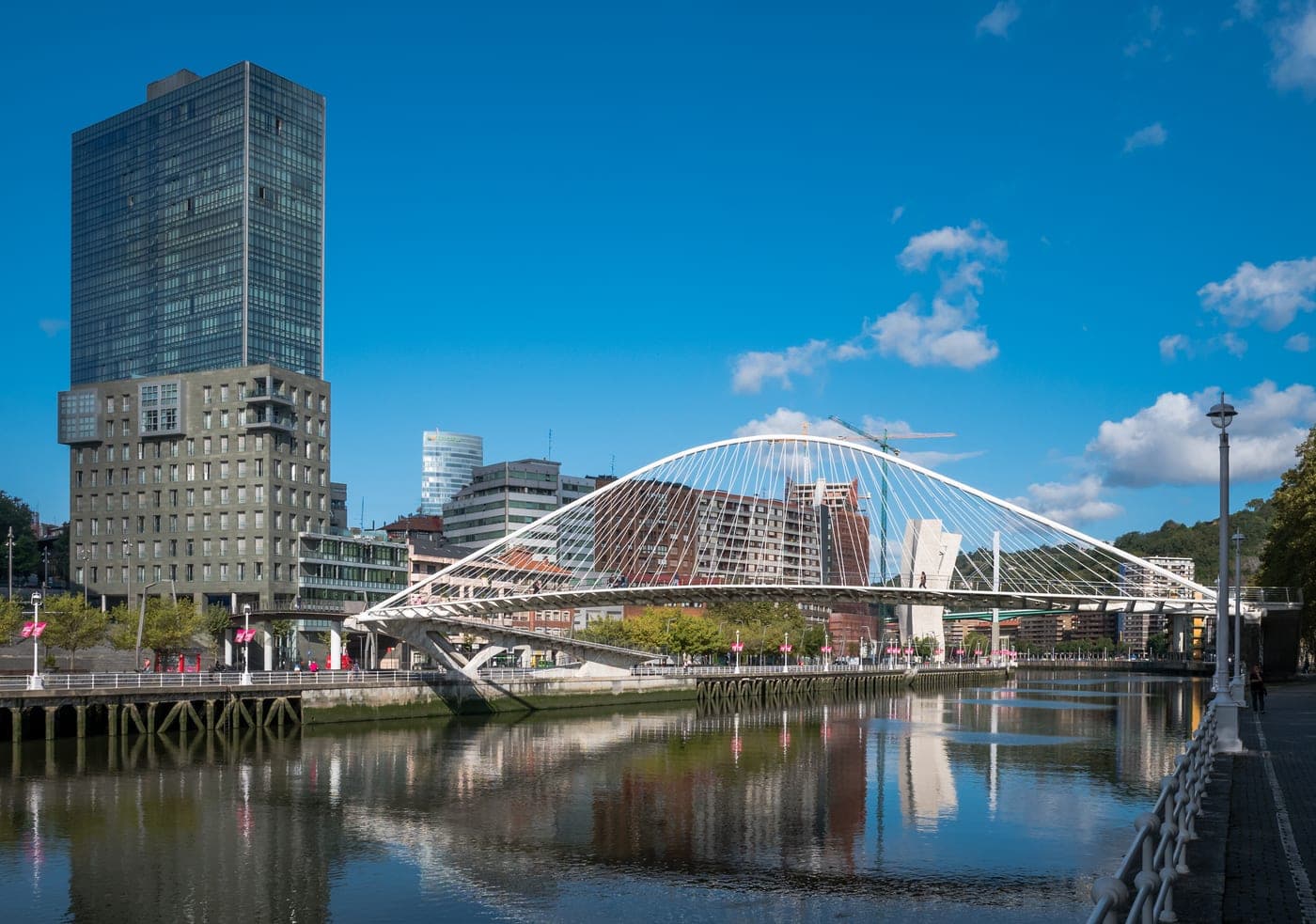
Basque Country is a unique region known for its distinct culture and language, Euskara. It's the only Spanish region with a coastline along the Bay of Biscay, featuring beautiful beaches and rugged cliffs. The largest city, Bilbao, is home to the modern Guggenheim Museum, but the true essence of Basque life can be found in smaller towns like Getaria, famous for its grilled fish and Txakoli wine. San Sebastián offers culinary delights and stunning beaches, while the historic town of Hondarribia showcases medieval architecture. The region is also rich in festivals, such as the Fiestas de la Virgen Blanca, celebrating local traditions. Its lush landscapes include the Picos de Europa mountains, perfect for hiking. Discovering local gastronomy, including pintxos and Basque cider, adds to the immersive experience.
Camper Van RentalsPanoramic TrainsHikingLocal Cuisine