Paella valenciana
A saffron rice dish from Valencia, cooked in a wide pan over orange wood
- Local name
- Paella valenciana
- Best eaten at
- Sunday lunch near La Albufera
- Pairs with
- Valencian white or rosé
What it is
Paella valenciana is the name of a specific rice dish that originated in the rural areas surrounding Valencia, on the eastern coast of Spain. Although paella is often treated abroad as Spain's national dish, the original is a Valencian one, and it is not the seafood paella often found on menus outside the region. The true version is a country meal born from the fields and marshes of the Albufera lagoon, just south of the city of Valencia.
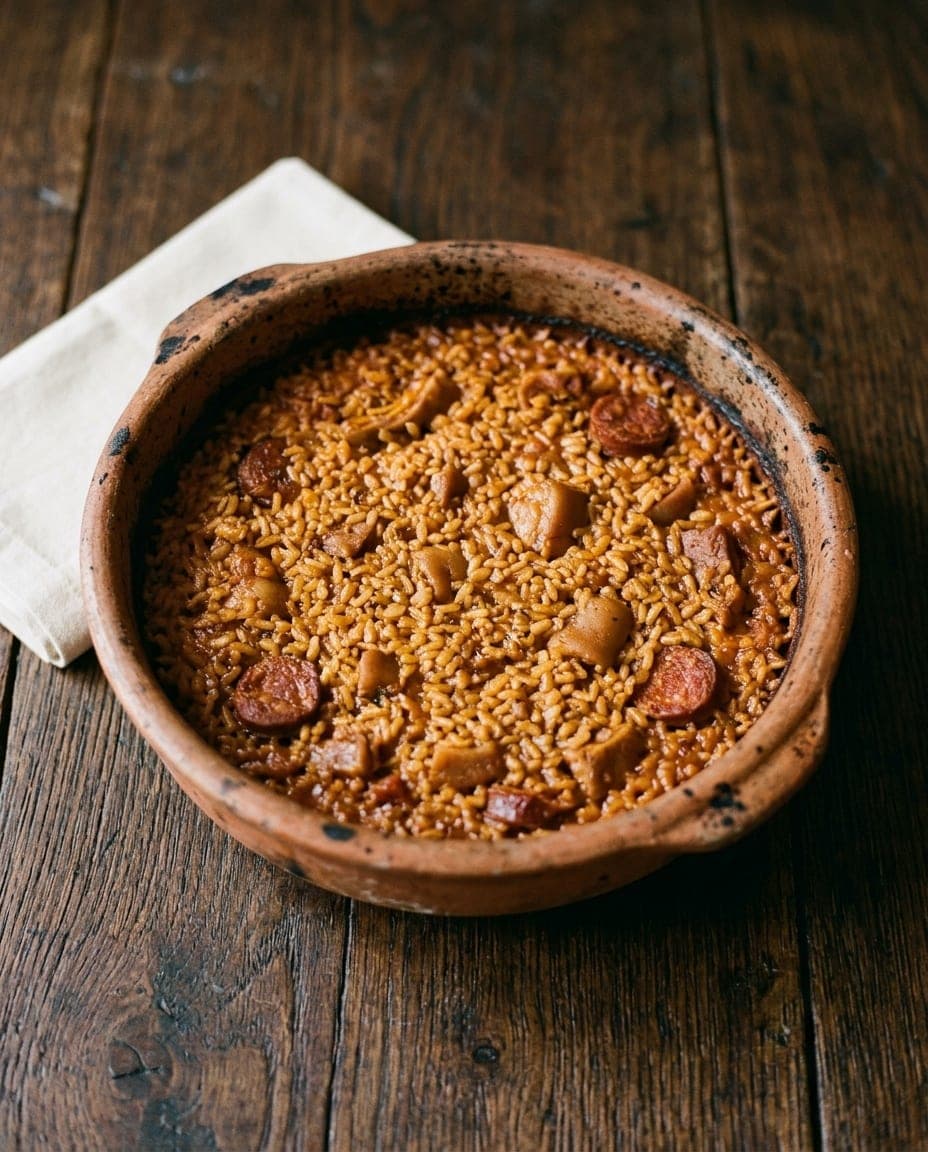
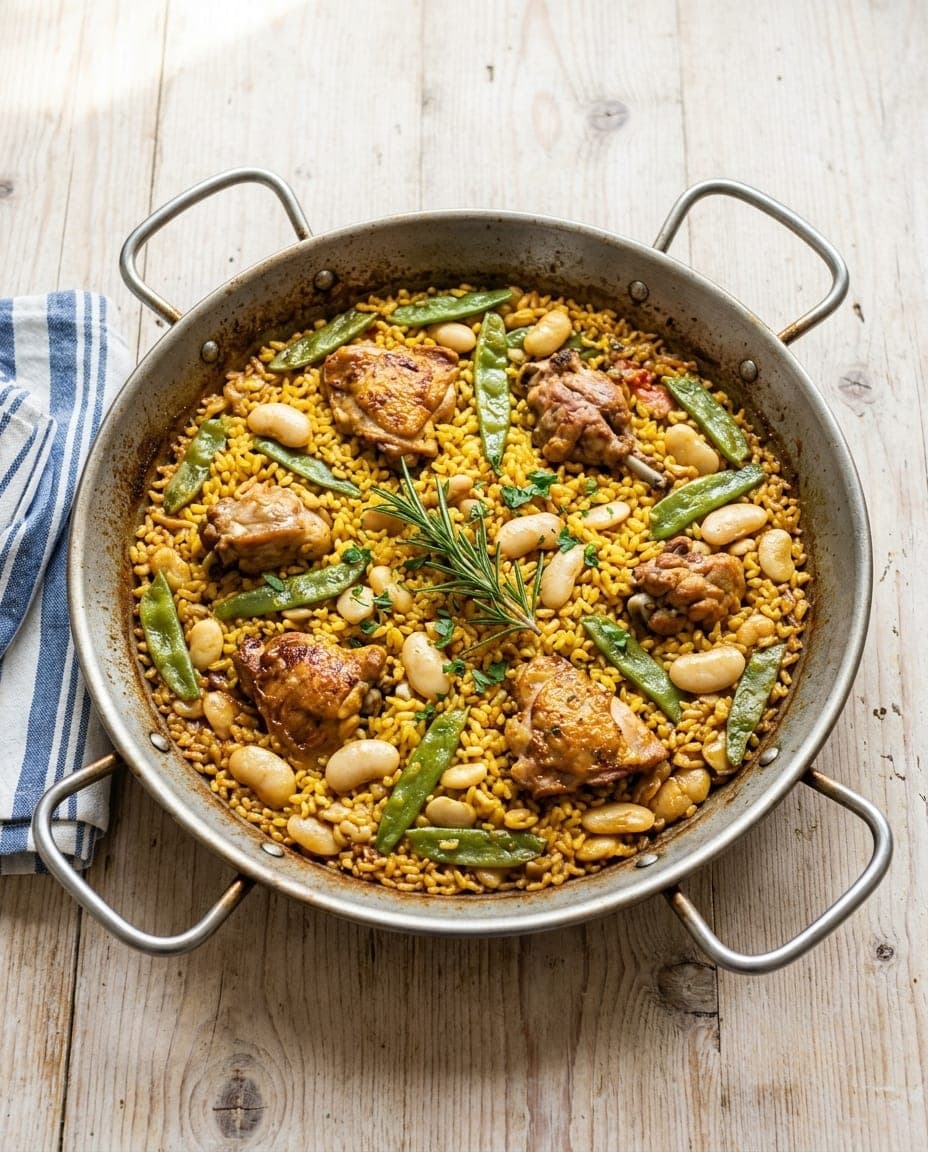
The dish consists of rice cooked in a wide, shallow pan with chicken, rabbit, sometimes snails, and local beans. Saffron provides the golden colour, while sweet paprika, tomato and olive oil add depth. The rice is Valencian short-grain, grown in the wetlands near the coast. It is traditionally cooked over an open fire, often fed with orange-tree and pine wood, which lends a subtle aroma to the grain.
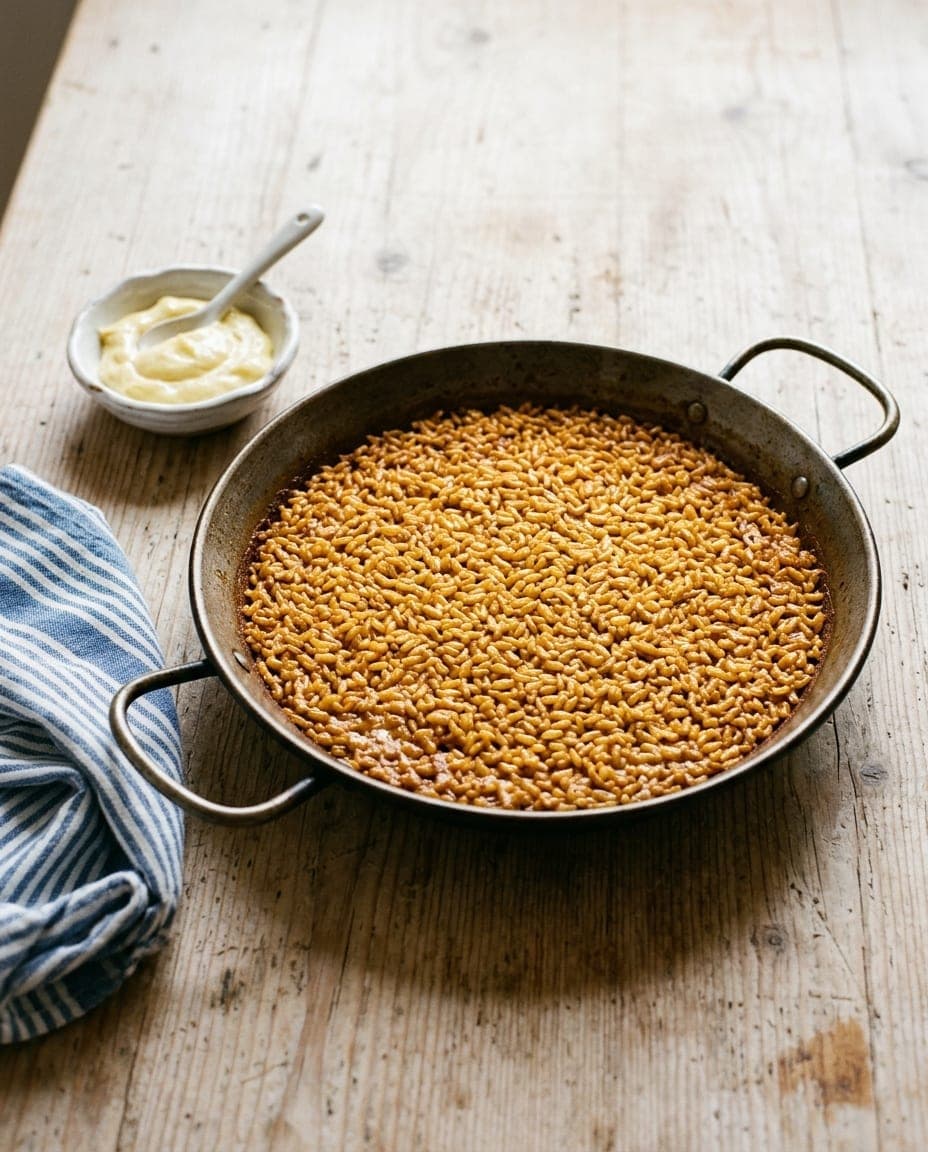
What defines this dish is the method of cooking and the texture of the final result. The rice grains must remain separate, never clumped together or mushy. There is no stirring once the rice is in. The goal is a dry dish where the rice forms a thin layer in the pan, ideally with a caramelised crust at the bottom known as socarrat, which many consider the best part of the meal.
Where it comes from
Rice has been grown around the Albufera for centuries, but the paella in its modern form took shape around the mid-19th century in the countryside around Valencia. It was a meal for farmworkers, prepared outdoors over an open fire using what the farm and the marshes provided: rice from the paddies, rabbit, chicken, snails and beans from the garden. The beans are local varieties: the garrofó (a large, flat lima bean) and the flat green ferraura, sometimes joined by tavella.
The name comes from the pan itself. In Valencian, paella means the wide, shallow pan with two handles, a word that goes back to the Latin patella. The dish takes its name from the vessel used to cook it, and the word is now often used to describe any rice dish cooked in a similar style, regardless of ingredients.
The tradition remained largely rural until the 20th century, when the dish began to appear in restaurants in Valencia and spread to other parts of Spain and the world. Its heart remains in the countryside, where it is still prepared for family gatherings and local festivals.
How it is cooked
The cooking traditionally takes place outdoors over an open wood fire, which gives the high heat needed to brown the meat and cook the rice quickly.
The process begins with heating olive oil in the paella pan. Meat, usually rabbit and chicken cut into pieces, is fried until browned. The green beans and garrofó follow, then grated tomato and paprika. Water is poured in, and the mixture simmers to make a flavoured broth before saffron and salt are added.
The rice is then scattered into the pan and spread evenly. From that moment it is not stirred, as stirring would release the starch and make the dish creamy. The rice absorbs the broth as it cooks, eventually becoming dry. The heat is adjusted so that the bottom layer caramelises without burning, forming the socarrat. The whole process takes around an hour, usually in the hands of one cook working for a group.
What goes into it
Recipes vary from village to village, but the ingredients of a traditional paella valenciana are fairly fixed. A version with seafood, such as prawns or mussels, is a different dish rather than the original. The core components are:
- Rabbit and chicken: the main meats, sometimes with duck in older recipes.
- Beans: the large, flat garrofó and the flat green ferraura.
- Saffron: used to colour the rice and give it a distinct aroma.
- Sweet paprika: a small amount for colour and flavour.
- Tomato: grated or crushed.
- Olive oil, water and salt.
- Snails or rosemary: optional additions in some traditional versions.
The result is a dry, savoury rice dish where every grain is distinct, the beans soften without disintegrating and the meat remains tender.
How it is eaten
Paella valenciana is traditionally served as a main course for Sunday lunch. It is brought to the table in the pan and shared directly from it, with everyone gathering around the vessel. Diners traditionally eat with spoons, often wooden ones, each working from the edge of the pan towards the centre within their own section. The crust from the bottom is scraped up and shared as a treat.
The dish is accompanied by local white wine or a rosé. A simple salad of lettuce and tomato may be served on the side, but the focus remains on the rice.
Curious facts
- The pan defines the dish. The word paella refers to the steel pan with two handles, not the food inside it.
- No stirring allowed. Once the rice is added, the cook does not stir it; stirring would release starch and give a creamy consistency rather than separate grains.
- The crust is prized. The socarrat, the caramelised layer at the bottom of the pan, is considered by many the best part of the meal.
- A rural Sunday tradition. The dish was historically cooked for family gatherings on Sundays, when there was time to prepare a large meal outdoors. It remains a staple of weekend gatherings in the region.
- Seafood is not original. Seafood paellas are a later variation; the original version relies on land-based ingredients like rabbit and chicken.
Where to try it
The countryside around Valencia, particularly near the Albufera lagoon, is the classic setting, with restaurants that cook the dish over wood fires. Many are simple rural taverns rather than fine-dining venues.
Sunday lunch is the traditional time to seek out the dish. Restaurants in villages like El Palmar and El Saler often prepare paella for the midday meal, serving it straight from the pan to groups of diners.
Where to try it
1 destination
 Camper Van Rentals
Valencia
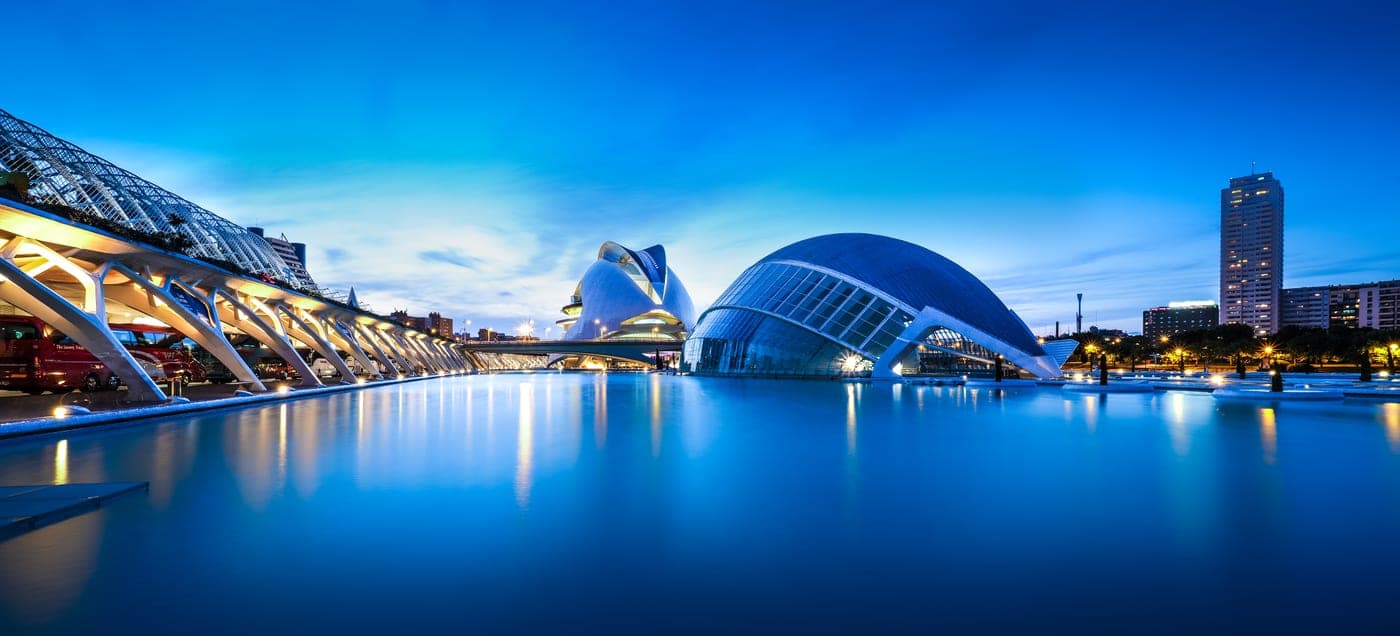
Mediterranean city famous for paella, futuristic architecture, and beaches.
Camper Van RentalsHiking
1 region
- Camper Van Rentals2 destinations
Valencia
Known for its rich history and vibrant culture, Valencia is the third-largest city in Spain and the only region with a Mediterranean coastline. This region boasts the UNESCO-listed City of Arts and Sciences, a futuristic architectural complex, alongside the historic Silk Exchange, a symbol of its trading past. Beyond the city, the Albufera Natural Park offers stunning wetlands and is famous for its rice paddies, the source of the region's renowned paella. Valencia's traditions include the Fallas festival, celebrated with impressive sculptures and fireworks. The region also produces excellent wines, particularly from the Utiel-Requena area, and has a thriving local market scene, perfect for food enthusiasts. Nearby towns like Xàtiva and Bocairent showcase medieval architecture and local crafts, providing an authentic glimpse into Valencia's diverse heritage.
Camper Van RentalsHikingBoat Rentals