Orujo de Liébana
A pomace spirit from Cantabria's deep mountain valley
- Alcoholic
- Local name
- Orujo de Liébana
- Served
- Neat, as a digestif
- Best eaten at
- Potes' Fiesta del Orujo
What it is
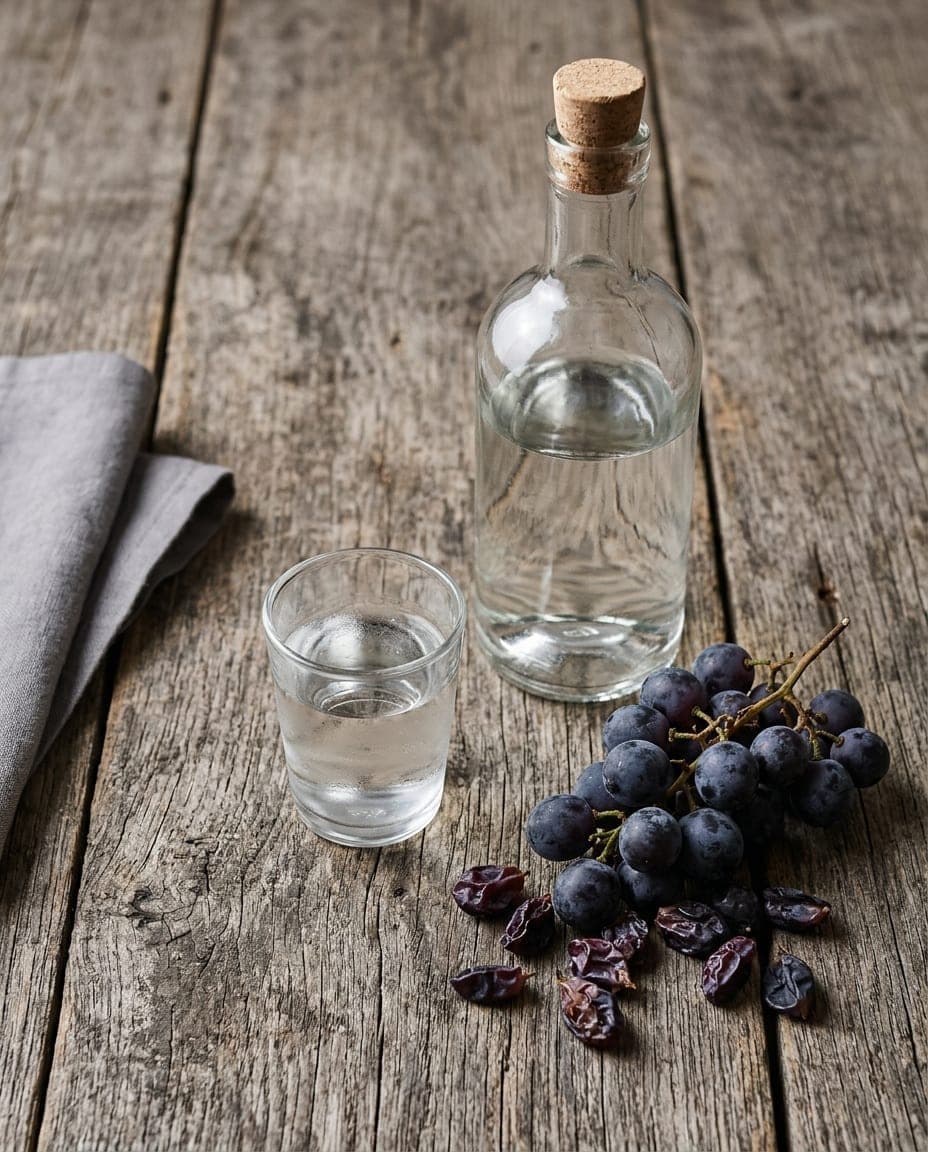
Orujo de Liébana is a clear spirit distilled from pomace, the skins, stalks and pips left after grapes are pressed for wine. It comes from Liébana in the north of Spain, within the autonomous community of Cantabria, a group of valleys enclosed by the Picos de Europa and reached through a deep gorge. Unlike Orujo de Galicia, it carries no Spanish or EU geographical indication (the valley's protected name, Liébana, covers its wine, not its spirit); its reputation rests on local tradition and on the valley's famous festival.
The spirit is strong and rough-edged when young, often described as fiery or intense. It is traditionally distilled in small copper pot stills called alquitaras. While it begins as a colourless liquid, Orujo de Liébana also appears in two other forms: de hierbas, which is macerated with herbs to take on a yellowish hue and a herbal aroma, and as a cream liqueur, crema de orujo, where cream is added to soften the bite.
The distillers of Liébana
The production of Orujo de Liébana is tied to the rhythm of the valley and its wine harvest. Once the grapes have been pressed, the remaining pomace is fermented and then distilled slowly over the fire of the alquitara, the vapour condensing into clear spirit.
The practice has deep roots here: the valley's monasteries are said to have distilled the leftovers of their harvests as far back as the Middle Ages, and in mountain communities little was wasted and every part of the harvest found a use. Home distilling was once widespread, but it is now restricted to registered producers, known locally as orujeros. The resulting drink is not meant for sipping slowly in a city bar; it is a product of the mountains, made to round off a meal and mark the end of the grape harvest.
How it is served
Orujo de Liébana is typically served neat, as a digestif after a meal. The de hierbas version is also drunk on its own, often chilled. The cream liqueur offers a sweeter alternative, though the classic clear spirit remains the emblem of the valley.
In the town of Potes, the main settlement of Liébana, the spirit is celebrated during the annual Fiesta del Orujo. Held on the second weekend of November since 1984 (with a break from 1985 until 1994), and declared a Festival of National Tourist Interest in 2012, it opens with the lighting of the alquitaras. Stills are fired up in the streets, releasing clouds of steam and the sharp scent of the new spirit into the cold air, and visitors taste the orujo while the distillers work nearby. On the final day, a blind tasting chooses the best distillery of the valley.
Curious facts
- Copper stills. The alquitara is the traditional still of Liébana, and local producers see it as the source of the spirit's character.
- Herbs give colour. The de hierbas version takes its colour from maceration, and the exact herbs used vary by producer.
- An honorary title. Each year a well-known guest is named Orujero Mayor and gives the opening speech of the Potes festival.
- A festival of steam. The Fiesta del Orujo features public distilling, where the new spirit is tasted as it comes from the stills.
- Not a wine. While it comes from grape pomace, Orujo de Liébana is a distilled spirit, not a wine; only the herb and cream versions count as liqueurs.
Where to try it
The best place to taste Orujo de Liébana is in Potes, the capital of the Liébana valley. During the Fiesta del Orujo in November, visitors can see the stills in action and sample the fresh spirit as it comes from the copper. Outside the festival, traditional taverns in the valley serve the drink neat or de hierbas after meals of cocido lebaniego and local cheeses such as Picón.
It is also available in small mountain bars throughout Cantabria, where it is often offered as a warming drink after a long day of walking in the Picos de Europa. The cream liqueur version is found more widely in Spain, but the true character of Orujo de Liébana remains rooted in the valley and its cold winters.
Where to try it
1 region
 Panoramic Trains3 destinations
Cantabria
Cantabria, located on Spain's northern coast, is the only region in the country with a coastline along the Bay of Biscay. Known for its dramatic landscapes, it features the Picos de Europa mountains, offering numerous hiking trails and stunning vistas. The region's capital, Santander, is renowned for its beaches and cultural institutions like the Centro Botín. Explore the prehistoric caves of Altamira, which house some of the world's most important cave paintings. Off the beaten path, towns like Comillas showcase unique architecture, including the Gaudí-designed El Capricho. With a rich maritime history, Cantabria is famous for its seafood and traditional dishes such as sobao pasiego and quesada. The local festivals celebrate both culture and gastronomy, highlighting the region's vibrant traditions.
Panoramic TrainsHikingLocal Cuisine