Mejillones de Galicia
PDO mussels from Galician rafts, served steamed or in vinagreta
- Local name
- Mejillones de Galicia
- Served with
- Lemon or vinagreta
- Best eaten at
- A Galician tapas bar
- Pairs with
- Albariño
What they are
Mejillones de Galicia, the mussels from the north-west coast of Spain, are a regional speciality rather than a dish found everywhere in the country. They come from the rías, the drowned river valleys that cut deep into the Galician coastline. The most famous of these is the Ría de Arousa, where thousands of wooden rafts, known as bateas, float in rows across the sheltered water.
The mussels themselves are grown on ropes hanging from these rafts. The cold Atlantic upwelling brings nutrient-rich water to the surface, allowing the mussels to grow quickly. They are one of the most significant products of Galicia, which stands as one of the largest mussel producers in the world.
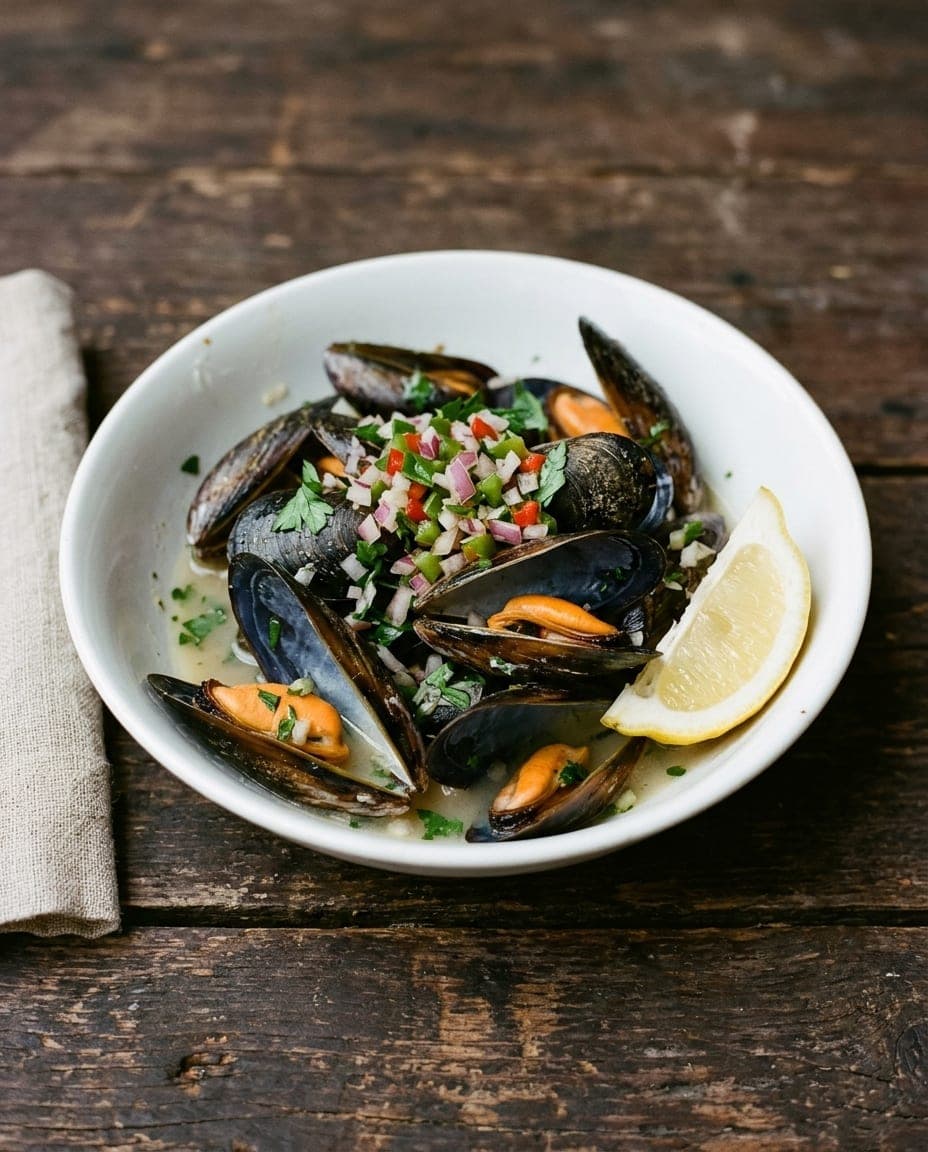
In the kitchen, they are treated with simplicity. The focus is on the quality of the shellfish rather than complex sauces. They are typically steamed open over a high heat with just a bay leaf and a splash of water or dry white wine until the shells pop. This method keeps the meat tender and the flavour clean. Alternatively, they may be served cold, dressed in a vinagreta made from finely chopped onion, peppers, vinegar and oil. A tinned version, preserved in escabeche with vinegar and spices, is also a serious product that travels well and appears on shelves outside Galicia.
The batea system
The batea is a distinctive feature of the Galician coast. These are large wooden platforms, traditionally built from a grid of eucalyptus beams, held up by floats and anchored to the seabed with concrete blocks. They are moored in lines across the rías, and the mussels attach themselves to ropes, a dozen metres or more long, that hang down into the water from them.
This method of farming has been used in the region for generations. It relies on the natural productivity of the rías rather than artificial feed. The rías are deep inlets of the sea flooded as sea levels rose after the last ice age, where cold, nutrient-rich Atlantic water mixes with fresh water from the rivers. The upwelling brings a constant supply of plankton, which the mussels filter from the water as they grow. The farmers add nothing; the mussels feed on what is already there.
The cycle takes well over a year. Young mussels are gathered from coastal rocks or from collector ropes and fixed to the culture ropes with a fine net; after some months the ropes are split into several lighter ones so the mussels have room to grow. A fully laden rope can weigh hundreds of kilos, so harvesting is done from boats fitted with cranes that lift the ropes and strip the mussels off. Before sale, the mussels pass through a purification and dispatch centre on land. This direct path from raft to kitchen helps maintain freshness, which is essential for a product that is often served simply steamed.
How they are served
Mejillones de Galicia are rarely found as a standalone course in a fine dining setting. Instead, they are a staple of the taberna or tapas bar, where they appear as a starter or a small plate to share. The most common presentation involves the mussels steamed hot in their shells. They arrive in a clay dish or a metal bowl, often with a few lemon wedges on the side. A squeeze of lemon juice cuts through the brine and brightens the flavour of the meat.
In some places, particularly during warmer months, the mussels are served cold, usually on the half shell and topped with a vinagreta of finely diced onion, peppers, vinegar and olive oil. This version is refreshing and pairs well with the crispness of the local white wine. The tinned variety offers a different experience entirely. Preserved in escabeche, they have a deeper, more complex flavour developed by the vinegar and spices. They are often eaten as part of a mixed tapas plate or on their own with bread.
Where to try them
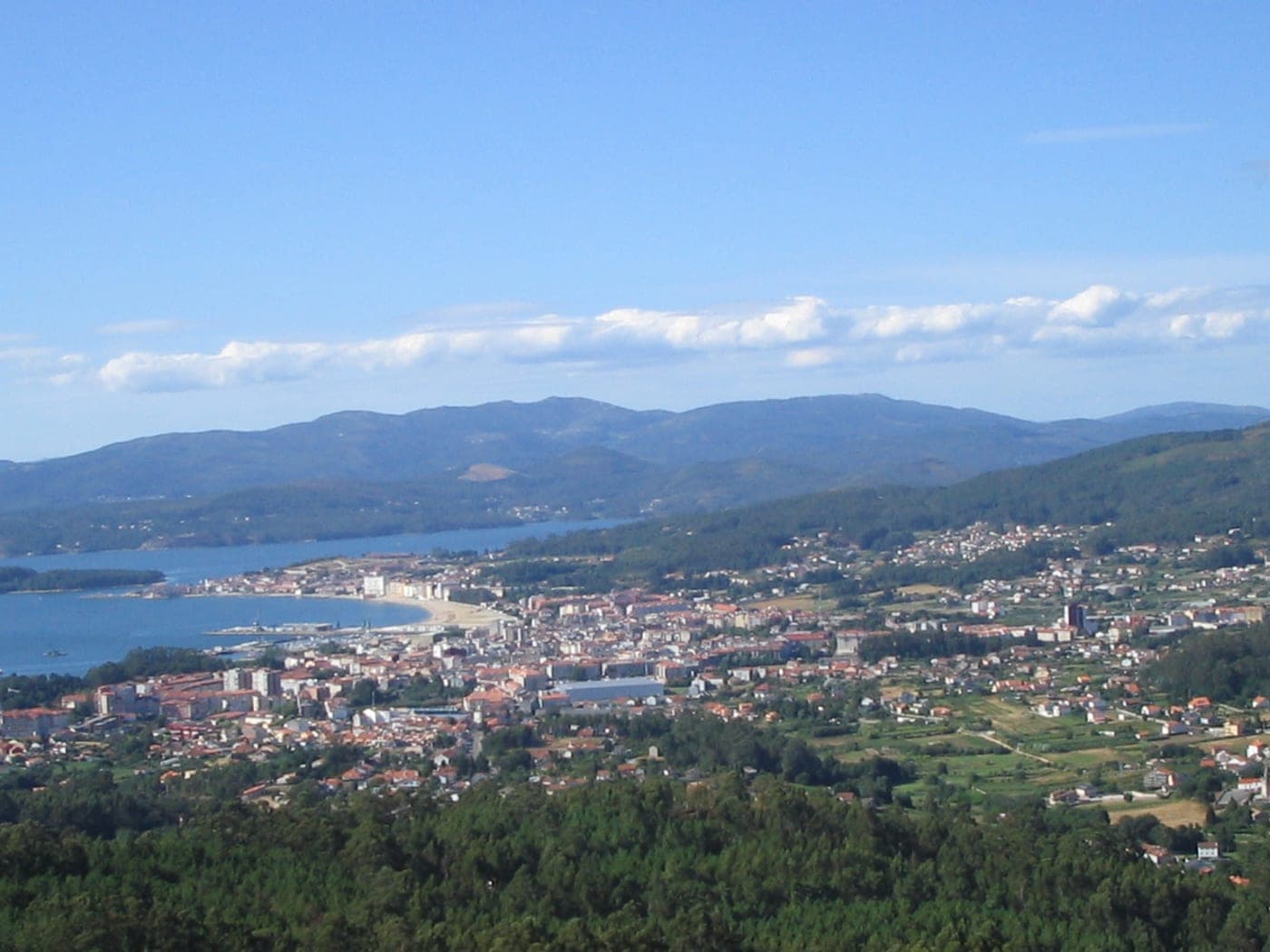
Vilagarcía de Arousa, on the south-eastern shore of the estuary, is one of the hearts of this region. Here, the mussels are a central part of the local identity and appear on almost every traditional menu. The town has a long history of mussel farming, and many of the restaurants serve product harvested from the nearby bateas.
Other towns along the Ría de Arousa, such as Cambados and O Grove, also offer excellent versions. In these places, small neighbourhood taverns, known locally as tabernas, prepare the mussels in large quantities for groups of diners.
A glass of Albariño, the local white wine from the same region, is the traditional companion. Its high acidity and notes of citrus and stone fruit complement the briny taste of the mussels. The pairing is so common that it is almost expected in a proper Galician meal.
Curious facts
- Protected status. Mexillón de Galicia (Mejillón de Galicia) is a Protected Designation of Origin (PDO) for fresh mussels grown on floating rafts in five Galician rías: Ares-Sada, Muros-Noia, Arousa, Pontevedra and Vigo.
- One species. The PDO covers only the Mediterranean mussel, Mytilus galloprovincialis, sold fresh after purification; processed products may only mention the PDO if the PDO mussel is their sole mussel ingredient.
- The wooden rafts. The bateas float on the surface, allowing the mussels to grow suspended in open water rather than on the seabed.
- Steaming method. Traditional preparation involves steaming with only a bay leaf and a splash of liquid, avoiding heavy spices that might mask the natural taste.
- Regional focus. While mussels are eaten across Spain, the batea farming and PDO status make this product a Galician signature.
Where to try it
1 destination
 Wine Tasting
Vilagarcía de Arousa
Port town in Rías Baixas known for seafood and Albariño wine.
Wine TastingHiking