Horchata de chufa
Chilled tiger-nut milk from Valencia, served with sweet pastries
- Non-alcoholic
- Local name
- Orxata de xufa
- Served
- Chilled, with fartons
- Best eaten at
- A Valencian horchatería in Alboraya
- Pairs with
- Fartons pastries
What it is
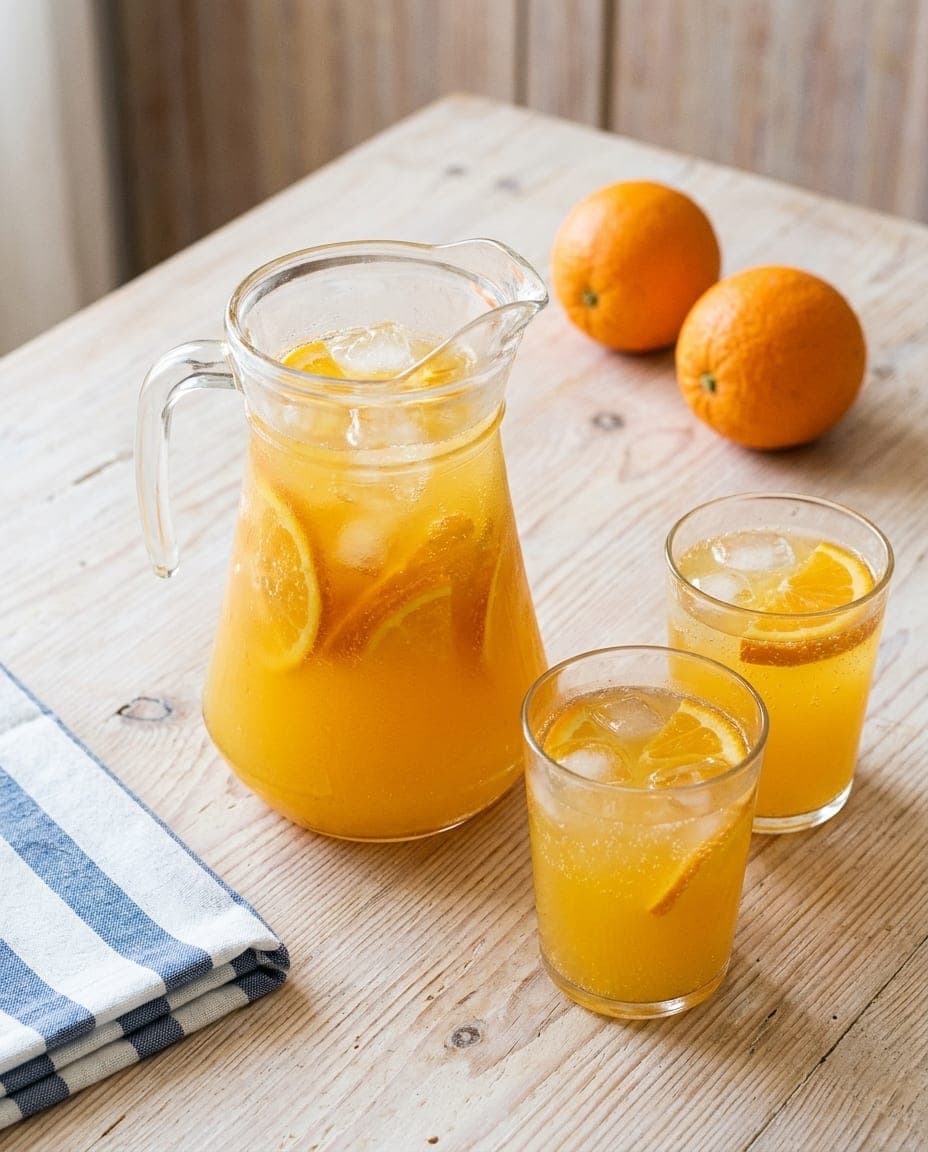
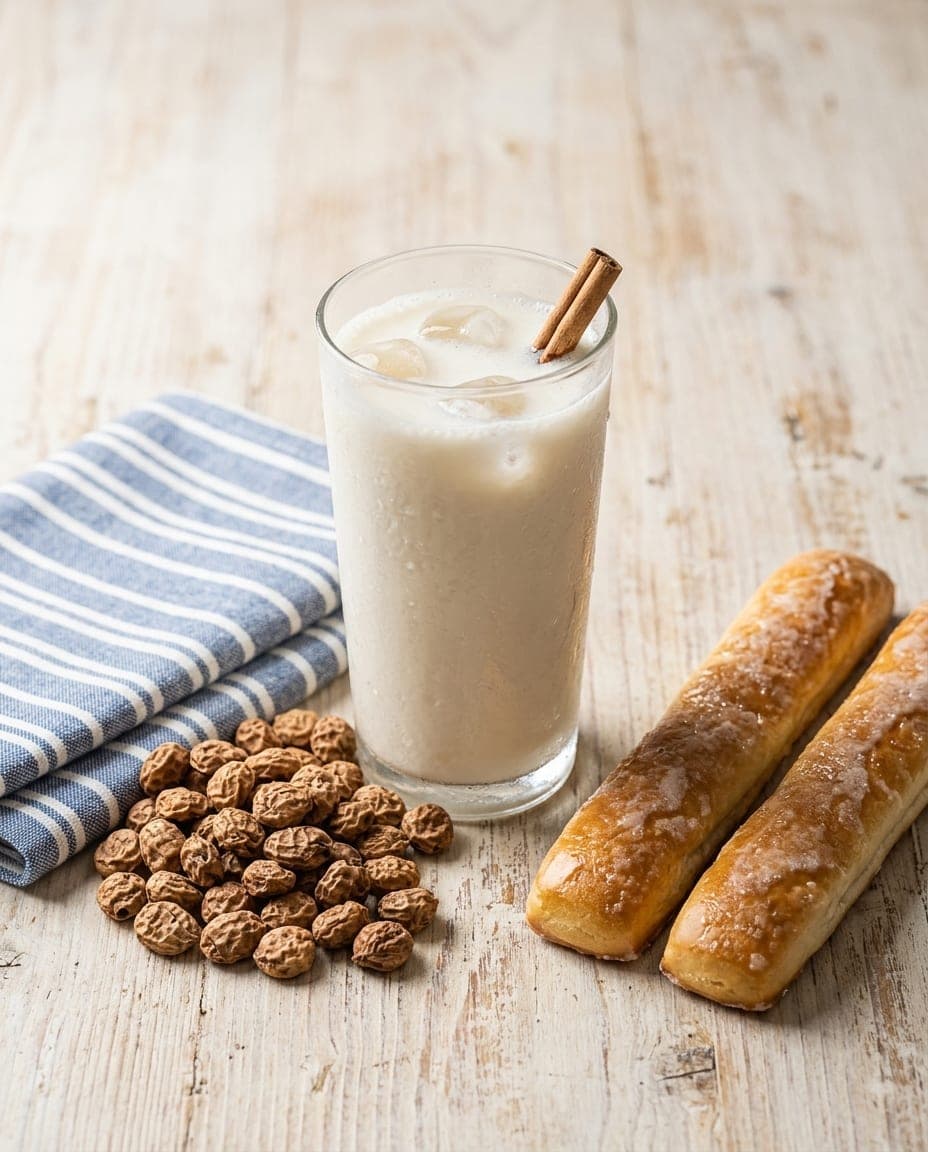
Horchata de chufa, known locally as orxata de xufa, is a cold, sweet, milky beverage native to the Valencian Community on Spain's eastern coast. It is not made from nuts or rice, but from the small, wrinkled tubers of a sedge plant called tiger nut (Cyperus esculentus). The drink has a cloudy, off-white appearance and a flavour that sits somewhere between almond and malt, with a subtle earthy sweetness that feels refreshing rather than heavy.
The texture is smooth, sometimes slightly grainy if the filtration is not perfect, and it remains one of the most popular refreshments in Spain during the hot months. In Valencia it is a midday or afternoon staple rather than an after-dinner drink. It is served well chilled, and in a popular variation it is partly frozen until slushy, known as horchata granizada.
The land of the tiger nut
The story of horchata is rooted in the irrigated farmland just north of Valencia city, the Horta Nord, with the municipality of Alboraya at its heart. Here, the sandy, irrigated fields of the huerta provide the conditions tiger nuts need: a long, hot growing season and loose, well-drained soil from which the tubers can be lifted cleanly.
The tubers grown here are protected by the Chufa de Valencia designation of origin (PDO), which covers a group of municipalities in l'Horta Nord around Alboraya. Its regulatory council also certifies horchata made from these tiger nuts. While tiger nuts are cultivated elsewhere, notably in West Africa, the Valencian crop is central to the identity of the drink as it is served today.
The tubers are planted in spring and harvested in late autumn and winter, after the foliage has dried off; they are then washed and dried slowly before storage. The huerta landscape, a patchwork of green fields irrigated by centuries-old canals, is as much a part of the horchata experience as the drink itself.
How it is made
The production of horchata de chufa is a process of extraction rather than fermentation or distillation. The dried tiger nuts are first soaked in water to soften and rehydrate them. They are then washed and ground with fresh water until the mixture becomes a thick paste.
This pulp is then pressed through cloth or fine sieves to separate the liquid from the solid fibres. The resulting milk is cloudy and pale, retaining the natural oils of the tuber but lacking the heavy creaminess of cow's milk. It is then sweetened with sugar, stirred until dissolved, and chilled thoroughly before serving.
There are no fixed quantities because the sweetness varies by house, and the consistency depends on how much water is used during grinding. The final product is a suspension of fine particles that may settle if left standing, which is why it is often stirred before pouring. Traditional horchata contains no dairy and no eggs, relying on the tuber, water and sugar.
How it is eaten
Horchata de chufa is almost always served ice-cold, usually in a tall glass. The drink is meant to be sipped slowly as a cooling break rather than gulped as a thirst quencher, and it is most popular in the afternoon and early evening during the summer.
The traditional accompaniment is the fartó (plural fartons), a long, thin, soft pastry glazed with sugar on top. It is made for dipping: the pastry soaks up some of the drink and becomes moist and rich. This combination is so well known in Valencia that it is hard to imagine a proper horchatería without fartons on the counter.
The pairing is about texture and ritual as much as flavour. The contrast between the cool, slightly grainy liquid and the soft, sugary pastry creates a satisfying balance. Some people dunk the fartó whole, others break it into pieces, and a glass of horchata is often accompanied by two or three of them.
Where it is served best
The definitive experience of horchata de chufa takes place in a horchatería in Alboraya, where many cafés make the drink on-site from local tiger nuts and serve it with fresh fartons. Many are family-run and unpretentious. In Valencia city, long-established horchaterías can be found in the old quarter and near the markets, though the concentration in Alboraya is unmatched.
In the summer months, locals and visitors alike gather at these spots to escape the heat, a ritual closely tied to the land of the Horta Nord and the rhythms of the Valencian summer.
Curious facts
- The name comes from barley. According to the Real Academia Española, horchata derives from the Latin hordeata, "made with barley", as early versions of the drink were barley water. A popular legend that King James I exclaimed "això és or, xata" ("that's gold, girl") is a folk tale, not etymology.
- Tiger nuts are not nuts. Despite their name, tiger nuts are tubers that form on the roots of a sedge plant.
- A seasonal rhythm. Many traditional horchaterías in and around Valencia close or scale back outside the warm months, although some now stay open all year.
- An old recipe. A tiger-nut drink already appears in the medieval Catalan cookbook Llibre de Sent Soví, though for centuries "horchata" in Spain was more often made from barley, almonds or melon seeds.
- A protected tuber. The Chufa de Valencia designation of origin ensures that only tiger nuts grown in its defined zone of l'Horta Nord can be sold under that name.
Where to try it
The only place to experience horchata de chufa in its truest form is a horchatería, a specialised café found above all in Valencia and its surrounding towns. These establishments are simple in design and sell little besides horchata, granizados and fartons.
The most famous destination is the town of Alboraya, just north of Valencia city, where several horchaterías have been operating for generations. Valencia city itself also has historic horchaterías in and around the old town and the markets.
The season peaks from May to September, coinciding with the hottest months of the year, when queues at the busiest horchaterías are a common sight on warm evenings.
Where to try it
1 destination
 Camper Van Rentals
Valencia
Mediterranean city famous for paella, futuristic architecture, and beaches.
Camper Van RentalsHiking
1 region
- Camper Van Rentals2 destinations
Valencia
Known for its rich history and vibrant culture, Valencia is the third-largest city in Spain and the only region with a Mediterranean coastline. This region boasts the UNESCO-listed City of Arts and Sciences, a futuristic architectural complex, alongside the historic Silk Exchange, a symbol of its trading past. Beyond the city, the Albufera Natural Park offers stunning wetlands and is famous for its rice paddies, the source of the region's renowned paella. Valencia's traditions include the Fallas festival, celebrated with impressive sculptures and fireworks. The region also produces excellent wines, particularly from the Utiel-Requena area, and has a thriving local market scene, perfect for food enthusiasts. Nearby towns like Xàtiva and Bocairent showcase medieval architecture and local crafts, providing an authentic glimpse into Valencia's diverse heritage.
Camper Van RentalsHikingBoat Rentals