Gazpacho manchego
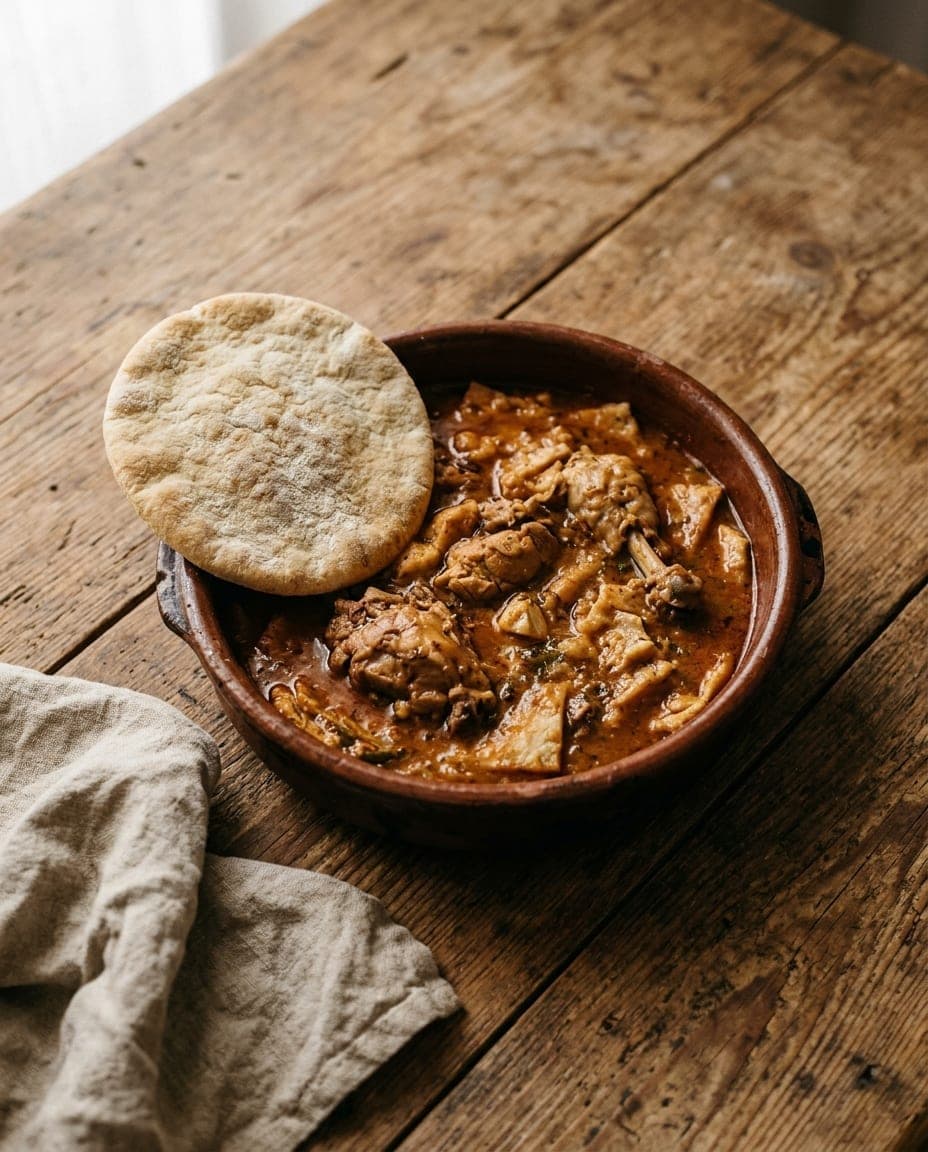
A hot game stew from La Mancha served with hard flatbread
- Local name
- Gazpacho manchego
- Best eaten at
- A La Mancha country inn
- Pairs with
- La Mancha red
What it is
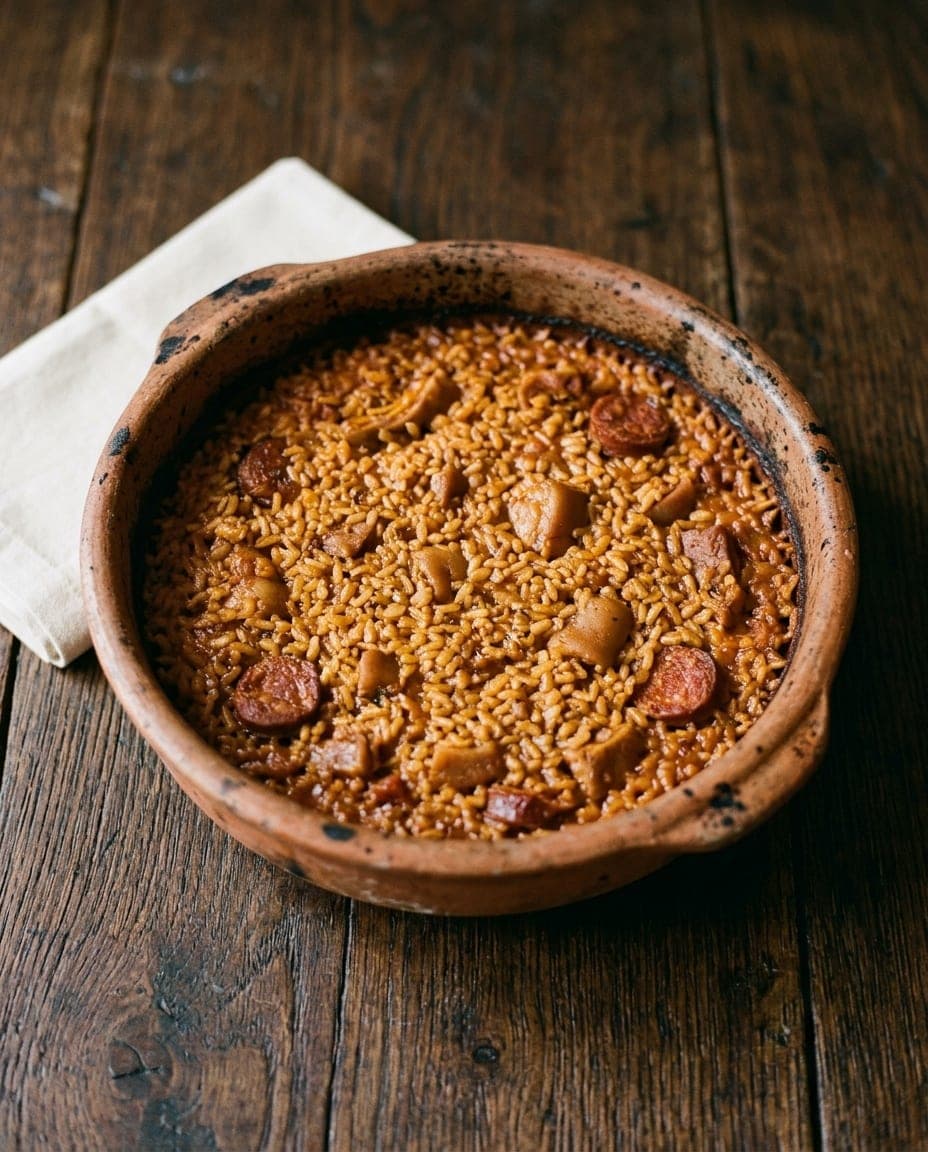
Gazpacho manchego is a hearty stew from the Castilla-La Mancha region of central Spain. Despite sharing its name with the famous cold soup from Andalusia, this dish has no relation in temperature or texture. It is a hot game stew, traditionally cooked in a single large pan and eaten directly from it. Locally the dish is often called simply gazpachos, and in parts of La Mancha galianos, a name that already appears in Don Quixote. The dish relies on rabbit, hare, partridge or chicken, slow-cooked with garlic, tomato, peppers and herbs until the meat falls from the bone.
The defining feature of gazpacho manchego is its thickening agent: torta de gazpacho, a thin unleavened flatbread baked until hard and dry. The cook tears these brittle rounds into pieces and stirs them into the simmering broth. The bread absorbs the liquid, swelling to create a dense, rustic mass rather than a loose soup. It is a dish of substance, designed to sustain shepherds and hunters through long days on the plain.
Where it comes from
The dish belongs firmly to La Mancha, the vast, windswept plateau known for its windmills and dry climate. Historically, this was the domain of sheep herders and hunters, where the landscape provided the game and the flatbreads were a practical staple. The tortas could be baked in advance and stored for weeks in a saddlebag or a dry pantry, making them ideal for journeys into the countryside.
Gazpacho manchego is above all a cold-weather food, tied to the hunting season when rabbits and partridges are plentiful. It was cooked over open fires in country inns, often referred to as ventas, where travellers could stop for a warm meal. The dish reflects the resourcefulness of rural Spain: turning simple game and preserved bread into a filling, savoury meal that requires no complex equipment beyond a heavy pot.
How it is made
The preparation is straightforward but demands patience. Game birds or rabbit are cut into pieces and browned with onions, garlic and peppers in olive oil. Tomatoes are added to provide acidity and body, followed by a generous amount of water or stock. Herbs such as thyme or rosemary are stirred in to complement the earthy game. The mixture simmers gently until the meat is tender and the flavours have melded.
Once the stew is ready, the torta de gazpacho is torn into rough shards and folded into the pan. The bread softens rapidly, soaking up the juices and thickening the liquid until it becomes a cohesive, spoonable dish. It is not stirred too vigorously once the bread is added, to avoid turning the mixture into a mush. The result is a deep, textured stew where the bread provides a satisfying chew against the tender meat.
How to eat it
Gazpacho manchego is traditionally served straight from the cooking pot or in deep bowls. In the oldest custom, a whole torta serves as the plate, soaking up the stew until it too is eaten. It is a communal dish, meant to be shared among a group around a table. A glass of La Mancha red wine is the customary accompaniment, its bold fruit notes balancing the savoury depth of the stew.
The experience is one of warmth and simplicity. The flatbread absorbs the broth, creating a texture that is neither soup nor solid food but something in between. It is eaten with a spoon, and the soaked bread means there is little sauce left to mop up. The dish is best enjoyed in the cooler months, when the heat of the stew offers relief from the chill winds of the plateau.
Curious facts
- A name that misleads. The term gazpacho refers to cold soups in Andalusia, yet the La Mancha version is hot and stew-like, sharing only the word with its southern namesake.
- The bread is essential. Without the torta de gazpacho, the dish would be a thin broth; the flatbread transforms it into a substantial meal that can sustain a labourer for hours.
- A hunter's dish. The recipe relies on game available in the La Mancha plains, such as rabbit or partridge, making it a seasonal treat tied to the hunting calendar.
- Cooked in one pot. Traditional preparation involves cooking everything in a single large pan over an open fire, preserving the flavours and simplifying the cleanup.
- Beyond La Mancha. Close variants are also cooked in the Murcian Altiplano around Yecla and Jumilla and in inland Alicante and Valencia, but the dish is most closely identified with Castilla-La Mancha.
Where to try it
The best place to eat gazpacho manchego is at a traditional country inn in La Mancha, particularly in the villages of Albacete province, where the dish is a fixture of local menus. These establishments often serve the stew from large communal pots, allowing diners to taste the authentic version of this winter staple.
Where to try it
1 destination
 Wine Tasting
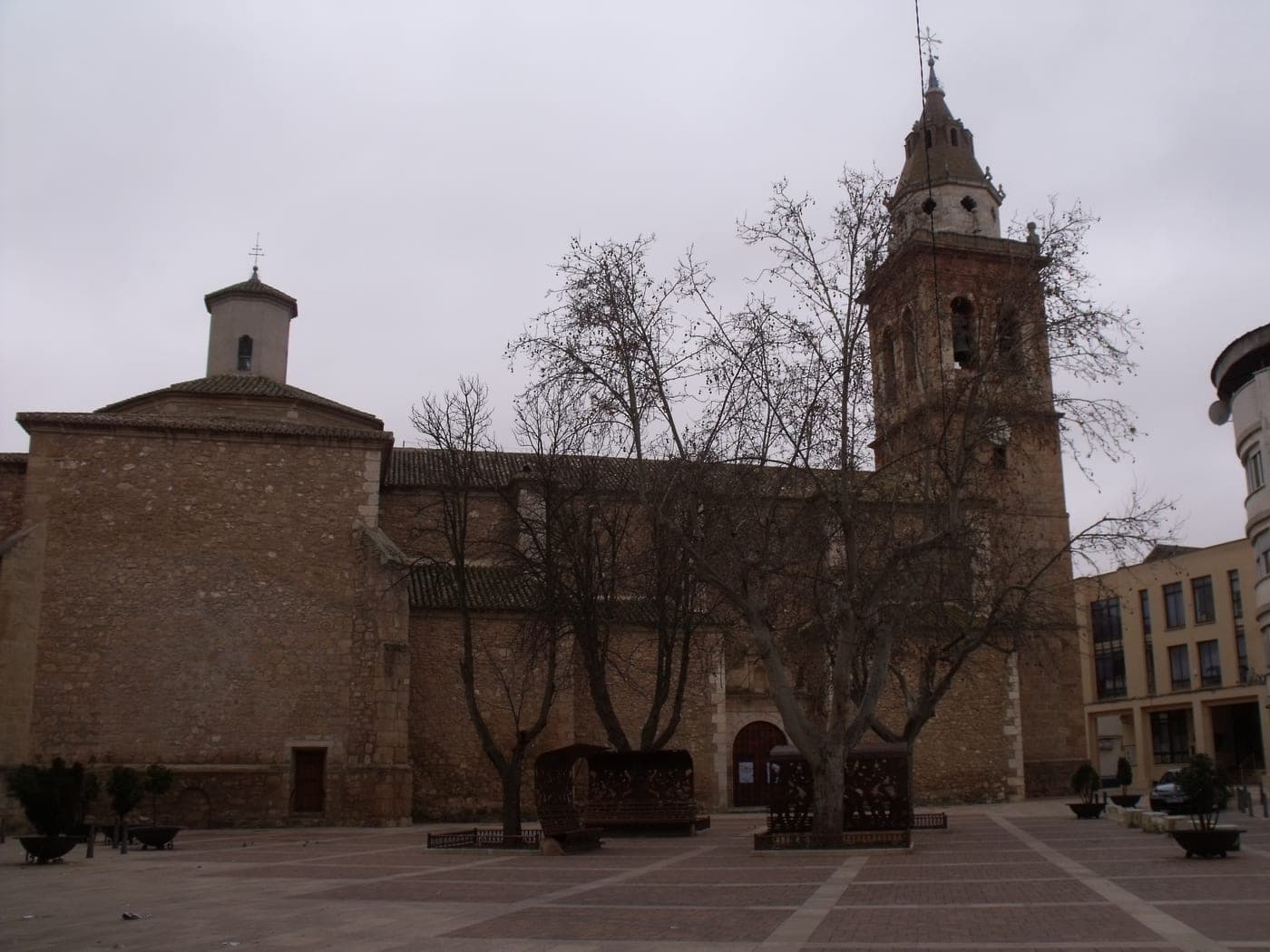
Casas-Ibáñez
Wine town in Albacete province known for quality red wines and rural wine tourism.
Wine TastingHiking
1 region
- Wine Tasting5 destinations
Castilla-La Mancha
This is Spain's largest region, known for its vast plains and historic cities. Toledo, a UNESCO World Heritage site, showcases a blend of Christian, Muslim, and Jewish architecture, while Cuenca is famous for its hanging houses and modernist art. The region is also noted for its artisanal cheese, saffron production, and robust wines like Tempranillo. Scenic landscapes such as the Tablas de Daimiel National Park offer rich biodiversity. Explore the small towns of Alcázar de San Juan and Consuegra, where windmills dot the horizon, echoing the tales of Don Quixote. The region's festivals, particularly in spring and autumn, celebrate local traditions and gastronomy, providing deeper cultural connections.
Wine TastingHikingLocal Cuisine