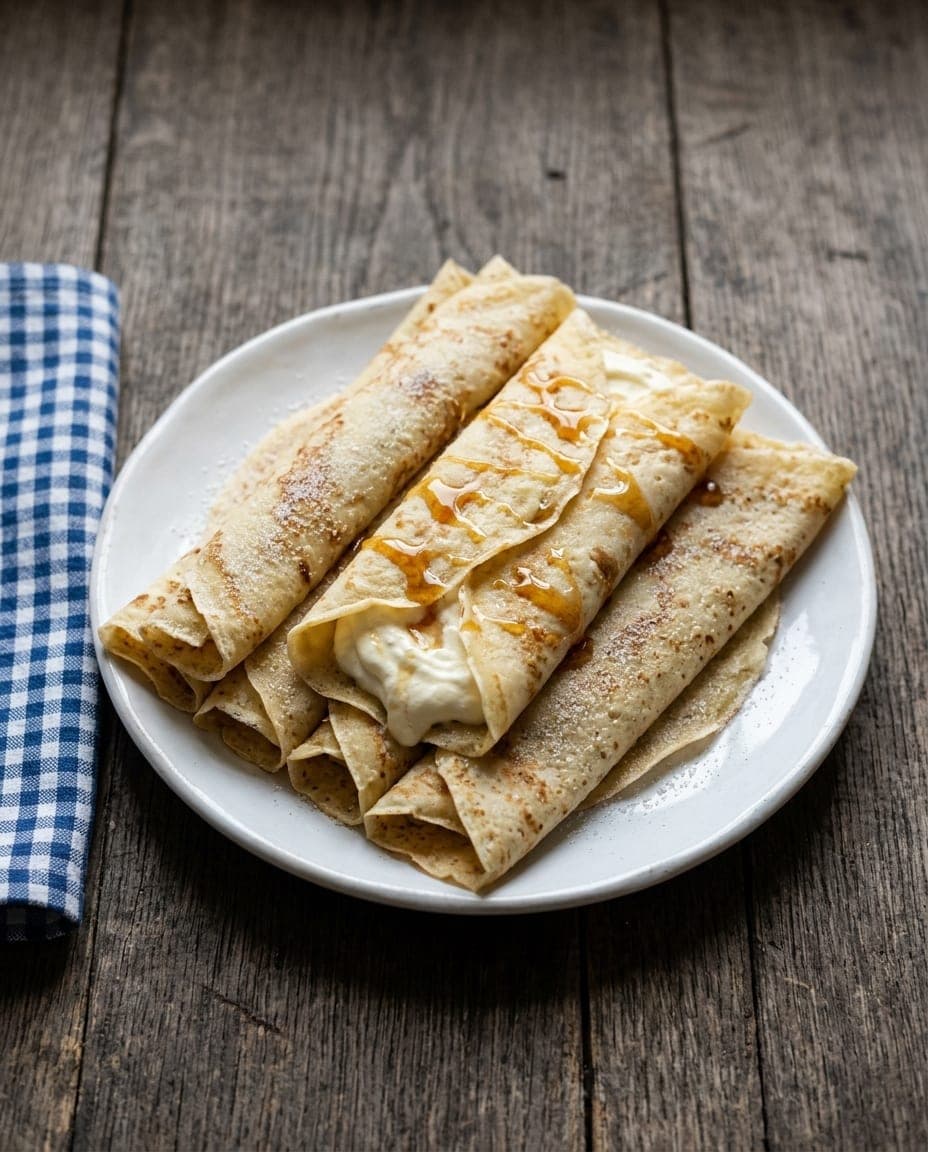
Frixuelos
Thin Asturian crêpes filled with sugar, cream or jam
- Vegetarian
- Local name
- Frixuelos
- Served with
- Sugar, honey or cream
- Best eaten at
- An Asturian family table
- Pairs with
- Asturian cider
What they are
Frixuelos are the thin, delicate crêpes of Asturias, a region on the north coast of Spain where the sea meets green hills. They are not the thick, fluffy pancakes found in many breakfast menus elsewhere. The batter is loose and fluid, poured into a hot pan to create a sheet so thin it looks almost like paper before it is folded or rolled.
These crêpes are a staple of the home kitchen rather than a dish one typically buys from a commercial bakery. They are made with flour, eggs, milk and a little sugar, sometimes flavoured with a splash of anisette or another local spirit. Once cooked, they are stacked in a pyramid on a plate, dusted generously with sugar, drizzled with honey, or filled with cream, jam, arroz con leche (rice pudding) or quince paste.
While available year-round in many households, frixuelos hold a special place during the carnival season known as Antroxu. In this period, families gather to cook them in large batches, often working at the same pan for hours until the batter is used up. The result is a simple, sweet treat that feels both celebratory and bound up with daily life.
Where they come from
The tradition of making thin crêpes is widespread across northern Spain, but the Asturian version carries its own distinct identity. In parts of Asturias, the same dish is called frisuelos or fayuelos, reflecting local dialects that vary from valley to valley. In neighbouring Galicia, a very similar crêpe exists known as filloas. While the Galician version sometimes includes pig's blood in the batter, the Asturian frixuelo remains a sweet affair, relying on the purity of its flour and egg base.
The dish does not have a single inventor or a specific date of origin that is recorded in history books. Instead, it grew from the practical need to use available ingredients—flour, eggs, milk—in a way that was quick and satisfying. Over time, this humble preparation became a marker of regional identity, distinguishing Asturian kitchens from their neighbours.
What goes into them
The ingredients are straightforward, reflecting the agricultural abundance of the region:
- Flour: usually plain wheat flour to create a light, non-chewy texture.
- Eggs and milk: these form the liquid base that allows the batter to spread thinly and evenly.
- Sugar: added directly to the batter for a subtle sweetness, though the final dusting is often heavier.
- Flavourings: a splash of anisette or other local spirit may be used, but many cooks keep the taste pure.
The cooking method requires a hot, greased pan and a steady hand. The batter is poured and swirled to cover the surface, then cooked quickly until it sets. The crêpes are removed while still soft and stacked before they cool and become brittle.
How to eat them
Frixuelos are best enjoyed at an Asturian family table, where the atmosphere is warm and the pace is slow. They are typically served rolled or folded into a cylinder, then dusted with a thick layer of white sugar that melts slightly from the heat of the crêpe. Alternatively, they are filled with cream, jam or arroz con leche before being rolled up.
A glass of Asturian cider, known as sidra, is the traditional companion. The sharp, acidic notes of the cider cut through the sweetness of the crêpes, creating a balance that feels natural rather than forced. The cider is poured from a height to aerate it, a technique known as escanciar, and each short pour (culín) is drunk quickly while it is still lively.
Curious facts
- A carnival staple. While available all year, frixuelos are most commonly made during Antroxu, when families cook them in large quantities to celebrate before the Lenten season.
- Names vary by valley. In some parts of Asturias they are called frisuelos or fayuelos, reflecting local dialects rather than a single standard term.
- The Galician cousin. The dish has a close relative in Galicia called filloas, which sometimes includes pig's blood in the batter, unlike the sweet Asturian version.
- Learned by eye. Proportions vary from household to household, and the knack of the thin pour is usually passed down through observation and practice rather than printed instructions.
- A stack of tradition. The crêpes are often stacked high on a plate, creating a visual pyramid that signals abundance and hospitality to the table.
Where to try them
While they are not always found on restaurant menus outside of Asturias, many family-run establishments in the region will prepare them if asked.
Where to try it
1 region
 Panoramic Trains6 destinations
Asturias
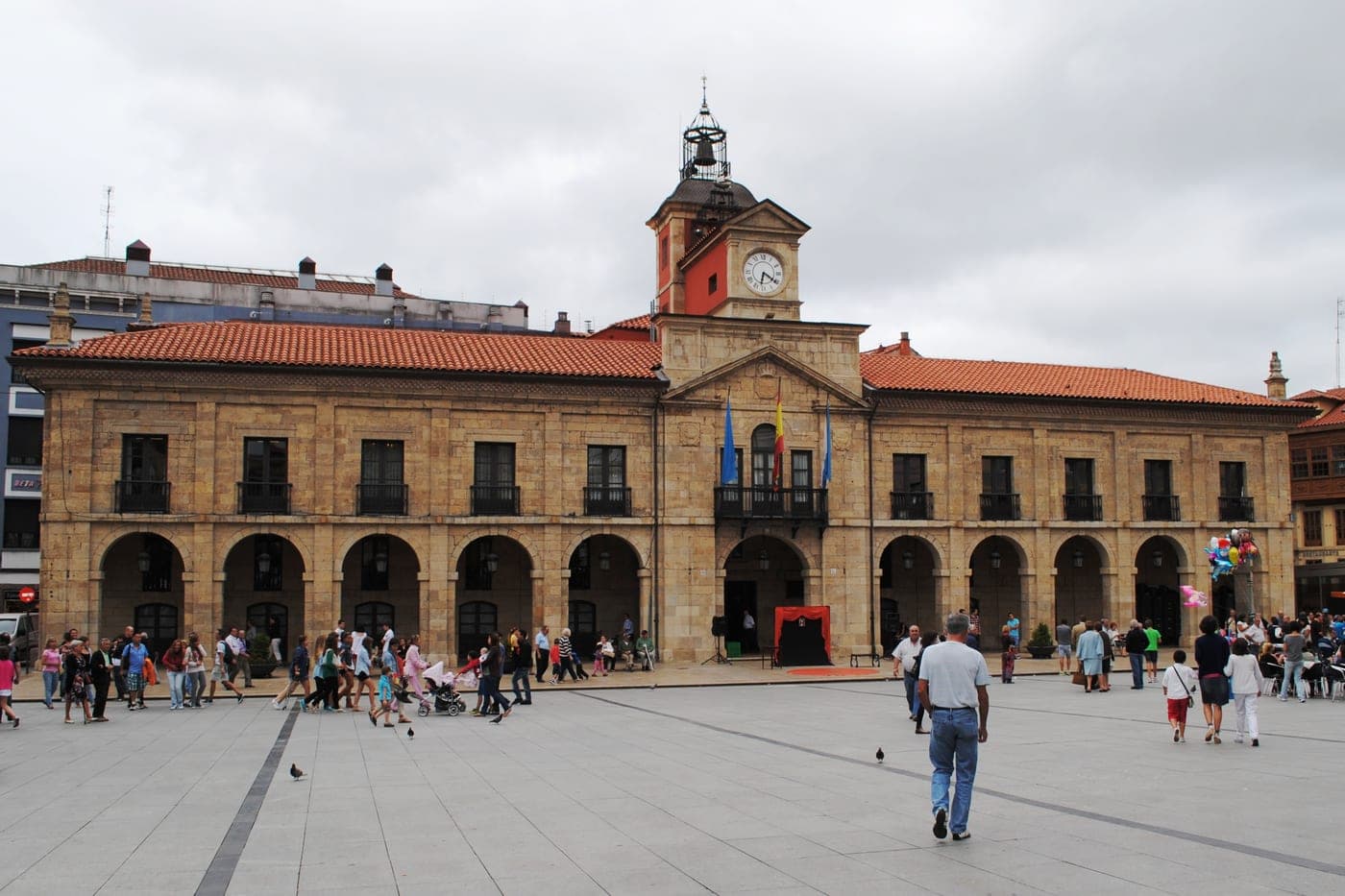
Asturias, bordered by the Cantabrian Sea to the north, is known for its rugged coastline and lush green landscapes. This region is the only one in Spain with both mountains and the sea, presenting a unique blend of natural beauty. Oviedo, the capital, is famed for its pre-Romanesque architecture and vibrant cultural scene, while Gijón offers beaches and a lively harbor. The Picos de Europa National Park attracts hikers with its dramatic peaks and diverse wildlife. Asturias is also recognized for its cider production, with traditional sidrerías dotting the landscape. With its rich history, including the medieval kingdom of Asturias, this region offers a deep dive into local culture, making it a fascinating destination for exploration.
Panoramic TrainsHikingLocal Cuisine