Fideuà
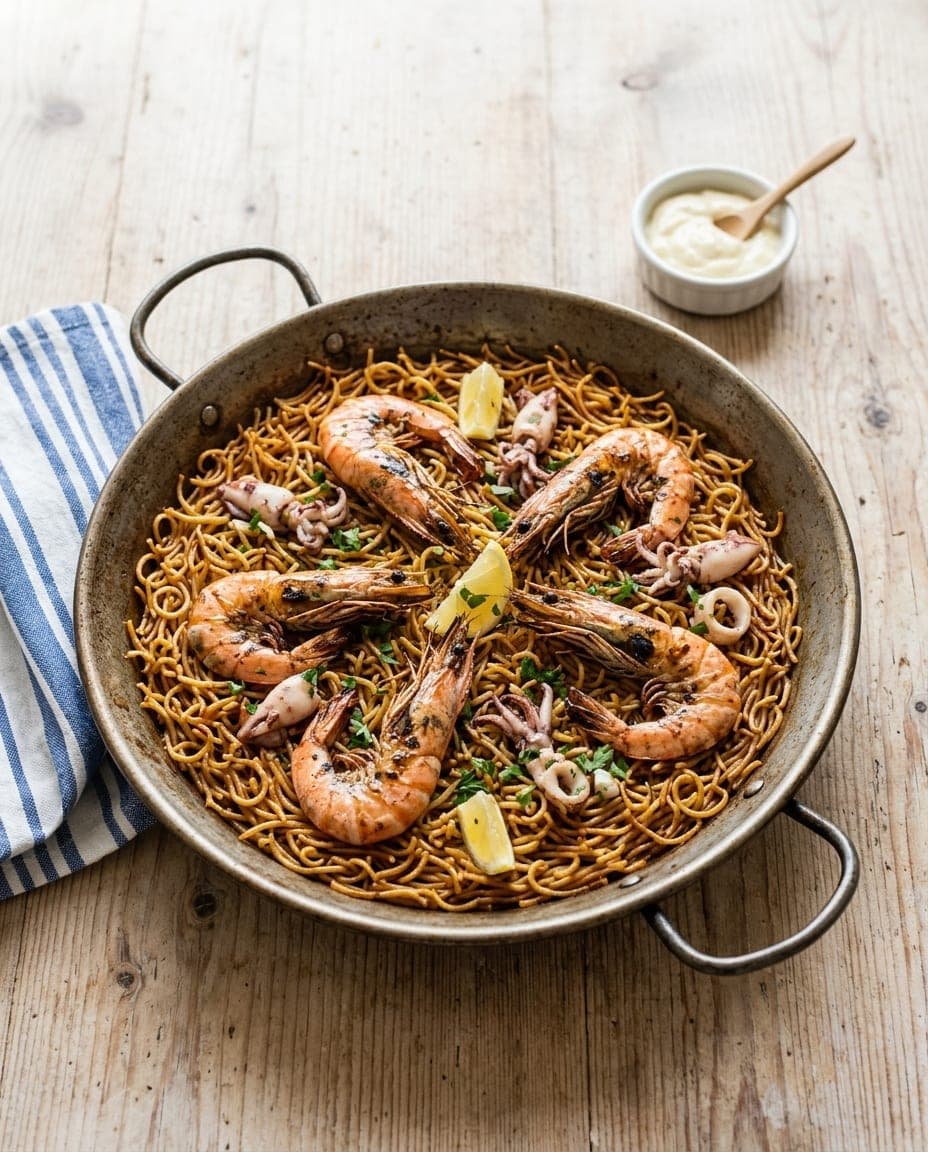
A paella-style dish of toasted noodles from Gandia, served with alioli
- Local name
- Fideuà
- Served with
- Alioli
- Best eaten at
- A Gandia beach restaurant
- Pairs with
- Valencian white
What it is
Fideuà is a dish of the Valencian coast that looks much like paella but replaces the short-grain rice with short, thin pasta noodles known as fideus. The result is a golden, crispy-edged pan of seafood and toasted noodles, cooked in a wide, shallow pan until the liquid has been absorbed. It is not a soup or a stew. The noodles take on the flavour of the fish stock, and the toasting gives them a nutty depth.
The dish belongs to Gandia, a coastal town in the province of Valencia, south of Valencia city. While paella is celebrated throughout the region and beyond, fideuà is the particular pride of Gandia. It is a substantial meal, often large enough to serve a family or a group of friends directly from the pan. The texture is distinct: the noodles are soft in the centre but crisp at the edges and on the base, where a crust forms much like the socarrat of a paella.
The visual similarity to paella can be misleading. The cooking vessel is the same and the technique is similar, yet the soul of the dish lies in the pasta. In many kitchens the noodles are fried briefly in the oil until golden before the stock is added, which helps them hold their structure rather than turning mushy.
The legend of the cook and the skipper
The best-known origin story places the dish aboard a fishing boat from the Grau de Gandia, the town's harbour district. The boat's skipper was said to be so fond of rice that the crew rarely got their fair share of the arròs a banda the cook prepared. The cook, remembered as Gabriel Rodríguez Pastor, with his young assistant Juan Bautista Pascual, known as "Zábalo", decided to make the dish with noodles instead of rice, hoping the skipper would like it less and leave more for everyone else.
The plan backfired in the best way: the noodle version was a success, and it moved from the boat to the shore and into the kitchens of Gandia's harbour taverns. Another version of the story says the cook simply ran out of rice and broke up pasta instead. Whether either tale is entirely true, the skipper story remains the accepted narrative in Gandia.
How the dish is made
Fideuà follows a rhythm similar to paella but with distinct steps for the pasta. The seafood and a sofrito of tomato and garlic are cooked in oil in a wide pan, and the short noodles are toasted until golden. Fish stock is then poured over and the whole simmers until it has been absorbed.
The seafood typically includes local catches such as prawns, clams, mussels, and sometimes pieces of firm white fish or cuttlefish. As the liquid reduces, the noodles swell and absorb the savoury stock. The heat is managed carefully so that the base can crisp without burning.
When the stock has been absorbed, the tips of the noodles often curl and point upwards from the surface, a sign many cooks look for. The pan is then removed from the heat and left to rest for a few minutes before serving.
What goes into it
The ingredients of fideuà are simple but require quality. The core components are:
- Short noodles, known locally as fideus. They are thin and are often the hollow kind, which crisps nicely at the tips.
- Fish stock, made from the heads and bones of local fish, providing a deep savoury base.
- Seafood, typically prawns, clams, mussels, and occasionally cuttlefish or white fish.
- Tomato and garlic, which form the aromatic sofrito.
- Olive oil, used to toast the noodles and cook the seafood.
The dish is not vegetarian, as it relies on fish stock and seafood for its character.
How to eat it
Fideuà is usually served directly from the pan in which it was cooked. It is a communal dish, meant to be shared among a group sitting around the table. The pan is placed in the centre, and diners serve themselves, taking care to scoop up both the noodles and the crisp layer beneath them.
In most restaurants fideuà arrives with alioli, a thick emulsion of garlic and olive oil, which diners stir into their portion. Some purists in Gandia prefer it without, arguing that the garlic masks the seafood, but for many the alioli is part of the experience.
The setting often includes open-air terraces facing the sea. It is typically eaten at lunch, as it is a filling dish. A glass of Valencian white wine pairs well with the seafood, offering a crisp contrast to the garlic.
Curious facts
- The curling noodles. When the dish is ready, the tips of the noodles often curl up from the surface of the pan.
- A Gandia tradition. Gandia has held an International Fideuà Contest (Concurs Internacional de Fideuà) every year since 1974.
- The noodle substitute. The story of the cook swapping noodles for rice so the skipper would eat less remains the most popular explanation for the dish's origin.
- Served with garlic. Alioli is the usual accompaniment, although some local purists do without.
- A regional speciality. Fideuà has spread along the Mediterranean coast, including Catalonia, but Gandia remains its acknowledged home.
Where to try it
The most authentic experience of fideuà is found in Gandia, where it is a staple on the menus of beachside restaurants and traditional taverns, particularly around the harbour and the beach. Each June the town's international contest draws cooks from across the region and beyond.
Restaurants along the wider Valencian coast also serve excellent versions. The key is to find a place that respects the traditional method: a good fish stock, properly toasted noodles and freshly made alioli.
Where to try it
1 region
 Camper Van Rentals2 destinations
Valencia
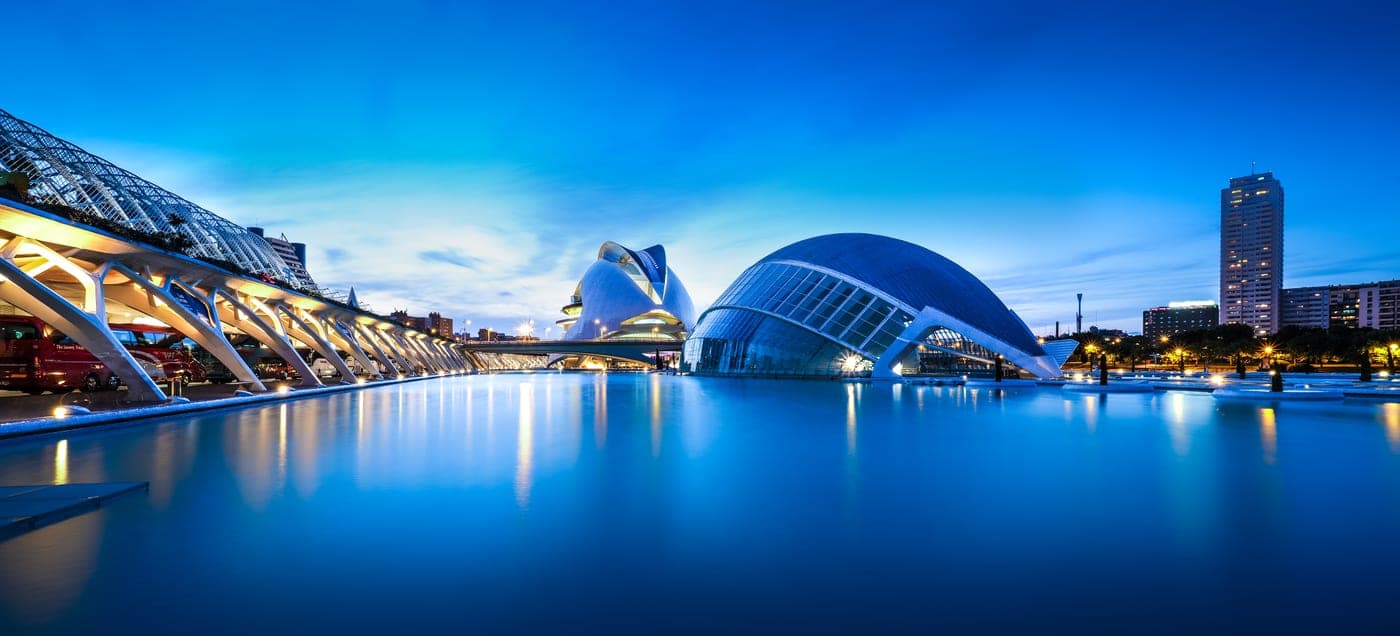
Known for its rich history and vibrant culture, Valencia is the third-largest city in Spain and the only region with a Mediterranean coastline. This region boasts the UNESCO-listed City of Arts and Sciences, a futuristic architectural complex, alongside the historic Silk Exchange, a symbol of its trading past. Beyond the city, the Albufera Natural Park offers stunning wetlands and is famous for its rice paddies, the source of the region's renowned paella. Valencia's traditions include the Fallas festival, celebrated with impressive sculptures and fireworks. The region also produces excellent wines, particularly from the Utiel-Requena area, and has a thriving local market scene, perfect for food enthusiasts. Nearby towns like Xàtiva and Bocairent showcase medieval architecture and local crafts, providing an authentic glimpse into Valencia's diverse heritage.
Camper Van RentalsHikingBoat Rentals





