Fartons
Long glazed buns from Alboraya for dipping into horchata
- Vegetarian
- Local name
- Fartons
- Served with
- Horchata
- Best eaten at
- An Alboraya horchatería
- Pairs with
- Horchata
What they are
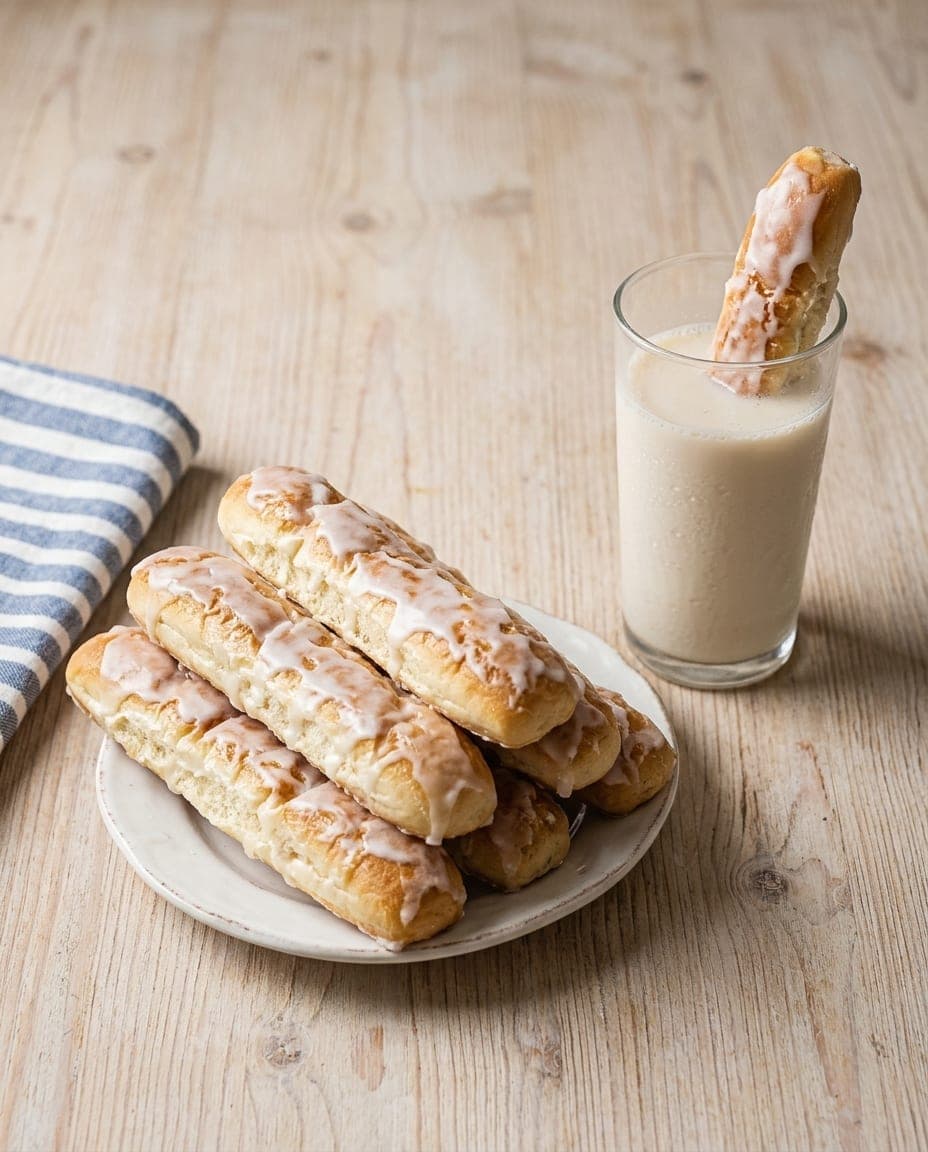
Fartons are long, thin sweet buns from the Valencian town of Alboraya, just north of the city of Valencia. They can be eaten on their own, but their real purpose is to be dipped into horchata (orxata in Valencian), the chilled, milky drink made from tiger nuts (chufas).
The appearance is simple and distinct. The buns are elongated, soft and pale, and are glazed with icing sugar after baking, which gives them a shiny, slightly sticky surface. Their texture is light and spongy, designed to absorb liquid without falling apart immediately. This is essential, as the buns are held by one end and dipped into tall glasses of horchata, letting the drink soak into the crumb while the pastry holds its shape for a moment.
They are sold at horchaterías, the specialised cafés found throughout Alboraya and Valencia, and in bakeries and supermarkets across the region. The pairing is considered fixed: a glass of cold horchata accompanied by a few fartons, usually as an afternoon or evening treat when the weather turns warm.
Made for dipping
The shape of the farton is a direct response to the glass in which horchata is served. A short or round bun would only reach the surface; the long, slender form lets it reach down into the glass while remaining manageable in the hand.
The dough is a light, enriched yeast dough made with flour, sugar, sunflower oil, eggs and yeast, baked until pale rather than dark or crisp. This keeps the interior soft and absorbent. The sugar glaze adds a touch of sweetness that complements the nutty, earthy flavour of the tiger nuts.
The name is Valencian; the singular is fartó (fartón in Spanish). It is often linked to the Valencian fart, "full" or "sated", fitting for a sweet that tends to be eaten several at a time.
Where they come from
Fartons are credited to the Polo family, who settled in Alboraya and, in the 1960s, developed a lighter, elongated version of the traditional Valencian panquemao sweet bread, finished with a glaze, specifically to go with horchata. The idea caught on quickly among the town's horchaterías, and fartons are now made by many bakers across the Valencian Community.
The pairing is tied to the tiger nut, which is grown in the sandy soils of l'Horta Nord, the farmland around Alboraya. Horchata is rich and sweet, and the farton provides a soft, starchy counterpoint that balances it.
The practice is seasonal in spirit. While some establishments serve horchata year-round, the horchaterías of Alboraya are busiest from late spring through early autumn, when demand for the cold drink peaks. On summer evenings their terraces fill with locals and visitors ordering glasses of horchata and plates of fartons.
How to eat them
Fartons are eaten by hand. The standard method is to hold a single bun by one end and dip it into the glass of horchata, wait a moment for the pastry to soak up the drink, then lift it out and take a bite while the drips fall back into the glass.
The setting is typically simple: a terrace table, a tall glass and a plate of buns. There is no need for cutlery.
Outside the horchata season, fartons are also dipped in hot chocolate or milky coffee, and some people eat them with granizado de limón, a lemon slush. Still, the pairing with horchata is so strong that in their place of origin it is rare to see them served with anything else.
Curious facts
- The shape is functional. The long, thin design lets the bun reach well down into a tall glass, a necessity for proper soaking.
- A recent classic. Unlike many Spanish pastries with medieval roots, fartons date only from the 1960s.
- Many versions. There is no single official recipe; bakeries and horchaterías each have their own, and flaky puff-pastry fartons appeared in the 1990s.
- A summer ritual. While horchata is available year-round, the routine of eating fartons peaks during the hot months when the cold drink is most refreshing.
- Not only for horchata. In winter, fartons are dipped into hot chocolate instead.
Where to try it
1 region
 Camper Van Rentals2 destinations
Valencia
Known for its rich history and vibrant culture, Valencia is the third-largest city in Spain and the only region with a Mediterranean coastline. This region boasts the UNESCO-listed City of Arts and Sciences, a futuristic architectural complex, alongside the historic Silk Exchange, a symbol of its trading past. Beyond the city, the Albufera Natural Park offers stunning wetlands and is famous for its rice paddies, the source of the region's renowned paella. Valencia's traditions include the Fallas festival, celebrated with impressive sculptures and fireworks. The region also produces excellent wines, particularly from the Utiel-Requena area, and has a thriving local market scene, perfect for food enthusiasts. Nearby towns like Xàtiva and Bocairent showcase medieval architecture and local crafts, providing an authentic glimpse into Valencia's diverse heritage.
Camper Van RentalsHikingBoat Rentals