Espinacas con garbanzos
Spinach and chickpeas stewed with cumin, garlic and fried bread in Seville
- Vegetarian
- Local name
- Espinacas con garbanzos
- Served with
- Fried bread
- Best eaten at
- A Seville tapas bar
- Pairs with
- Manzanilla
What it is
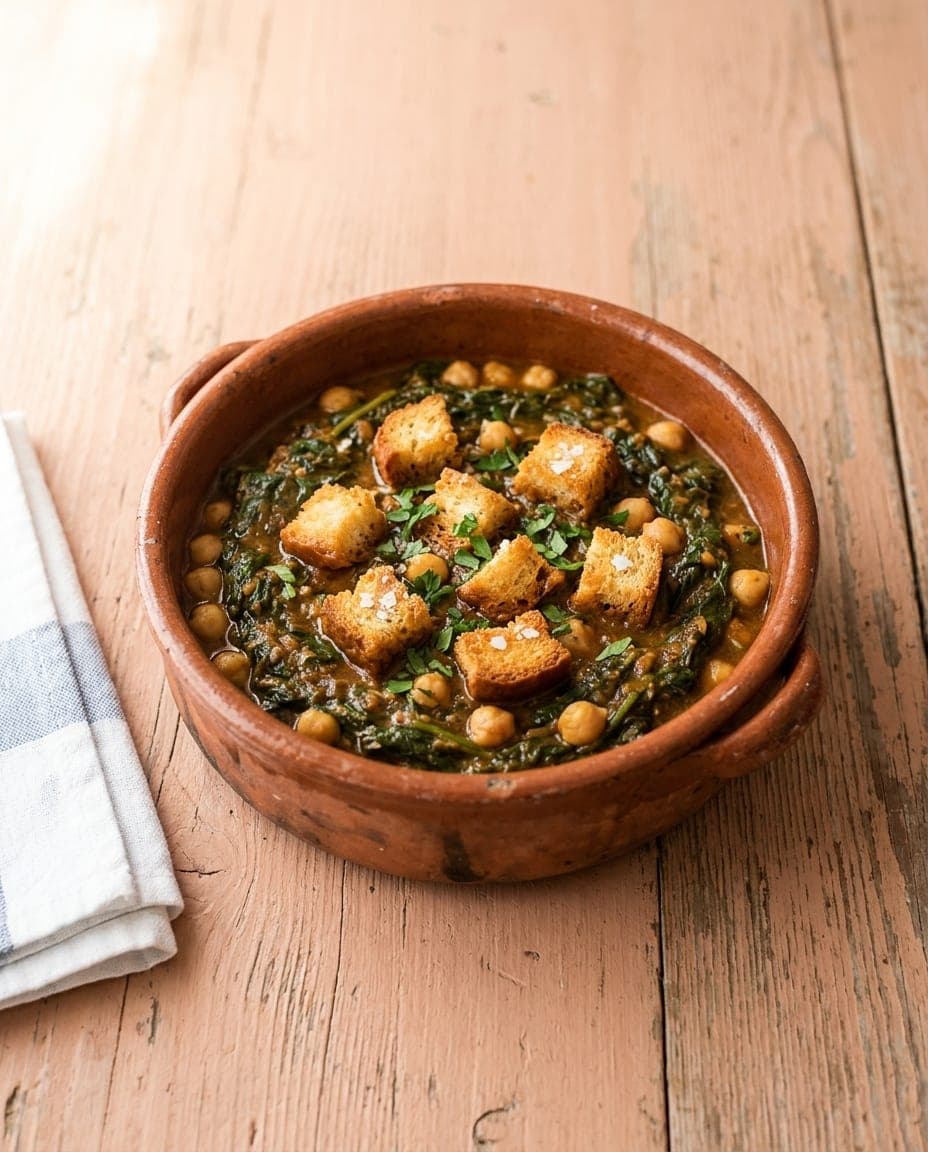
Espinacas con garbanzos is one of the most reliable sights in a Seville tapas bar. It is a simple dish of spinach and chickpeas stewed together until soft, then finished with a majado — a paste made from fried bread, garlic, cumin, paprika and vinegar. The result is a thick, savoury stew served in a small earthenware dish or on the plate itself, often with slices of fried or toasted bread.
The dish is a staple of Andalusian cooking, particularly in Seville, where it appears on a great many traditional menus. While spinach and legumes have long been part of Spanish peasant fare, this combination is often said to have a Moorish character: the generous cumin, the vinegar and the thickening with bread are frequently linked to the Arab-Andalusi culinary traditions that shaped the region for centuries.
It is a dish that defies the usual hierarchy of a meal. There are no expensive ingredients here, yet the flavour is deep and complex. The classic Seville version is meat-free, relying on the earthy notes of the chickpeas and the sharpness of the spices to provide substance, though some cooks add a chopped hard-boiled egg and some modern variations bring in ham.
The Moorish thread
The roots of the dish are commonly traced to Al-Andalus, the period when Muslim rule shaped much of southern Spain. Cumin, vinegar and the practice of thickening stews with bread are all associated with the cooking of that era, and the majado technique, where fried bread is pounded in a mortar with garlic and spices, is often seen as part of that inheritance, though a direct line is hard to document.
The combination of spinach and chickpeas suited households that needed cheap, filling food that could be reheated easily. Over time the preparation became a fixture of the city's taverns, served as a tapa or as a plate to share.
The dish is closely associated with Lent and Holy Week, when meat-free dishes were traditionally eaten during religious observance. However, it has long since shed any seasonal restriction. In Seville today it is on menus year-round, served just as enthusiastically in summer as in winter, and belongs to the everyday rhythm of the city rather than a specific calendar date.
What goes into it
The ingredients are few, but their quality matters. The base is fresh spinach and dried chickpeas that have been soaked overnight and then cooked until tender; many cooks keep some of the chickpea cooking water to loosen the stew.
The soul of the dish lies in the majado. Slices of bread are fried in olive oil until golden and crisp, often together with whole garlic cloves. The bread and garlic are then placed in a mortar with ground cumin, paprika and a splash of vinegar. Everything is pounded together with a pestle until it forms a coarse, aromatic paste. This mixture is stirred into the simmering spinach and chickpeas, where it dissolves to create a thick, creamy texture that coats every leaf and bean. Recipes vary from bar to bar, and some add a little tomato, coriander or pepper.
The final touch is often a slice of fried or toasted bread placed on top of the stew, soaking up the sauce while retaining some crunch. Some versions are finished with a drizzle of raw olive oil for extra gloss.
How it is eaten
Espinacas con garbanzos is designed for sharing in a casual setting. It is served hot in a small earthenware dish or on a plate, often accompanied by bread that can be dipped into the stew. The texture is thick and substantial, making it suitable as a light main course or a generous tapa.
It is common to order it alongside other small plates, so that a table can taste a range of flavours before moving on to the next round.
The pairing is straightforward and traditional. A glass of manzanilla, the dry, salty sherry from the nearby town of Sanlúcar de Barrameda, is the classic companion; its briny notes complement the savoury stew and the sharpness of the vinegar and cumin. A cold beer is the other everyday choice in Seville's bars.
Curious facts
- The bread is the thickener. Unlike many stews that use flour, this dish relies on the majado of fried bread to create its signature creamy texture.
- Cumin is key. Its generous use gives the dish its distinctive flavour and sets it apart from other Spanish spinach dishes.
- A Lenten staple turned everyday food. Historically associated with Lent, it is now a year-round favourite in Seville tapas bars.
- Served in earthenware. The dish is traditionally served in small clay dishes that hold the heat.
- A plain name. Espinacas con garbanzos simply means "spinach with chickpeas" — the name describes what is in the pot.
Where to try it
The best place to find espinacas con garbanzos is a traditional tapas bar in Seville. The dish is widely available, but the quality of the chickpeas and the balance of the majado vary from kitchen to kitchen.
In the historic centre of Seville, many bars serve it alongside other classics such as gazpacho or pescaíto frito.
Where to try it
1 destination
 Camper Van Rentals
Seville
Andalusia's capital with flamenco, tapas bars, and Moorish architecture.
Camper Van RentalsHiking