Escalivada
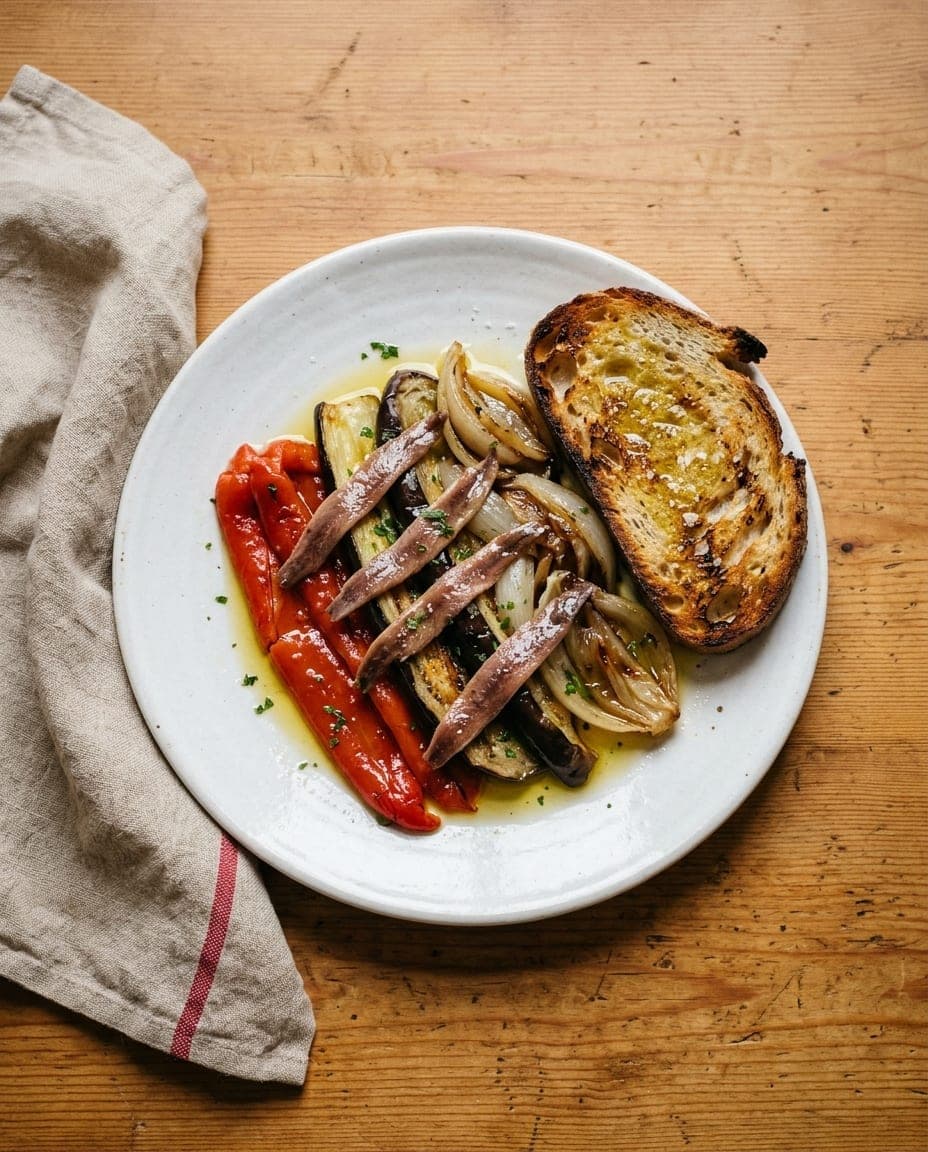
Ember-roasted aubergine and pepper strips, often on toast with anchovies
- Vegetarian
- Local name
- Escalivada
- Served with
- Toast, sometimes anchovies
- Pairs with
- Catalan rosé or white
What it is
Escalivada is a cold plate of vegetables from Catalonia. The dish consists of aubergine, red peppers, onions and sometimes tomato, all roasted whole over embers until the skins are blackened and the flesh soft. Once cooked, the vegetables are peeled by hand, torn into rough strips rather than cut with a knife, and arranged on a plate or board. They are then dressed generously with extra virgin olive oil and a pinch of salt.
The name comes from the Catalan verb escalivar, which means to cook in hot embers, itself derived from caliu, the glowing embers and hot ash of a fire. The defining characteristic of the dish is not just the ingredients, but the method of preparation that leaves them with a distinct smoky flavour and a texture that is tender yet retains some structure. It is a dish of simplicity, relying entirely on the quality of the produce and the skill of the roasting.
The history of embers and oil
The origins of escalivada are tied to the rustic cooking traditions of rural Catalonia, where open fires were long the primary source of heat. Vegetables grown in kitchen gardens or bought at local markets were cooked directly on the hot coals of a hearth or an outdoor fire. This method allowed the skins to blister and blacken quickly while the inside steamed in its own juices, creating a sweet, concentrated flavour that could not be achieved by boiling or frying.
The practice spread from farmhouses to village taverns and eventually into the kitchens of Barcelona. While the exact date of its first appearance is not recorded, the dish has long been associated with the Catalan summer harvest and with outdoor meals in the countryside. The roasted vegetables also keep well under olive oil for a few days, which made them a practical way to use the bounty of the season.
Over time, the preparation moved from the open hearth to the kitchen oven or grill, yet tearing the vegetables by hand rather than cutting them remains common in traditional kitchens. The ragged edges of the strips hold the oil well, and the result is a dish that feels both ancient and immediate.
What goes into it
The core ingredients are always simple and seasonal, though the proportions can vary depending on the cook's preference or the availability of produce.
- Aubergine: The dark purple skin turns black during roasting, while the flesh becomes soft and creamy. It provides the substantial body of the dish.
- Red peppers: Usually sweet varieties that blister easily, adding a bright colour and a hint of sweetness to balance the smokiness.
- Onion: Often added whole to the fire, it becomes sweet and tender, giving the plate a softer, mellower note.
- Tomato: While not always present, some versions include a ripe tomato roasted alongside the others, adding a touch of acidity and colour.
- Olive oil: Good extra virgin olive oil is essential, used as the final dressing that coats every strip.
The vegetables are sometimes finished with a little chopped garlic or a splash of vinegar. Salt is added at the end to season the warm, smoky flesh. The combination creates a savoury, aromatic plate that serves as either a starter or a side dish.
How it is eaten
Escalivada is traditionally served cold or at room temperature, making it a popular choice during the warmer months. It is rarely eaten on its own and is usually paired with bread to soak up the oil. A common accompaniment is pa amb tomàquet, bread rubbed with ripe tomato, olive oil and salt, which acts as a vessel for the vegetables; the strips are also laid on slices of toast to make a coca or torrada.
The dish frequently appears as part of a larger spread, often alongside grilled fish or meat. In many places it is served with anchovies, either placed on top of the vegetable strips or arranged separately on the plate. The saltiness of the anchovies complements the smoky sweetness of the vegetables and the richness of the oil.
For a complete meal, escalivada can open a lunch followed by grilled sardines or sea bass. It pairs well with a dry Catalan rosé or a white wine from the Penedès, which refreshes the palate between bites.
Curious facts
- The name describes the fire. The verb escalivar refers to cooking in embers, distinguishing it from roasting in an oven or grilling on a grate.
- Torn, not cut. The vegetables are traditionally pulled apart by hand into irregular strips rather than sliced.
- It keeps. The roasted vegetables can be stored under olive oil for a few days and eaten later without further cooking.
- A summer staple. While available year-round in shops, the dish is most closely associated with summer, when aubergines and peppers are at their peak.
- Vegetarian at heart. The vegetables themselves are meat-free; anchovies are a popular addition rather than part of the dish itself.
Where to try it
Escalivada is found throughout Catalonia, around Barcelona, Girona and along the coast as well as inland. It appears on the menus of traditional Catalan restaurants and taverns, and in village eateries that still cook over wood or charcoal.
Delicatessens and markets also sell it ready-made in jars or trays. The dish is so integral to the local food culture that it appears on menus in both rustic country inns and more refined city establishments, always prepared with the same respect for the ingredients.
Where to try it
1 region
 Wine Tasting21 destinations
Catalonia
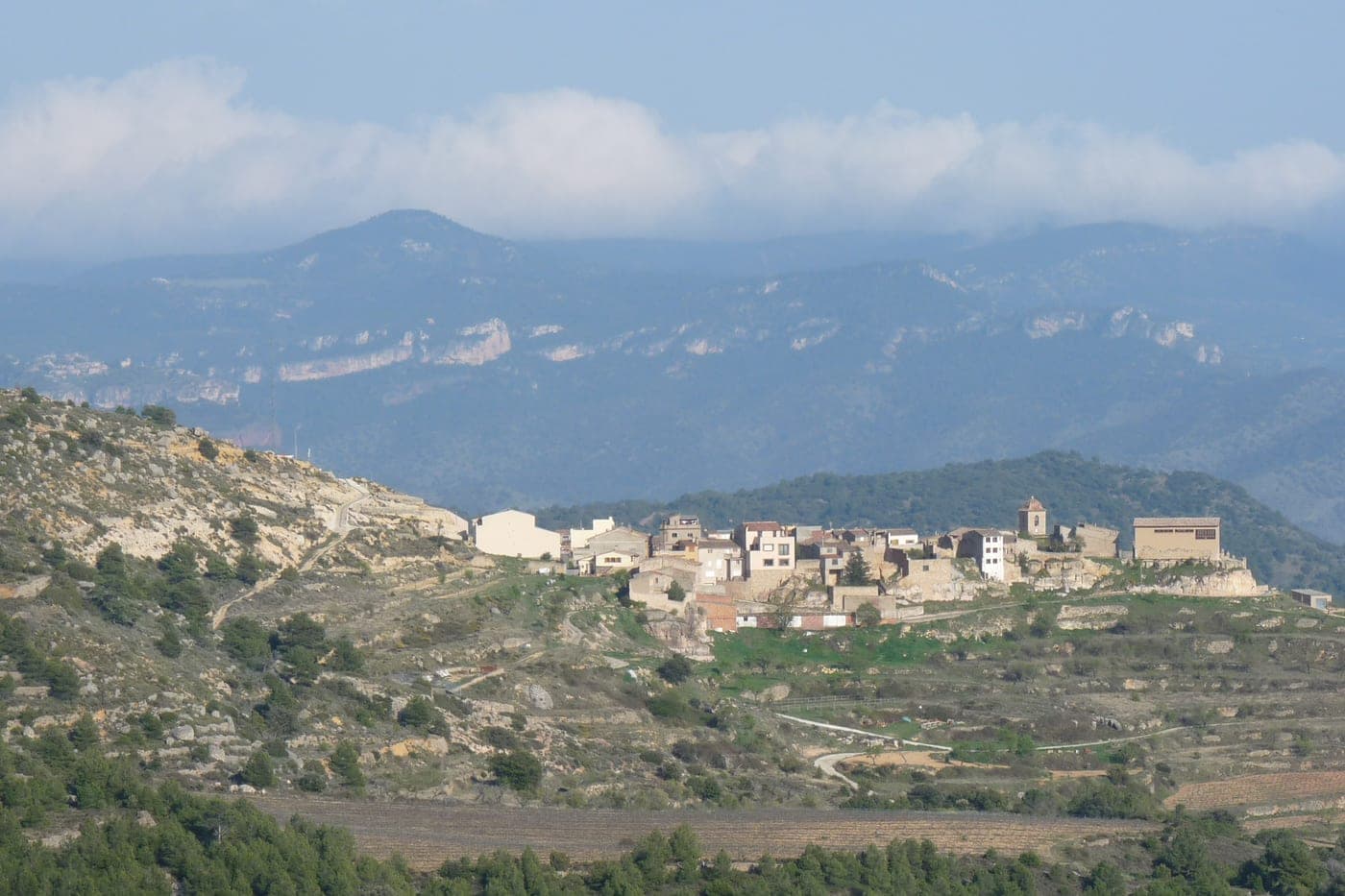
Catalonia stretches from the high Pyrenees down to the Mediterranean, and that range gives it a slow-travel character all its own: stone villages tucked into mountain valleys, a jagged coastline of small harbours, and an inland plain still shaped by farming and pilgrimage. Barcelona sits at one edge of the region, but Catalonia's quieter identity is built elsewhere — in places most visitors reach only if they choose to look beyond the capital. In the north, the Pyrenean valleys hold Romanesque churches and hamlets built from dark local stone, many still working farming communities. Villages like these keep a rhythm set by the seasons and the land, and walking between them reveals bell towers and hay meadows. Further south and inland, the Camí de Sant Jaume, a Catalan branch of the Camino de Santiago, crosses rolling wheat country and passes through small towns built around a church square. The coast has its own version of slowness. Cadaqués, with its whitewashed harbour houses and steep lanes, once drew Dalí and other artists. The Costa Brava's smaller coves still keep this feel in the off-season: fishing boats pulled up on shingle, a handful of restaurants serving the day's catch, cliff paths connecting one cove to the next. Inland from the coast, medieval towns like Besalú preserve their fortified bridges and Jewish quarters largely intact. Catalonia's regional cuisine reflects this pace. Cava is made using the same traditional method as Champagne, and small family cellars around Sant Sadurní d'Anoia still open their doors for tastings. Calçotada season, when charred spring onions are dipped in romesco sauce and eaten by hand, is a communal meal built around fire and patience. Elsewhere, pa amb tomàquet, botifarra sausage, and mountain cheeses reflect a cuisine shaped by both the sea and the high pastures. History runs close to the surface here. Poblet Monastery, one of Catalonia's Cistercian foundations, still follows a monastic routine largely unchanged for centuries, and some of Gaudí's early works outside Barcelona show the same architectural language in quieter settings. A handful of Catalan paradors occupy restored castles and monasteries — the one at Cardona, built into a medieval fortress on a hilltop, is among the most striking examples of this in Spain. Mountain villages, pilgrim paths, whitewashed coves, cava cellars, and monastery towns give Catalonia a landscape suited to slow travel: a dialect (Catalan) still spoken in daily life, a cuisine tied closely to what grows and grazes nearby, and villages that have kept their own pace as the region around them has modernised.
Wine TastingBoat RentalsHikingCamper Van Rentals