Cochinillo asado
Crisp-skinned suckling pig from Segovia's wood-fired ovens
- Local name
- Cochinillo asado
- Served with
- Green salad
- Best eaten at
- A Segovia asador
- Pairs with
- Ribera del Duero
What it is
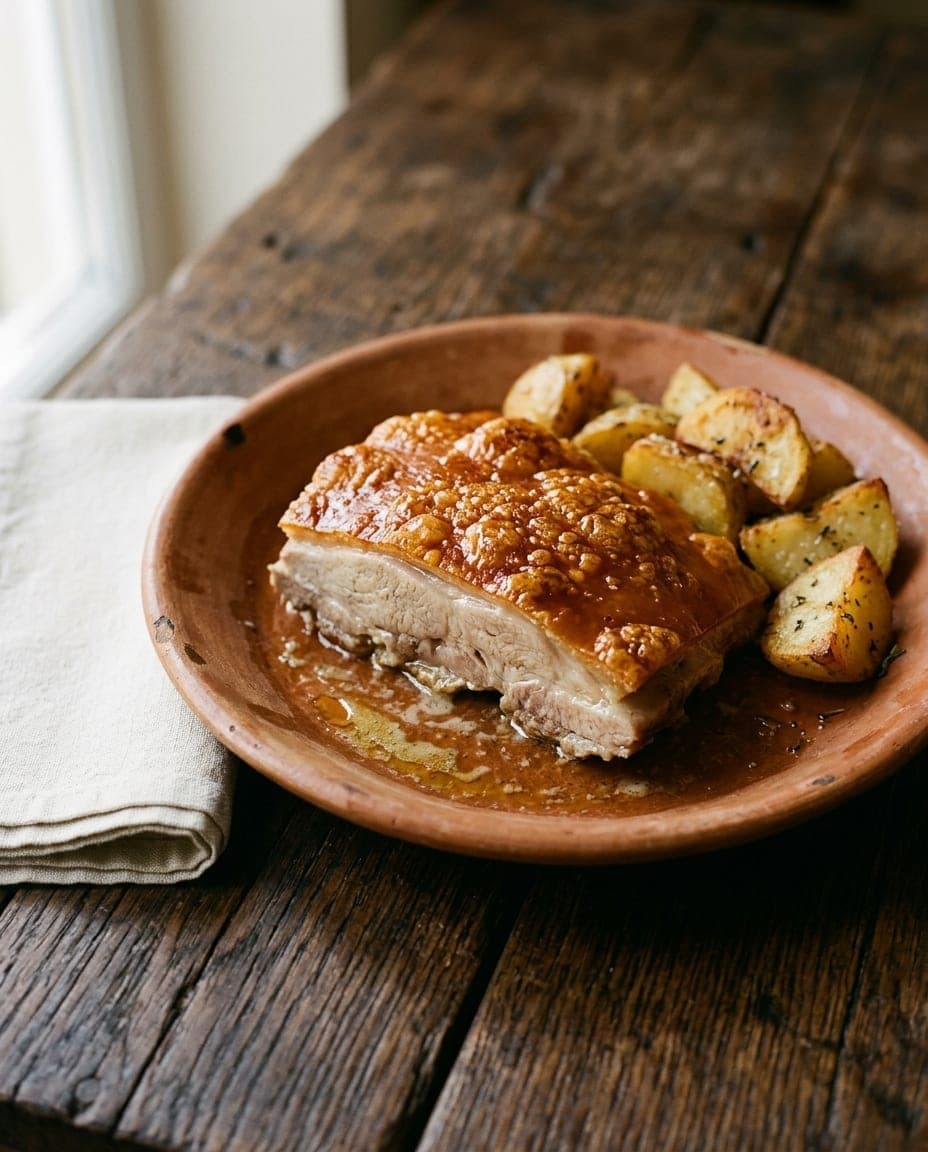
Cochinillo asado is the definitive dish of Segovia, a city in Castile and León, north-west of Madrid. It is a suckling pig, roasted slowly until the skin turns a hard, amber glass that shatters at the touch, while the meat underneath remains so tender it falls away from the bone without resistance. The piglet must be very young, fed only on its mother's milk, which gives the flesh its pale colour and delicate flavour.
This is not a dish of fine cuts or delicate preparation. The piglet is split open and laid in a shallow earthenware dish with a little water at the bottom to keep the meat moist during the roast; seasoning is usually little more than salt. The result is a meal of immense simplicity and power: golden, crisp skin and soft, pale meat. It is a hearty, savoury feast meant to be shared, typically accompanied by a plain green salad.
The wood-fired ritual
The cooking method is the soul of the dish. Traditional asadores in Segovia use domed, wood-fired ovens of the kind long used for baking bread. The oven is fired with wood until the walls are thoroughly heated, then the fire is allowed to settle so the heat stays steady enough for slow roasting.
The piglet goes into the oven in its earthenware dish, often raised on sticks so the meat does not sit in the liquid. It roasts for a couple of hours or more until the skin achieves its signature crispness. The heat renders the fat slowly, basting the meat from within while the skin hardens into a brittle shell. The process relies on the skill of the cook, who watches the colour closely so the skin does not burn before the meat is fully tender.
How it is served
In a traditional Segovian restaurant, the roasted piglet is often brought to the dining room whole before carving. The serving ritual is as important as the eating. In the best-known version, the carver sets the knife aside and divides the piglet using the edge of an ordinary dinner plate.
If the pig has been roasted correctly, the flesh separates easily when struck by the plate's rim, a demonstration of tenderness for everyone watching. The plate is then thrown to the floor and smashed. This piece of theatre was popularised in Segovia in the 20th century by one of the city's celebrated innkeepers, although a form of plate carving is reported in Madrid as early as the 19th century. It is still performed in some establishments today.
Portions combine shards of crackling skin with soft meat pulled from the bone and are served immediately while hot. The accompaniment is humble: a bowl of lettuce dressed simply with oil and vinegar, sometimes with potatoes on the side.
Where it comes from
Cochinillo asado belongs firmly to Castile and León, above all to the province of Segovia and the neighbouring La Moraña district of Ávila, around the town of Arévalo, where the roast piglet is often called tostón. The region's dry, high plains have long supported livestock farming, and roasting young animals in wood-fired ovens is a shared tradition of the Castilian tableland, from suckling pig to milk-fed lamb.
The practice of roasting whole piglets dates back centuries, rooted in the need to feed large groups at festivals and family gatherings. Over time, the dish became the hallmark of Segovia's restaurants, and the city's identity is closely bound up with it. Visitors travel specifically to taste the version cooked in a traditional wood-fired oven.
Since 2024, Cochinillo de Segovia has been registered as an EU Protected Geographical Indication (PGI). It covers piglets born, reared and slaughtered in the province of Segovia and the La Moraña district, fed exclusively on their mother's milk.
What goes into it
The ingredients are few, and the quality of each is paramount. There are no heavy spices or complex marinades; the flavour comes from the meat itself and the method of cooking.
- A suckling pig, fed only on its mother's milk and just a few weeks old, so the meat is pale and tender.
- Salt, usually the only seasoning.
- An earthenware dish, which holds the piglet and helps it roast evenly.
- Wood fire, heating the oven for slow, even roasting.
- A little water, placed at the bottom of the dish to prevent the meat from drying out.
- Green salad, made with lettuce dressed simply with oil and vinegar.
It is a substantial meal, often shared between several people. The texture is the primary focus: the contrast between the shattering skin and the soft, yielding meat.
Curious facts
- The plate test. Carving the piglet with the edge of a plate proves the meat's tenderness without a knife.
- The smashed plate. In some traditional restaurants, the carving plate is thrown to the floor and broken as a flourish at the end of the ritual.
- Milk-fed only. The PGI rules require piglets fed exclusively on their mother's milk.
- The bread oven. The domed wood-fired ovens used for roasting are of the same type traditionally used for baking bread, valued for their heat retention.
- Regional pride. While pork is eaten across Spain, cochinillo asado is a Castilian speciality, with Segovia as its undisputed heartland.
Where to try it
The best place to eat cochinillo asado is in an asador in Segovia itself, many of them near the Roman aqueduct or within the old city walls. In these traditional restaurants the wood-fired ovens are often still in use, and some perform the plate-carving ritual for diners. Arévalo and the villages of the Segovia province offer their own versions.
A glass of Ribera del Duero red wine is the classic pairing, its bold fruit cutting through the richness of the pork.
It is a dish that demands time and attention; there is no rush in Segovia when it comes to cochinillo asado.
Where to try it
1 region
 Panoramic Trains22 destinations
Castile and León
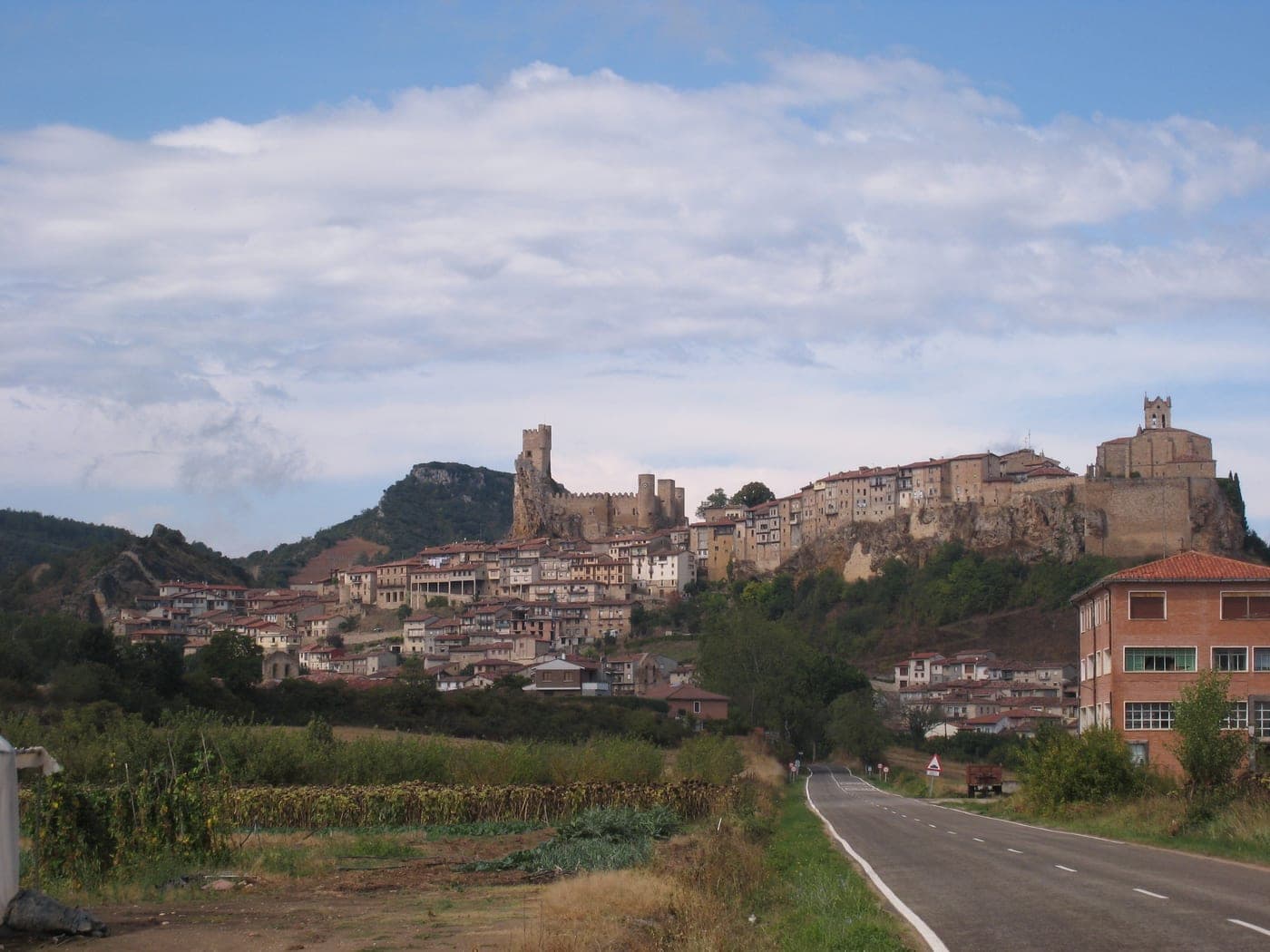
Covering over a quarter of Spain's land, this region is known for its historical richness and diverse landscapes. It features the ancient city of Salamanca, home to one of the oldest universities in the world, and Ávila, famous for its well-preserved medieval walls. The region also boasts stunning natural parks like Sierra de Guadarrama and the Duero Valley, known for its exceptional wine production, particularly Ribera del Duero. Castile and León is the birthplace of Spanish language and literature, with paths like the Camino de Santiago running through it. Visitors can explore lesser-known towns like Pedraza and Sepúlveda, where traditional crafts and gastronomy thrive, offering a genuine taste of local culture.
Panoramic TrainsHikingWine TastingLocal Cuisine