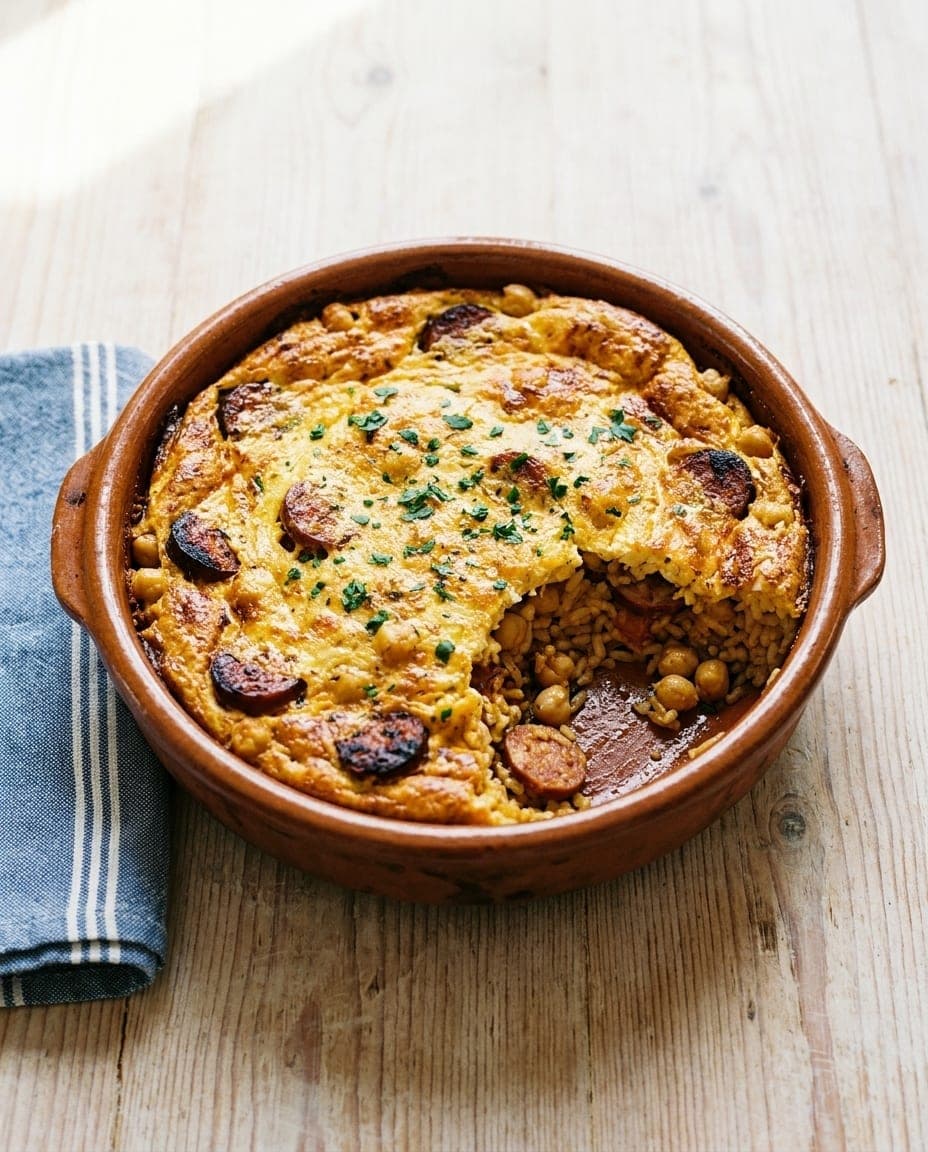
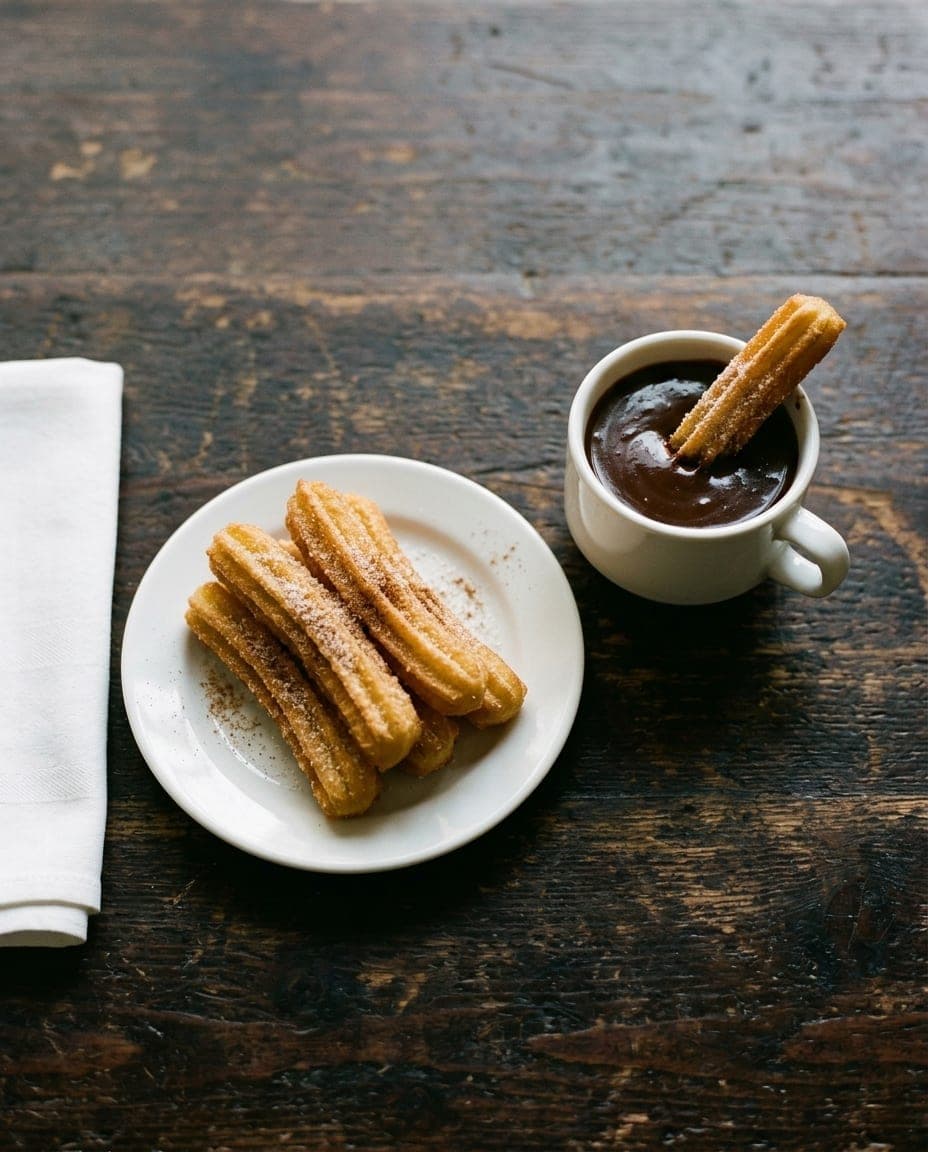
Churros con chocolate
Fried ridged dough sticks dipped in thick, dark hot chocolate
- Vegetarian
- Local name
- Churros con chocolate
- Served with
- Thick hot chocolate
- Best eaten at
- A Madrid chocolatería
- Pairs with
- Café con leche
What it is
Churros con chocolate is the name given to a simple pairing that has become a national institution in Spain. The dish consists of lengths of fried dough, the churros, served alongside a cup of very thick hot drinking chocolate. It is not a dessert in the conventional sense. The combination is eaten as a breakfast, a mid-afternoon merienda, or most famously, as the final meal of the night after hours spent out in the city.
The dough itself is made from flour, water and salt, with no sugar in the mixture. It is piped through a star-shaped nozzle into hot oil, creating ridges along the surface that help the sticks crisp evenly. Once fried until golden, the churros are drained and served warm, sometimes with a dusting of sugar. They are designed to be dipped into the accompanying chocolate rather than eaten dry.
The chocolate is the other half of the equation. It is not the thin, sweet liquid found in many cafés elsewhere. It is a dense, spoon-coating drink, usually thickened with cornflour, dark in colour and only moderately sweet. A churro dipped into it becomes a single, cohesive bite in which the depth of the chocolate balances the salt in the dough.
Where it comes from
The origins of the fried dough are debated. One popular account suggests Spanish shepherds devised it as a bread that could be fried over an open fire in the mountains. Another holds that Portuguese sailors brought back the idea of fried dough sticks from China. Others point to the fried pastries of the Arab world, which were known in al-Andalus. None of these stories is settled. The chocolate has clearer roots: cacao was drunk in Mesoamerica, notably by the Aztecs and Maya, long before the Spanish arrived and brought it back to Europe.
In Spain, the pairing became a staple of daily life, particularly in the capital. While fried dough appears in many countries, often as a street snack or fair food, the ritual of dipping it into thick chocolate at a dedicated establishment is most strongly associated with Madrid. The city embraced the combination as a way to warm up on cold mornings and to recover after long nights of socialising.
The tradition spread across the country, and regional habits vary: in parts of Andalusia, for instance, the dough is fried as a large spiral and cut into lengths, and in some places the chocolate is thinner or swapped for coffee. In Madrid, the benchmark remains the churro paired with thick chocolate at a chocolatería.
The two shapes of the churro
There are two main forms of fried dough in Madrid. The first is the standard churro: a thin, ridged length of dough, either straight or bent into a loop. It is crisp throughout and is often sold by the piece or in small bundles.
The second is the porra. This is a thicker, softer variant, made from a dough with a raising agent such as bicarbonate or yeast and fried as one long coil that is then cut into pieces. The interior stays soft and airy while the exterior holds a gentle crispness, and its larger surface soaks up more of the chocolate. Many establishments offer both, so diners can choose or try one of each.
How it is eaten
The dish is traditionally served at a chocolatería, an establishment that focuses largely on this pairing. Many open from early morning until late at night, serving as a gathering point for families, students and night-owls alike.
The chocolate arrives in a thick cup, hot enough to require careful sipping. The churros come on a plate or in a paper cone. The diner takes a churro, dips it into the chocolate and eats it while the dough is still warm, repeating until the plate is empty; whatever chocolate is left is drunk from the cup.
It is a social food, often shared in groups. The late-night version is particularly significant. After an evening out at bars or clubs, many people head to a chocolatería before going home, and the dish serves as a comfort meal that signals the end of the night.
Curious facts
- A breakfast for the night. In Madrid, churros con chocolate are often eaten at dawn after a night out, serving as a late supper as much as a morning meal.
- The chocolate is thick. Spanish hot chocolate for dipping is thickened until it coats a spoon, making it something between a drink and a dip.
- No sugar in the dough. The batter contains only flour, water and salt. Any sweetness comes from the chocolate or from sugar sprinkled on top.
- A winter favourite. While eaten year-round, the dish is particularly popular in the colder months.
- The porra is a coil. The thicker porra is fried as a large spiral before being cut, distinguishing it from the thin standard churro.
Where to try it
The classic place to experience this dish is a traditional chocolatería in Madrid, especially in the older parts of the city centre, where some establishments have been frying churros for generations. They range from small neighbourhood counters to busy, long-established cafés, and some keep very late hours to cater to the night crowd.
There is no need to dress up or book a table. Diners often stand at a counter or share a small table. The focus is entirely on the food: the contrast of crisp, salty dough and rich, thick chocolate that has made the pairing one of the best-known tastes of Madrid.
Where to try it
1 destination
 Camper Van Rentals
Madrid
Capital city with vibrant art scene, historic plazas, and culinary delights.
Camper Van RentalsHiking
1 region
- Camper Van Rentals1 destination
Madrid
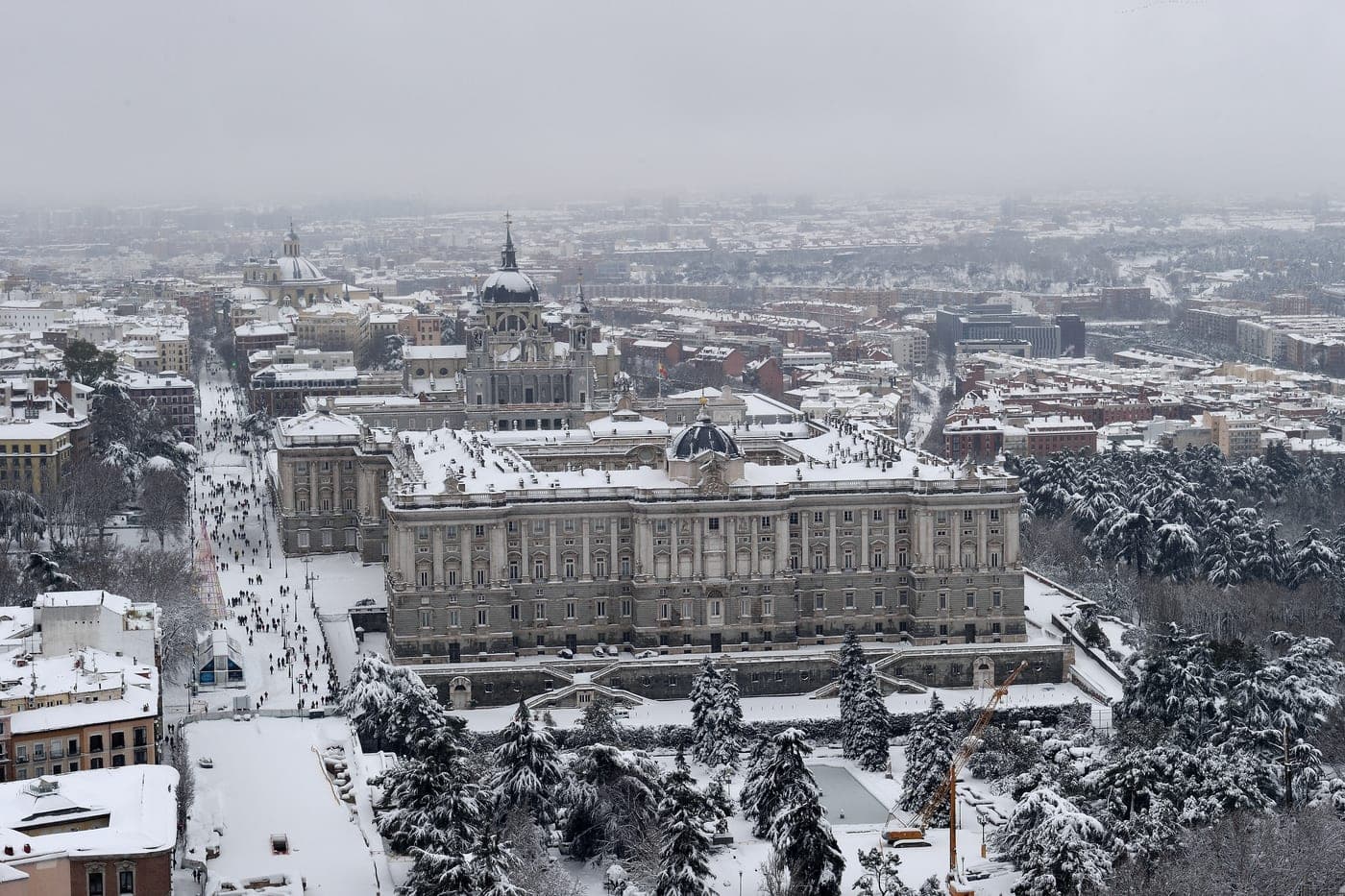
Madrid, the largest city and capital of Spain, is a vibrant hub of culture and history. Known for its royal palace, the city boasts a rich artistic heritage with museums like the Prado and the Reina Sofia. Beyond the mainstream, explore the Malasaña district, famous for its alternative scene, or the tranquil Retiro Park, a green oasis in the urban landscape. The surrounding region features towns like Alcalá de Henares, birthplace of Cervantes, and El Escorial, a UNESCO World Heritage site. Madrid's culinary scene is diverse, from traditional tapas to innovative cuisine, reflecting its cultural melting pot. The region also hosts various local festivals throughout the year, showcasing its traditions and community spirit.
Camper Van RentalsHiking