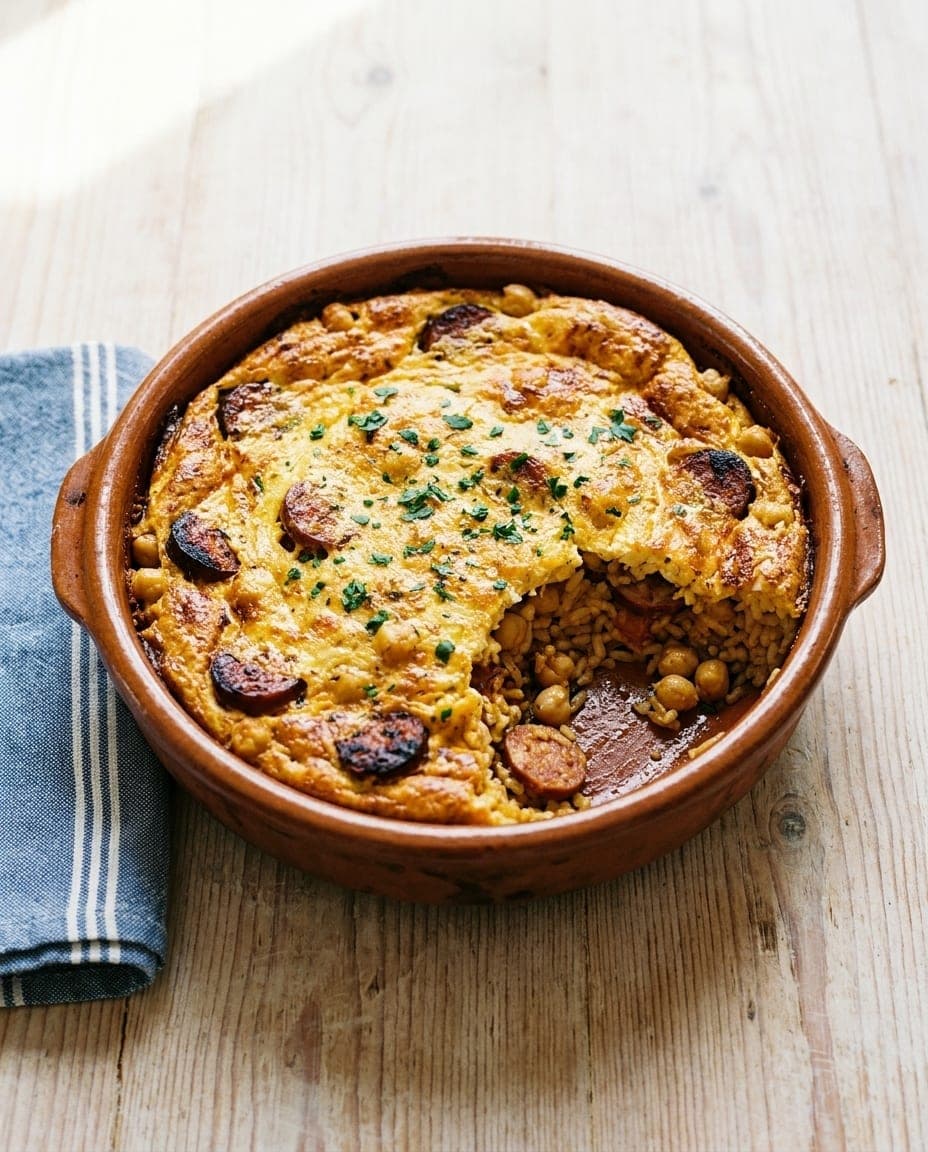
Caldo gallego
A winter broth of turnip greens, white beans and pork in Galicia
- Local name
- Caldo gallego
- Served with
- Galician bread
- Best eaten at
- A Galician taberna
- Pairs with
- Ribeiro white or Mencía red
What it is
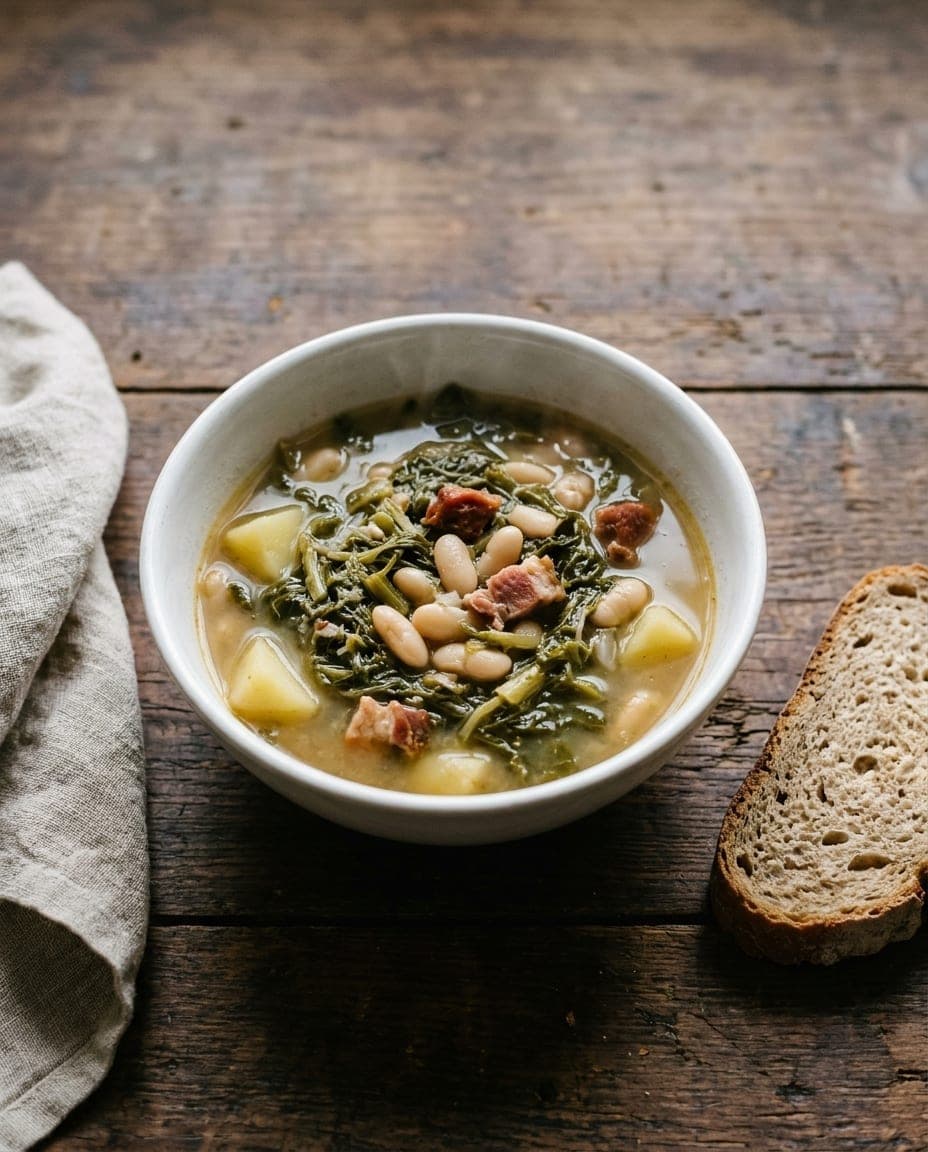
Caldo gallego is the everyday broth of Galicia, a region on the north-west coast of Spain where the climate is cool, wet and green. It is not a fancy dish or a tourist attraction but a staple that has sustained families through long winters for generations. The soup consists of white beans, potatoes and leafy greens simmered in a clear broth with a piece of cured pork fat. When the potatoes soften and break down, they thicken the liquid into a consistency that is thin enough to drink from a bowl yet substantial enough to warm the body thoroughly.
The dish is defined by its seasonal rhythm. In the colder months, the primary green is grelos, the flowering shoots and leaves of the turnip plant. These have a distinct bitterness and a sharp, mustard-like flavour that cuts the fat of the pork. When grelos are not in season, cooks switch to berza, a sturdy leafy cabbage that holds its shape well during long simmering, or to young turnip leaves. The result is a soup that changes character with the seasons but remains rooted in the same simple method: simmer until tender and serve hot.
The ingredients that define it
There is no single official recipe for caldo gallego, but the core components are consistent across homes and taverns in Galicia. The foundation is white beans, which provide a creamy texture when cooked with the potatoes. These are usually dried beans soaked overnight.
The greens are the most critical element. Grelos are cut in winter and early spring, when the turnip plant sends up its flowering shoots. They are sold in bundles at local markets, their deep green leaves and stems a sure sign of the season. When unavailable, berza takes over, offering a milder but still earthy flavour.
Pork is essential to the broth's depth. A piece of lacón, the cured foreleg of the pig, or a little unto, the cured pork fat that is a Galician kitchen staple, is added to the pot. This fat melts into the liquid, coating the beans and greens with a savoury richness that water alone cannot achieve. Chorizo or bacon may also be included, but the cured pork remains the backbone of the flavour.
Potatoes are not merely an addition; they are the thickener. As they cook, their starch dissolves into the broth, creating a natural creaminess without the need for flour or cream.
How it is eaten
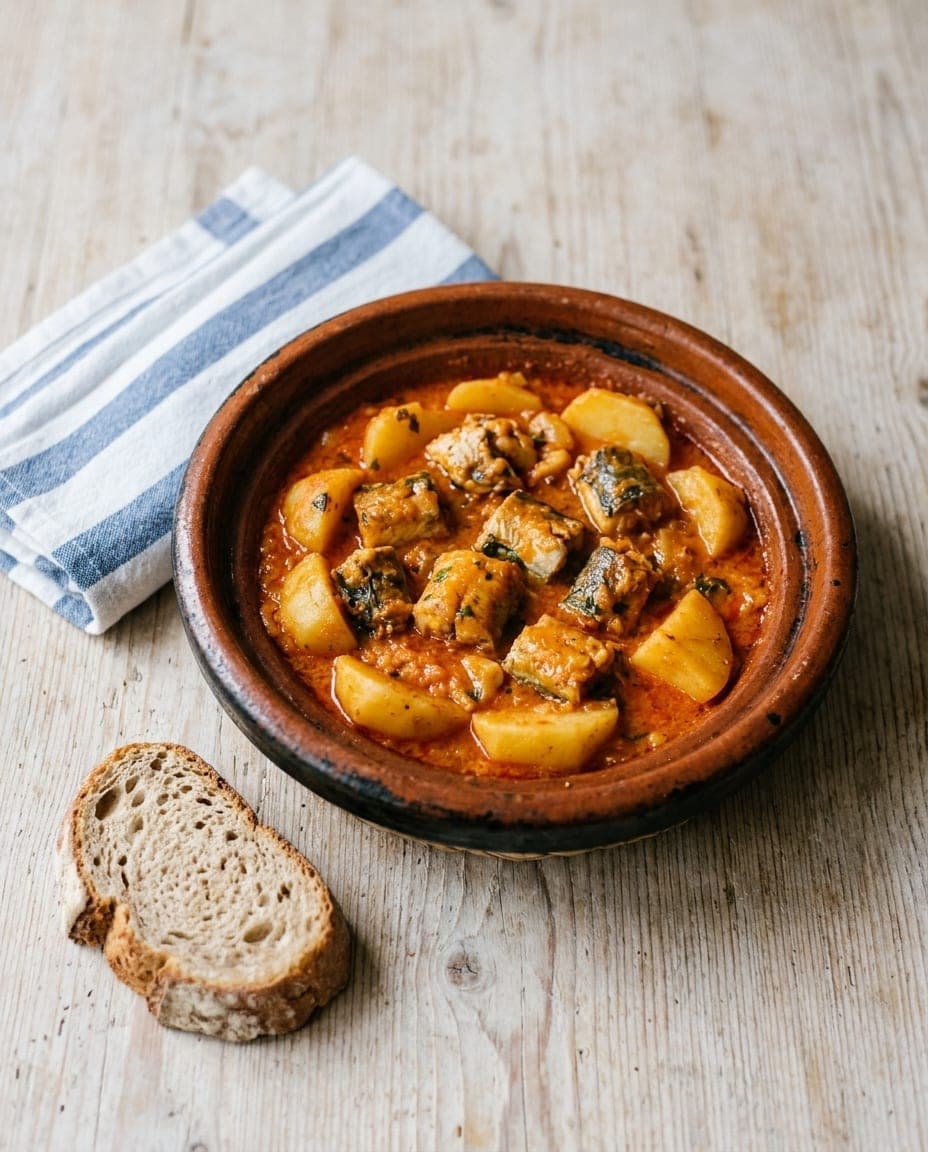
Caldo gallego is served hot in a deep bowl, traditionally an earthenware cunca, and eaten with a spoon, but the bread plays an equally important role. A slice of Galician bread, usually a crusty wheat loaf, though maize or rye broa is also traditional, is eaten alongside or dipped into the broth.
The soup is usually the first course of a meal, eaten at lunch and sometimes at dinner. After the caldo comes the main dish, which might be roast pork, grilled fish or shellfish. In many Galician homes, the soup is served from a central pot, with each person ladling their own portion.
A glass of local wine is the traditional companion: a white Ribeiro, or a red made from the Mencía grape, the main red variety of inland Galicia. The acidity of the wine cuts the fat of the pork, balancing the meal.
Where it comes from
The roots of caldo gallego lie in the rural life of Galicia, where farming and fishing have shaped the diet for centuries. The region's climate, with its frequent rain and cool temperatures, made hearty soups a daily necessity. Beans, turnips, cabbages and potatoes grew well in the damp soil, and the household pig was a reliable source of fat and protein.
Over time, the dish became a symbol of Galician identity. It is not just food but a practice that connects people to the land and the seasons. It has close relatives across the border: Portugal's caldo verde is built on similar greens and potatoes, while Galicia itself has variants such as caldo de castañas, made with chestnuts.
The recipe varies from house to house and from valley to valley, reflecting the local availability of ingredients rather than any fixed rule.
Curious facts
- Grelos carry protection. The turnip greens sold as Grelos de Galicia have EU protected geographical indication status, covering production across the whole of Galicia.
- A seasonal crop. Grelos appear in the colder months, when the turnip plant produces its flowering shoots. They are not available year-round.
- The bread is key. The soup is rarely served without a slice of Galician bread to accompany it.
- Not a main course. Caldo gallego is traditionally served as a starter, meant to warm the diner before the main dish arrives.
- Regional variations. The intensity of the bitterness depends on the type of green used and the length of cooking, with some versions being milder than others.
Where to try it
The best place to eat caldo gallego is in a Galician taberna, a small neighbourhood tavern that serves local food without pretension. These places are found throughout Galicia, from the busy streets of Santiago de Compostela to quiet villages in the interior.
In the winter months, look for a taberna that highlights grelos on its board. The soup will be at its most characteristic then, with the sharp bitterness of the turnip greens balancing the fat of the pork. In other seasons, the version made with berza offers a milder but still satisfying flavour.
Places where locals gather, near a market or in a residential area, are usually the best choice: the broth will be freshly made, and the bread baked locally.
Where to try it
1 region
 Panoramic Trains8 destinations
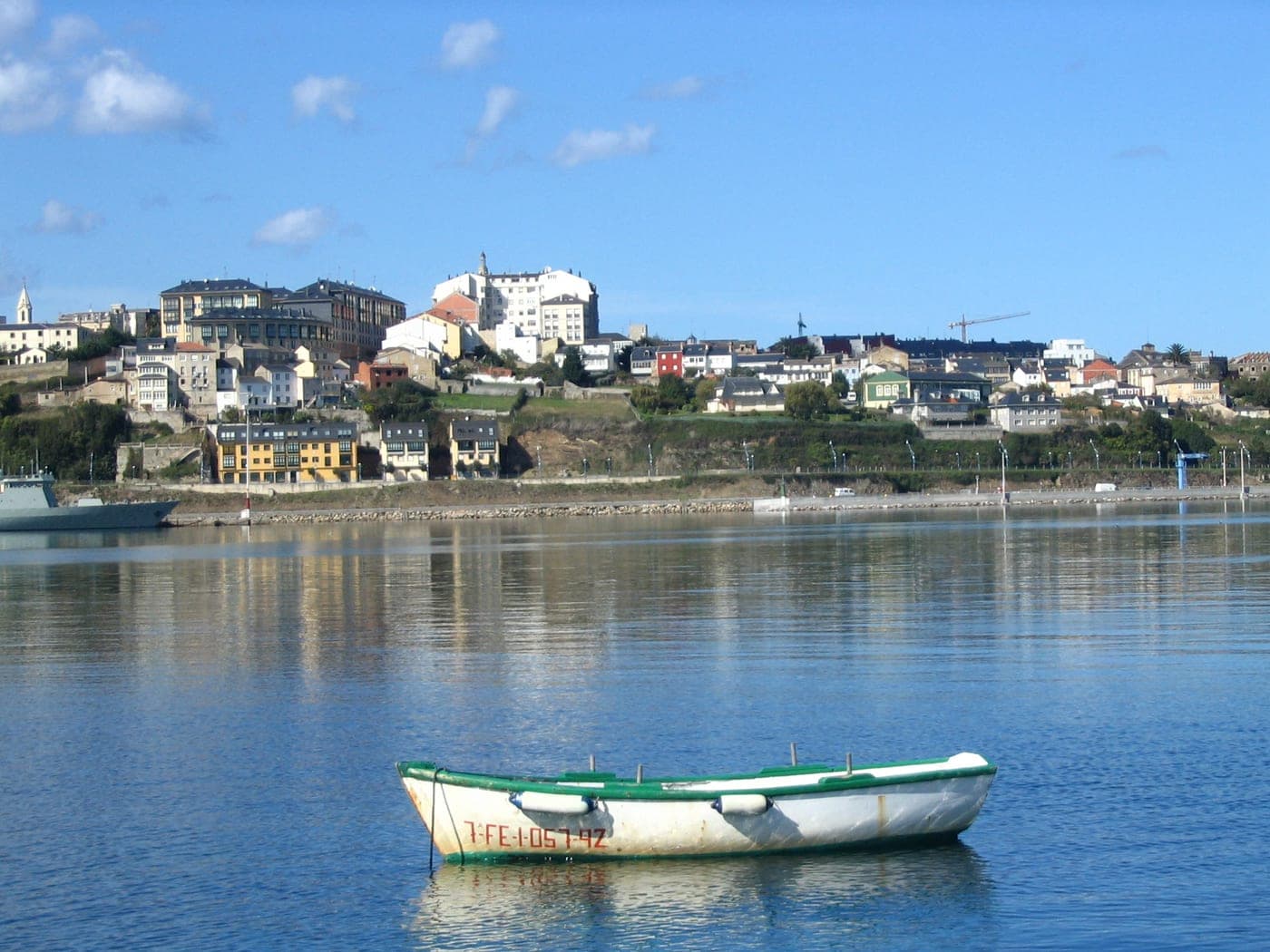
Galicia
This region is the largest in Spain, featuring a stunning coastline along the Atlantic Ocean. Known for its rich Celtic heritage, Galicia boasts historical towns like Santiago de Compostela, famous for its pilgrimage routes and the impressive cathedral. The Rías Baixas area is celebrated for its Albariño wine, while the rugged shores offer scenic beauty, including the dramatic cliffs of the Costa da Morte. Traditional crafts, such as pottery and weaving, reflect the local culture. Visitors can explore lesser-known villages like Combarro and O Cebreiro, which showcase ancient architecture and regional gastronomy. Unique festivals, such as the Romería de San Juan, highlight local traditions and community spirit, making this region a treasure trove for those seeking depth in their travels.
Panoramic TrainsHikingWine TastingLocal Cuisine