Botifarra amb mongetes
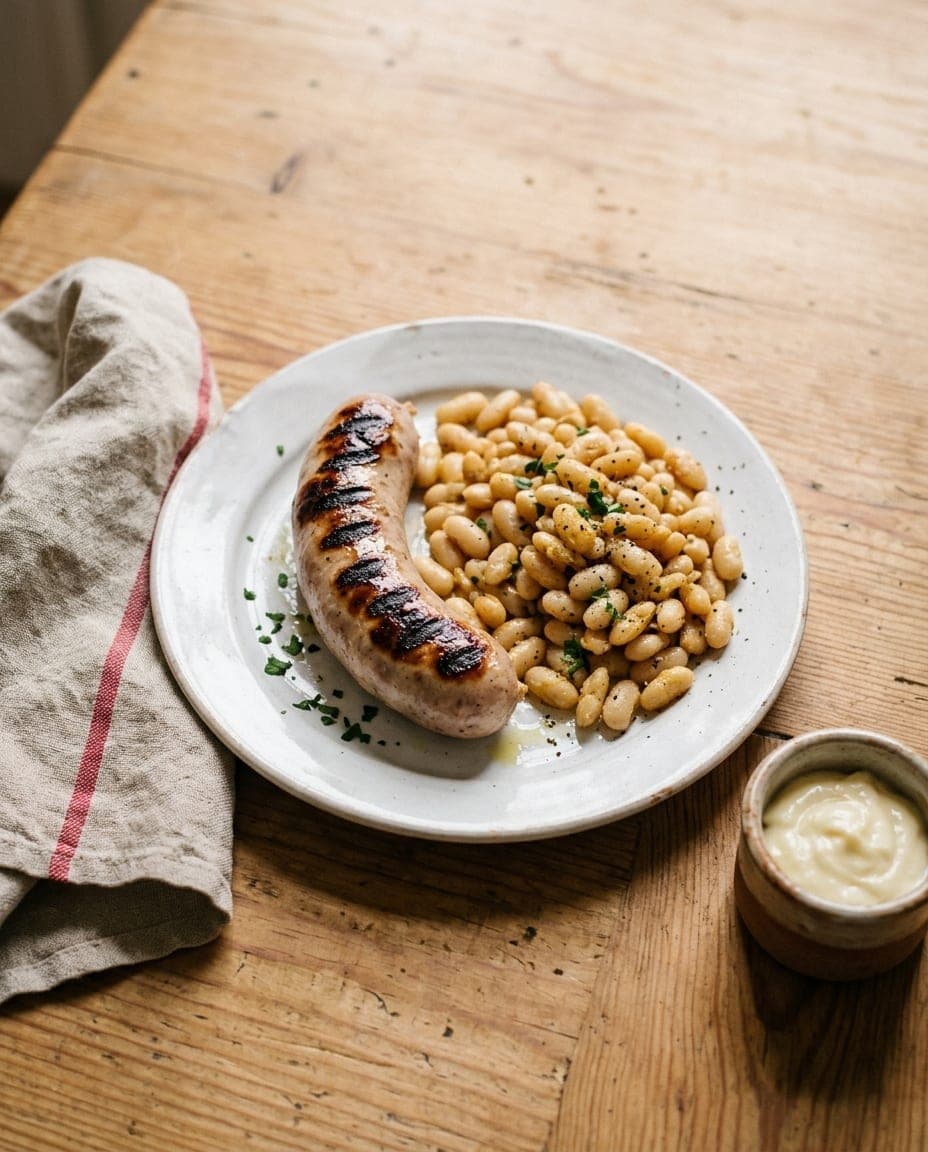
Grilled fresh Catalan sausage with white beans and allioli
- Local name
- Botifarra amb mongetes
- Served with
- Allioli
- Best eaten at
- A Catalan masia restaurant
- Pairs with
- Montsant red
What it is
Botifarra amb mongetes is one of the most honest plates on a Catalan table. It consists of a fresh pork sausage, grilled over embers, served alongside white beans that have been sautéed in the fat left behind by the meat. The dish is not elaborate in appearance or technique, yet it carries a weight of tradition that makes it central to the region's food identity.
The name translates directly: botifarra refers to the sausage, and mongetes are the beans. Cooks use local dried white beans, and the most prized is the mongeta del ganxet, a flattened, strongly kidney-shaped white bean with a protected designation of origin. The sausage is the fresh kind, made from raw minced pork seasoned with salt and black pepper, and neither smoked nor cured. It is often grilled as a whole coil or in long links.
The beans are not merely boiled and served. They are first cooked until tender, then tossed in a pan with the fat rendered from the sausage or with a little lard or oil, so that they absorb the flavour and pick up a light golden edge. This step transforms simple ingredients into something cohesive and deeply savoury.
Where it comes from
Botifarra amb mongetes belongs firmly to Catalonia, where it is eaten everywhere from Barcelona bars to country restaurants. Other regions of Spain have their own sausages and bean preparations, but this combination is distinctly Catalan.
The dish is rooted in the farming life of the masia, the traditional farmhouse of the Catalan countryside. These largely self-sufficient households raised pigs and grew beans, and the sausage made at the winter pig slaughter met the dried beans of the summer and autumn harvest in a hearty, warming plate.
Today the dish is a staple of rural restaurants and city menus alike, often found in establishments that cook over embers and serve local produce. It is a plate that speaks of the land and the animals raised upon it.
How it is made
The preparation relies on two good ingredients and a simple sequence. The beans are boiled until they are soft but still hold their shape, then drained and set aside. Meanwhile, the fresh botifarra is grilled over charcoal or embers until the skin is crisp and the interior is cooked through.
The beans are then sautéed in a pan with the rendered pork fat, tossed gently so that every bean takes on the flavour. A clove of garlic or a little parsley may be added at this stage. The goal is to marry the smoky, charred notes of the grilled meat with the earthy taste of the legumes.
There is no heavy sauce or broth. The dish stands on its own, relying on the texture of the beans and the charred skin of the sausage.
What goes into it
The simplicity of the dish means that every element matters. The core components are:
- Fresh botifarra: A raw pork sausage seasoned with salt and black pepper. It is neither smoked nor cured.
- White beans: Ideally mongetes del ganxet, which are grown in the Vallès comarques and parts of the Maresme and La Selva. They have a fine skin and a creamy texture when cooked.
- Rendered pork fat: The fat from the sausage, or lard, used to sauté the beans.
- Garlic: Often added during the sautéing stage.
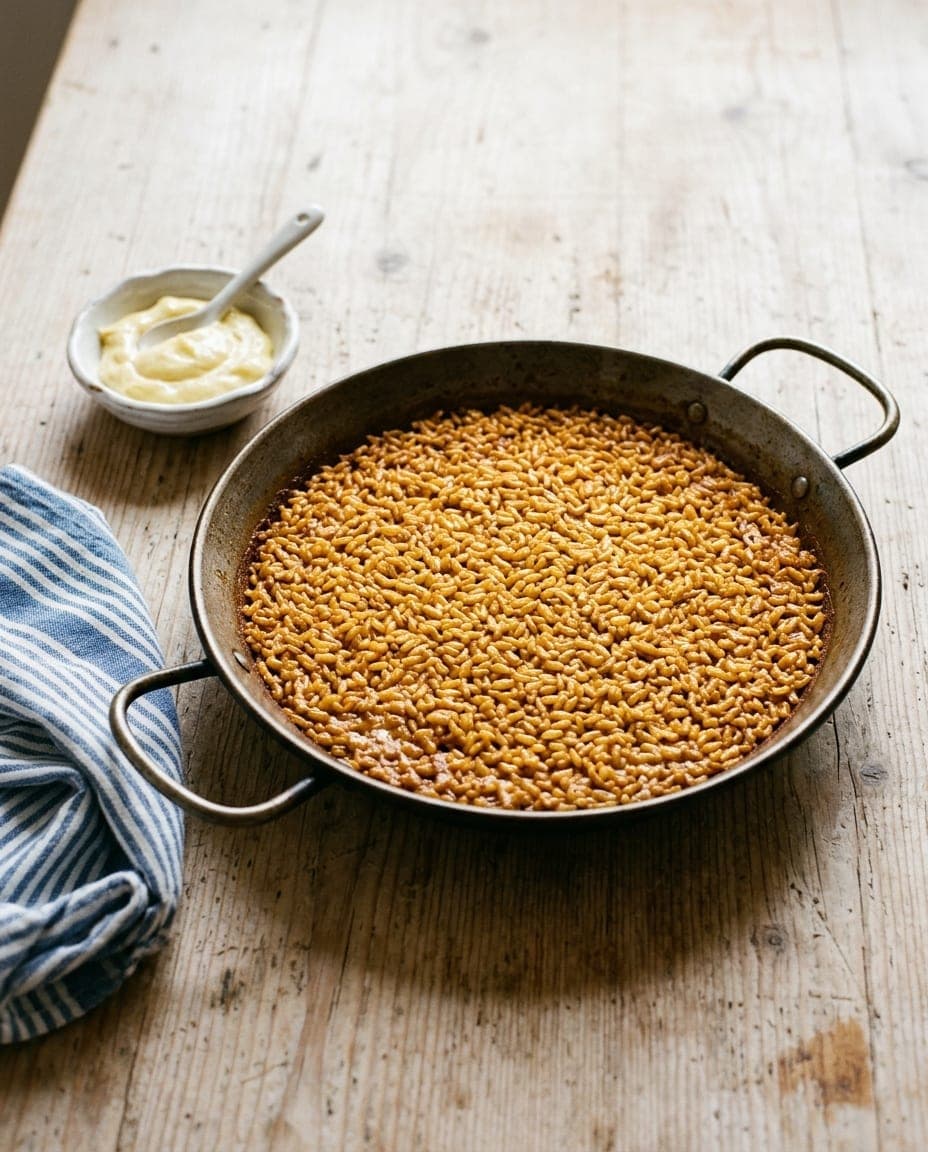
The dish usually comes with allioli, a thick emulsion of garlic and olive oil that provides a pungent contrast to the warm, fatty sausage. A slice of crusty bread, often rubbed with tomato as pa amb tomàquet, is also common.
How it is eaten
Botifarra amb mongetes is typically a main course, served at lunch or dinner. It is a fixture of Catalan masia restaurants, where the atmosphere matches the simplicity of the food. The sausage is eaten with a knife and fork, the beans alongside it.
The allioli is served on the side, to be added to taste. Many diners dab a little on each forkful of sausage or beans, its sharpness cutting the fat of the pork and the creaminess of the legumes.
A glass of Catalan red, for example from the Montsant region, makes a good pairing. Its fruity, slightly tannic profile complements the smoky notes of the sausage without overwhelming the beans. A cold beer is also common, particularly in warmer weather.
Curious facts
- The beans have a name. The mongeta del ganxet carries a protected designation of origin, meaning it must be grown in a defined area of Catalonia to bear that label. Ganxet means "little hook", after the bean's curved shape.
- Fresh, not smoked. Unlike many European sausages that are cured or smoked, the botifarra served with beans is fresh and raw before grilling.
- A masia tradition. The dish reflects the farmhouse life of rural Catalonia, where pigs and beans were staples.
- Allioli is the classic partner. The garlic emulsion is considered the perfect counterpoint to the fatty sausage and creamy beans.
- No heavy sauces. The dish relies on the interaction between the meat fat and the beans, with no added stocks or creams.
Where to try it
The classic place to eat botifarra amb mongetes is a Catalan masia restaurant, particularly in the countryside around Barcelona and in the Vallès, home of the mongeta del ganxet. These establishments often specialise in local produce and grill over embers.
A quiet table in a rural setting allows the food to take centre stage, with the landscape visible through the window.
Where to try it
1 region
 Wine Tasting21 destinations
Catalonia
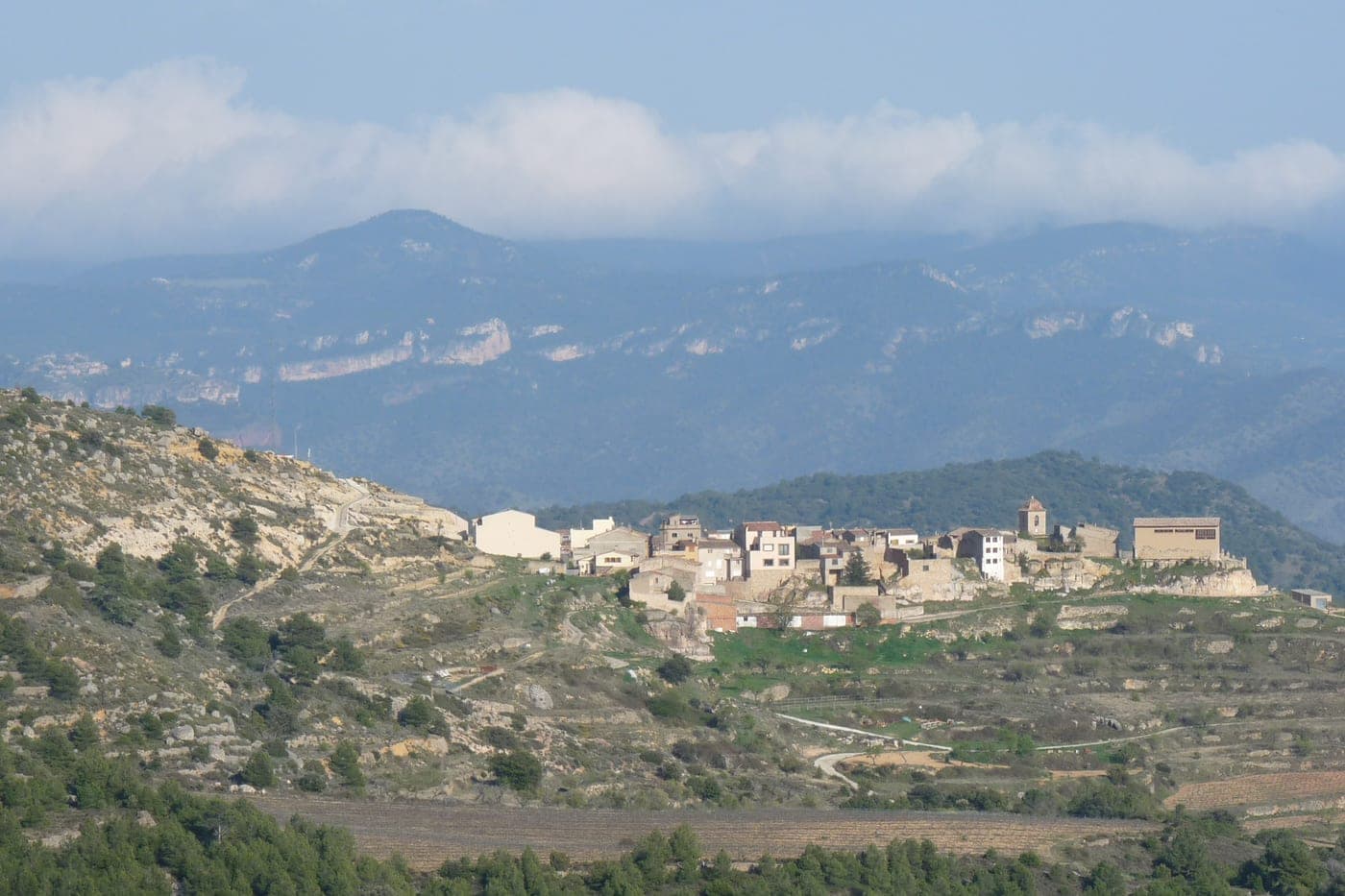
Catalonia stretches from the high Pyrenees down to the Mediterranean, and that range gives it a slow-travel character all its own: stone villages tucked into mountain valleys, a jagged coastline of small harbours, and an inland plain still shaped by farming and pilgrimage. Barcelona sits at one edge of the region, but Catalonia's quieter identity is built elsewhere — in places most visitors reach only if they choose to look beyond the capital. In the north, the Pyrenean valleys hold Romanesque churches and hamlets built from dark local stone, many still working farming communities. Villages like these keep a rhythm set by the seasons and the land, and walking between them reveals bell towers and hay meadows. Further south and inland, the Camí de Sant Jaume, a Catalan branch of the Camino de Santiago, crosses rolling wheat country and passes through small towns built around a church square. The coast has its own version of slowness. Cadaqués, with its whitewashed harbour houses and steep lanes, once drew Dalí and other artists. The Costa Brava's smaller coves still keep this feel in the off-season: fishing boats pulled up on shingle, a handful of restaurants serving the day's catch, cliff paths connecting one cove to the next. Inland from the coast, medieval towns like Besalú preserve their fortified bridges and Jewish quarters largely intact. Catalonia's regional cuisine reflects this pace. Cava is made using the same traditional method as Champagne, and small family cellars around Sant Sadurní d'Anoia still open their doors for tastings. Calçotada season, when charred spring onions are dipped in romesco sauce and eaten by hand, is a communal meal built around fire and patience. Elsewhere, pa amb tomàquet, botifarra sausage, and mountain cheeses reflect a cuisine shaped by both the sea and the high pastures. History runs close to the surface here. Poblet Monastery, one of Catalonia's Cistercian foundations, still follows a monastic routine largely unchanged for centuries, and some of Gaudí's early works outside Barcelona show the same architectural language in quieter settings. A handful of Catalan paradors occupy restored castles and monasteries — the one at Cardona, built into a medieval fortress on a hilltop, is among the most striking examples of this in Spain. Mountain villages, pilgrim paths, whitewashed coves, cava cellars, and monastery towns give Catalonia a landscape suited to slow travel: a dialect (Catalan) still spoken in daily life, a cuisine tied closely to what grows and grazes nearby, and villages that have kept their own pace as the region around them has modernised.
Wine TastingBoat RentalsHikingCamper Van Rentals