Bacalao al pil-pil
Salt cod emulsified with olive oil, garlic and chilli in the Basque Country
- Local name
- Bacalao al pil-pil
- Best eaten at
- A traditional Bilbao restaurant
- Pairs with
- Txakoli
What it is
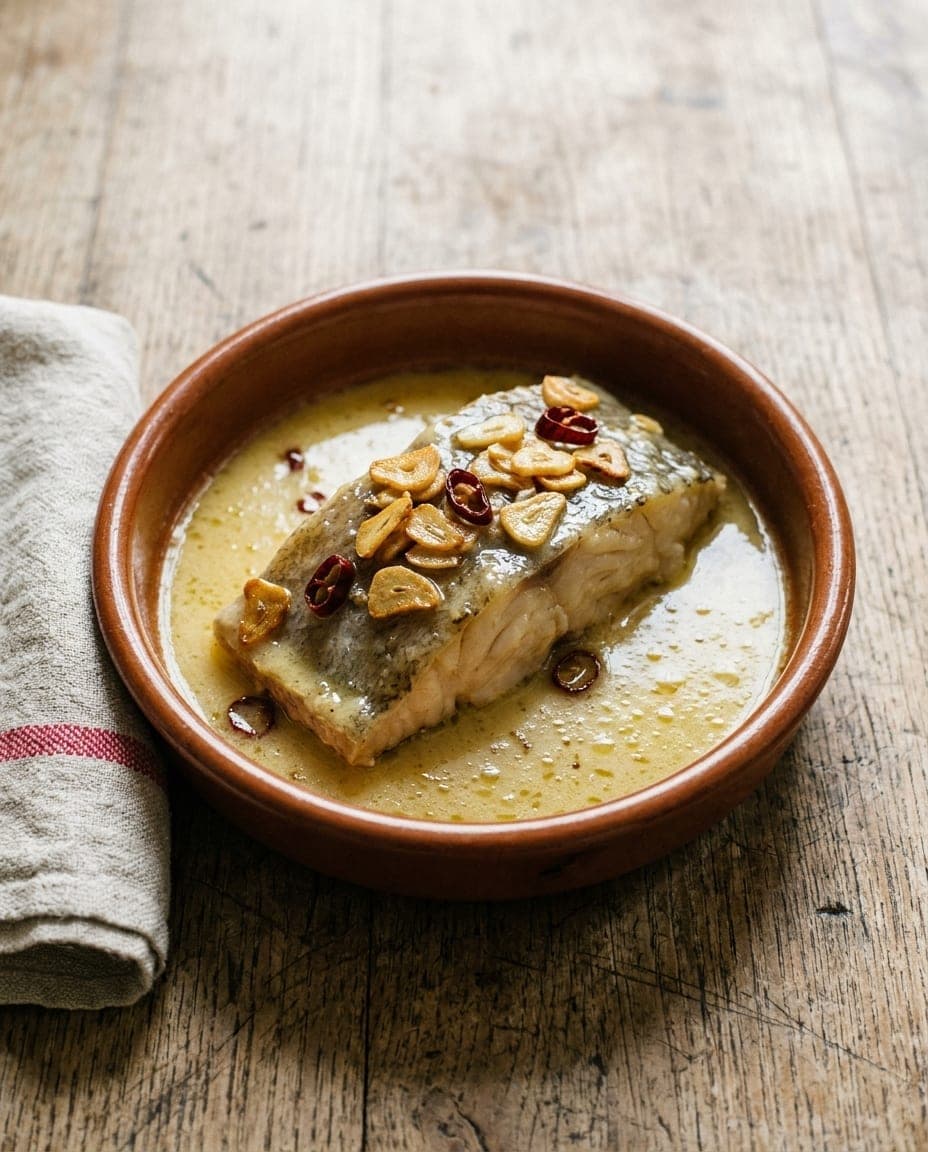
Bacalao al pil-pil is a dish of striking simplicity that has become a signature of Basque cooking, particularly around Bilbao. It consists of salt cod cooked gently in olive oil until it releases its gelatine, then swirled patiently until the liquid transforms into a pale yellow emulsion. The result is a sauce with the consistency of a thin mayonnaise, thick and glossy, clinging to the fish rather than sitting beneath it.
The name is onomatopoeic: pil-pil imitates the soft popping and bubbling of the oil as the cod cooks in it. The cook must listen to the fish as much as watch it. If the heat is too high, the emulsion breaks and the oil separates from the juices released by the cod. If it is too low, the gelatine will not come out and the sauce remains thin. Mastering this balance is considered a test of skill for any Basque cook.
The origins of the technique
This dish belongs firmly to the Basque Country, and particularly to Biscay and Bilbao, rather than being a national Spanish speciality, although it is now cooked and served across Spain. It has been popular in the region for a long time, but no reliable record pins down who first made it or when.
The pil-pil technique makes the most of salt cod, an ingredient preserved for centuries before refrigeration became common. The gelatine-rich skin and flesh of the cod provide a natural thickening agent when cooked slowly in oil, creating a rich sauce without the need for flour or cream. While similar emulsions exist elsewhere, the Basque version is distinct in its reliance on the fish itself to create the texture.
The dish is a favourite both in restaurants and in the txokos, the private gastronomic societies where members gather to cook and eat together. It is often described as a dish that requires patience and attention, qualities that suit the slow, communal spirit of Basque dining.
How it is made
The process begins with salt cod that has been soaked and desalted until the flesh is soft and pliable. Thinly sliced garlic and a little chilli are first fried gently in extra virgin olive oil to flavour it, then often lifted out and set aside. The oil is allowed to cool a little before the cod goes in, typically skin side up.
The pan is then returned to a low heat, and the cod cooks slowly while it releases gelatine and juices into the oil. The cook moves the pan in small, continuous circular motions, or works the oil with a sieve. This agitation binds the oil and the gelatine into an emulsion. The mixture gradually thickens, turning from a clear liquid into a creamy, opaque sauce that coats the fish.
The skill lies in keeping the temperature gentle throughout. If the pan is too hot, the emulsion breaks and the oil separates. If it is too cool, the gelatine will not emulsify. The cook relies on feel and observation rather than precise measurements. Once the sauce reaches the desired consistency, the garlic and chilli are returned to the pan and the fish is served in its sauce.
What goes into it
The dish is defined by its restraint. It uses only four ingredients, each with a specific purpose:
- Salt cod: The fish must be fully desalted and soft enough to release gelatine without falling apart. Pieces with the skin on are essential.
- Extra virgin olive oil: A good oil forms the base of the emulsion and carries the flavour of the garlic.
- Garlic: Sliced thinly, it infuses the oil with a sharp, aromatic note.
- Chilli: A small dried guindilla or two adds a subtle warmth, though the heat level varies by taste.
No flour, no cream, and no stock are added. The entire body of the sauce comes from the interaction between the oil and the gelatine released by the cod. This makes the dish a study in chemistry as much as cooking.
Where it is eaten
The dish appears on the menus of traditional Basque restaurants, particularly in Bilbao and along the coast, and it is a classic of the txokos, which are members-only spaces where friends cook, eat and drink together, often taking turns as the chef for the evening.
It is usually presented as a main course, sometimes accompanied by boiled potatoes or a simple salad. The emulsion is thick enough to coat the fish completely, making it a substantial part of the meal.
A glass of Txakoli, a slightly sparkling and acidic white wine from the Basque coast, is a classic pairing. The wine's sharpness cuts the richness of the olive oil and balances the saltiness of the cod. A slice of rustic bread is often used to soak up the remaining sauce at the end of the meal.
Curious facts
- The name comes from sound. Pil-pil imitates the bubbling of the oil as the cod cooks, not the texture of the final sauce.
- A test of skill. Many Basque cooks consider mastering this emulsion a rite of passage, as it requires precise temperature control and patience.
- No flour or cream. The thickening agent comes entirely from the gelatine of the cod rather than any added starch.
- Society food. The dish is a staple of the txokos, where members cook for each other.
- Regional pride. While salt cod is eaten across Spain, the pil-pil method is most closely identified with the Basque Country.
Where to try it
Traditional restaurants in Bilbao and the coastal towns of Biscay serve excellent versions that honour the original technique. The txokos are private, so a meal in one depends on an invitation from a member.
Where to try it
1 region
 Camper Van Rentals1 destination
Basque Country
Basque Country is a unique region known for its distinct culture and language, Euskara. It's the only Spanish region with a coastline along the Bay of Biscay, featuring beautiful beaches and rugged cliffs. The largest city, Bilbao, is home to the modern Guggenheim Museum, but the true essence of Basque life can be found in smaller towns like Getaria, famous for its grilled fish and Txakoli wine. San Sebastián offers culinary delights and stunning beaches, while the historic town of Hondarribia showcases medieval architecture. The region is also rich in festivals, such as the Fiestas de la Virgen Blanca, celebrating local traditions. Its lush landscapes include the Picos de Europa mountains, perfect for hiking. Discovering local gastronomy, including pintxos and Basque cider, adds to the immersive experience.
Camper Van RentalsPanoramic TrainsHikingLocal Cuisine