Bacalao a la vizcaína
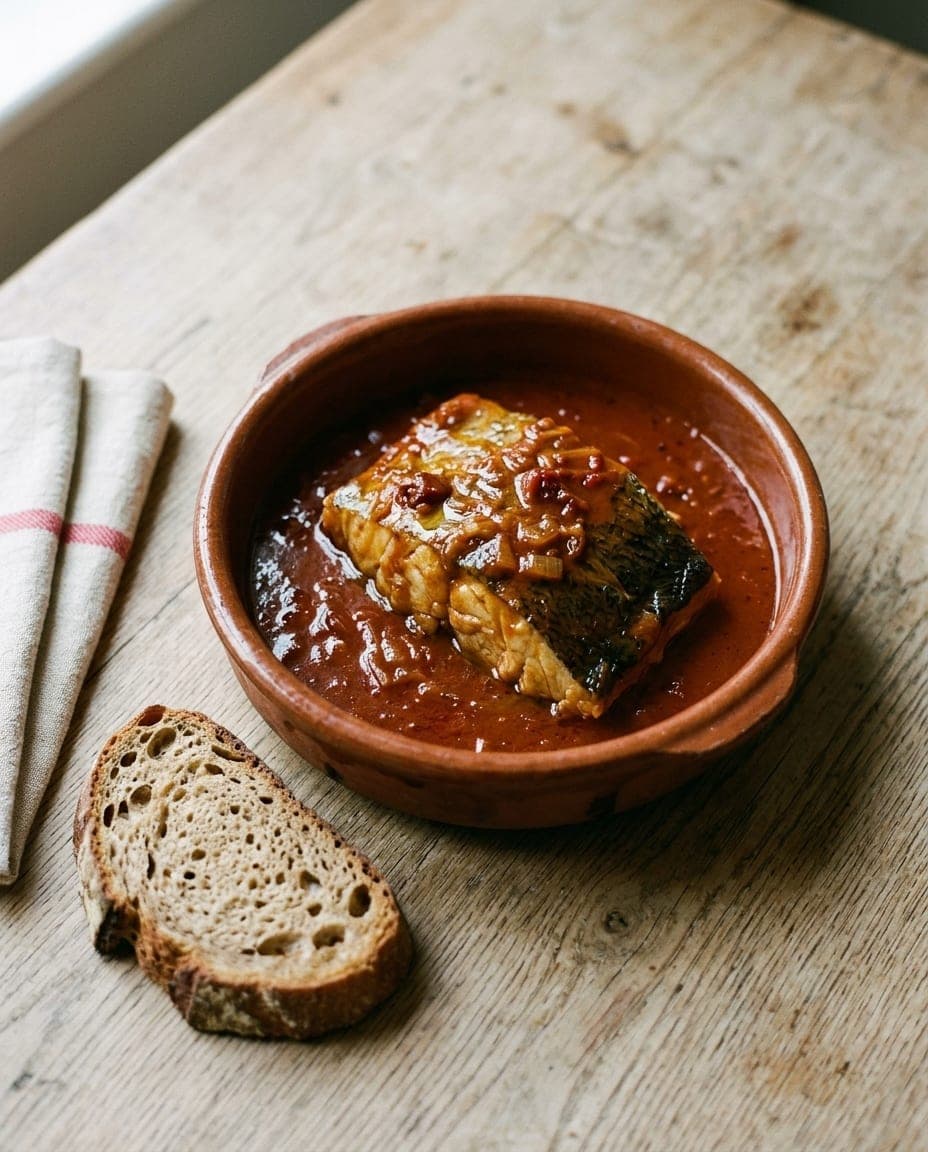
Salt cod in a sauce of dried choricero peppers and onion from Bilbao
- Local name
- Bacalao a la vizcaína
- Served with
- Crusty bread
- Best eaten at
- A Bilbao Casco Viejo restaurant
- Pairs with
- Txakoli or Rioja Alavesa
What it is
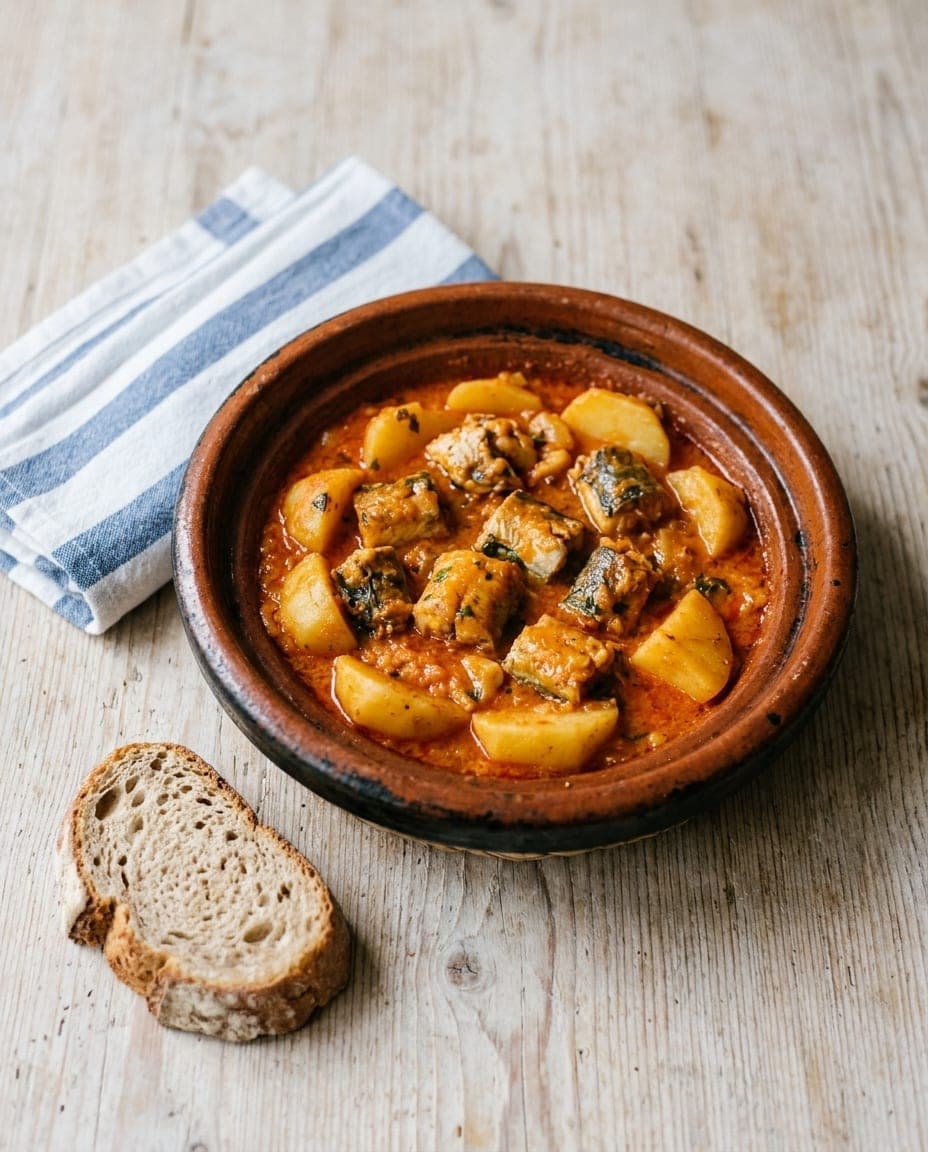
Bacalao a la vizcaína is the most celebrated preparation of salted cod in the Basque Country, specifically tied to the province of Biscay and the city of Bilbao. It is a dish of simple ingredients transformed by patience and technique into something deeply savoury and deeply coloured. The name means "cod in the Biscayan style", and the dish is defined by its sauce rather than the fish alone.
The visual identity of the dish is striking. The white, flaky flesh of the cod sits in a thick, deep red sauce that bears no resemblance to the tomato-based sauces found in many other Mediterranean cuisines. In the traditional version that colour comes from dried choricero peppers, which are soaked and scraped until they form a velvety paste. This paste is cooked slowly with onions until it sweetens and darkens, creating a sauce that is fruity, gently earthy and savoury without being spicy in the way many people expect from red peppers.
It is not a starter or a light lunch. It is a substantial main course, traditionally associated with Lent and Holy Week, when Catholic families abstained from meat but ate fish. The dish belongs to a broader culture of salted cod that developed along the Atlantic coast, where Basque fleets fished the North Atlantic, including the waters off Newfoundland.
The history of the red sauce
Salted cod has been eaten in the Basque Country for centuries, and cooking it with a sauce of choricero pulp and slowly cooked onion has long been recognised as the Biscayan way. The precise date at which the style took shape is not documented, but it grew out of a kitchen that made the most of preserved fish and dried peppers.
The choricero pepper itself is a variety of sweet red pepper grown for drying. Once dried, it keeps a deep ruby colour and a taste that shifts between fruity sweetness and a gentle, earthy warmth. In the traditional preparation, the peppers are rehydrated and their flesh scraped from the skin to make a smooth purée. Before modern blenders this was laborious work, which helped mark the dish as something special rather than everyday fare.
There is a long-standing debate among Basque cooks about what belongs in this sauce. The traditionalist view holds that it should contain only choricero peppers, onions, garlic, and perhaps a little bread to thicken it. Some modern versions introduce tomato, arguing that it adds depth. Purists maintain that tomato dilutes the character of the choricero pepper and alters the colour of the dish, and for many Basque cooks the tomato-free sauce is a point of pride.
How the cod is prepared
The preparation of the fish is the most critical element of the dish. Salted cod is far too hard and salty to eat straight from the package. It must first be desalted (desalado), a process that typically takes between one and three days depending on the thickness of the pieces.
During this period, the fish sits in cold water that is changed several times. This gradually removes the excess salt while the flesh absorbs moisture and regains a soft texture. Once the cod has softened sufficiently, it is poached gently until just cooked through, then rested before being introduced to the sauce.
The final step involves adding the cod to the simmering choricero sauce. The fish is not stirred vigorously, as this would break the delicate flakes. Instead, it is left to absorb the flavour of the sauce while the heat gently warms the flesh. The result is a tender, flaky texture contrasting with the thick, velvety red sauce.
What goes into it
The ingredients are few, but each plays a specific role:
- Salted cod, desalted and poached until tender.
- Dried choricero peppers, soaked and scraped to create the red sauce that gives the dish its colour.
- Onions, cooked slowly until they dissolve into the sauce and provide sweetness.
- Garlic, added for a subtle aromatic depth.
- Bread, sometimes used in small amounts to thicken the sauce, depending on the cook's preference.
The dish is not vegetarian, as the fish is the central element, and some traditional recipes also start the sauce in pork lard rather than olive oil.
How to eat it
The dish is traditionally served hot, often in the earthenware cazuela in which it was cooked. It is meant to be eaten with crusty bread, which serves both as an accompaniment and a tool for mopping up the red sauce.
In Bilbao, particularly in the old town known as the Casco Viejo, the dish appears in traditional restaurants as part of a larger meal or as a standalone course. Txakoli, the slightly sparkling, high-acid white wine of the Basque coast, is a classic companion, though a young red from Rioja Alavesa is also frequently recommended for its fruitiness.
Curious facts
- A colour without tomato. In the traditional version, the deep red hue comes from dried choricero peppers rather than tomato, distinguishing it from many other cod dishes.
- A fish of two worlds. While the dish is Basque, the cod itself came from the cold waters of the North Atlantic, highlighting the region's long maritime and trading history.
- The desalting ritual. Preparing the cod requires patience; rushing the process leaves a tough, overly salty texture that ruins the dish.
- A Lenten staple. The dish is traditionally associated with Lent and Holy Week, when meat was forbidden but fish was permitted.
- Travelled far. A version of the dish, with tomato, capers and pickled chillies added, became a Christmas classic in Mexico.
Where to try it
The dish is most strongly associated with Biscay and Bilbao, and the narrow streets of the Casco Viejo hold many traditional restaurants serving the classic method. It can also be found elsewhere in the Basque Country, especially in family-run kitchens where the recipe has been passed down through generations.
Where to try it
1 destination
 Camper Van Rentals
Bilbao
Dynamic city known for modern architecture, vibrant arts scene, and Basque cuisine.
Camper Van RentalsPanoramic TrainsHikingLocal Cuisine