Arròs negre
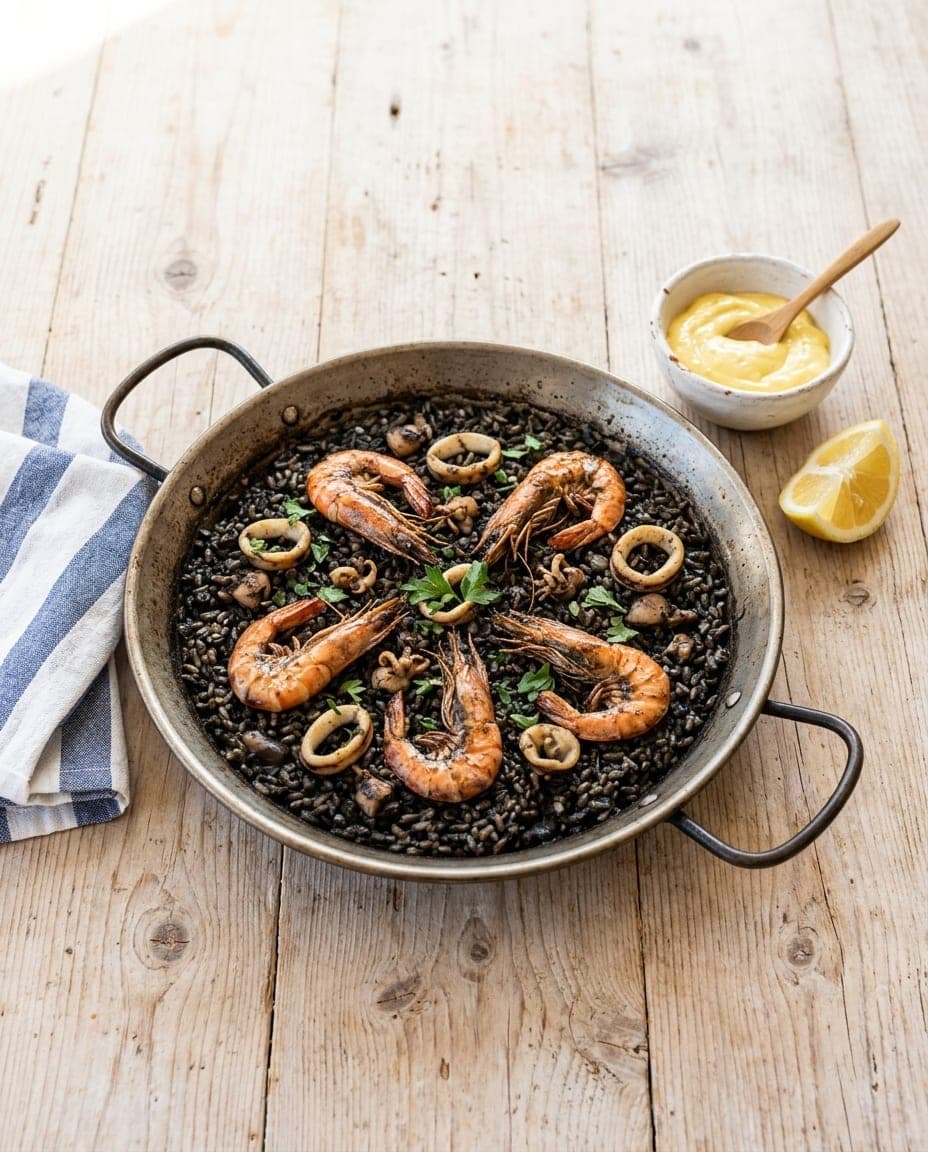
Black rice from Valencia's coast, cooked with cuttlefish ink and served with allioli
- Local name
- Arròs negre
- Served with
- Allioli
- Best eaten at
- A Valencian seaside arrocería
- Pairs with
- Valencian white
What it is
Arròs negre, literally "black rice", is a coastal speciality of Spain's Mediterranean shore, claimed by both the Valencian coast and Catalonia. It is not a paella, though the two share a common ancestor in the region's long history of cooking rice in wide pans. While a paella is defined by its saffron-coloured grains, arròs negre is defined by its deep, glossy black colour, achieved by cooking short-grain rice with cuttlefish or squid and their ink.
The dish is a study in contrasts. The grains are jet black, shiny and firm to the bite, absorbing the briny notes of the ink. This dark canvas is balanced by the creamy, pale garlic sauce known as allioli, which is served alongside or spooned over the rice.
The colour comes from the ink of the cuttlefish or squid. It acts as both a pigment and a seasoning, adding a faintly briny sweetness to the dish. The rice is cooked until it is dry, with no lingering broth at the bottom of the pan, distinguishing it from the creamy texture of Italian risotto.
The history of the blackened grain
The origins of arròs negre are rooted in the fishing communities of the Mediterranean coast, where fishermen made use of every part of their catch. When cuttlefish or squid were cleaned for cooking, the ink sacs were not discarded but saved to colour and flavour the rice. This practice turned a humble seafood dish into a distinctive regional icon.
The dish is closely tied to the arrocerías, restaurants specialising in rice found in coastal towns like Gandia, Cullera and the area around Valencia city. These establishments often serve rice dishes in large pans directly at the table, prioritising the texture of the rice and the intensity of the seafood flavour over elaborate presentation.
The date of its first appearance is not recorded, but the dish is today a staple of the coastal kitchen and a signature of the region's culinary identity.
What goes into it
The ingredients for arròs negre are simple, yet each plays a vital role. The base begins with a sofrito of garlic, tomato and often onion or green pepper, with a little sweet paprika, which provides sweetness and depth. Pieces of cuttlefish or squid are browned in the pan before the rice and ink are added.
The rice then cooks in fish stock made from the bones and heads of local fish. The ink, diluted in the stock, turns the grains a deep black. The dish finishes dry, with the rice grains remaining separate and firm rather than soft and creamy.
- Short-grain rice: Typically a Valencian round-grain variety such as Senia, Bahía or Bomba, chosen for its ability to absorb liquid without becoming mushy.
- Cuttlefish or squid ink: The defining ingredient, providing both colour and a subtle briny flavour.
- Fresh cuttlefish or squid: Cut into pieces that remain visible in the finished dish; some cooks add prawns as well.
- Aromatics: Garlic, tomato and pepper or onion cooked down into a thick sofrito.
- Fish stock: Made from local catch to give the rice its savoury backbone.
The dish is not vegetarian, as it relies on seafood for its core flavour.
How to eat it
Arròs negre is best eaten at an arrocería along the coast. These places often serve the dish in the pan it was cooked in, allowing diners to share directly from the centre of the table. The black rice is accompanied by a generous portion of allioli, a thick emulsion of garlic and oil.
The allioli is served on the side or spooned over the rice just before eating. Its creamy texture and sharp garlic flavour provide a counterpoint to the dark, briny taste of the blackened grains.
The dish stains teeth and lips with its dark colour, but this is expected and accepted by everyone as part of the experience. A glass of Valencian white wine pairs well with the dish, offering a crisp contrast to the deep flavours of the rice and allioli.
Curious facts
- The ink is the seasoning. The cuttlefish or squid ink adds a subtle briny sweetness rather than a bitter taste.
- Staining is part of the ritual. The black colour leaves a temporary mark on teeth and lips, a known and accepted feature of the meal.
- Not a paella. While both are rice dishes from the region, arròs negre is distinct in its use of ink and its lack of saffron.
- A noodle cousin. Fideuà negra, made with short noodles instead of rice, follows the same idea and is also served with allioli.
- Dry finish. Unlike risotto, the rice is cooked until all liquid is absorbed, leaving no soupy residue at the bottom of the pan.
Where to try it
The best place to eat arròs negre is along the Valencian coast, particularly in towns known for their arrocerías, such as Gandia, Cullera and the seaside districts near Valencia city. It is also widely found on the Catalan coast.
The truest versions come from local kitchens where the ink is taken from fresh cuttlefish and the rice is cooked with care. A visit to these coastal towns in the summer months offers the opportunity to enjoy the dish alongside fresh seafood and local white wines.
Where to try it
1 region
 Camper Van Rentals2 destinations
Valencia
Known for its rich history and vibrant culture, Valencia is the third-largest city in Spain and the only region with a Mediterranean coastline. This region boasts the UNESCO-listed City of Arts and Sciences, a futuristic architectural complex, alongside the historic Silk Exchange, a symbol of its trading past. Beyond the city, the Albufera Natural Park offers stunning wetlands and is famous for its rice paddies, the source of the region's renowned paella. Valencia's traditions include the Fallas festival, celebrated with impressive sculptures and fireworks. The region also produces excellent wines, particularly from the Utiel-Requena area, and has a thriving local market scene, perfect for food enthusiasts. Nearby towns like Xàtiva and Bocairent showcase medieval architecture and local crafts, providing an authentic glimpse into Valencia's diverse heritage.
Camper Van RentalsHikingBoat Rentals





