Twentse krentenwegge
A long currant loaf from Twente, baked for newborns
- Vegetarian
- Local name
- Krentenwegge
- Served with
- Butter
- Best eaten at
- A Twente bakery
- Pairs with
- Coffee
What it is
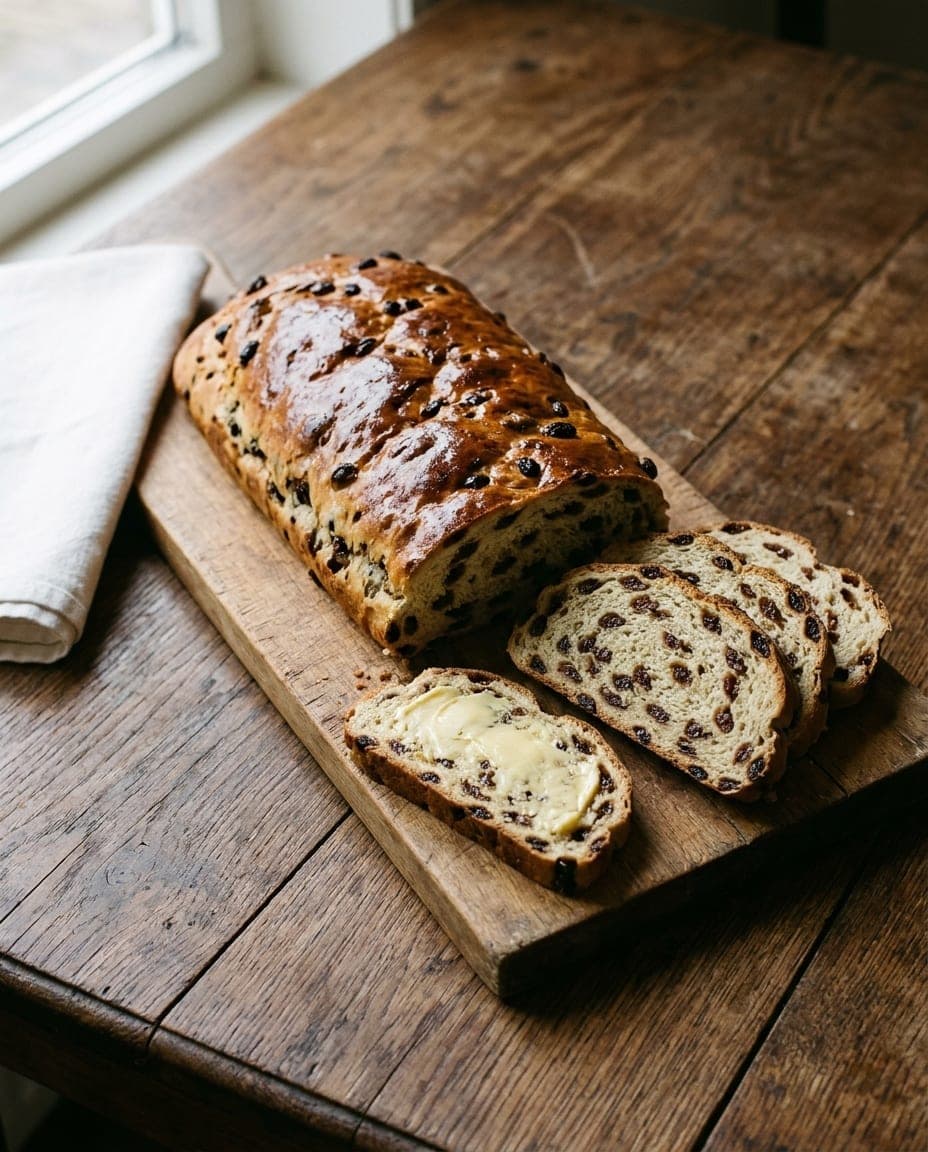
The Twentse krentenwegge is a very long loaf of wheat dough, studded generously with currants and raisins. It originates from the Twente region in the east of the Netherlands, within the province of Overijssel. This is not a nationwide bread found in every Dutch bakery; it is a regional speciality tied closely to the local identity of Twente.
The dough is a yeasted bread dough, traditionally with a little sourdough, and only lightly sweet; older recipes used whole milk, eggs and lard. Made to order, a traditional loaf was one to one and a half metres long, with a dense crumb packed with dried fruit. Straight from the oven it is brushed with butter for shine, and often glazed with warm apricot jam. The result is a sturdy, flavourful loaf that holds together well when sliced.
While it is now a common item on the counter of local bakeries, the krentenwegge carries a history of social significance. Its best-known role is the kraamvisite, the visit to a new mother after a birth, when a krentenwegge was brought as a gift, and the size of the loaf was a measure of goodwill. It was also ordered for baptisms, weddings, funerals and official receptions. The longest loaves were carried on a ladder, later on long planks, from the bakery to the recipient's home.
A regional tradition
The bread is specific to the Twente area and does not appear with such prominence in other parts of the Netherlands. It remains a staple in Overijssel, particularly in towns and villages where local bakers continue to bake it for their regular customers. Outside the region, it is difficult to find authentic versions, as mass-produced alternatives often lack the density and fruit-to-dough ratio of the traditional loaf.
The connection between the krentenwegge and childbirth is a living but less universal custom. In earlier generations, the delivery of these loaves marked a community's welcome to a new member. The rituals around it were added to the Dutch national inventory of intangible cultural heritage in 2023, and artisanal bakers still take orders for the big loaves; in everyday form the bread has become an ordinary bakery item. It sits on bakery shelves alongside other Dutch breads, yet its regional roots remain clear.
What goes into it
The composition of the Twentse krentenwegge is straightforward: flour, water, fresh yeast, a little sourdough and salt. Older recipes enriched the dough with whole milk, eggs and lard; during the war, chopped dates stood in for the currants and raisins. The defining feature is the high proportion of currants and raisins, which are folded into the dough before baking. Unlike some sweet breads where fruit is scattered sparsely, here the dried fruit is integral to the texture and flavour of every slice.
The loaf is baked until it has a golden-brown crust, then brushed with butter while still hot to keep it moist. Once cooled, it is sliced for sale or delivered whole.
How it is eaten
The traditional way to eat the krentenwegge is simple: slice the loaf and spread it with butter. The combination of the sweet, fruity bread and the salty, creamy butter creates a balanced taste that has stood the test of time. At parties and celebrations it is sliced and shared with coffee; traditionally the end piece, the knepke, went to the most important guest.
A Twente bakery sells it sliced or whole, and a whole one is long enough to need both arms. The bread pairs naturally with a cup of coffee, a common Dutch ritual where the sweetness of the krentenwegge complements the bitterness of the roast. Its character is best appreciated when the butter and fruit shine together.
Curious facts
- A birth custom. The largest loaves were traditionally carried on a ladder to a family welcoming a newborn, symbolising the community's support.
- Regional only. It is on the counter in Twente bakeries and rarely anywhere else in the country.
- Fruit heavy. The ratio of currants and raisins to dough is higher than in most standard sweet breads.
- Heritage, not a label. The krentenwegge has no protected designation of origin, but its rituals have been on the Dutch intangible cultural heritage inventory since 2023.
Where to try it
A bakery in Twente — Enschede, Hengelo, Oldenzaal, or any of the villages between them — where it is baked daily and sold by the loaf or the half.
The birth loaves are still ordered occasionally, and a bakery will make one to whatever length is asked for. Supermarkets across the country sell a krentenbrood that is the same idea in a shorter tin and with less fruit in it.
Where to try it
1 region

Overijssel
Overijssel, a region in the northeastern Netherlands, is known for its diverse landscapes, from lush forests to winding rivers. The area is home to Zwolle, the capital, recognized for its medieval architecture and vibrant cultural scene. Nearby, the picturesque town of Giethoorn, famous for its canals and thatched-roof houses, offers a glimpse into traditional Dutch life. The region boasts several nature reserves, including De Weerribben-Wieden, ideal for hiking and cycling. Rich in history, Overijssel features remnants of Hanseatic trade, and its local cuisine is highlighted by traditional dishes and local cheeses. With fewer tourists, it provides an authentic experience of Dutch culture and nature.