Oude jenever
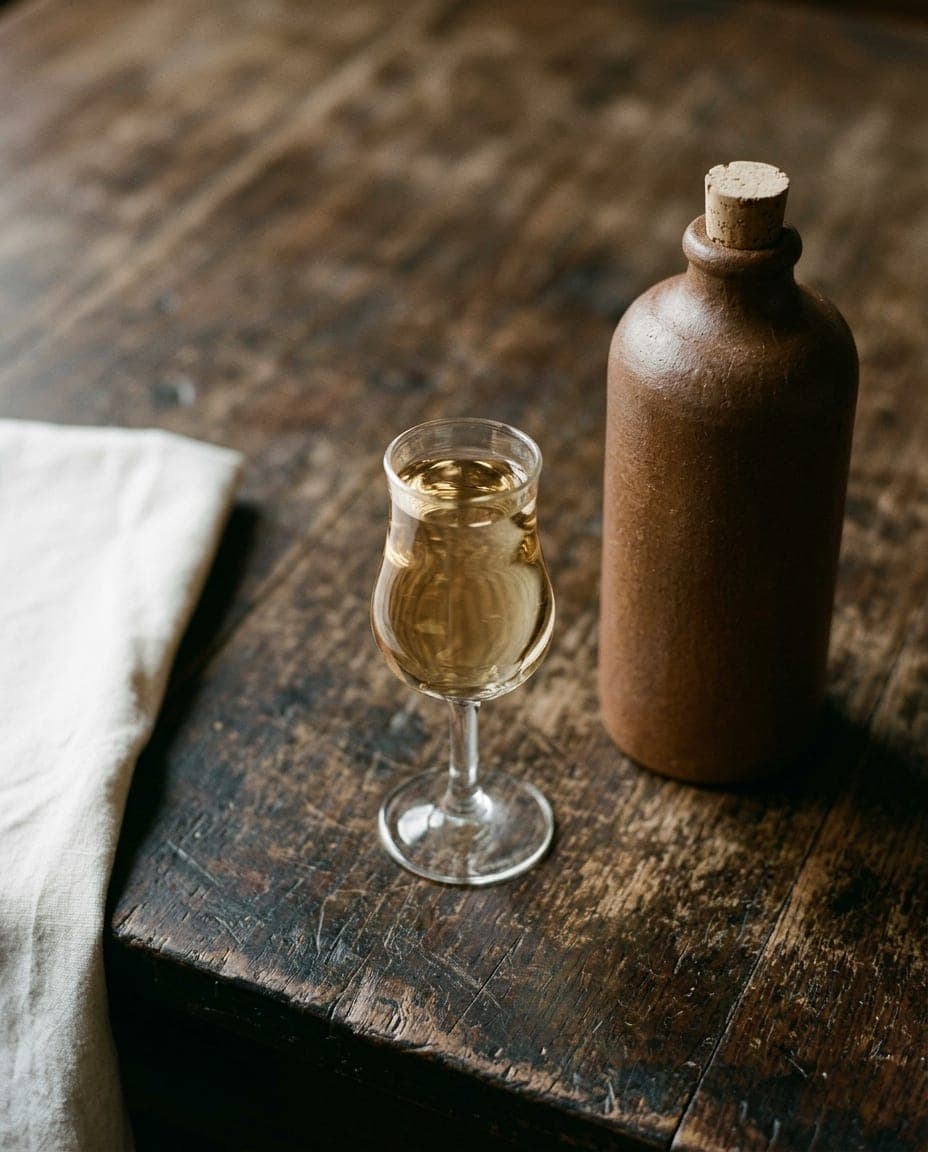
A malty grain spirit served in a brim-full tulip glass
- Alcoholic
- Local name
- Oude jenever
- Served
- Neat, in a brim-full tulip glass
- Best eaten at
- An Amsterdam proeflokaal
- Pairs with
- Herring, bitterballen
What it is
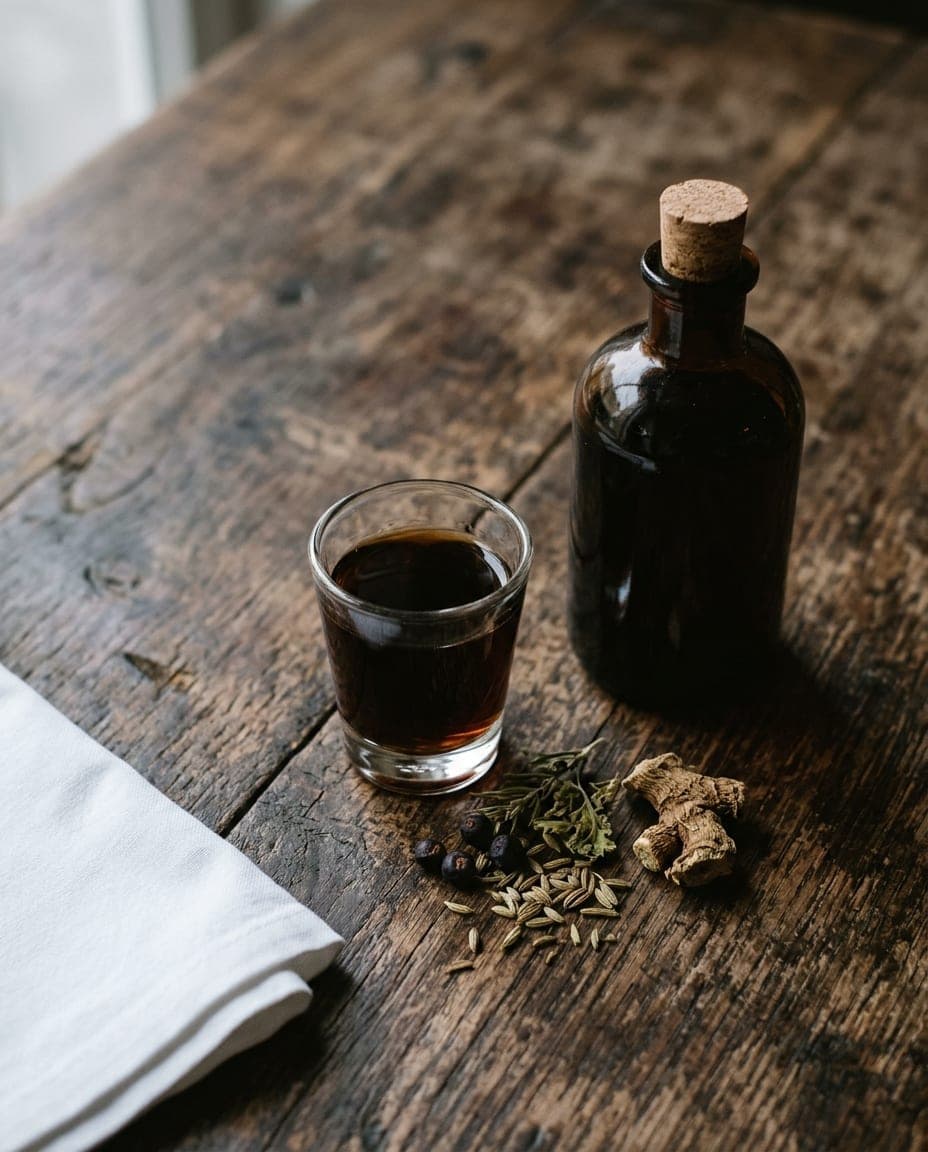
Oude jenever is the older style of Dutch gin, a clear to pale yellow spirit that carries a distinct maltiness not found in the sharper London dry variety. It originates from the Netherlands, where the term jenever describes any juniper-flavoured spirit, but oude specifically denotes the traditional style with a high share of malt wine. While the word oude translates to "old", it does not indicate how long the liquid has aged in a cask. Instead, it marks the style: a spirit where the flavour comes from the grain mash rather than just the botanicals added later.
The spirit is made across the Netherlands and Flanders; Schiedam in Zuid-Holland was its great distilling town, while Amsterdam's tasting rooms are its best-known stage. It possesses a grainy, slightly sweet body derived from malt wine, distilled from a mash of rye, maize and malted barley. This base gives the drink a weight and texture that feels closer to a fine whisky or a heavy vodka than to the crisp, dry profile of modern gin. The juniper is present, providing the characteristic piney note, but it rarely dominates the palate. Instead, it sits alongside the soft, bread-like sweetness of the malt wine, creating a flavour that is both earthy and refined.
The presentation is as specific as the recipe. It is usually served at room temperature or lightly chilled (it is the younger jonge style that comes straight from the freezer), and never over ice. It arrives in a tulip-shaped glass designed to hold the liquid to the very brim. This shape concentrates the aroma and ensures the first sip comes from the very top of the glass. The serving ritual requires a slight bend of the neck rather than raising the glass high.
The history of malt wine
A physician named Franciscus Sylvius is often credited with inventing jenever as a medicine, which is a story worth setting aside: he lived in the 17th century and the spirit was being distilled and sold long before he was born. The real history is the slow development of grain distilling in the Low Countries. The region had long produced beer from malted barley, and the technique for distilling this "malt wine" into a stronger spirit was gradually adopted by local brewers.
Over centuries, the method became standardised in distilling towns such as Schiedam and Amsterdam. The oude style was simply jenever as it had always been made; only around 1900, when distillers could produce an almost neutral spirit, did the lighter jonge (young) style appear. The rules now separate them by malt wine: oude must contain at least 15 per cent malt wine and no more than 20 g of sugar per litre, jonge no more than 15 per cent. Jenever itself is a protected designation for spirits from the Netherlands, Belgium and small parts of France and Germany. This distinction remains a point of local pride, as it preserves the older, more complex character of the spirit that defined Dutch drinking culture for hundreds of years.
The malt wine is distilled from the fermented grain mash, allowing the natural flavours of the rye, maize and barley to remain. Unlike modern gins, built on neutral spirit stripped of flavour before botanicals are added, the oude style keeps the grain's personality to the fore. This makes it a unique bridge between the world of beer and the world of spirits.
How it is served and shared
The ritual of drinking Oude jenever is deeply embedded in the social fabric of the Netherlands, particularly in the city of Amsterdam. The classic setting for this experience is the proeflokaal, a distiller's traditional tasting room, or the brown café where locals gather to drink, talk and eat simple food. These are not tourist venues but everyday neighbourhood spots, often with dark wood paneling and small tables.
The glass is filled to the brim, which is why the first move is to bend to it rather than lift it, taking the first sip without hands. Served this way, the malt sweetness shines through without becoming cloying. It is not a drink taken slowly over hours; it is often consumed quickly as part of a social ritual or a meal.
A classic combination in this setting is the kopstootje, which translates literally to "little headbutt". This consists of a glass of jenever with a beer alongside, typically a lager or pilsner. The drinker takes the first sip of jenever, bending to the glass, and then follows it with the beer. The contrast between the malty spirit and the cold, carbonated beer is a traditional way to warm up on a cold day or to finish a meal. It is a standard order in a brown café, not a novelty.
What goes into it
The composition of Oude jenever is defined by its grain base rather than a list of added botanicals. Its character comes from the malt wine, which is created by fermenting a mash of rye, maize and malted barley. This mixture is then distilled to capture the essence of the grains and blended with grain spirit and a juniper distillate. While juniper berries are used to flavour the spirit, they are not the dominant force as they are in other gins. Instead, they provide a subtle background note that complements the grainy sweetness.
The resulting liquid is clear or pale yellow, depending on the specific distillation and whether it has been aged in oak casks for a short period. The texture is often described as slightly oily or viscous, a result of the higher concentration of congeners from the grain mash. This body gives the spirit a sense of weight that makes it suitable for sipping neat but also allows it to stand up to strong food pairings.
Both styles are blended with neutral spirit; the difference lies in how much malt wine goes in. With at least 15 per cent, and often considerably more, the oude style retains far more of the character of the grain. This makes it a distinct product that reflects the agricultural history of the Netherlands, where rye and barley have been staples for centuries.
What it is drunk with
Oude jenever often comes with something to eat. The traditional accompaniments are those found in the proeflokaal or on a Dutch street corner. Raw herring, known as haring, is a classic pairing. The fish is often served with onions and pickles, and the cold jenever cuts the fat of the oily fish while complementing its briny taste.
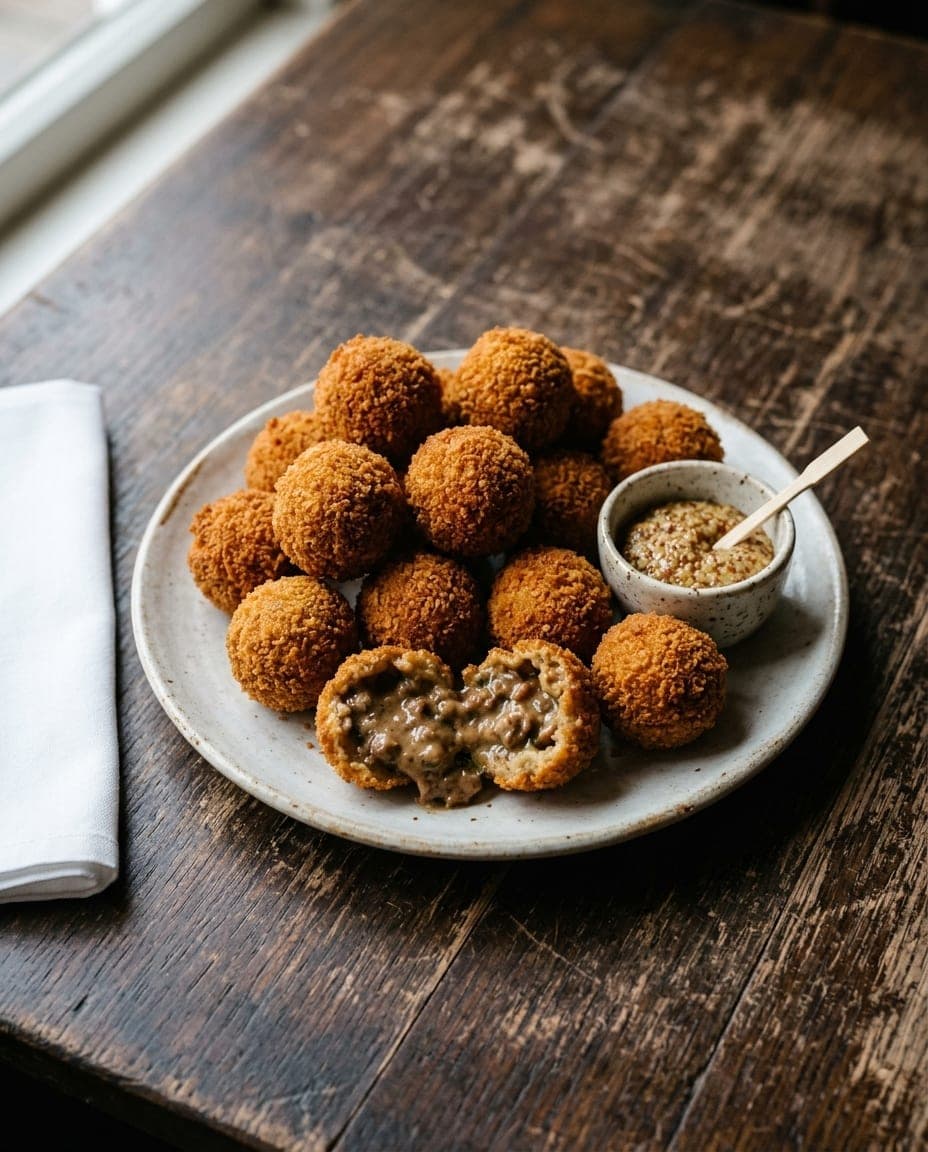
Another standard pairing is the bitterballen, deep-fried balls filled with a thick beef ragout. These are usually served with mustard for dipping. The greasy, savoury nature of the bitterballen is balanced by the clean, cold finish of the jenever. This combination is one of the most common ways to enjoy the spirit in a Dutch bar.
The drink is not meant to be a dessert or a digestif taken after a heavy meal in the modern sense. It is a companion to the meal, often consumed while standing at a counter or sitting at a small table with friends. The malt sweetness and the alcohol make it an excellent palate cleanser between bites of herring or bitterballen.
Curious facts
- The glass must be full. Unlike most spirits served with ice, Oude jenever is poured to the very brim. This ensures the aroma is concentrated and the first sip is pure.
- Malt wine defines the style. The oude label refers to a minimum of 15 per cent malt wine, not the age of the bottle. The jonge style, which appeared around 1900, uses less malt wine and more neutral spirit.
- A headbutt ritual. The kopstootje involves drinking a glass of jenever followed immediately by a beer. This is a standard order in a brown café, not a special occasion drink.
- Regional roots. While known across the Netherlands and Belgium, the spirit is most closely associated with Schiedam, its historic distilling capital, and with the tasting rooms of Amsterdam.
- Not a dry gin. The juniper flavour is present but subordinate to the grainy, slightly sweet body of the malt wine, distinguishing it from London dry gin.
Where to try it
The best place to experience Oude jenever is in an Amsterdam proeflokaal, a traditional brown café where locals gather to drink and eat. They are spread through the old centre and the surrounding neighbourhoods, and a few of the oldest date from the 17th century.
The glass arrives full on a saucer, with a plate of herring or bitterballen beside it and a beer if the order was a kopstootje. Distillers' tasting rooms in the old centre pour their own range; the brown cafés pour whatever is on the shelf, which is most of the trade.
Where to try it
1 region
 Boat Rentals11 destinations
Noord-Holland
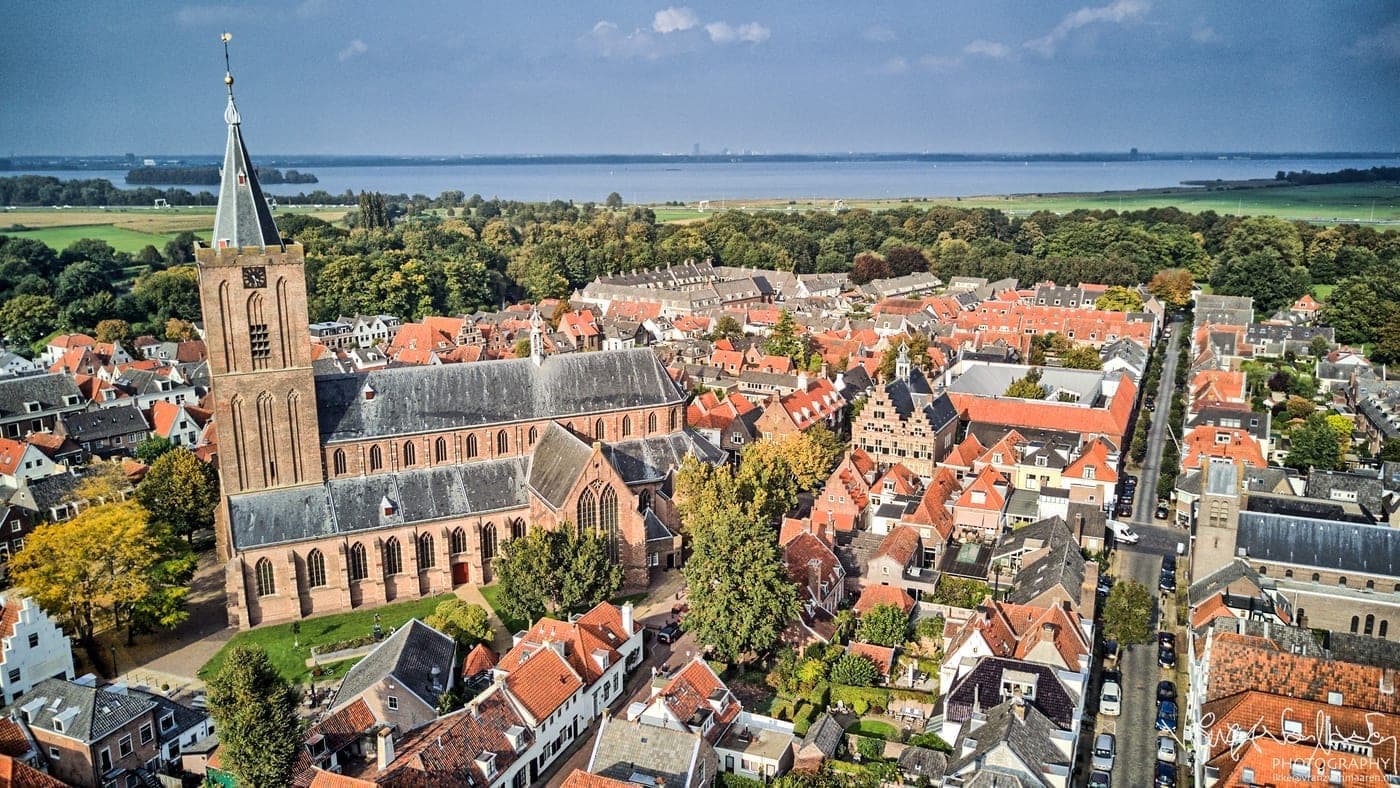
North Holland is a diverse region located in the northwest of the Netherlands, known for its mix of urban and rural landscapes. Amsterdam, the capital, is the only major city, renowned for its canals and museums. Outside the city, the region boasts picturesque villages such as Edam, famous for its cheese, and Volendam, a traditional fishing village. The coastline offers beautiful beaches, particularly in Zandvoort and Bloemendaal, popular for windsurfing and beach walks. North Holland is also home to the UNESCO-listed Wadden Sea, a unique natural habitat. The region's rich history is evident in its historic windmills and vibrant tulip fields that bloom in spring, inviting exploration through serene countryside paths.
Boat RentalsHikingLocal CuisineCamper Van Rentals