Leidse kaas
Cumin-studded hard cheese from Leiden, pressed with city keys
- Vegetarian
- Local name
- Leidse kaas
- Served with
- Rye bread, mustard
- Best eaten at
- A Leiden cheese shop
- Pairs with
- Dutch lager
What it is
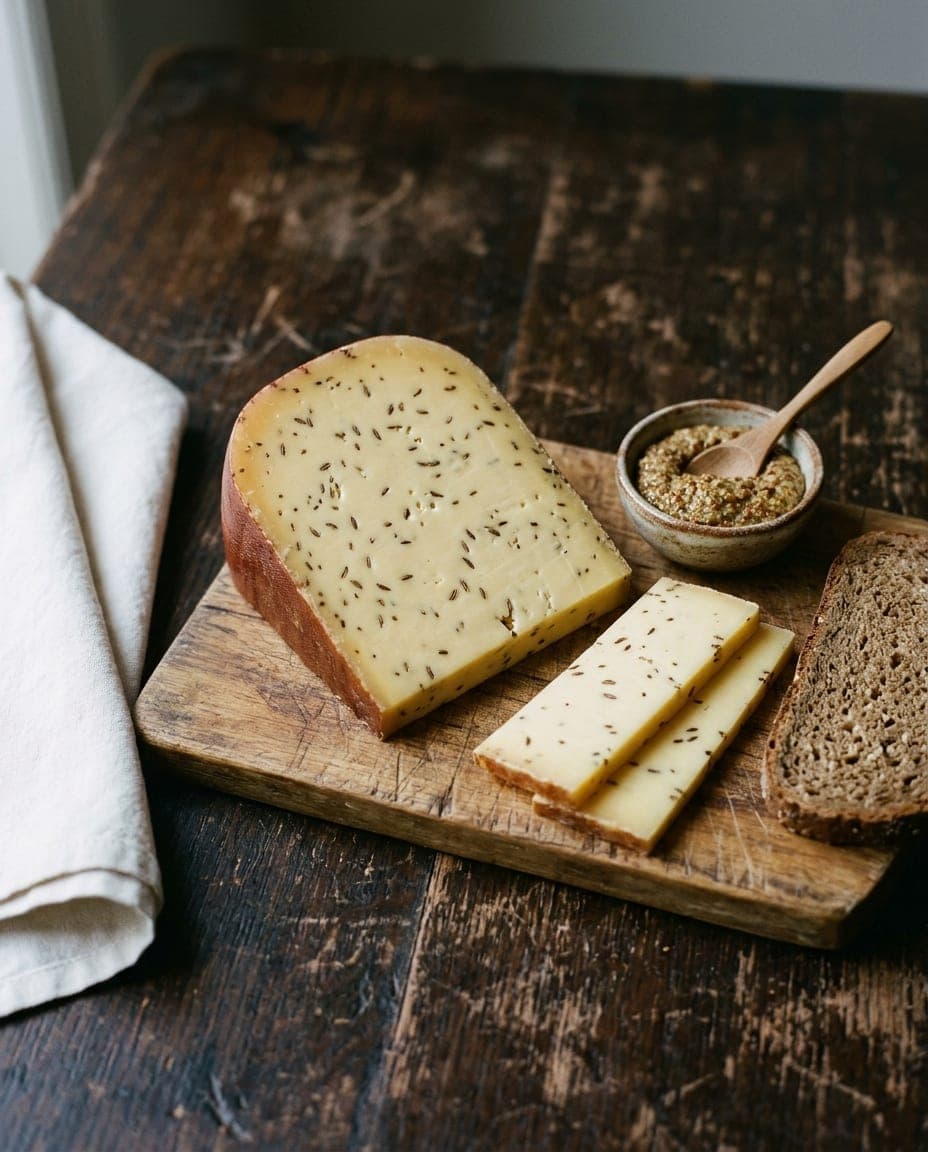
Leidse kaas, or Leyden cheese, is a hard, pale-yellow cheese from the Dutch city of Leiden in the province of Zuid-Holland. It is defined by the presence of cumin seeds, which are mixed into the curd before the wheel is formed. The texture is firm and dense rather than creamy, a result of using partly skimmed milk where much of the cream was removed to make butter. This gives the cheese a lean, savoury character that holds up well against strong accompaniments.
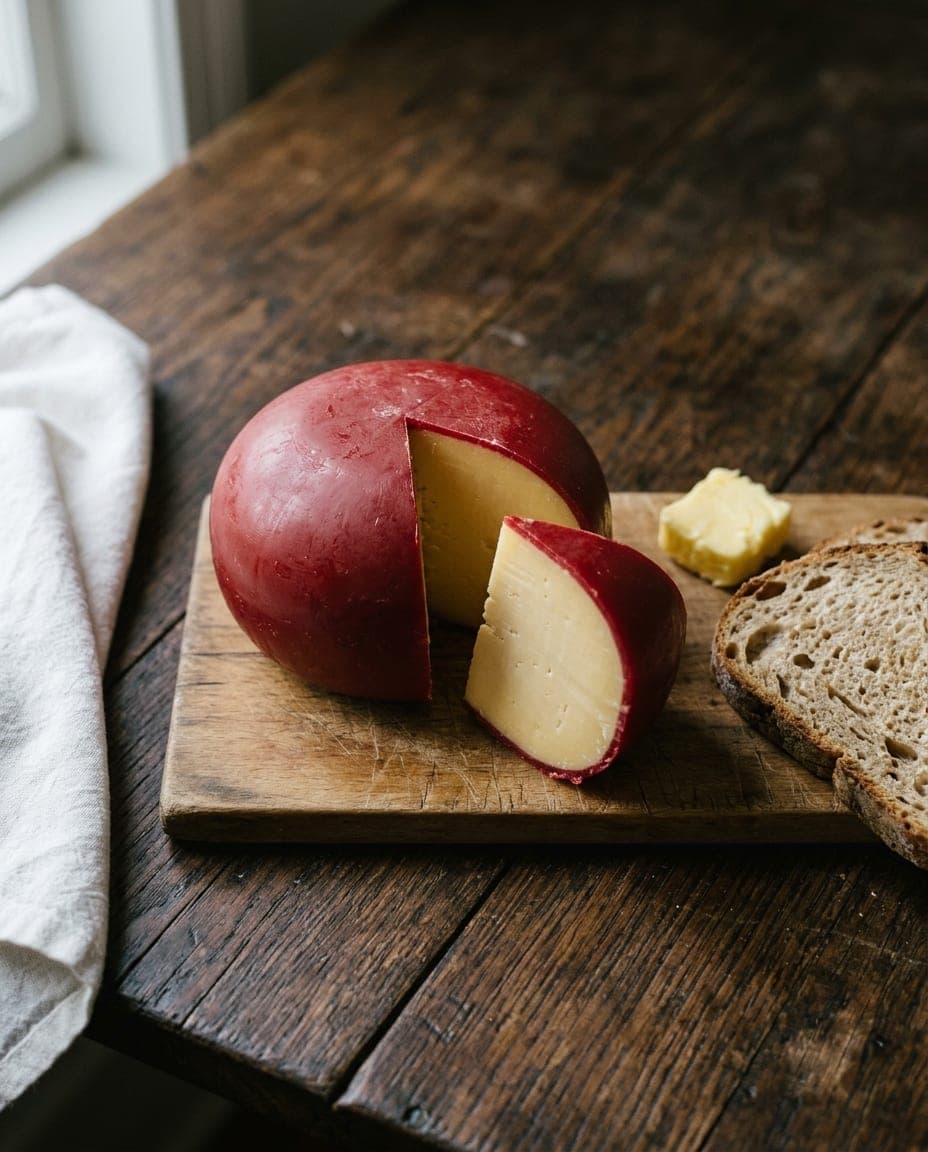
The rind of the farmhouse version is coloured red, traditionally with annatto, a natural dye derived from the seeds of the achiote tree. While many Dutch cheeses are produced across the country, Leidse kaas remains a regional speciality closely tied to the city of Leiden and its immediate surroundings. The most distinctive feature of the traditional farmhouse version is the stamp on the rind: the crossed keys of the city's coat of arms, pressed into the cheese while it was still soft.
The history of the wheel
The origins of this cheese are rooted in the agricultural practices of the Rijnland polders, the flat, fertile lands along the Oude Rijn around Leiden that were reclaimed and drained centuries ago. Dairy farming has long been central to life in these polders, where the soil supported rich pastures for cattle. The city's emblem on the rind has long served as a mark of origin, and the name itself has been in use for around three centuries.
The cumin itself is not native to the Netherlands but arrived through trade routes, eventually becoming a staple in Dutch dairy production. Cumin-studded cheeses have long been made in various parts of the country, but the Leiden version gained particular renown for its texture and the quality of its milk. Today the keys are reserved for Boeren-Leidse met sleutels, the farmhouse version, which has been a Protected Designation of Origin since 1997.
Over time, the farmhouse tradition evolved into a more commercial practice, yet the core method remained consistent. The use of partly skimmed milk ensured that the cheese was lean and suitable for long storage, a practical necessity in an era before refrigeration. The spice also made the cheese identifiable at a glance, which mattered in a trade where wheels were sold by reputation.
What goes into it
The ingredients are simple and reflect the agricultural resources of the region:
- Cow's milk, typically partly skimmed to remove much of the cream for butter making, leaving a lean base for the cheese.
- Cumin seeds, which are mixed into the curd to provide a warm, earthy spice that cuts the fat of the dairy.
- Starter cultures and rennet to coagulate the milk and form the solid curds.
- Annatto, used to colour the rind red on the farmhouse version.
- Salt, taken up in a brine bath after pressing, which draws out moisture and develops the final texture.
The result is a firm, slightly crumbly cheese with a sharp, nutty flavour that intensifies as it ages. The cumin seeds are distributed throughout the wheel, offering small bursts of spice in every bite.
How to eat it
Leidse kaas is best enjoyed as part of a simple meal rather than a standalone course. It is traditionally served alongside dark rye bread, which provides a sturdy base for the firm cheese. A dollop of sharp mustard, often a Dutch-style variety with a tangy kick, complements the cumin and cuts through the density of the dairy.
The cheese pairs naturally with a cold Dutch lager, whose carbonation and light bitterness balance the fat of the cow's milk. In Leiden, it is common to find this combination in small local shops or cafés where the focus is on quality produce rather than elaborate presentation. A thick slice of the cheese, perhaps with a spoonful of mustard and a crusty roll, makes for a satisfying snack or light lunch.
Curious facts
- The keys are real. The crossed keys of Leiden's coat of arms are pressed into the rind of traditional farmhouse versions, serving as a mark of origin rather than decoration.
- Cumin arrived via trade. The spice was not native to the Netherlands but became a defining feature of local cheese through centuries of maritime commerce.
- Lean by design. The use of partly skimmed milk meant that much of the cream went to butter, leaving the cheese firm and suitable for long storage.
- A regional identity. While cumin cheeses exist elsewhere, the Leiden version is specifically tied to the Rijnland polders and the city's agricultural history.
- The rind's colour. The red rind of the farmhouse wheels traditionally comes from annatto, a dye from the seeds of the achiote tree.
Where to try it
The most authentic experience comes from a Leiden cheese shop, where local producers sell wheels that bear the city's crossed keys stamp. These shops often stock aged versions that have developed a deeper taste, as well as younger varieties that are milder and softer. While the cheese can be found in other parts of the Netherlands, the version from Leiden retains its distinct character due to the specific milk and traditional methods used in the region.
The shops in the old centre and around the Wednesday and Saturday market on the Nieuwe Rijn are the obvious places, and most will cut a piece off a young wheel and an old one to compare.
The farmhouse version — boerenkaas, made on the farm from raw milk — is the one with the keys on it, and it is sold at the farms across the Rijnland polders as well as in the city.
Where to try it
1 destination
 Boat Rentals
Leiden
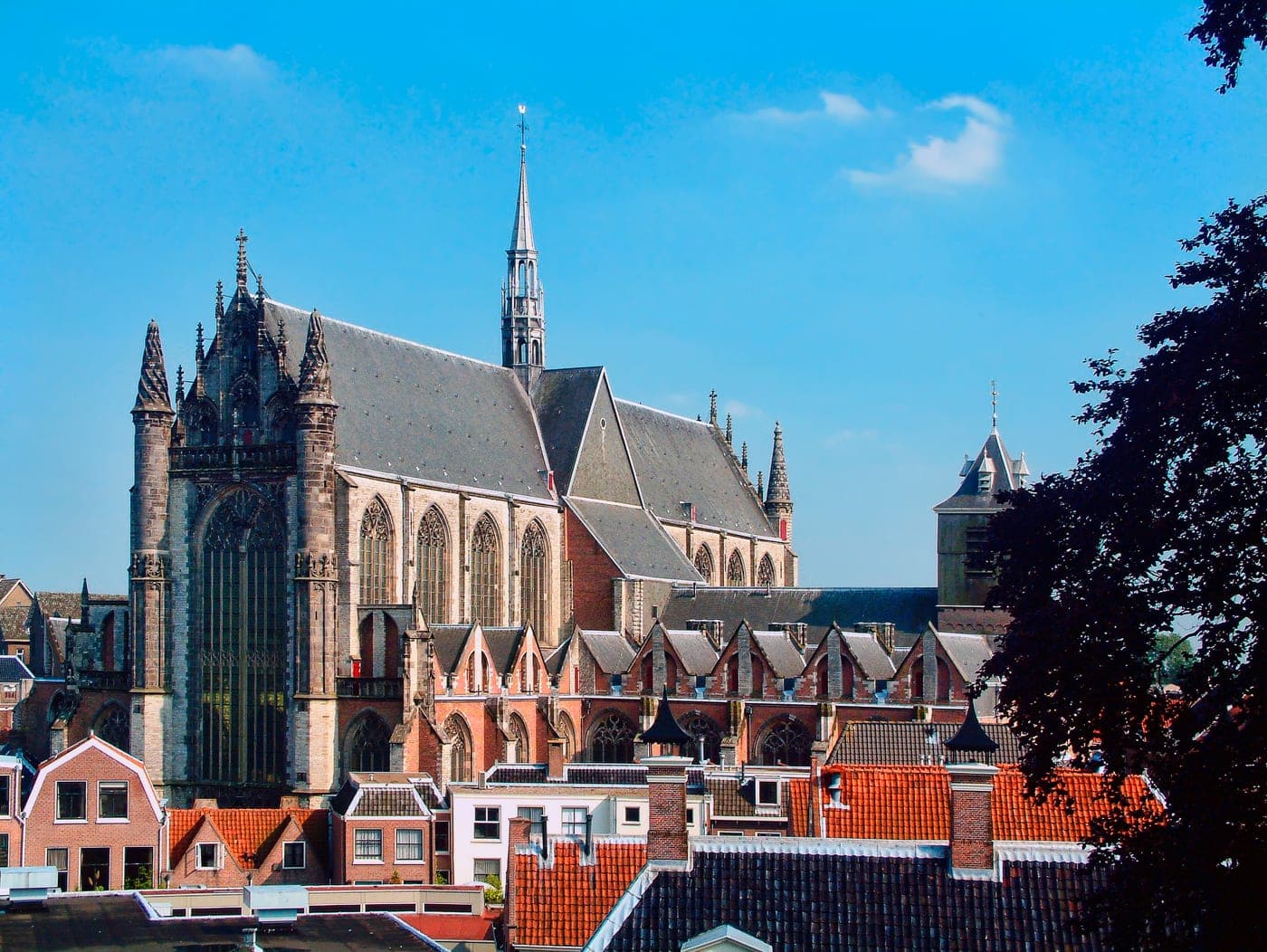
Historic university city with canals, museums, and scholarly heritage
Boat RentalsHiking
1 region
 Boat Rentals5 destinations
Zuid-Holland
South Holland, the most populous region in the Netherlands, features a blend of urban and rural landscapes. The region's capital, The Hague, is known for its political significance and the stunning Mauritshuis museum, home to masterpieces like Vermeer’s 'Girl with a Pearl Earring.' Rotterdam, a hub for modern architecture, boasts an innovative skyline and vibrant cultural scenes. The coastline, stretching along the North Sea, offers picturesque beach towns like Scheveningen and Kijkduin. Explore the serene countryside dotted with historic windmills and charming villages such as Kinderdijk, famous for its UNESCO-listed windmills. South Holland is also renowned for its tulip fields, particularly in the Bollenstreek area, showcasing the region's floral heritage in spring. This diverse region invites travelers to experience its rich history, local markets, and culinary delights at a leisurely pace.
Boat RentalsHikingCamper Van Rentals