Hollandse Nieuwe haring
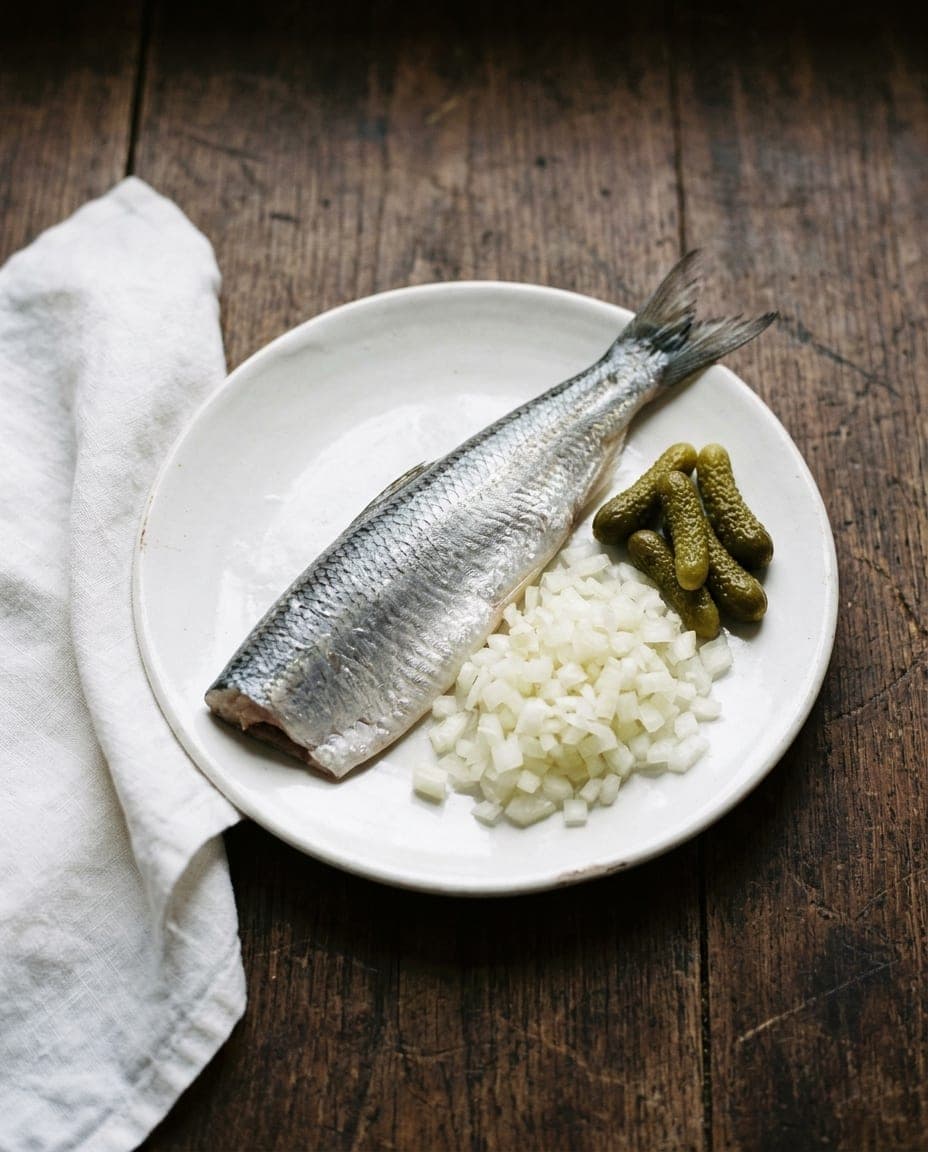
Raw herring cured in light brine, eaten with onions
- Local name
- Hollandse Nieuwe haring
- Served with
- Chopped onions, pickles
- Best eaten at
- A Dutch street herring cart
- Pairs with
- Jenever
What it is
Hollandse Nieuwe, or new herring, is the name given to North Sea herring that has been caught during a short window each year, before it spawns, and cured only lightly in salt. The fish arrives on Dutch tables in June and is sold through the summer; to carry the name it must contain at least 16 per cent fat. Unlike smoked or heavily pickled varieties, this preparation leaves the flesh soft, pale and delicate, with a texture closer to butter than to firm meat.
The dish is defined by its simplicity. A whole herring, gutted but retaining its pancreas, ripens in salt for between a day and a week before being sold. The result is a fish that tastes neither salty nor sour, but rather clean and briny with a hint of sweetness from the oil inside. It is not a heavy meal so much as a seasonal ritual, eaten quickly on the spot or taken home to be shared.
While herring has been a staple in the Netherlands for centuries, the specific term Hollandse Nieuwe refers only to this new-season catch. Once the season ends, the same style of fish is sold as maatjesharing, and herring caught later in the year, after spawning, goes into other preparations. The summer window is distinct, celebrated nationwide and linked to the rhythm of the sea.
How it is made
The magic of Hollandse Nieuwe lies in a single detail that separates it from all other preserved fish: the pancreas. When the herring are caught, they are gibbed (in Dutch, gekaakt). This means the gills and most of the internal organs are removed, but the pancreas is deliberately left inside the belly.
The pancreas contains enzymes that slowly break down the proteins in the flesh during the curing process. This natural ripening gives the herring its characteristic soft texture and subtle flavour. If the pancreas were removed completely, the fish would remain firm and need heavier salting or pickling to become palatable. By keeping the enzyme source, the Dutch create a mild cure that relies on time rather than strong salt or smoke.
The fish are then salted and left to ripen in the cold, at 0 to 4°C, for a day to a week. By law they are also frozen at -20°C for at least 24 hours to kill any parasites. No vinegar is added, no spices are used, and no heat is applied. The process is entirely dependent on the quality of the catch and the care taken during the gibbing. This method ensures that the final product remains pale, tender and fresh-tasting, even though it has been cured.
How to eat it
The traditional way to eat Hollandse Nieuwe is standing up at a street cart, holding the fish by its tail with one hand. The head and the backbone are gone; what is left is two fillets still joined at the tail, which is the handle. The eater tips the head back and lowers it in.
For those who prefer not to hold the fish by the tail, the herring can be cut into pieces and eaten with a cocktail stick, or served in a soft white roll, known as a broodje. In this version, the fish is filleted and placed between two halves of a soft bun. The roll is then topped with a generous heap of finely chopped raw onions.
The onions are essential. Their sharpness cuts the fat of the herring oil, balancing the flavour perfectly. A few pickles may be added on the side for extra crunch. Some vendors also offer mustard or a small cup of jenever, a Dutch gin, to wash it down, though the spirit is not mandatory. The eating style is casual and communal, often enjoyed while watching the harbour or walking through the town.
The start of the season
The arrival of the first herring of the year is marked by a festival known as Vlaggetjesdag, or Flag Day, named after the flags that dress the fishing boats. This event takes place in Scheveningen, a district of The Hague on the North Sea coast, and celebrates the opening of the new-season herring trade.
Around the festival, the first barrel of the new herring is auctioned off to the highest bidder. The proceeds from this auction go to charity, a different cause each year. The winning bid often reaches significant sums, turning the event into a spectacle that draws crowds and media attention from across the country.
Once the season opens, herring carts and fishmongers throughout the Netherlands put the new catch on sale. The fish are not available under this name year-round; they must be caught during a specific window before spawning, when the fat content is high enough. This seasonal rhythm creates a sense of anticipation among locals and visitors alike.
Curious facts
- The pancreas is key. Unlike other cured fish, the Dutch leave the pancreas inside to naturally ripen the flesh using its enzymes.
- Holding by the tail. The traditional method involves gripping the herring by its tail and lowering it into the mouth without cutting it first.
- Vlaggetjesdag begins the trade. The auction of the first barrel at Scheveningen marks the opening of the season, and the money goes to charity.
- No vinegar used. Unlike pickled herring from other countries, Hollandse Nieuwe is cured only with salt, with no added acid.
- Frozen by law. Every raw herring sold in the Netherlands has been frozen first, a rule dating from the late 1960s to kill parasites.
- Seasonal limits. The name may only be used for herring caught in the season, with at least 16 per cent fat.
Where to try it
A haringkar — the street cart — anywhere in the coastal provinces between June and August. They stand near harbours, markets and station forecourts in Noord-Holland, Zuid-Holland and Flevoland, and the fish is cut, onioned and handed over in under a minute.
Scheveningen, the seafront district of The Hague where the season opens, is the obvious place to be at the start of it. Fishmongers and market stalls across the country sell the same fish, and supermarkets sell it vacuum-packed, which is a lesser thing.
The season is the constraint. Once it closes, what is sold is maatjesharing, from frozen stock, under a different name.
Where to try it
1 destination
 Boat Rentals
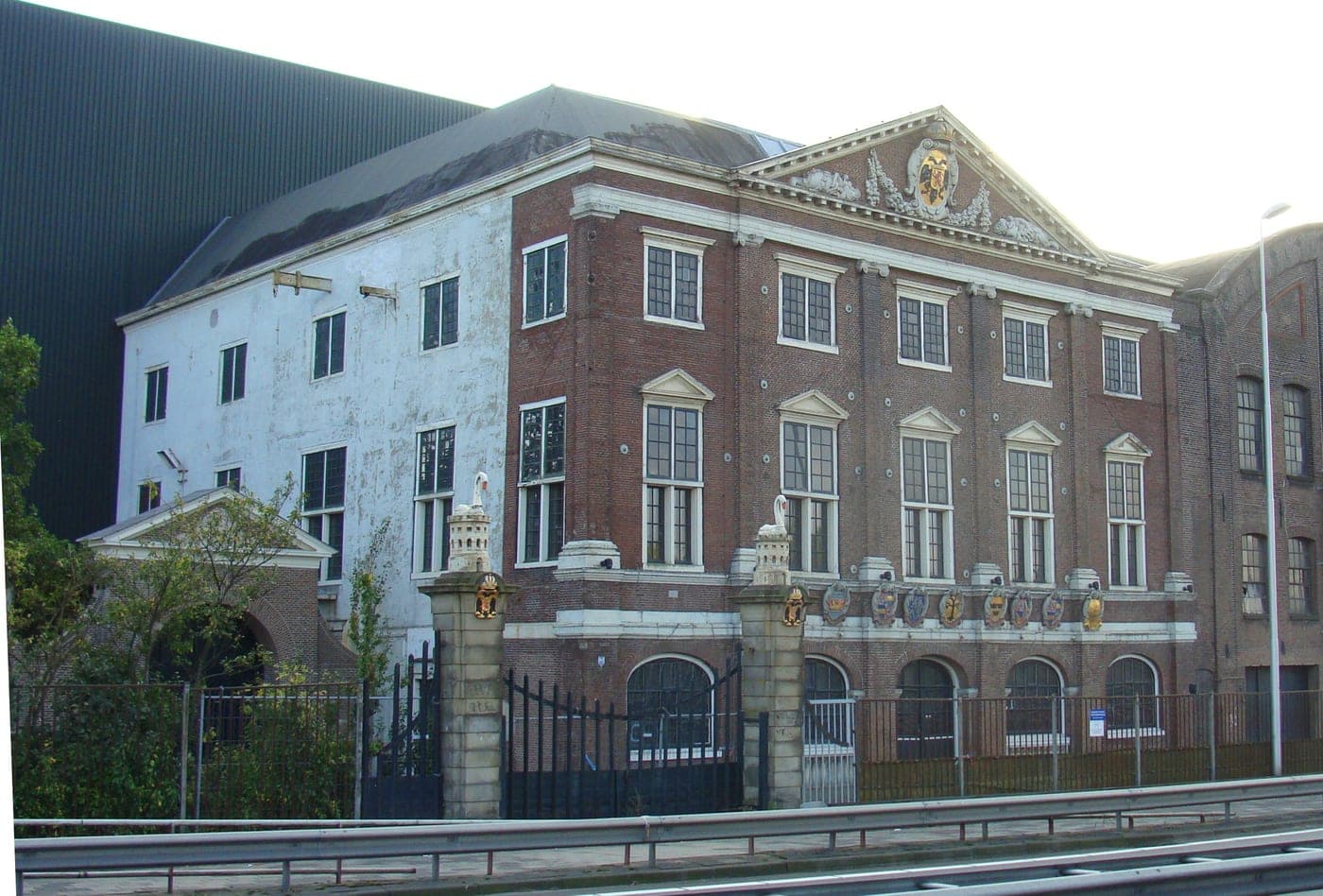
Halfweg
Historic halfway village between Amsterdam and Haarlem in polder landscape
Boat RentalsHiking
3 regions
 Boat Rentals2 destinations
Flevoland
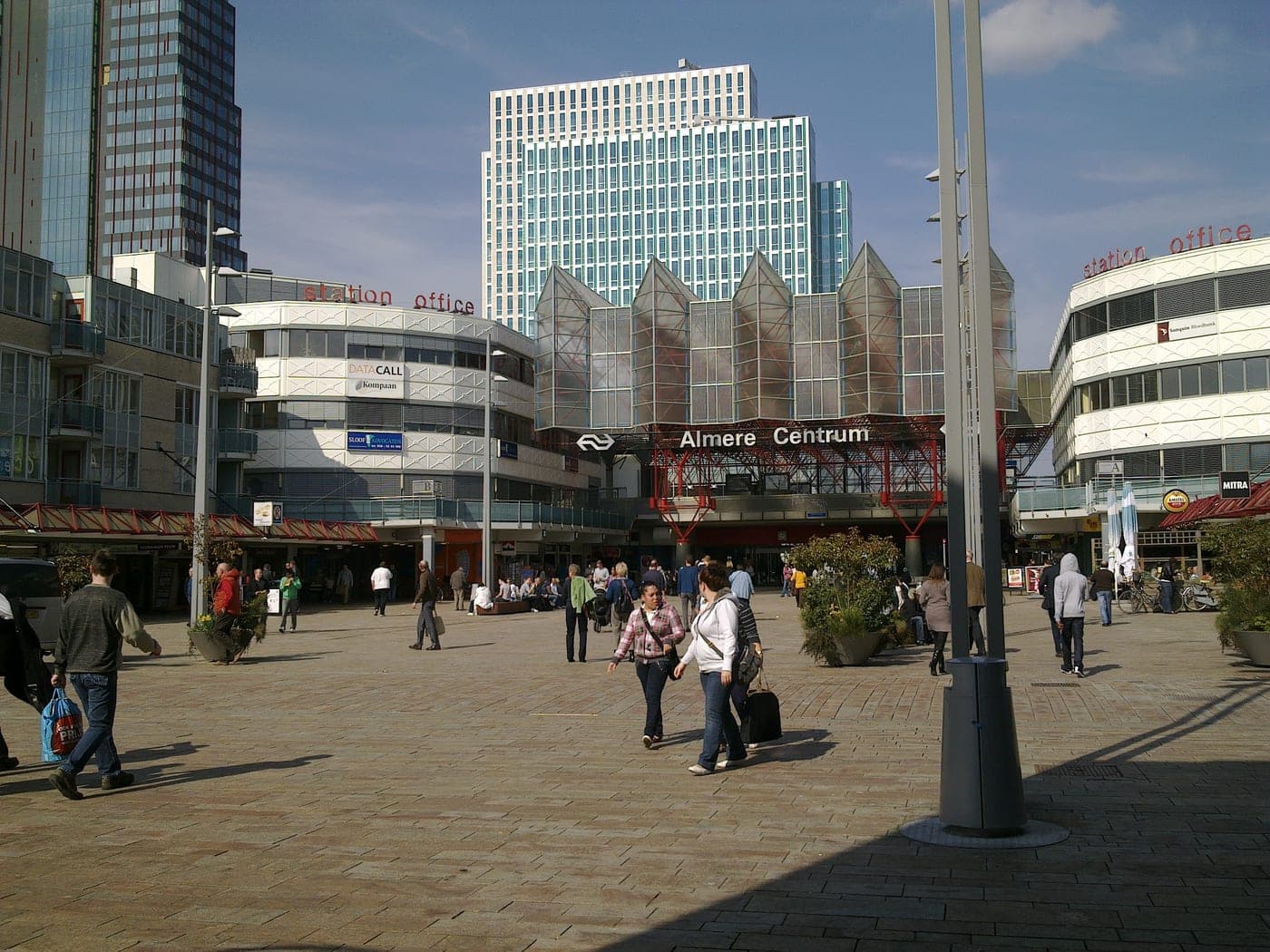
Flevoland, the youngest province in the Netherlands, was reclaimed from the Zuiderzee, showcasing innovative land reclamation techniques. Almere, the largest city, features modern architecture and a vibrant cultural scene, while Lelystad, the provincial capital, offers museums like the Batavialand, highlighting the region's maritime history. The area's unique landscapes include the Oostvaardersplassen nature reserve, home to diverse wildlife. Flevoland is also known for its agricultural practices, particularly in tulip cultivation. This province provides an opportunity to explore modern Dutch life alongside historical insights, making it a fascinating destination beyond typical tourist trails.
Boat RentalsHiking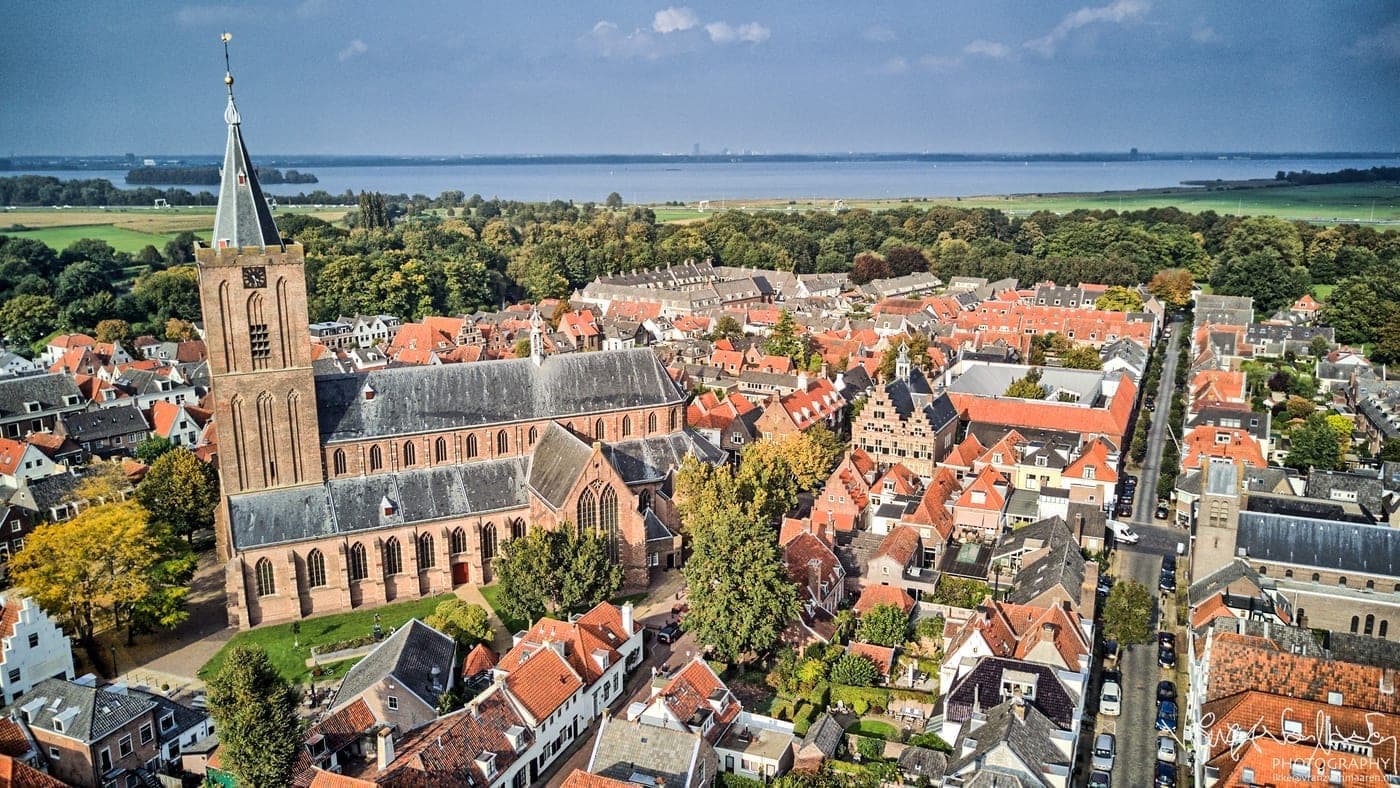 Boat Rentals11 destinations
Noord-Holland
North Holland is a diverse region located in the northwest of the Netherlands, known for its mix of urban and rural landscapes. Amsterdam, the capital, is the only major city, renowned for its canals and museums. Outside the city, the region boasts picturesque villages such as Edam, famous for its cheese, and Volendam, a traditional fishing village. The coastline offers beautiful beaches, particularly in Zandvoort and Bloemendaal, popular for windsurfing and beach walks. North Holland is also home to the UNESCO-listed Wadden Sea, a unique natural habitat. The region's rich history is evident in its historic windmills and vibrant tulip fields that bloom in spring, inviting exploration through serene countryside paths.
Boat RentalsHikingLocal CuisineCamper Van Rentals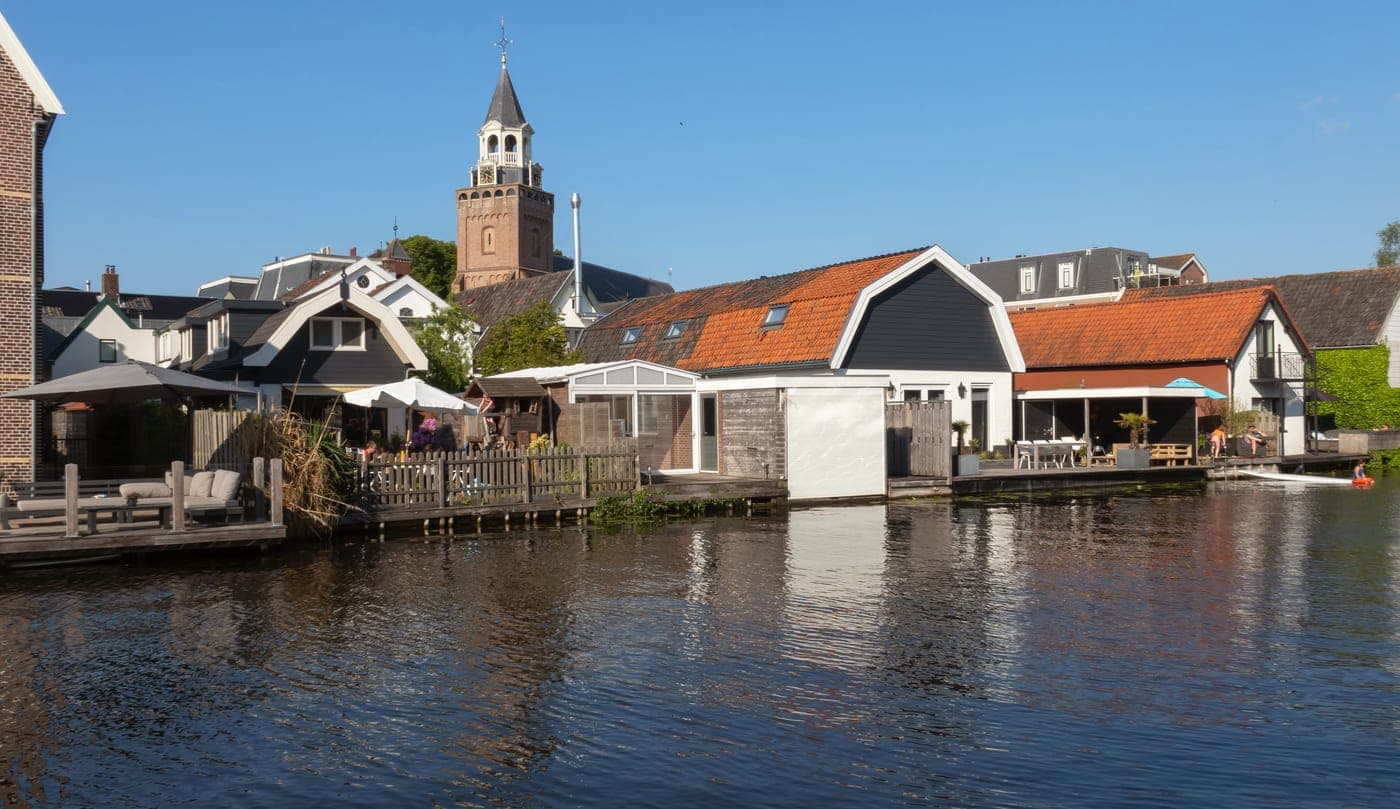 Boat Rentals5 destinations
Zuid-Holland
South Holland, the most populous region in the Netherlands, features a blend of urban and rural landscapes. The region's capital, The Hague, is known for its political significance and the stunning Mauritshuis museum, home to masterpieces like Vermeer’s 'Girl with a Pearl Earring.' Rotterdam, a hub for modern architecture, boasts an innovative skyline and vibrant cultural scenes. The coastline, stretching along the North Sea, offers picturesque beach towns like Scheveningen and Kijkduin. Explore the serene countryside dotted with historic windmills and charming villages such as Kinderdijk, famous for its UNESCO-listed windmills. South Holland is also renowned for its tulip fields, particularly in the Bollenstreek area, showcasing the region's floral heritage in spring. This diverse region invites travelers to experience its rich history, local markets, and culinary delights at a leisurely pace.
Boat RentalsHikingCamper Van Rentals