Gelderse rookworst
The smoked pork sausage that carries Gelderland's name
- Local name
- Gelderse rookworst
- Served with
- Stamppot or erwtensoep
- Pairs with
- Dutch pilsner
What it is
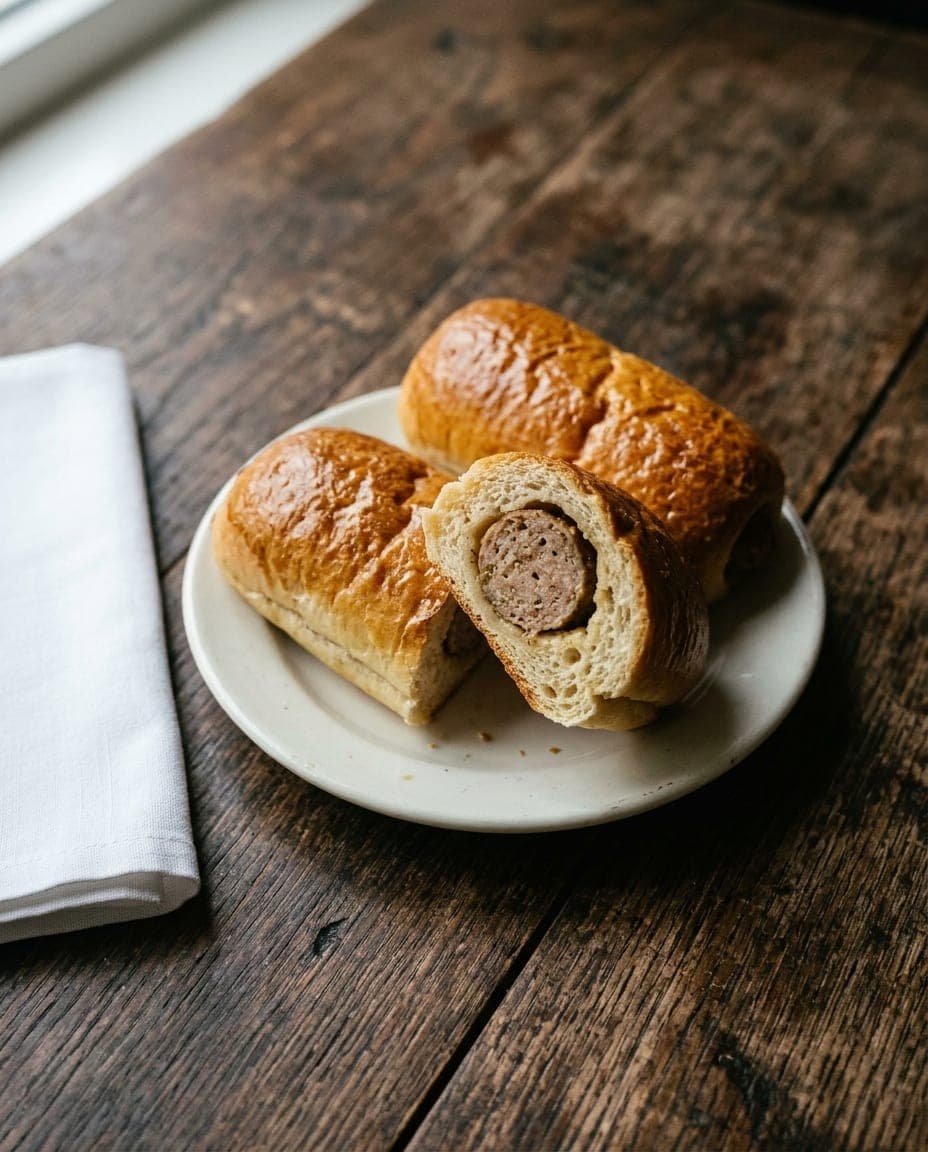
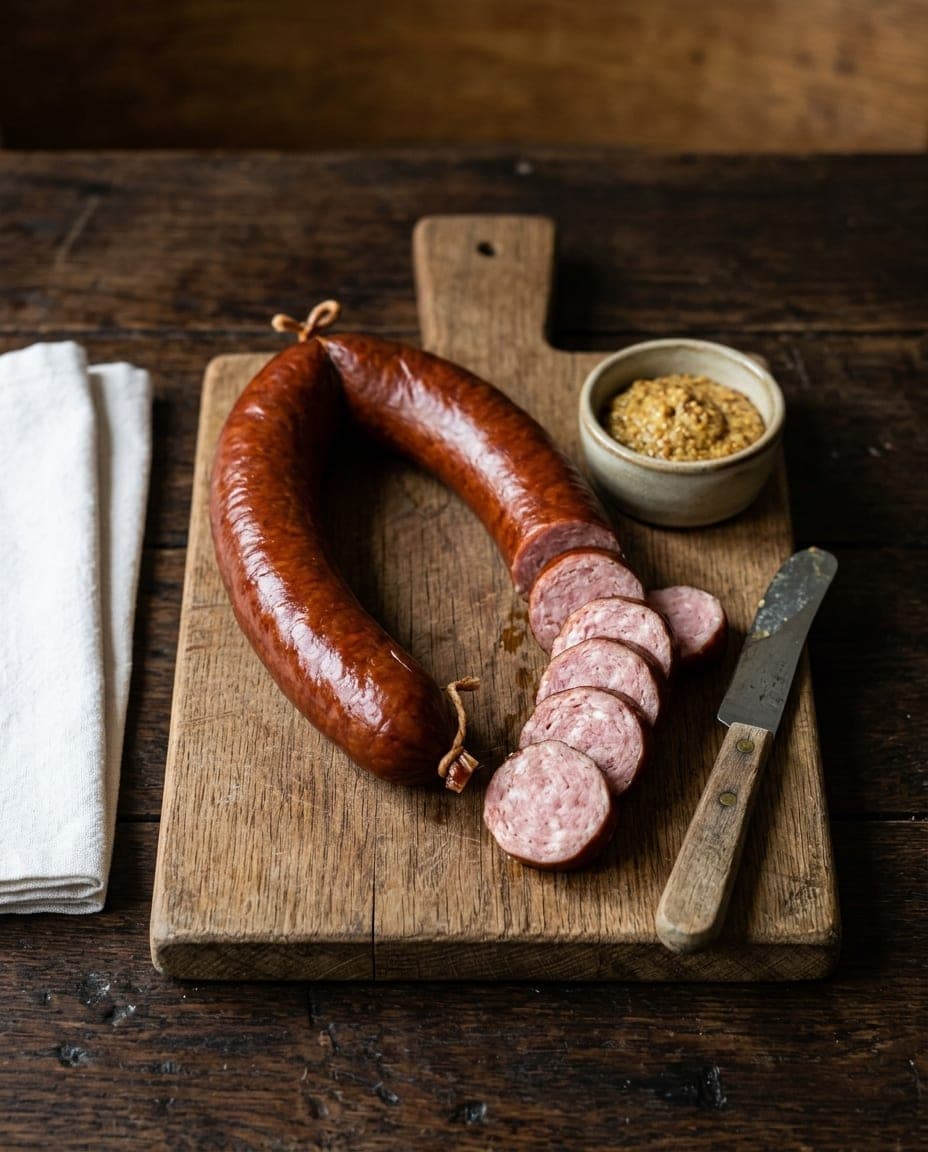
The Gelderse rookworst is a smoked sausage that defines the culinary identity of the Dutch province of Gelderland. While similar sausages exist across Europe, this version carries a specific character derived from its texture and the method of smoking it over beech or oak. It is a substantial, usually horseshoe-curved length of ground pork, seasoned simply and encased in a skin that holds its shape during cooking.
The supermarket version is sold pre-cooked and only needs gentle heating; a traditional butcher's rookworst may be sold raw and must be cooked through. Unlike many other sausages that are fried or grilled until crisp, the Gelderse rookworst is best poached whole in simmering water or broth. This technique warms the meat through without splitting the casing or drying out the interior. The result is a tender, deep brown cylinder with a firm yet yielding bite and a smoky aroma that lingers on the palate.
It occupies a central place in the Dutch winter diet, particularly as the topping for stamppot. This dish consists of mashed potatoes beaten together with leafy greens such as kale, sauerkraut, or carrots and onions. The sausage is placed whole atop the mound of mash, often sliced only when the diner cuts into it at the table. It also features prominently in erwtensoep, a thick pea soup served in winter months, where the sausage is either sliced into rounds or added as a whole link to the bowl.
The region that gave it its name
Although the Gelderse rookworst is now a staple in supermarkets across the Netherlands, its heart lies firmly in the province of Gelderland. The name points to the province, which became known for its smoked sausage as far back as the 18th century, when farm households across this rural province slaughtered and smoked their own pigs.
Gelderland is river country with woodland behind it, which supplied both the pork and the wood for the smokehouse. The methods have industrialised like everything else, but many village butchers still smoke their own, and in winter the smell of it carries down the street.
The sausage does not carry a protected geographical status in the European sense, nor does it belong to a single historic family of butchers, and the name is used today by producers well outside the province. Instead, it is a collective achievement of the region's food culture. Many butchers in Gelderland produce their own version, adhering to the general principles while maintaining subtle variations in the seasoning or the coarseness of the grind. This local ownership ensures that the sausage remains bound up with the place where it was made.
How it is made and what goes into it
The construction of the Gelderse rookworst relies on a few essential elements, none of which are hidden from the diner. The primary ingredient is pork, typically a mix of lean meat and fat to ensure a moist texture. The meat is ground and mixed with the fat, giving the sausage a texture that holds together when sliced but remains tender.
The seasoning is restrained, relying on salt, pepper and often a touch of nutmeg or coriander to enhance the flavour without overpowering it. The mixture is then stuffed into natural casings, usually made from sheep or hog intestines, which provide a skin that can withstand the heat of smoking without bursting. Once filled, the sausages hang in a smokehouse where they are exposed to the smoke of beech or oak wood for a few hours. This process imparts the deep brown colour and the distinct, earthy smokiness that defines the dish.
The smoking is done cool, so it flavours rather than cooks; factory sausages are then cooked in hot water before packing, which is why they only need warming. The casing gives slightly under the teeth before the inside does, which is the test of a good one.
How to eat it
The traditional way to consume the Gelderse rookworst is with stamppot, a dish that serves as the standard winter meal in many Dutch households. The sausage is placed whole on top of a generous serving of mashed potatoes mixed with kale, sauerkraut or carrots. It is common to slice the sausage only when ready to eat, allowing the juices to mix with the mash and the smoky aroma to rise into the steam.
In winter, the sausage also appears in erwtensoep, a thick soup made from split peas, vegetables and often smoked meat. Here, the Gelderse rookworst is either cut into thick rounds or added as a whole link, simmering gently in the broth to infuse it with its smoky flavour. The sausage is not meant to be fried or grilled in this context; its role is to provide a deep, warm element that complements the hearty soup.
A glass of Dutch pilsner is the classic companion to these dishes. The crisp, hoppy character of the beer cuts the fat of the pork and the heaviness of the potato mash. In many traditional settings, the sausage is served with mustard, often a mild variety that allows the smoky notes of the meat to shine.
Curious facts
- The casing matters. Natural casings are the traditional choice for the authentic texture. They allow the sausage to hold its shape during poaching while providing a slight resistance when bitten, unlike synthetic skins which can become rubbery.
- It is not boiled. Boiling water causes the natural casing to split and the fat to leak out. The correct method is gentle poaching in simmering water or broth, which keeps the sausage intact and moist.
- The wood is key. The specific smoky flavour comes from smoking over hardwood, usually beech or oak. Many factory versions skip the smokehouse and use smoke flavouring instead.
- A winter staple. While available year-round in supermarkets, the sausage is most deeply associated with the colder months, when it features prominently on menus and in home kitchens alongside stamppot and erwtensoep.
- Regional pride. Despite its popularity across the Netherlands, the name Gelderse rookworst remains a marker of provincial identity, distinguishing it from other regional smoked sausages.
Where to try it
The most authentic experience of the Gelderse rookworst is found in the province of Gelderland itself, where the sausage has long been part of the local food scene. Traditional restaurants and small butchers in the region often serve it with stamppot or as part of a winter menu featuring erwtensoep.
Every supermarket in the country sells a vacuum-packed version, which is what most Dutch households eat and which is perfectly good. The butcher's version is coarser and smokier, and it is sold by weight rather than by the link.
Where to try it
1 destination
 Boat Rentals
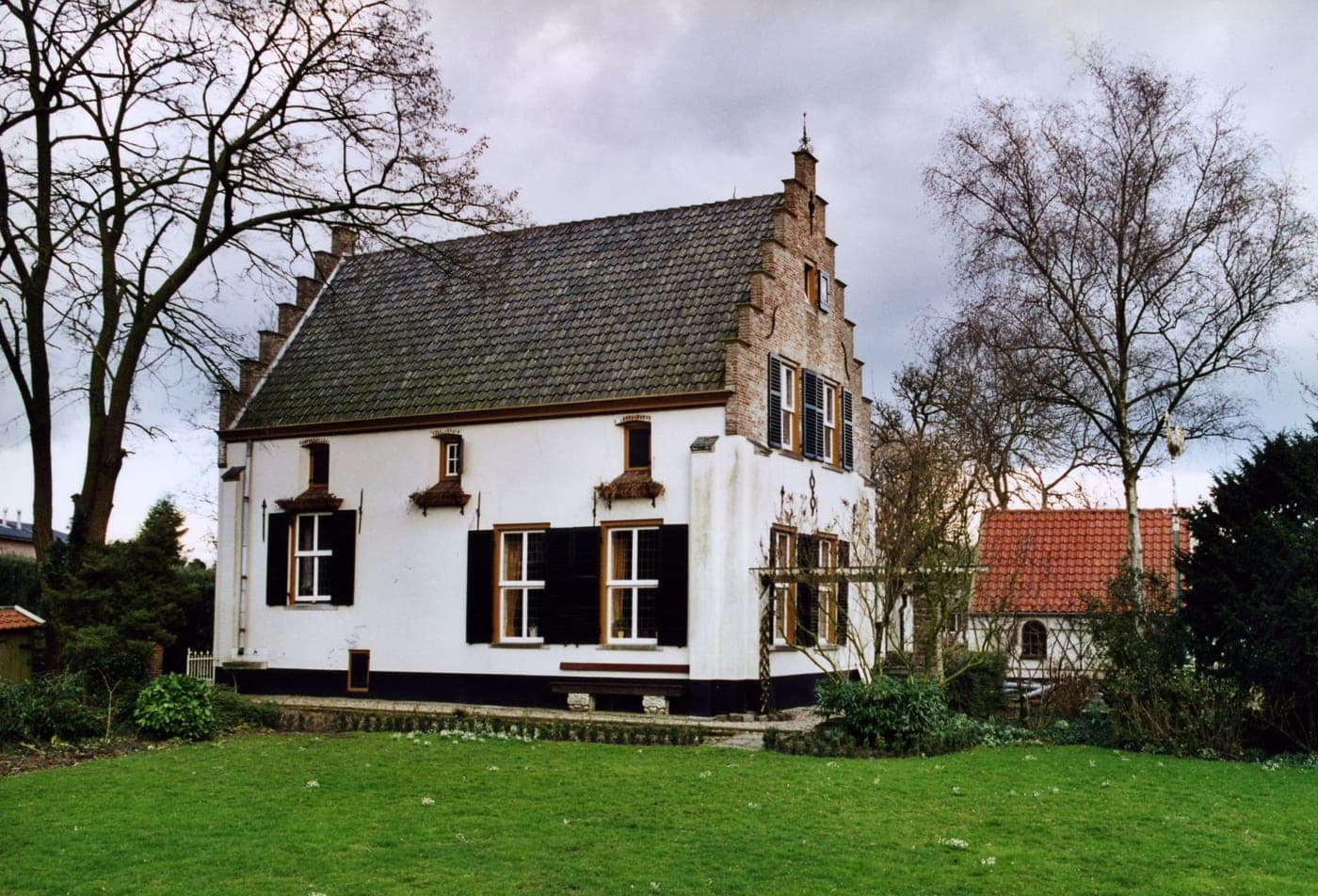
Kerkdriel
Charming town with historic windmills and picturesque canals.
Boat RentalsHiking
1 region
 Boat Rentals2 destinations
Gelderland
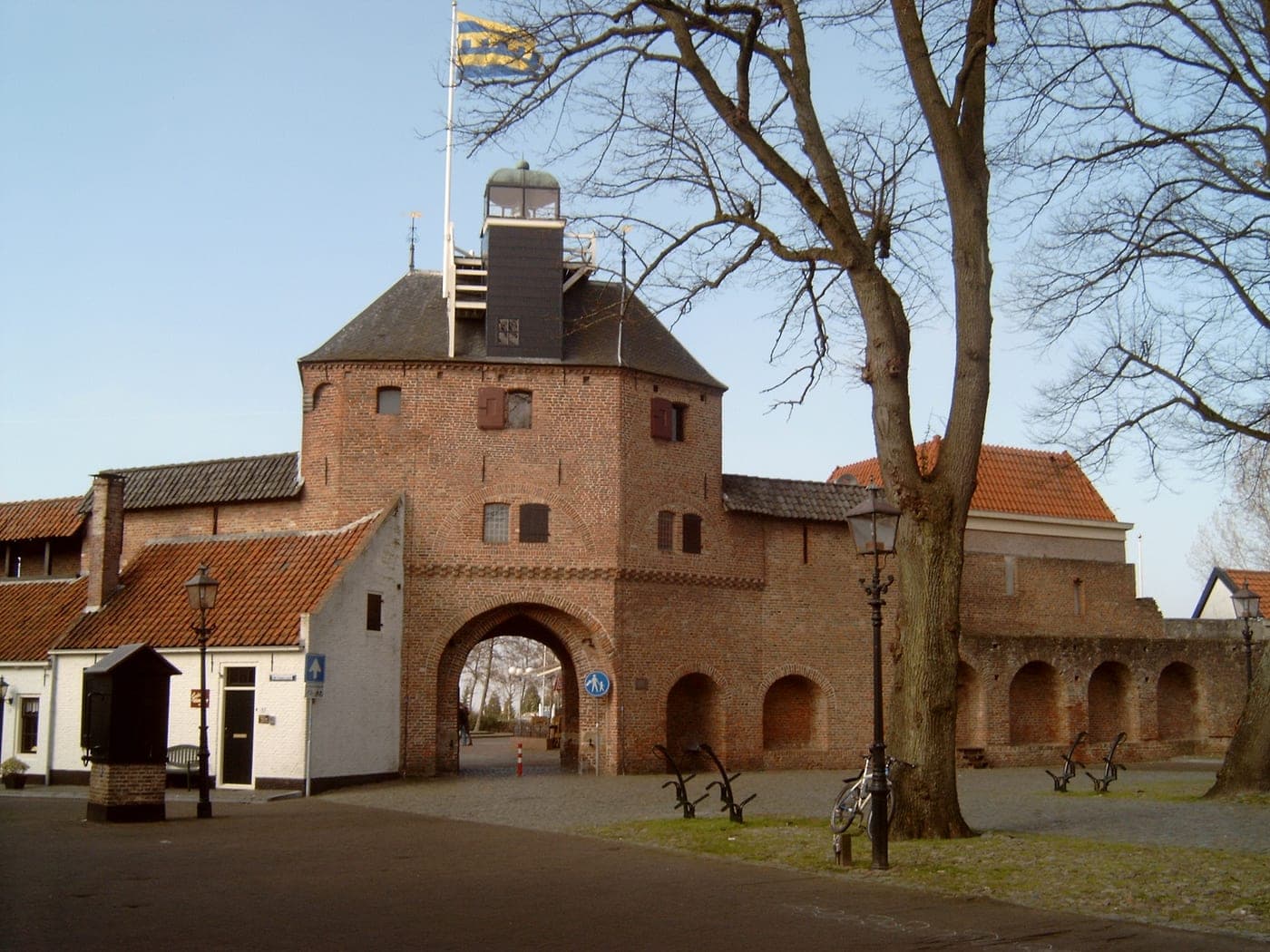
Gelderland, the largest province in the Netherlands, is known for its diverse landscapes, including vast forests, heathlands, and beautiful river valleys. The region is home to the historic city of Arnhem, famous for its pivotal role in World War II, featuring the Airborne Museum. Nearby, the Hoge Veluwe National Park offers extensive trails for walking and cycling amidst art installations and nature. The charming town of Nijmegen boasts ancient Roman history and vibrant cultural festivals. Gelderland is also notable for its traditional Gelderland horse breeding and local cuisine, featuring local cheeses and game dishes. Off the beaten path, explore the quaint villages of Bronkhorst, one of the smallest towns in the Netherlands, and Elburg, with its medieval harbor and preserved architecture.
Boat RentalsHiking